Artwork
ulcior de apă
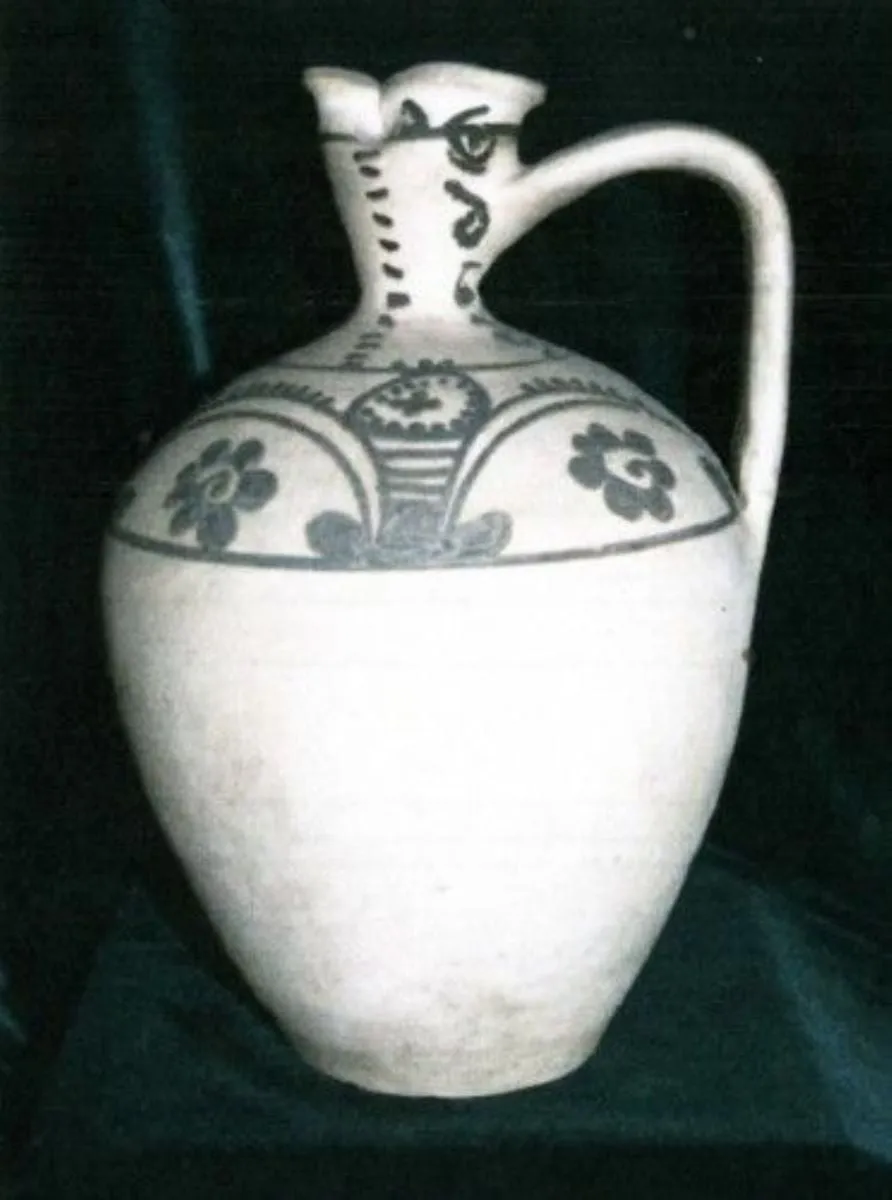
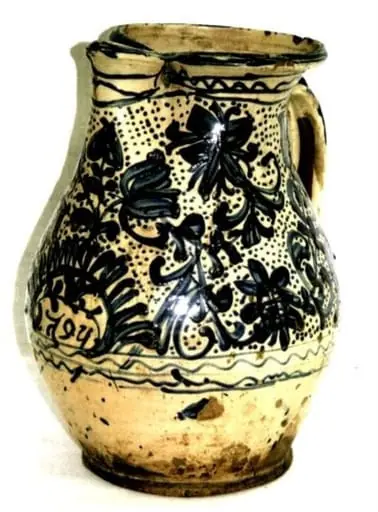
ulcior de apă is a photography by Unknown. It dates from 1850 and is held in the collection of the Zalău Museum of History and Art.
About this work
Overview
This ceramic pitcher, known as ulcior de apă, is a utilitarian vessel from a tradition that blends function with decorative expression.
This ceramic pitcher, known as ulcior de apă, is a utilitarian vessel from a tradition that blends function with decorative expression. Its white clay body is adorned with dark geometric and floral motifs, and a stylized human face adorns the neck. The two handles—one for pouring, one for gripping—reflect its practical use in daily life. The design suggests a regional craft tradition where utility and symbolism coexisted.
Subject & Meaning
The face on the pitcher’s neck, with large eyes and a simple smile, introduces a personified quality to an everyday object. While not clearly religious or mythological, the feature may reflect a cultural belief in animating household items or invoking protection. The floral and diamond patterns likely carry symbolic weight, possibly tied to fertility, continuity, or natural cycles common in folk traditions.
Technique & Style
The pitcher was hand-thrown and fired in a low-temperature kiln, then painted with iron-rich slips to achieve black and gray tones against the pale clay. Decorative elements—swirls, flowers, and diamonds—were applied freehand, showing the maker’s intuitive rhythm rather than rigid symmetry. The restrained palette emphasizes form and texture, typical of regional pottery where pigments were locally sourced.
History & Provenance
This type of vessel originates from rural communities in Eastern Europe, particularly Romania, where such ceramics were produced from the 18th to early 20th centuries. Made for domestic use, they were rarely signed or documented. Surviving examples like this one are often found in family households or regional museums, passed down through generations as both tools and heirlooms.
Context
In agrarian societies, pottery like this was essential for storing and serving water, milk, or wine. Decoration served not only aesthetic purposes but also signaled regional identity and craftsmanship. The face motif appears in other folk objects, suggesting a broader cultural tendency to imbue household items with a sense of presence or guardianship, blurring the line between object and spirit.
Legacy
Contemporary ceramic artists in Romania and beyond continue to draw inspiration from these forms, reviving traditional motifs and hand-building methods. While mass production has replaced most utilitarian pottery, the survival of such pieces in collections and ethnographic archives ensures their visual language remains part of cultural memory, valued for its quiet humanity rather than rarity.
Artist & collection
 Domestic Scene
 Giacomo and Cardinal Marco, investing Andrea, Abbot of San Zeno, with his Benefice
 The Nymph of Fontainebleau
 Portrait of a Woman
 Madonna and Child with Saints in the Enclosed Garden
 Venus and Minerva
 Family Group of Four on Sofa
 Wall painting from Room H of the Villa of P. Fannius Synistor at Boscoreale
 vas persan
 oală cu toartă
 cantă
cantă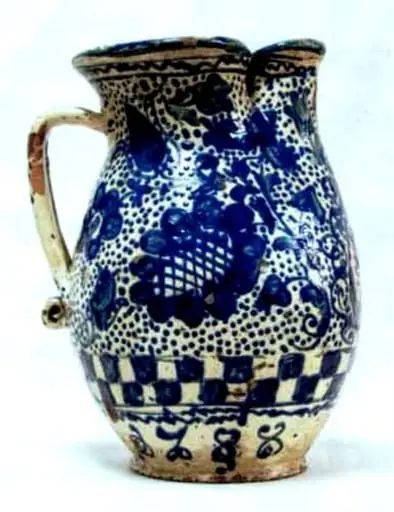 cană de vin
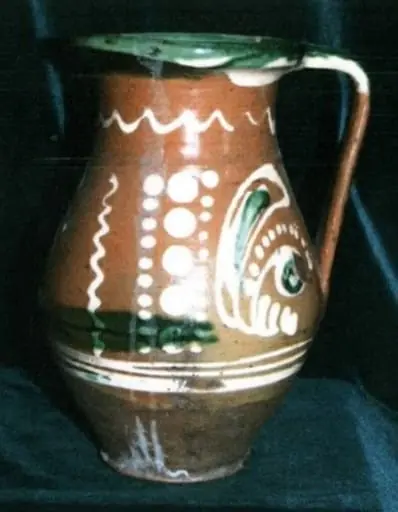 ulcea de lapte
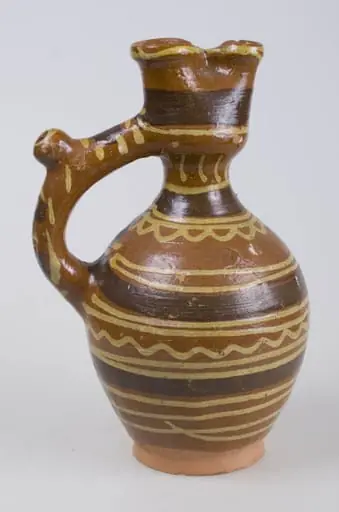 Recipientul este confecționat din lut, cu pântecul extins în zona mediană, cu gât îngust și gură bilobată. Acesta prezintă ciur la gură și în interior piatră sunătoare. Obiectul este prevăzut cu o toartă tubulară cu țâță pentru scurgerea lichidului, lipită de gât și de mijlocul diametrului maxim al corpului. Ulciorul este smălțuit până aproape de fundul vasului. Decorul este format din motive geometrice, pictate cu cornul, pe toată suprafața corpului, inclusiv pe mâner: linii circulare, linii vălurite, linii oblice dispuse vertical, semicercuri pe umeri. Cromatică: fond: cărămiziu; decor: galben; maro închis.
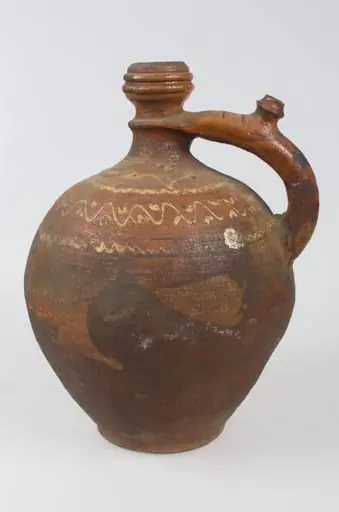 Vas de formă bitronconică prevăzut cun un gât ușor alungit și cu buză pe care se identifică două brâuri profilate. Pe toarta de formă semicirculară se identifică un orificiu pentru consumarea lichidului (”țâță”). Toarta pleacă din zona mediană a orificiului de umplere și se unește cu corpul vasului pe zona diametrului maxim. Vasul prezintă smalț la exterior cu urme de degradare. Decorul se identifică la baza gâtului și constă din motive geometrice: linii curbe, brâuri și motive vegetale. Cromatică: fond: cărămiziu: motive: crem; maron închis
 cană de bere