Artwork
vas persan
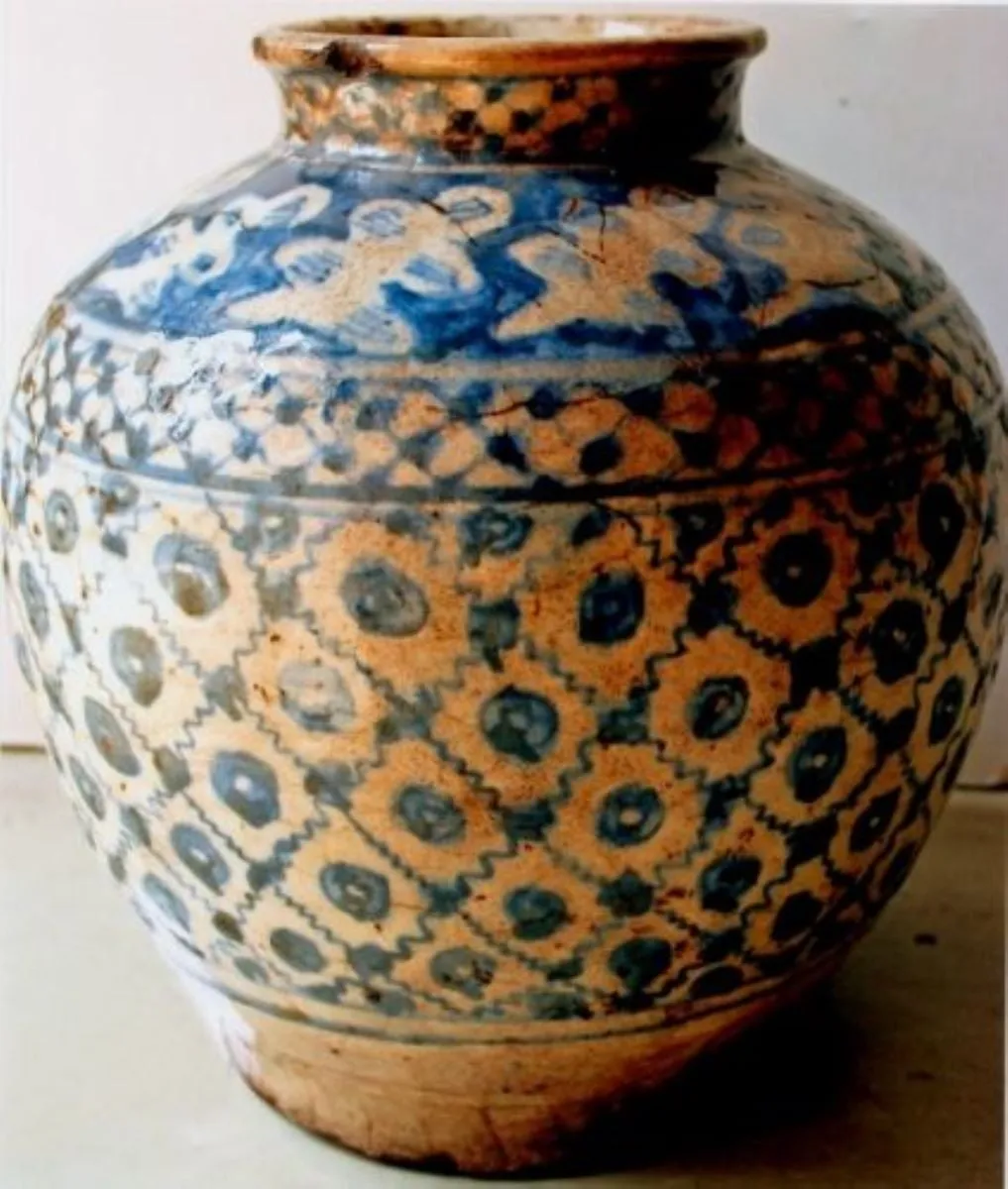
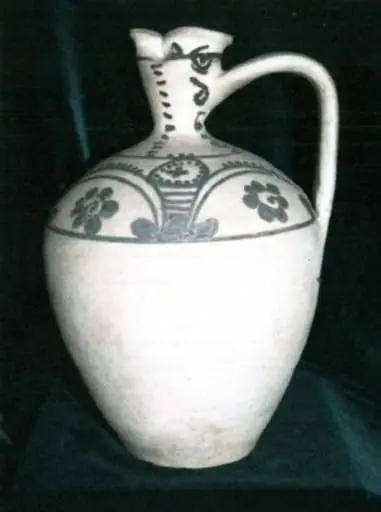
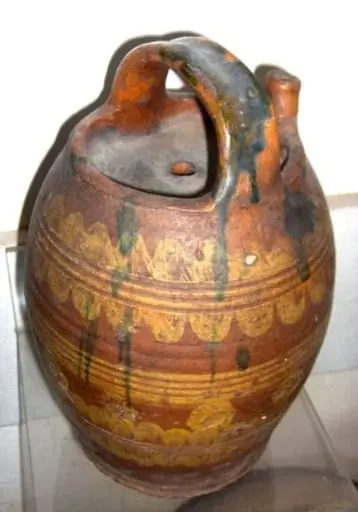
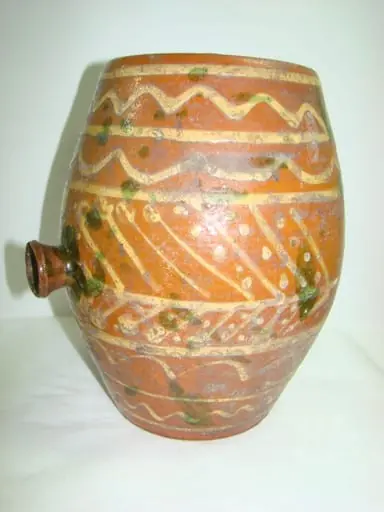
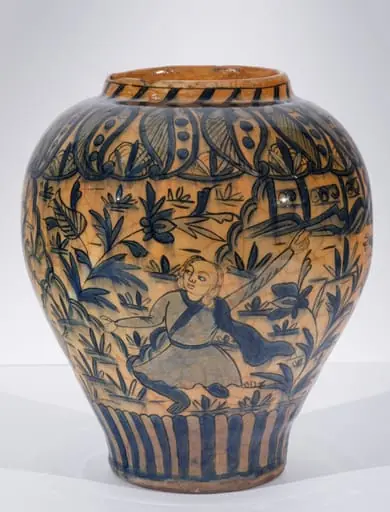
vas persan is a photography by Unknown. It dates from 1750 and is held in the collection of the Romanian Academy in Bucharest. The object is an antique Persian ceramic vase characterized by a broad, bulbous body that tapers to a slender neck with a modest opening.
About this work
Overview
The object is an antique Persian ceramic vase characterized by a broad, bulbous body that tapers to a slender neck with a modest opening. Its surface bears a coarse, tactile finish typical of traditional earthenware, and the piece is displayed against a plain white backdrop within the Museum of Ethnography.
Subject & Meaning
The vase’s decoration consists of a network of blue motifs applied over a light‑brown ground. Geometric elements—circles, linear bands and zigzag patterns—interweave across the surface, creating a rhythmic visual language that reflects the aesthetic preferences of its cultural origin.
Technique & Style
Blue pigments were hand‑painted onto the fired ceramic, leaving portions of the background exposed, a technique that emphasizes contrast and adds a sense of spontaneity. The brushwork is confident and expressive, suggesting a skilled artisan familiar with the decorative conventions of Persian pottery.
History & Provenance
Although the precise date of manufacture is not recorded, the vase belongs to the broader corpus of Persian ceramic art, which flourished from the medieval period onward. It entered the collection of the Museum of Ethnography, where it joins other artifacts that illustrate the region’s material culture.
Context
Persian pottery often employed cobalt‑blue designs on a lighter slip, a practice that linked functional vessels to decorative art. The geometric patterns on this vase align with motifs commonly found on contemporary textiles and architectural ornamentation, indicating an integrated visual culture.
Artist & collection
 Domestic Scene
 Giacomo and Cardinal Marco, investing Andrea, Abbot of San Zeno, with his Benefice
 The Nymph of Fontainebleau
 Portrait of a Woman
 Madonna and Child with Saints in the Enclosed Garden
 Venus and Minerva
 Family Group of Four on Sofa
 Wall painting from Room H of the Villa of P. Fannius Synistor at Boscoreale