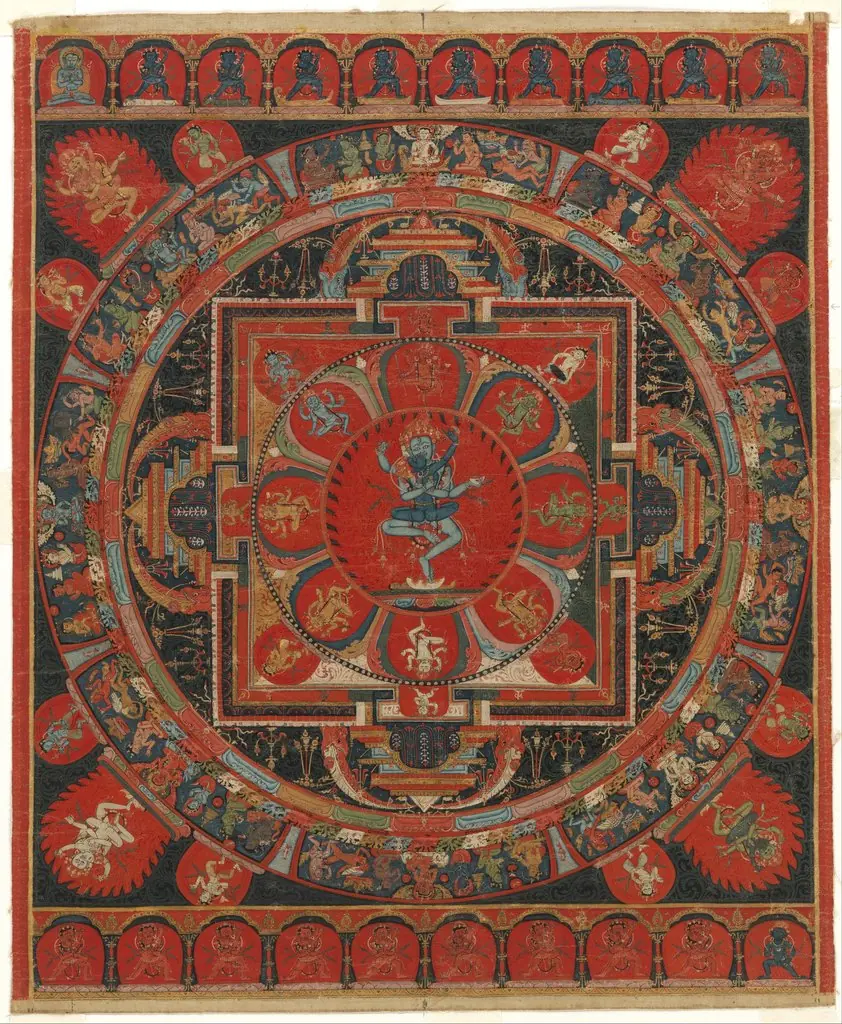
Artwork
Untitled
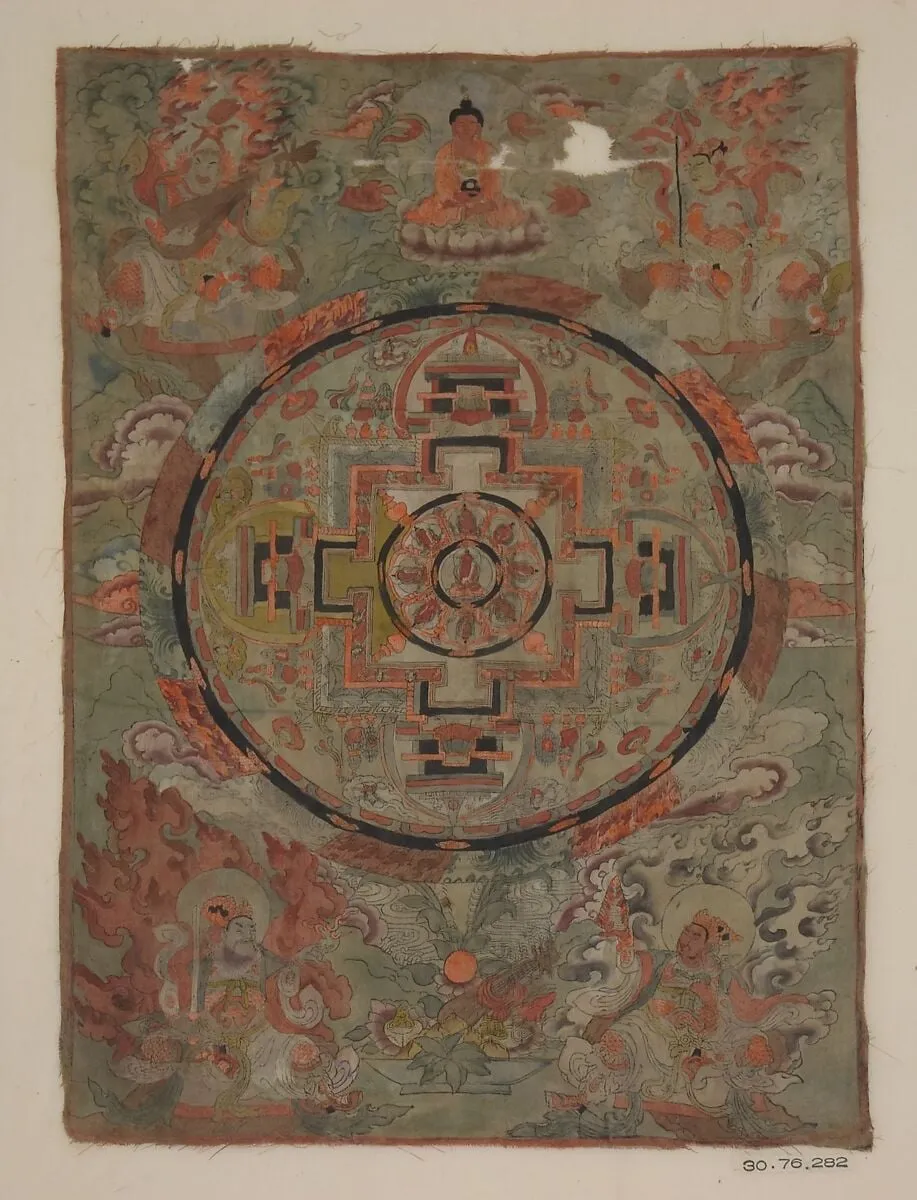
Untitled is a paint painting. It dates from 1849 and is held in the collection of the Metropolitan Museum of Art.
About this work
Overview
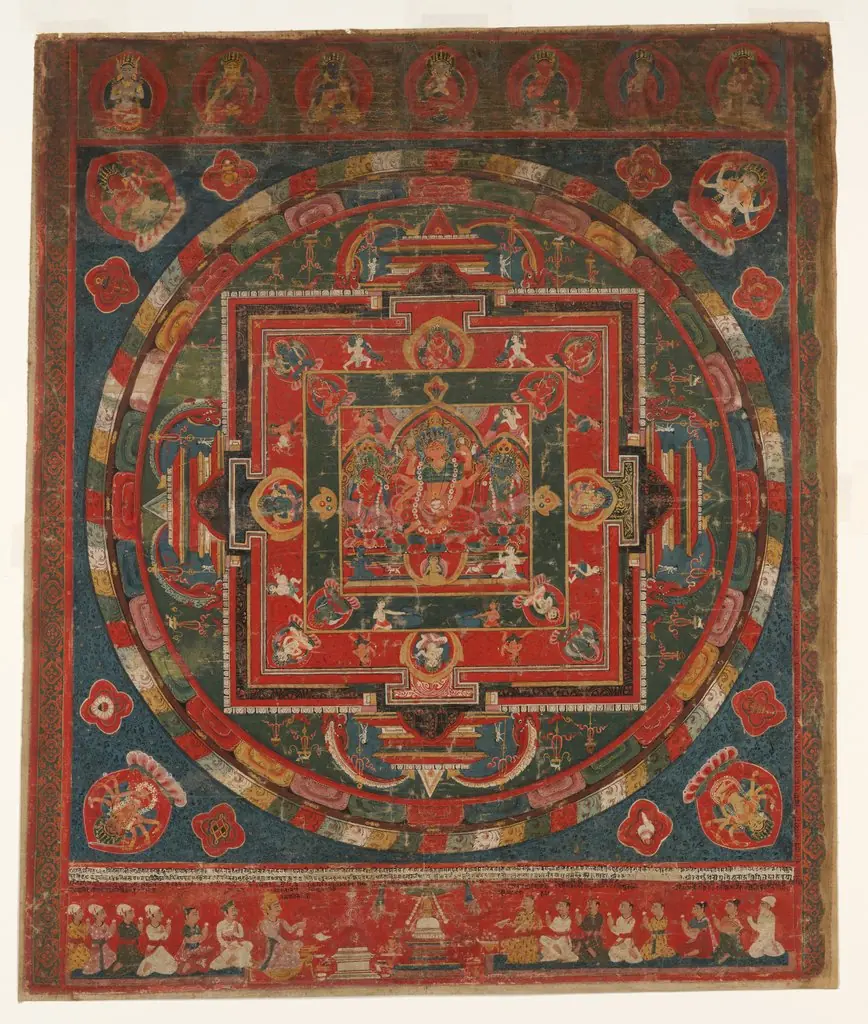
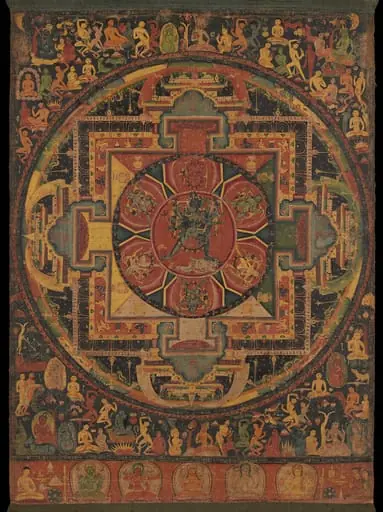
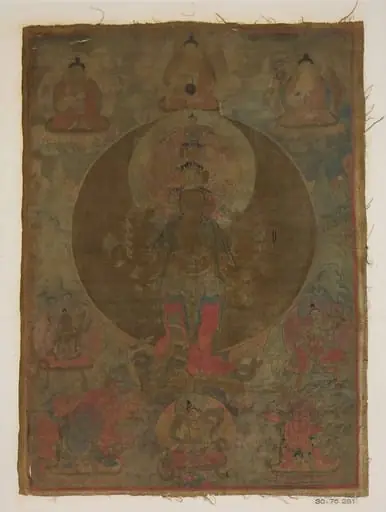
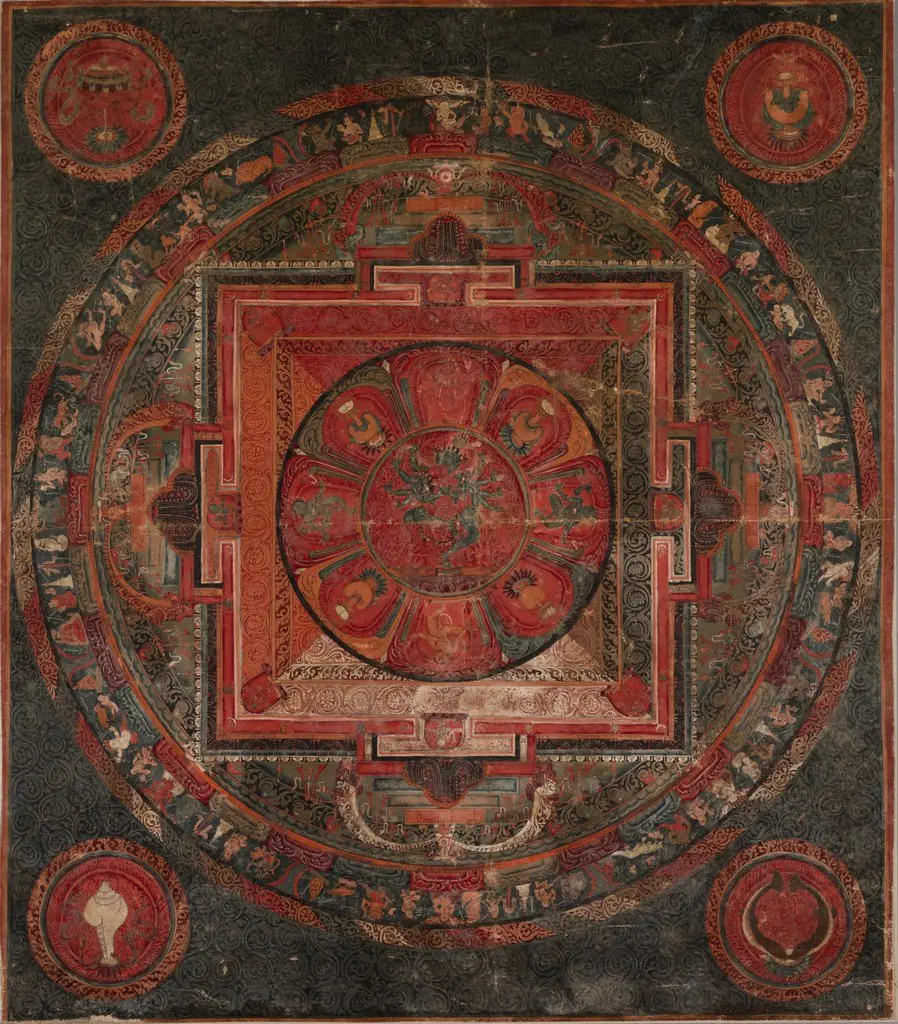
This untitled painting, rendered in green and orange on silk, depicts a seated Buddha accompanied by two attendant figures.
This untitled painting, rendered in green and orange on silk, depicts a seated Buddha accompanied by two attendant figures. Its discovery in a cave in Dunhuang, a significant site for Buddhist art, suggests its role as a devotional object. The work is notable for the enduring vibrancy of its colors, a testament to the artist's choice of durable mineral pigments, which have maintained their brightness over two centuries.
Subject & Meaning
The central image of a seated Buddha, flanked by two holy figures, is a common motif in Buddhist iconography. This arrangement typically represents the Buddha in a state of meditation or teaching, surrounded by bodhisattvas or disciples who embody compassion and wisdom. Such depictions served as focal points for devotion and contemplation for pilgrims and practitioners, offering a visual aid for spiritual practice.
Technique & Style
Executed on a silk scroll, this painting employs a palette dominated by soft green and orange hues. The remarkable preservation of these colors, which remain bright after two centuries, is attributed to the use of mineral pigments. These natural earth and stone-derived colors are known for their exceptional lightfastness and resistance to fading, a quality often valued in religious art intended for long-term veneration and display.
History & Provenance
This painting was discovered within one of the numerous cave temples at Dunhuang, a crucial oasis town situated along the Silk Road. Dunhuang served as a major center for Buddhist pilgrimage and cultural exchange, where travelers and devotees often commissioned or left behind thousands of Buddhist artworks. The painting's presence there indicates its function within a devotional context for those passing through the region.
Context
The artwork belongs to a vast collection of Buddhist paintings and sculptures found in the Dunhuang caves, a site that represents a rich repository of Central Asian and Chinese Buddhist art. These works collectively illustrate the artistic and religious traditions prevalent along the Silk Road, reflecting influences from various cultures. Its style and subject matter align with broader artistic trends seen in the region, including those connected to Tibetan Buddhist art.
Artist & collection