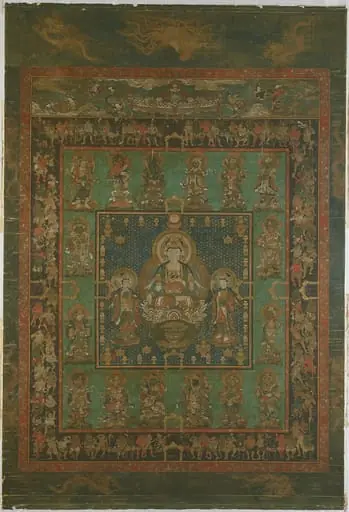
Artwork
Untitled
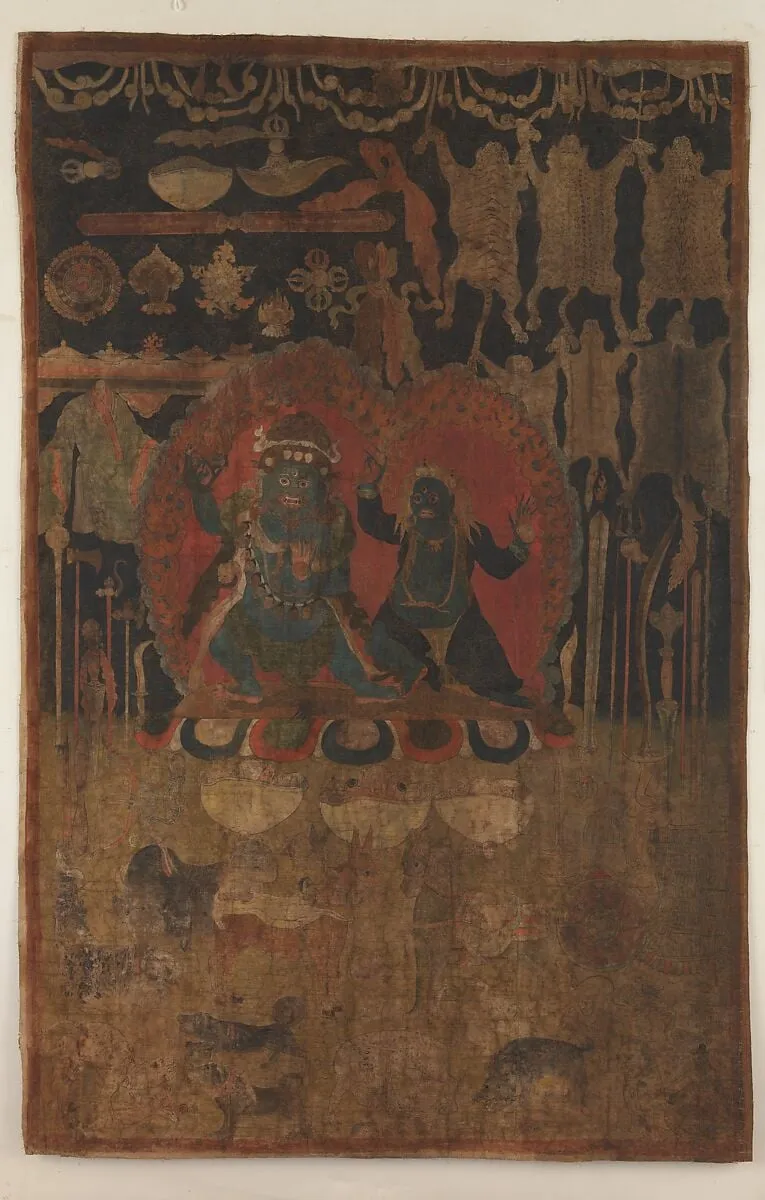
Untitled is a distemper painting. It dates from 1635 and is held in the collection of the Metropolitan Museum of Art.
About this work
Overview
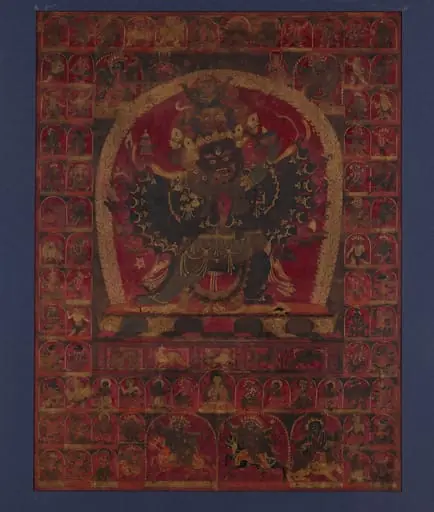
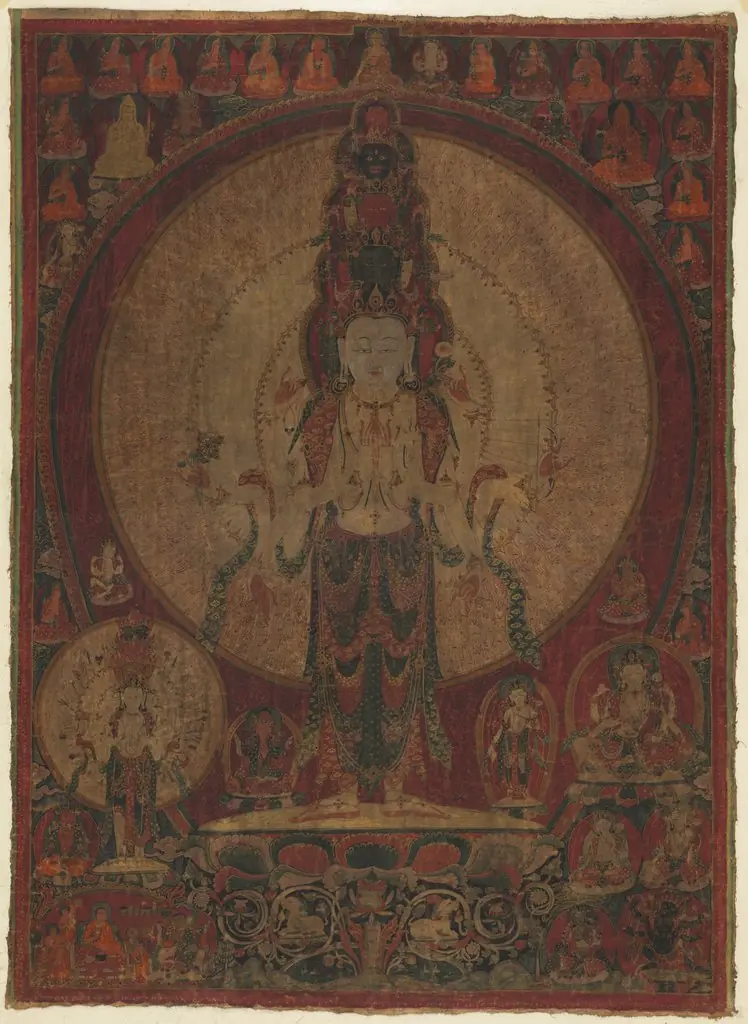
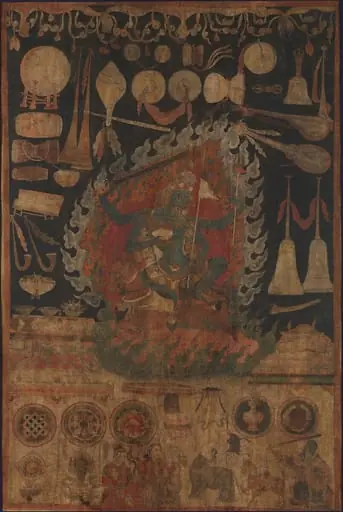
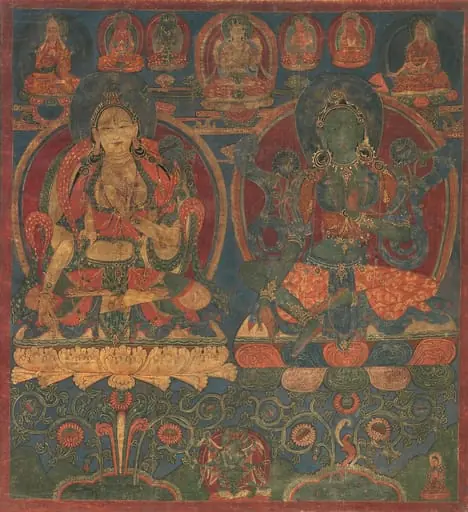
This untitled painting, rendered in distemper and ink on cloth, depicts a multi-armed deity. The central figure, characterized by blue skin, sits upon a lotus blossom, encircled by flickering flames. Its serene expression contrasts with the various implements held in its hands, including a sword and a skull, presenting a complex visual for contemplation.
Subject & Meaning
Seated on a lotus, a symbol of purity, the deity is surrounded by flames, which often signify wisdom or transformation.
The artwork portrays a four-armed, blue-skinned god, a common representation within Tibetan Buddhist iconography. Seated on a lotus, a symbol of purity, the deity is surrounded by flames, which often signify wisdom or transformation. The objects held, such as a sword and a skull, are symbolic attributes that convey specific aspects of the deity's power and teachings, intended to aid meditative practice.
Technique & Style
The artist employed distemper, a paint made by mixing pigments with animal glue, along with ink on a cloth support. This choice of medium ensured that the colors would retain their vibrancy, particularly when viewed in the dim, flickering light of temple candles. The distinct, sharp outlines of the figures contribute to a clear and defined aesthetic, designed to facilitate focused meditation by monks.
Context
This painting was created specifically for display within a Tibetan Buddhist temple. Its function extended beyond mere decoration, serving as a visual aid for spiritual practice. The precise rendering of the deity and its attributes provided a focal point for monks, guiding their contemplation and understanding of complex Buddhist principles through the visual narrative presented.
Artist & collection