Artwork
Untitled
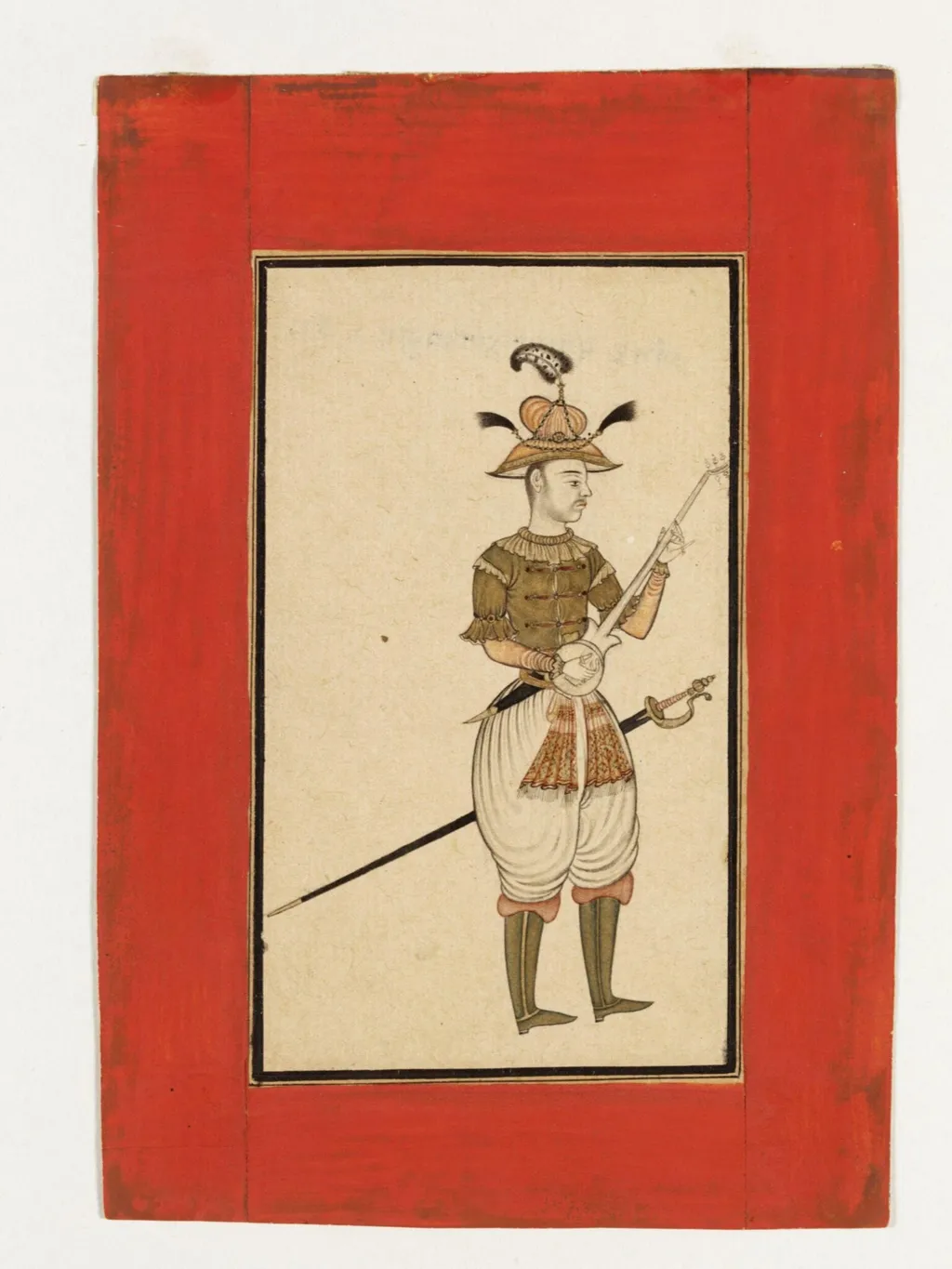
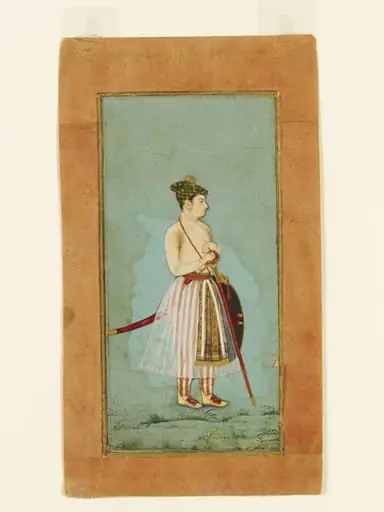
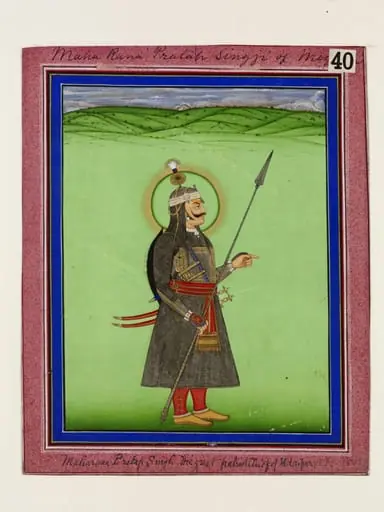
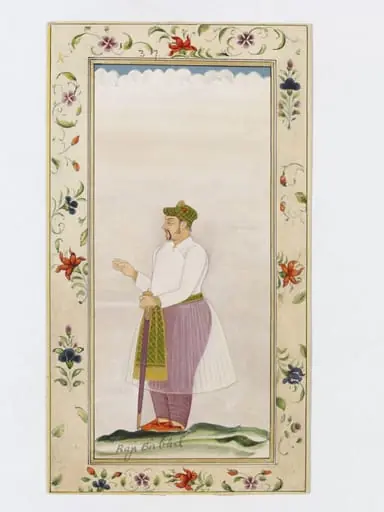
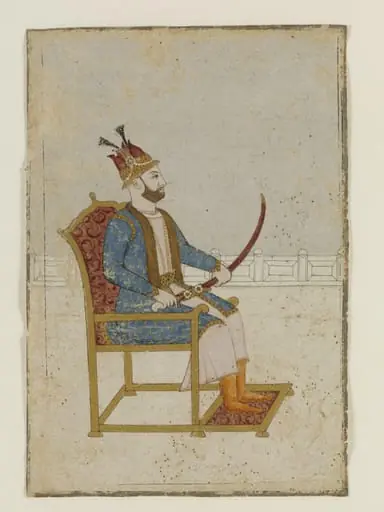
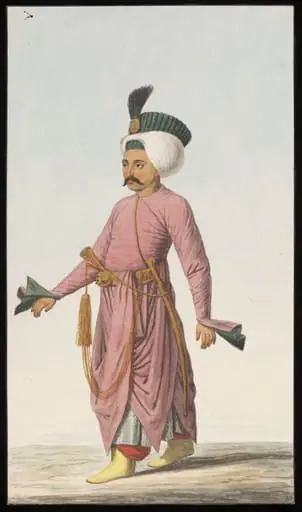
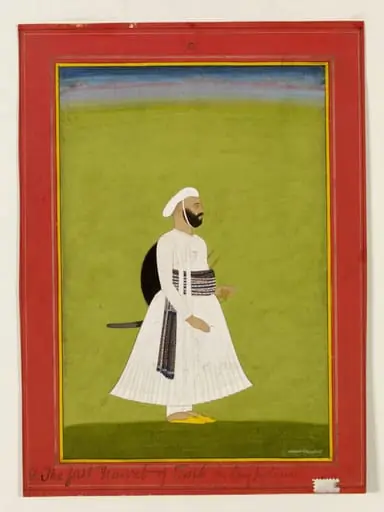
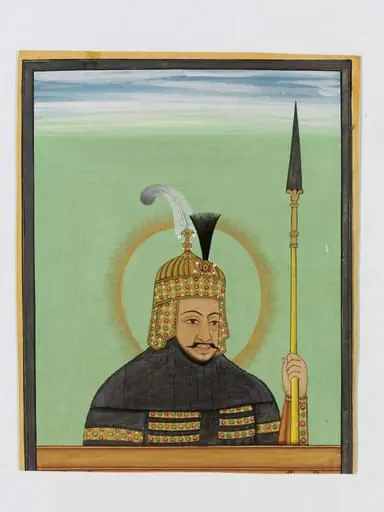
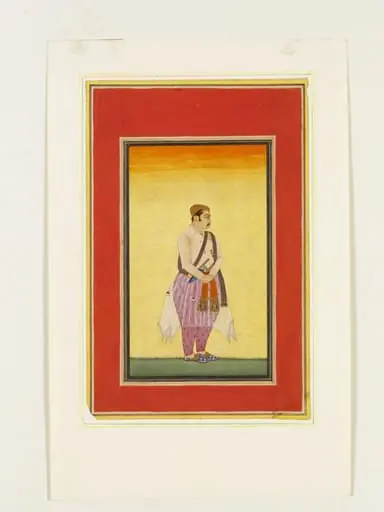
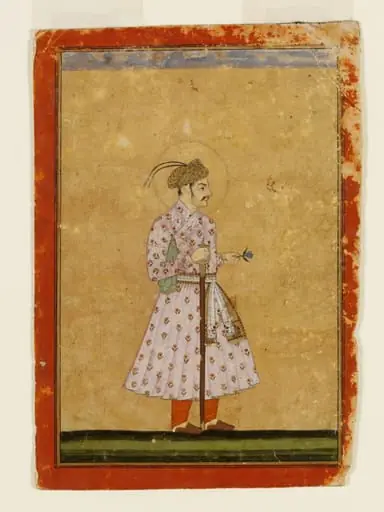
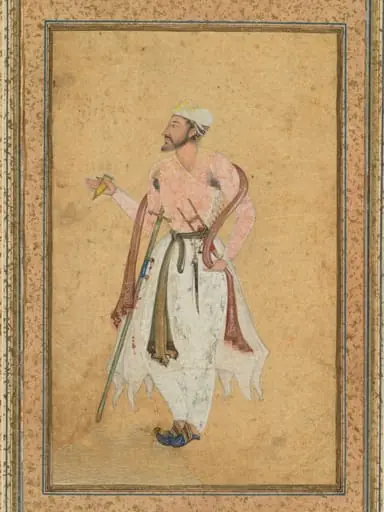
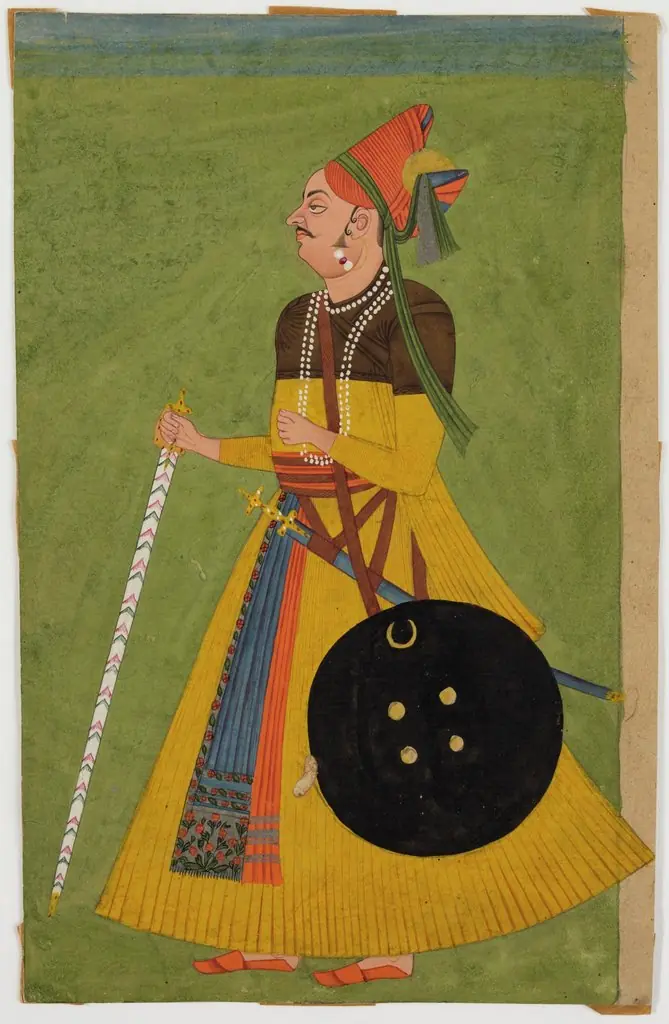
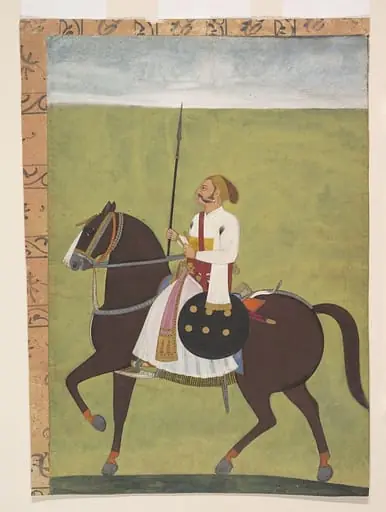
Untitled is a paint painting by the Baroque artist Unknown. It dates from 1694 and is held in the collection of the Victoria and Albert Museum. Created in 1694, this opaque watercolor on paper presents a solitary figure in a vividly colored, minimally detailed setting.
About this work
Overview
Created in 1694, this opaque watercolor on paper presents a solitary figure in a vividly colored, minimally detailed setting.
Created in 1694, this opaque watercolor on paper presents a solitary figure in a vividly colored, minimally detailed setting. The subject stands within a red-framed space, his attire and posture suggesting a hybrid identity. The work’s flat planes and strong outlines distinguish it from contemporaneous Western painting traditions, pointing instead to a regional aesthetic that absorbed and reinterpreted foreign visual elements.
Subject & Meaning
The figure, dressed in a fusion of European and Asian garments, holds a curved sword and rests his other hand on a small figure—possibly a child or animal—suggesting authority or guardianship. His attire, including a feathered hat and puffy sleeves, blends motifs from distant cultures, implying a figure of cross-cultural interaction, perhaps a diplomat, traveler, or local elite adopting foreign symbols of status.
Technique & Style
The artist employed opaque watercolor to achieve saturated, unmodulated hues with sharp, clean edges. Forms are defined by bold contours rather than shading or perspective, creating a decorative, almost graphic quality. This approach contrasts with the chiaroscuro and naturalism dominant in European Baroque painting, reflecting a distinct local sensibility that prioritized symbolic clarity over illusionistic depth.
History & Provenance
The painting’s origin is tied to a region where European traders and missionaries interacted with local courts during the late 17th century. Its survival suggests it was valued within a collector’s context, possibly commissioned by someone with access to international goods or imagery. No documented ownership before the 20th century is known, but its style aligns with regional artistic responses to global contact.
Context
In the late 1600s, portraiture in many Asian courts began incorporating foreign dress and objects as markers of prestige. This work reflects a broader trend where local artists adapted European visual elements—not as copies, but as symbols within their own cultural frameworks. The absence of landscape or architectural detail focuses attention on the figure as an emblem of hybrid identity.
Legacy
The painting stands as a quiet testament to early global exchange in visual culture. Its stylistic choices, distinct from both Western and traditional regional norms, reveal how artists navigated new influences without abandoning local conventions. It remains a key example of how identity and power were visually negotiated in borderland contexts during the early modern period.
Artist & collection

 Domestic Scene
 Giacomo and Cardinal Marco, investing Andrea, Abbot of San Zeno, with his Benefice
 The Nymph of Fontainebleau
 Portrait of a Woman
 Madonna and Child with Saints in the Enclosed Garden
 Venus and Minerva
 Family Group of Four on Sofa
 Wall painting from Room H of the Villa of P. Fannius Synistor at Boscoreale