Artwork
Untitled
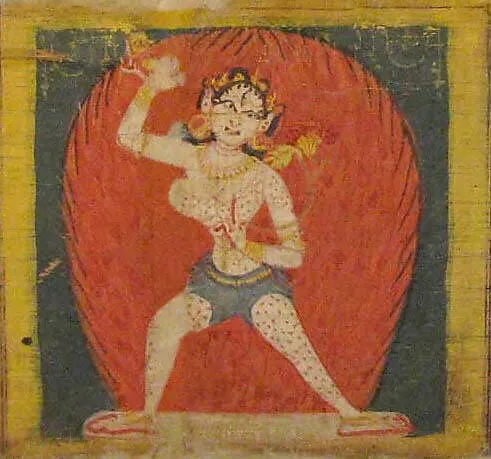
Untitled is a watercolor painting. It dates from 1090 and is held in the collection of the Metropolitan Museum of Art.
About this work
Overview
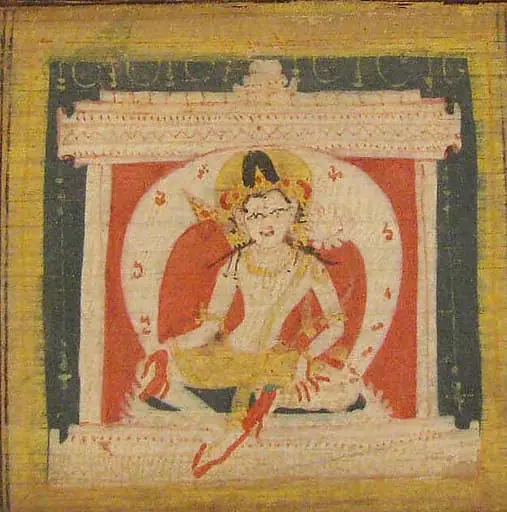
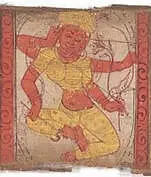
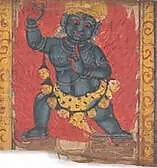
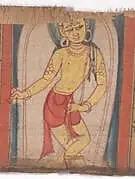
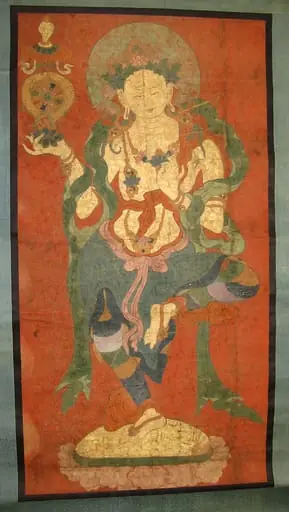
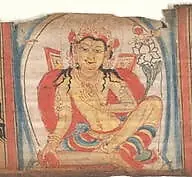
This untitled painting, created over nine centuries ago in Bengal or Bangladesh, depicts a seated Buddha using opaque watercolor on a palm leaf. Its small scale and vibrant colors, achieved through thickly layered pigments, suggest it once formed part of a larger narrative manuscript. Despite its age, the intricate details of the figure remain remarkably distinct.
Subject & Meaning
The artwork portrays a Buddha figure, characterized by golden skin and a red robe. His hands are positioned in a specific gesture, signifying teaching or exposition. Such images were integral to Buddhist narratives, often illustrating sacred texts and conveying core tenets of the faith to practitioners.
Technique & Style
Executed in opaque watercolor on a prepared palm leaf, the painting demonstrates a sophisticated application of pigment. The colors are built up in thick layers, a technique that imparts a luminous quality to the surface. This method allowed for precise rendering of details, contributing to the enduring clarity of the image even after centuries.
History & Provenance
Dating back over 900 years, this painting originates from the historical region of Bengal, encompassing parts of modern-day India and Bangladesh. It represents a significant example of early Buddhist manuscript illumination from the area. The survival of such delicate materials over centuries provides valuable insight into the artistic practices of the period.
Artist & collection