Artwork
Untitled
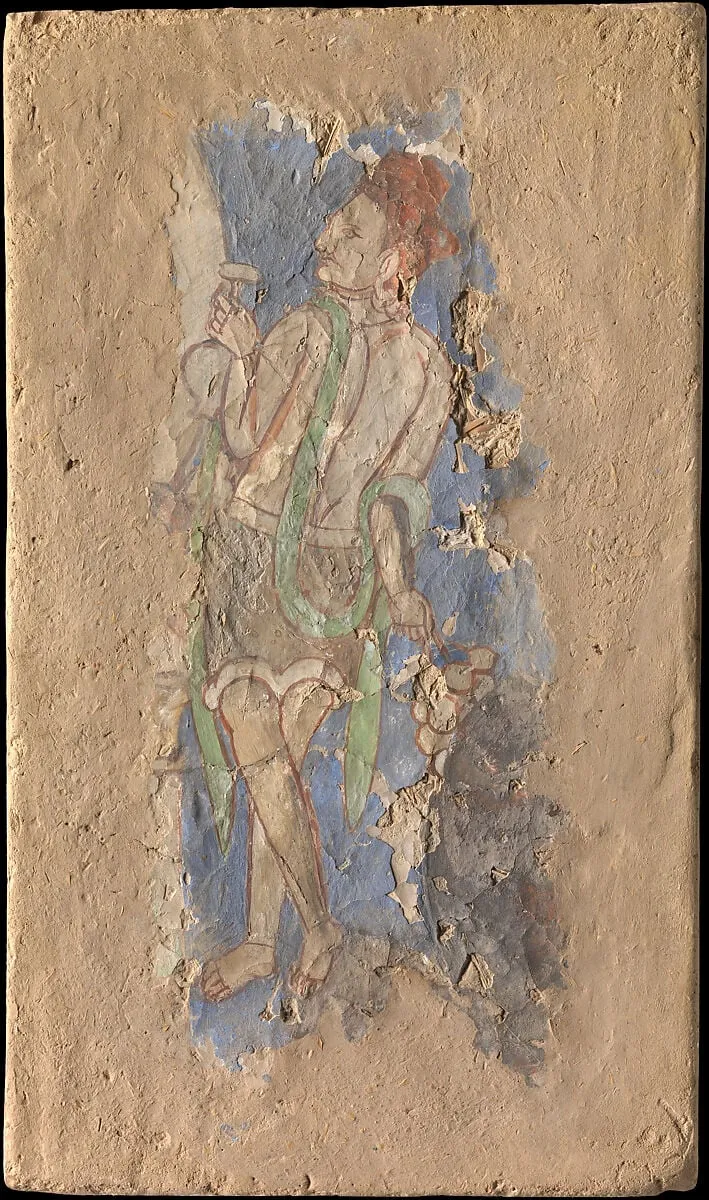
Untitled is an unspecified painting. It dates from 600 and is held in the collection of the Metropolitan Museum of Art.
About this work
Overview
The artwork's enduring presence is partly due to the natural earth pigments used, which have largely retained their original intensity over centuries.
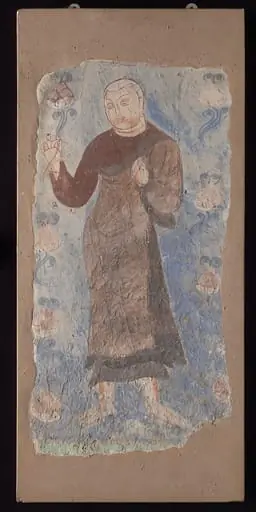
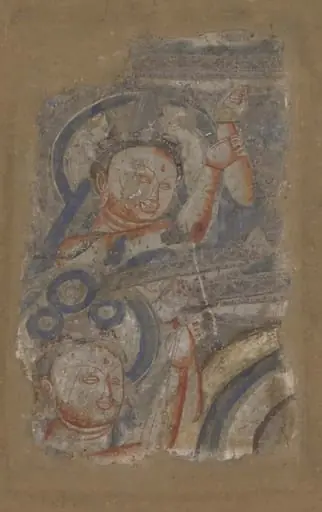
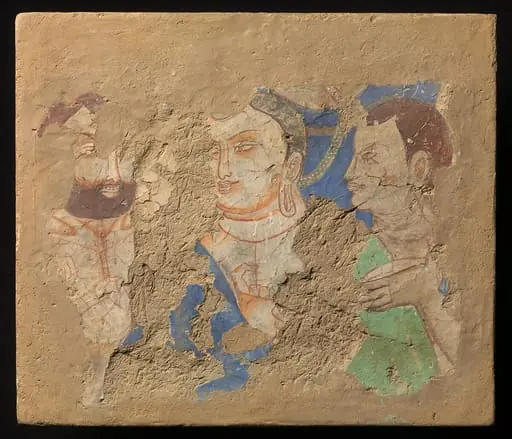
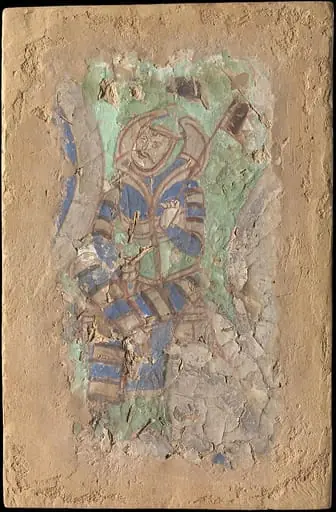
This untitled painting, executed with pigments on a mud plaster surface, depicts a human face. Created over a millennium ago in a region now part of western China, it originally adorned the interior of a cave temple. The artwork's enduring presence is partly due to the natural earth pigments used, which have largely retained their original intensity over centuries. Its simple yet striking visual qualities offer insight into ancient artistic practices.
Subject & Meaning
The painting presents a man's face, characterized by wide eyes and a substantial beard. His complexion appears ruddy, suggesting exposure to the elements. Rendered directly onto a coarse mud-plaster wall, the portrayal is direct and unadorned. The artist focused on essential features, conveying a distinct human presence without elaborate detail or symbolic complexity, allowing the viewer to engage with the raw depiction.
Technique & Style
The artist employed a straightforward technique, applying natural pigments directly onto a rough mud-plaster substrate. The palette is restricted to a few fundamental colors—red, brown, and black—without the use of shading or tonal variations. This approach results in a flat, graphic quality that emphasizes outlines and distinct color areas rather than three-dimensional form. The durability of the earth-derived pigments has preserved the artwork's original vibrancy.
Context
This painting originated within a cave temple complex in a geographical area corresponding to present-day western China. Unlike art intended for a private collection or public gallery, its purpose was integral to the sacred space it inhabited. Such works were part of a larger devotional environment, contributing to the spiritual atmosphere of the temple rather than serving as standalone objects for aesthetic contemplation.
Legacy
Works similar to this painting can be found throughout the Xinjiang Uyghur Autonomous Region, a historical crossroads in Central Asia. These regional examples collectively illustrate a distinct artistic tradition that flourished in cave temples across the area. Studying these related sites provides a broader understanding of the materials, techniques, and iconographies prevalent in the region's ancient art.
Artist & collection