Artwork
Untitled
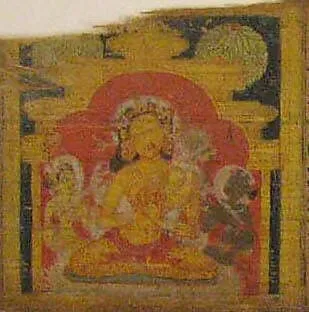
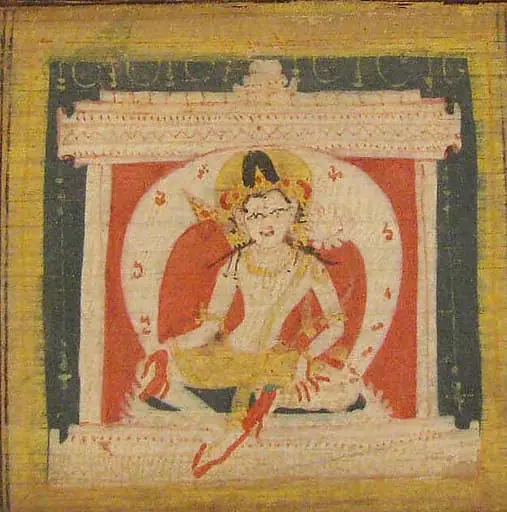
Untitled is a watercolor painting. It dates from 1090 and is held in the collection of the Metropolitan Museum of Art.
About this work
Overview
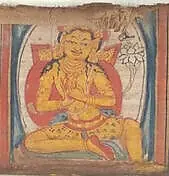
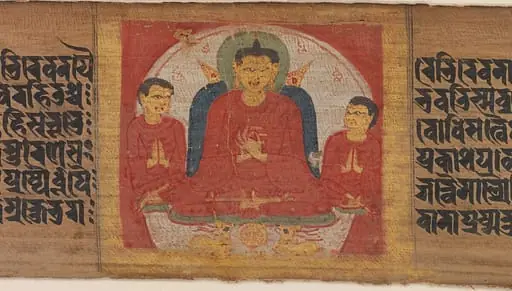
This untitled painting, crafted from opaque watercolor on a palm leaf, dates back over nine centuries. Originating from the Bengal region, it depicts a monk in red robes seated beneath a tree, with one hand raised in a gesture. The artwork offers insight into early painting traditions from a period predating the widespread use of paper in the area, representing a significant historical artifact.
Subject & Meaning
The central figure in this miniature painting is a monk, identifiable by his red robes, shown in a meditative posture under a tree. His raised hand likely conveys a specific mudra or teaching gesture, common in Buddhist iconography. This imagery suggests the artwork's connection to Buddhist practices and narratives prevalent in the region during its creation, reflecting spiritual themes.
Technique & Style
This method highlights the sophisticated artistic practices of the period, adapting available materials to achieve rich visual textures and vibrant depictions.
The artist employed opaque watercolor on a palm leaf, a medium that allowed for a dense, almost gouache-like application of pigment. Colors were layered with precision, particularly evident in the monk's robes, where the technique creates an effect of luminosity. This method highlights the sophisticated artistic practices of the period, adapting available materials to achieve rich visual textures and vibrant depictions.
History & Provenance
Created more than 900 years ago, this painting originates from the historical Bengal region, encompassing parts of modern-day Bengal and Bangladesh. Its substrate, a palm leaf, reflects the artistic conventions of an era when paper was not yet a common material for painting in this part of South Asia, underscoring its historical significance as a rare survival.
Artist & collection