Artwork
Untitled: (British soldiers, man on palequin, and indigenous workers); (ornate buildings, verso)
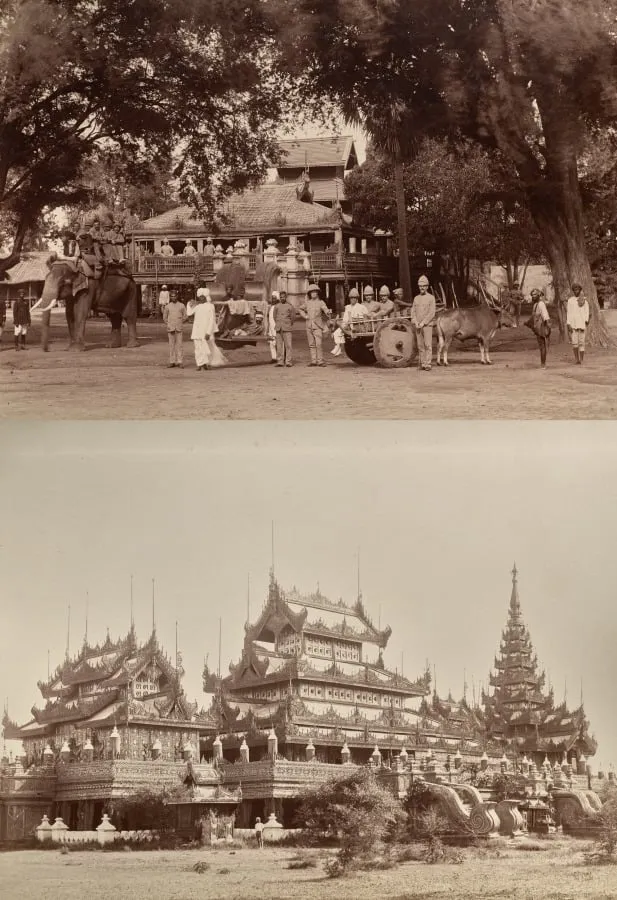
Untitled: (British soldiers, man on palequin, and indigenous workers); (ornate buildings, verso) is a photography by the Impressionist artist Unknown. It dates from 1880 and is held in the collection of the Cleveland Museum of Art. This photograph captures two distinct scenes on a single surface.
About this work
Overview
The composition suggests a documentary intent, recording spatial and social relationships within a colonial context through careful framing and detail.
This photograph captures two distinct scenes on a single surface. The upper register depicts a procession featuring British military personnel, local laborers, an elephant, and a man carried on a palanquin before a colonial-era structure. The lower register presents an architectural view of ornate, spired buildings. The composition suggests a documentary intent, recording spatial and social relationships within a colonial context through careful framing and detail.
Subject & Meaning
The imagery juxtaposes colonial authority and indigenous presence: soldiers and laborers stand in proximity, while the palanquin-borne figure may signify local elite status. The architectural backdrop, rich in ornamentation, reflects regional building traditions. Together, the scenes imply a hierarchy of power and cultural visibility, with the built environment serving as both setting and symbol of imperial and local coexistence.
Technique & Style
The photograph employs sharp focus and high contrast to render textures—fabric folds, stone carvings, animal hide—with precision. Lighting is even, minimizing shadows to emphasize surface detail. The dual composition, divided horizontally, reflects a methodical approach to recording both human activity and architectural form, aligning with 19th-century ethnographic and topographical practices rather than artistic stylization.
History & Provenance
The work likely originates from British India during the mid-to-late 1800s, when photographic surveys of landscapes and populations were commissioned by colonial administrators. Its dual imagery suggests it may have been part of a larger archive, possibly produced by a military or civil service photographer. The verso’s architectural focus indicates an interest in documenting structures for administrative or scholarly purposes.
Context
Photography in colonial India often served as a tool for classification and control, recording people and places for imperial records. This image fits within a broader practice of visual ethnography, where architecture and human figures were cataloged to assert knowledge and dominance. The presence of both soldiers and laborers reflects the social stratification inherent in colonial administration.
Legacy
As a historical document, the photograph contributes to the visual record of colonial India’s material and social landscapes. It is not celebrated as art but valued for its evidentiary quality, offering insight into the dynamics of power, labor, and architecture under British rule. Its preservation in institutional collections underscores its role as a primary source for postcolonial studies.
Artist & collection

 Domestic Scene
 Giacomo and Cardinal Marco, investing Andrea, Abbot of San Zeno, with his Benefice
 The Nymph of Fontainebleau
 Portrait of a Woman
 Madonna and Child with Saints in the Enclosed Garden
 Venus and Minerva
 Family Group of Four on Sofa
 Wall painting from Room H of the Villa of P. Fannius Synistor at Boscoreale
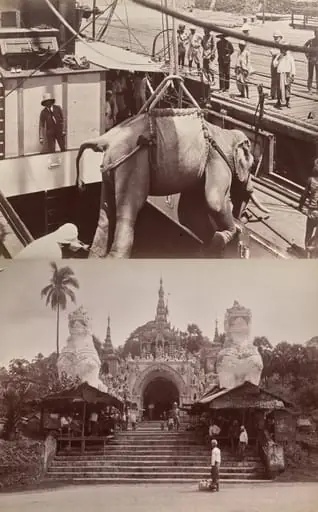 Untitled: (elephant being loaded onto a ship, recto); (steps and building, verso)
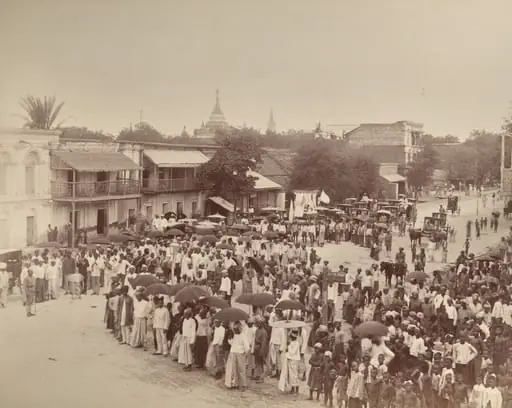 Untitled (procession or crowd) (verso)
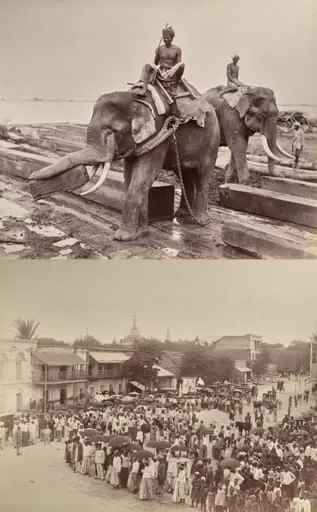 Untitled: (elephants moving blocks of wood, recto); (procession or crowd, verso)
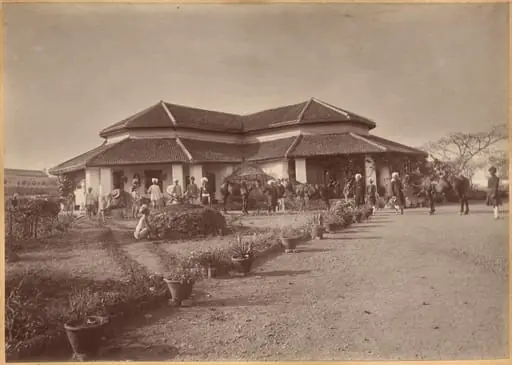 Major Creagh's home, Mhon (verso)
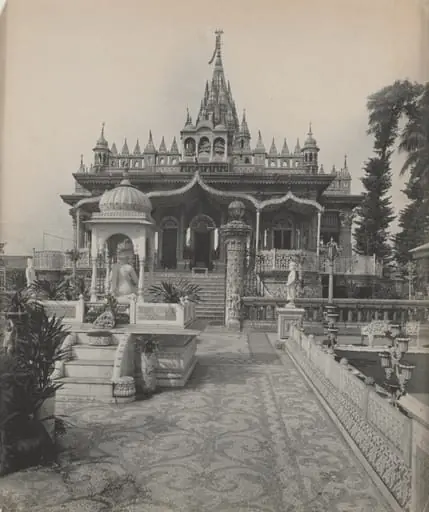 Jain Temple, Calcutta
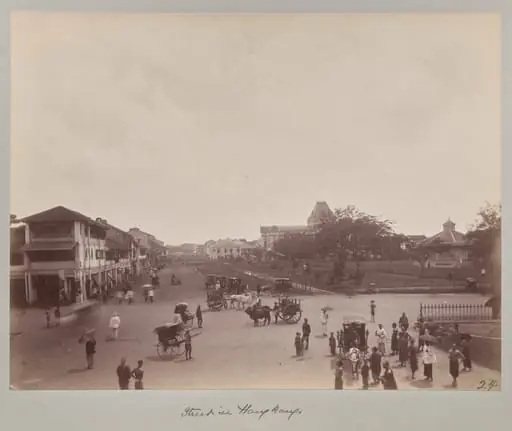 Hong Lim Green, Singapore
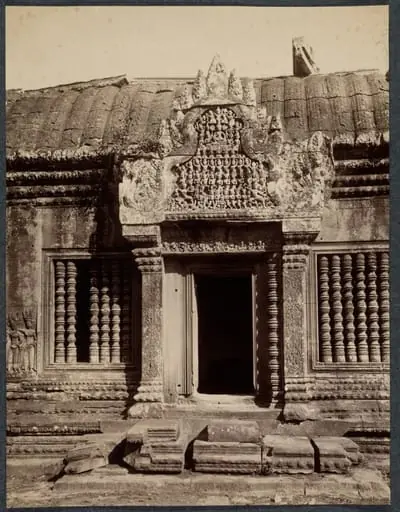 Doorway Through an Inner Enclosure, Angkor Wat, Cambodia