Artwork
Untitled (Case with portraits of a man and woman and hair ornaments)
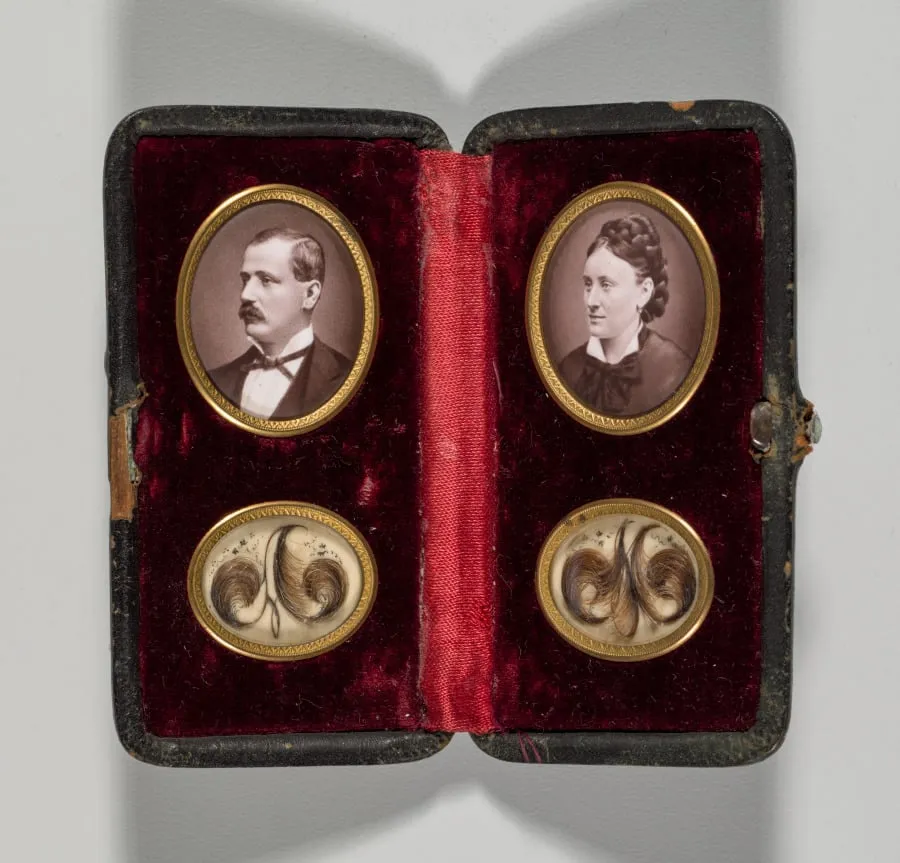
Untitled (Case with portraits of a man and woman and hair ornaments) is a photography by the Impressionist artist Unknown. It dates from 1874 and is held in the collection of the Cleveland Museum of Art.
About this work
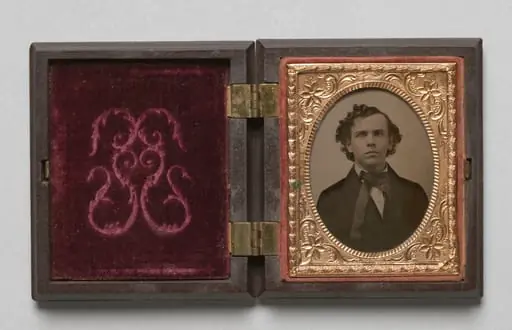
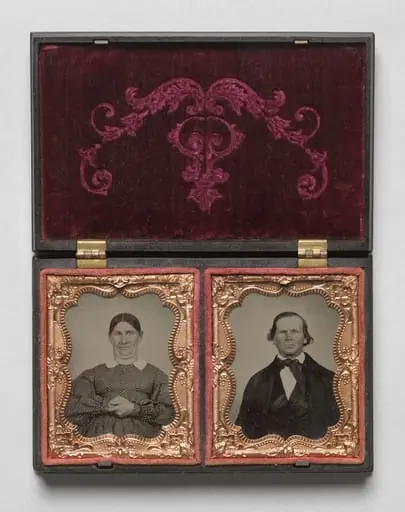
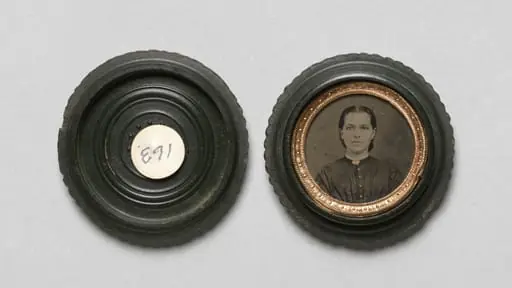
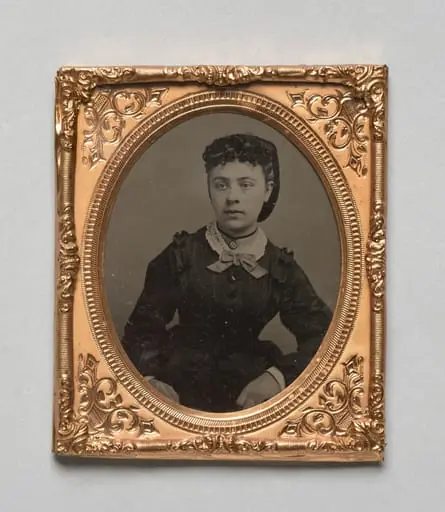
This small case holds two tiny portraits—one of a man, one of a woman—and two swirls of hair shaped like the letters A and M.
This small case holds two tiny portraits—one of a man, one of a woman—and two swirls of hair shaped like the letters A and M. The hair looks real, like it was cut and glued down.
People in the 1800s often saved hair from loved ones as keepsakes. They’d weave it into jewelry or tuck it behind glass like this. The portraits here are baked onto enamel, a shiny, hard surface that lasts.
If you like how personal this feels, look up *19th century* keepsakes next.
Overview
This small, ornate case contains two miniature photographic portraits, one of a man and one of a woman, alongside arrangements of hair forming the initials 'A' and 'M'. The overall composition suggests a memorial or memento, likely commemorating a couple.
Subject & Meaning
The juxtaposition of the couple's portraits with their hair, shaped into initials, implies a symbolic union. This arrangement was common in 19th-century mementos, serving as a personal, intimate keepsake, possibly for remembrance or mourning.
Technique & Style
The portraits are rendered on vitrified enamel, a durable technique involving baking images onto an enamel surface, now predominantly used for funerary markers. The hair arrangements appear to be real, carefully clipped and adhered to the case.
History & Provenance
Created in the late 19th century, this piece aligns with the era's practice of combining photography and hair clippings in memorial or memento pieces, often enclosed in jewelry or framed cases.
Context
Within the broader context of Victorian-era mourning customs, this case reflects the practice of preserving personal relics, like hair, as a means of retaining a tangible connection to loved ones, living or deceased.
Artist & collection

 Domestic Scene
 Giacomo and Cardinal Marco, investing Andrea, Abbot of San Zeno, with his Benefice
 The Nymph of Fontainebleau
 Portrait of a Woman
 Madonna and Child with Saints in the Enclosed Garden
 Venus and Minerva
 Family Group of Four on Sofa
 Wall painting from Room H of the Villa of P. Fannius Synistor at Boscoreale