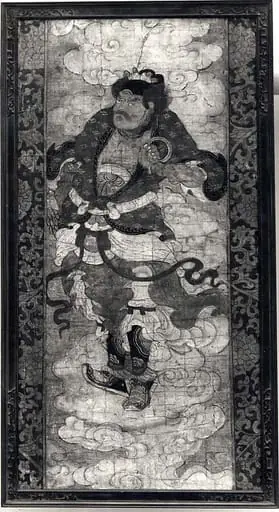
Artwork
Untitled
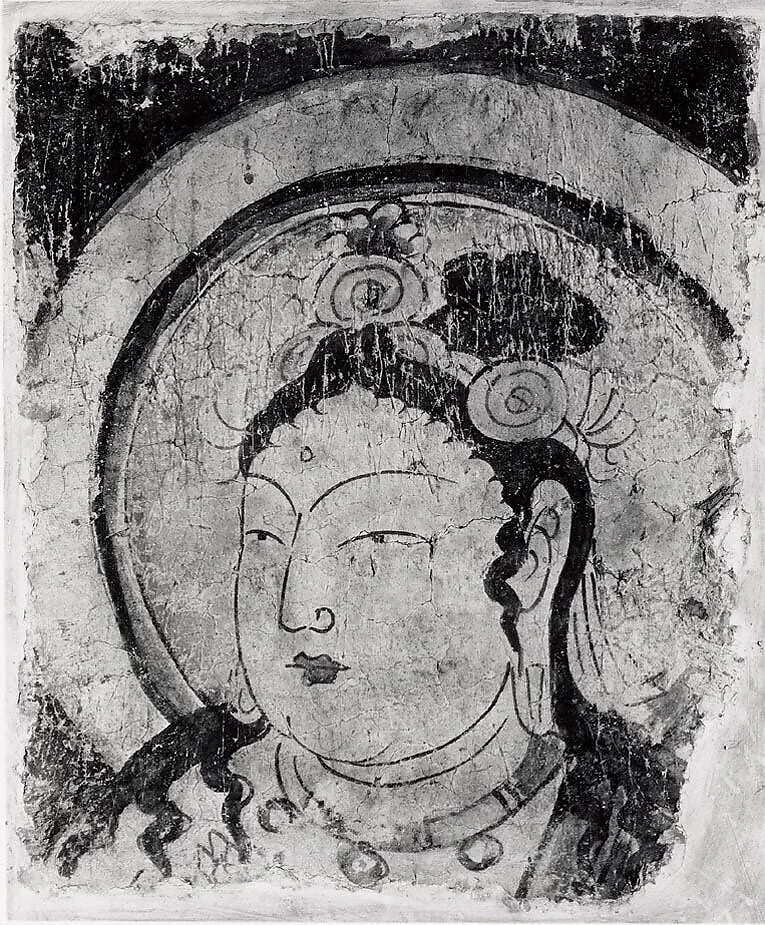
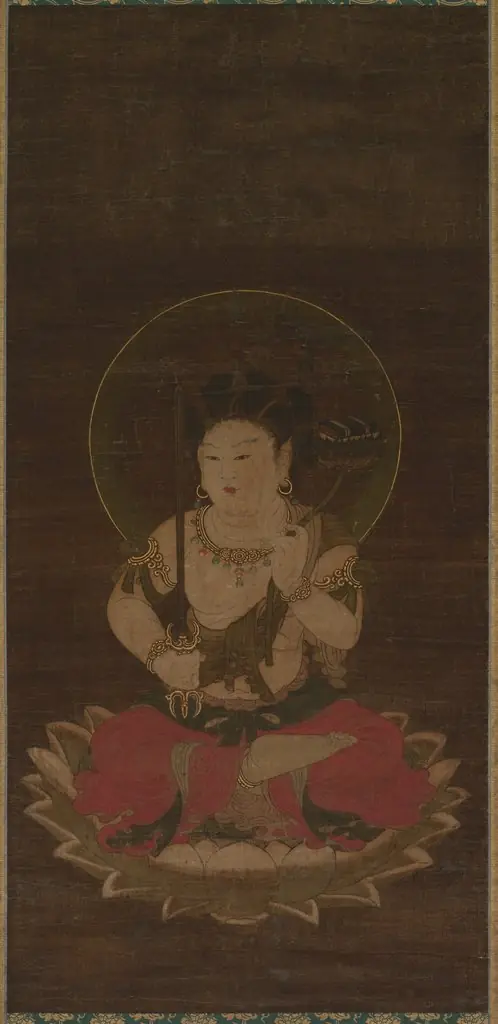
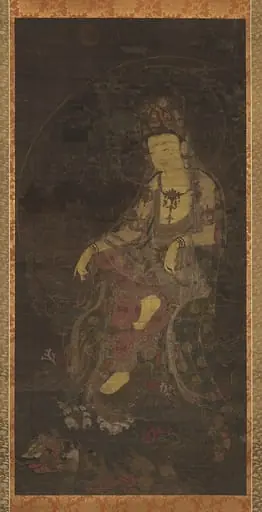
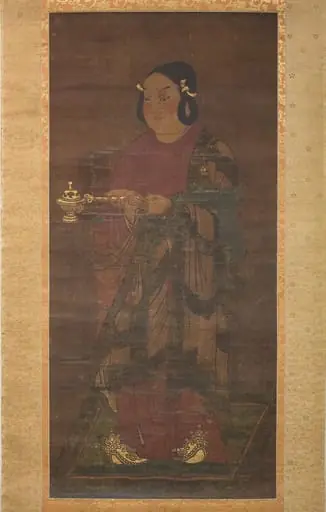
Untitled is an unspecified painting. It dates from 900 and is held in the collection of the Metropolitan Museum of Art.
About this work
Overview
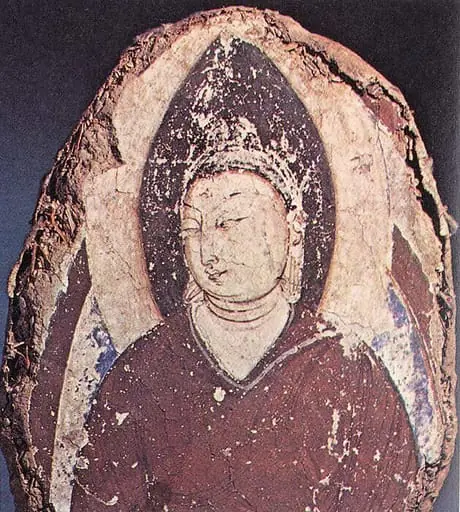
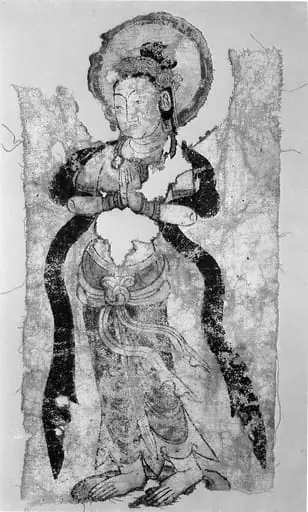
This work is a water‑based pigment painting on a mud plaster surface, originally part of a larger mural in a Buddhist cave complex in Xinjiang, China. Dated to roughly the 10th‑11th century, the fragment now measures only the central figure, a bodhisattva, whose serene visage remains, while the lower portion, including the hands, has been lost.
Subject & Meaning
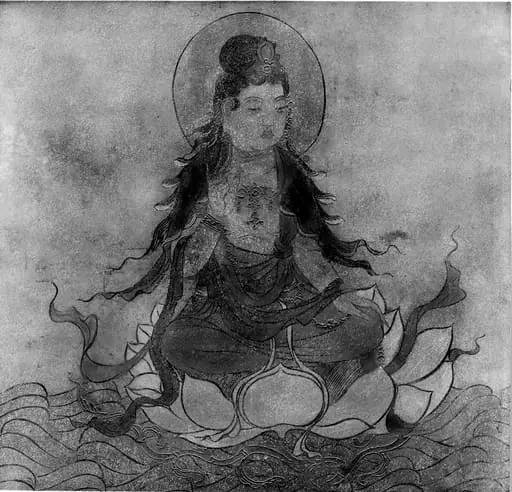
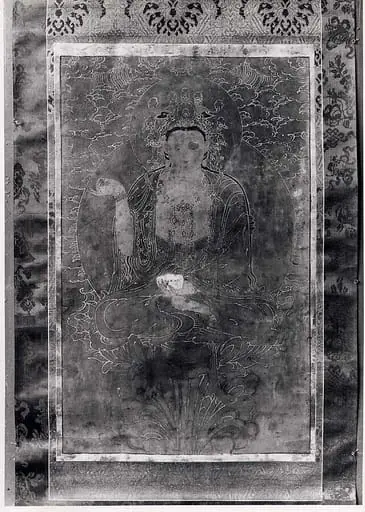
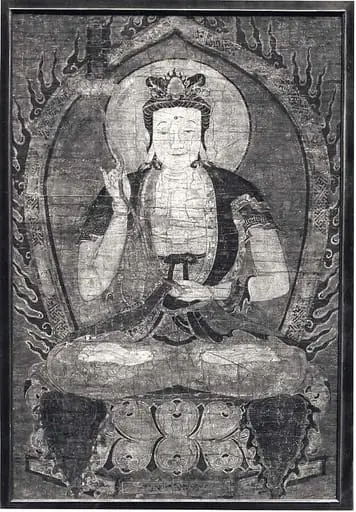
The central figure represents a bodhisattva, a compassionate being on the path to enlightenment, depicted in a flowing robe and a luminous halo. The calm expression and graceful posture convey spiritual serenity, while the gold accents on the halo and jewelry emphasize the figure’s sacred status within Buddhist devotional practice.
Technique & Style
The artist employed thin, watery pigments that give the image a sketch‑like quality, allowing the underlying plaster to show through. Gold leaf was applied sparingly to highlight the halo and ornamental details, catching ambient light. The overall aesthetic reflects the delicate, translucent style characteristic of Central Asian Buddhist mural painting of the period.
History & Provenance
Excavated from a cave in Xinjiang, the fragment was once integrated into a larger wall composition. Over centuries the mural suffered damage; the lower portion was lost, and the surviving section was later removed, conserved, and framed for display. Its provenance traces back to the cave’s original monastic context before entering museum collections.
Context
The painting belongs to a network of cave sites along the Silk Road where Buddhist iconography flourished, often featuring numerous bodhisattvas in similar poses. These caves served both religious and artistic functions, providing visual aids for meditation and illustrating doctrinal narratives to traveling pilgrims and local communities.
Artist & collection