Artwork
Untitled

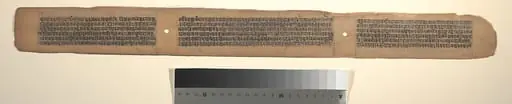
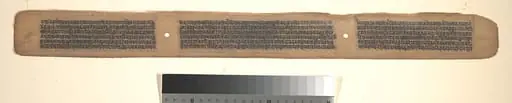
Untitled is an ink painting. It dates from 1090 and is held in the collection of the Metropolitan Museum of Art. The work consists of a rectangular fragment of palm leaf, its natural light‑brown hue and weathered edges indicating considerable age.
About this work
Overview
The work consists of a rectangular fragment of palm leaf, its natural light‑brown hue and weathered edges indicating considerable age. Across the surface runs black ink arranged in orderly rows, each line comprising a short passage of an unfamiliar script. The piece is presented as a painted object, though the primary emphasis lies in the written content rather than pictorial representation.
Subject & Meaning
The inked text appears to be a form of writing no longer in common use, suggesting the leaf served a documentary or ritual function. Without a deciphered translation, the precise subject remains speculative, yet the careful arrangement implies a deliberate record—perhaps a liturgical chant, a legal decree, or a literary excerpt preserved for posterity.
Technique & Style
The artist employed a simple yet durable medium: black ink applied with a fine brush or reed pen onto a prepared palm leaf. The leaf’s texture, slightly torn and worn, indicates a traditional substrate used in South and Southeast Asian manuscript cultures, where natural fibers were favored for their resilience and availability.
History & Provenance
Now part of the Metropolitan Museum of Art’s collection, the leaf’s acquisition details are not specified in the available data. Its material composition and script style place it within a broader corpus of ancient manuscript fragments, many of which entered museum holdings through early 20th‑century archaeological expeditions and private collectors.
Context
Palm‑leaf manuscripts were a common vehicle for recording religious, scientific, and administrative texts across regions such as India, Sri Lanka, and Indonesia. The fragment’s physical condition—lightly frayed edges and a muted palette—reflects the typical wear of objects that were handled, stored, and possibly re‑used over centuries.
Artist & collection