Artwork
Ursula's parents praying
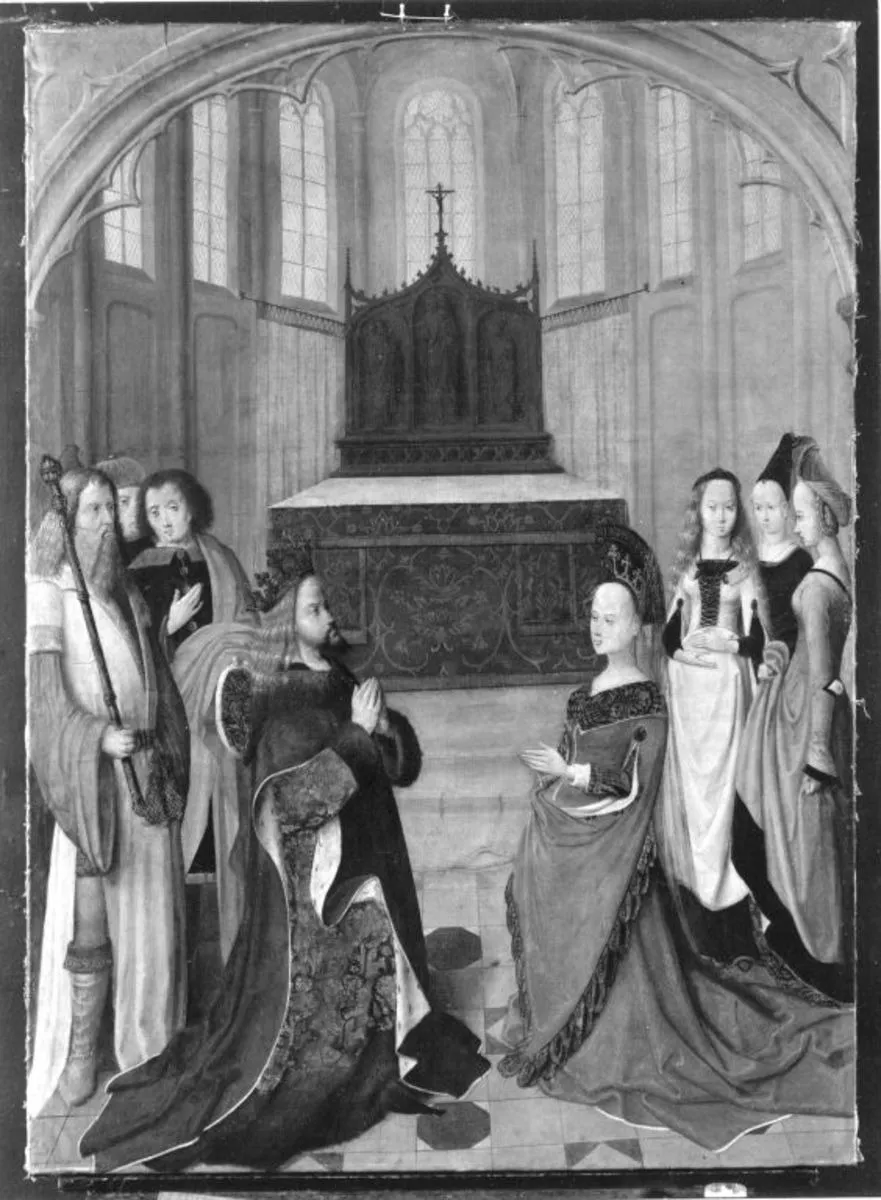
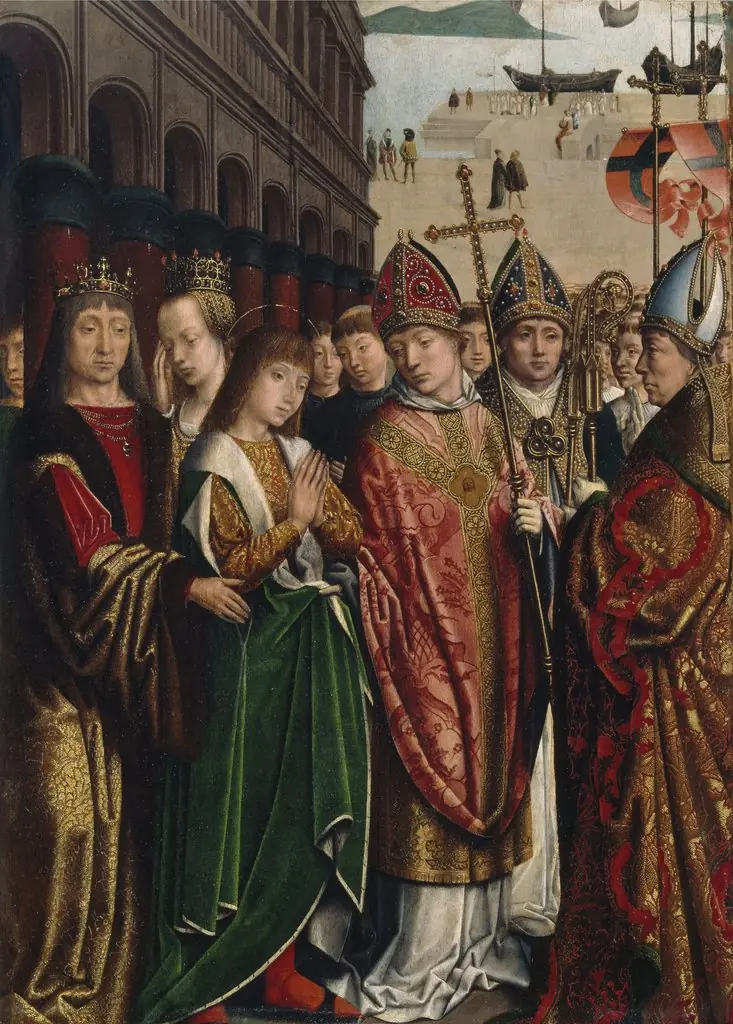
Ursula's parents praying is an unspecified painting by the Northern Renaissance artist Unknown. It dates from 1499 and is held in the collection of the Bavarian State Painting Collections. This painting depicts a quiet, solemn moment in a spacious interior, centered on a woman kneeling in prayer.
About this work
Overview
Surrounding figures, some kneeling, others standing, direct their attention toward her, creating a focused, hierarchical composition.
This painting depicts a quiet, solemn moment in a spacious interior, centered on a woman kneeling in prayer. Surrounding figures, some kneeling, others standing, direct their attention toward her, creating a focused, hierarchical composition. The architecture—tall windows and a high ceiling—enhances the sense of reverence, suggesting a domestic or ecclesiastical setting where personal devotion intersects with communal presence.
Subject & Meaning
The central figure, identified as Ursula, is shown in private prayer, surrounded by family members who observe in silence. The scene conveys a moment of spiritual intensity within a domestic context, possibly illustrating a rite of passage or a plea for divine intervention. The group’s stillness and alignment emphasize collective reverence, framing Ursula’s act as both personal and socially significant.
Technique & Style
The artist employs subtle contrasts of light and shadow to model forms and direct focus toward the central figure. Soft illumination falls across Ursula’s dress and the faces of those nearby, while deeper tones recede into the background. The restrained palette and controlled brushwork reflect a tradition of quiet, introspective portraiture, avoiding theatricality in favor of emotional restraint.
History & Provenance
The painting’s origins trace to a Northern European context in the late 16th or early 17th century, likely commissioned by a devout middle- or upper-class family. Its survival suggests it remained within private hands, possibly passed through generations as a devotional object. No documented public exhibition history is known prior to the 20th century.
Context
During this period, private prayer scenes in domestic interiors became more common among Protestant and Catholic households alike, reflecting a shift toward personal piety. While public altarpieces dominated church spaces, intimate works like this one catered to individual spiritual practice, blending familial identity with religious devotion in the home.
Legacy
The painting contributes to a broader genre of Northern European devotional art that prioritized quiet contemplation over dramatic narrative. Though not widely reproduced or studied, it exemplifies how religious sentiment was embedded in everyday domestic life, influencing later traditions of genre painting focused on interior spirituality.
Artist & collection

 Domestic Scene
 Giacomo and Cardinal Marco, investing Andrea, Abbot of San Zeno, with his Benefice
 The Nymph of Fontainebleau
 Portrait of a Woman
 Madonna and Child with Saints in the Enclosed Garden
 Venus and Minerva
 Family Group of Four on Sofa
 Wall painting from Room H of the Villa of P. Fannius Synistor at Boscoreale
 Der zwölfjährige Jesus im Tempel
 Flügel eines Kreuzaltares, Außenseite: Die hll. Helena und Sebastian
 The Marriage of the Virgin
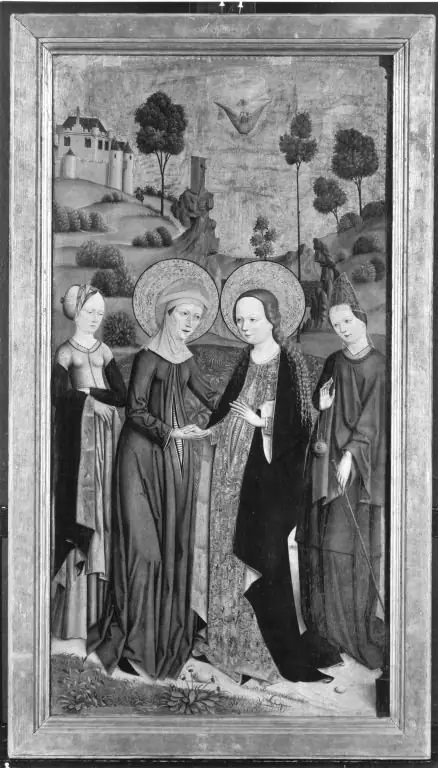 Heimsuchung Mariens Außenseite: Krönung Mariens
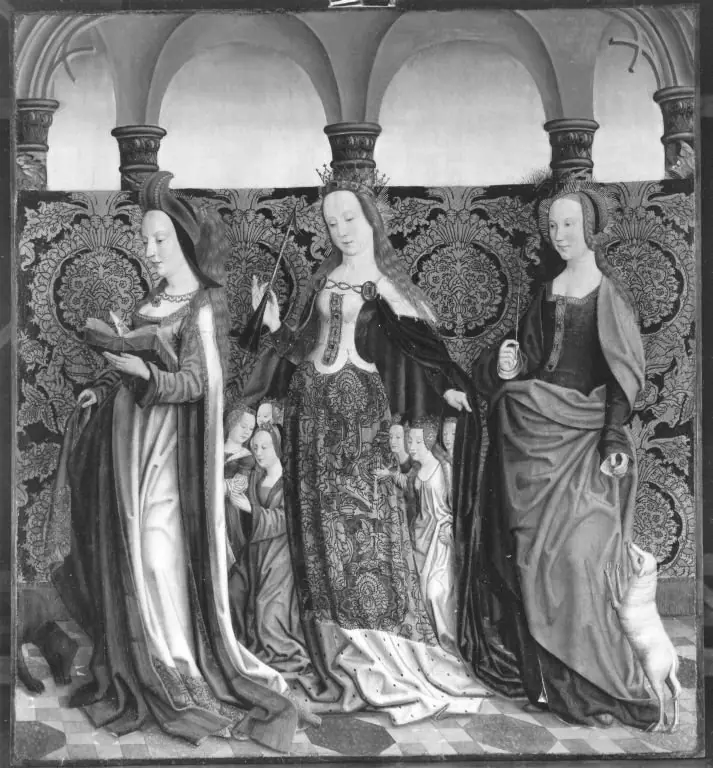 Beschneidungsaltar: Die hll. Columba, Ursula und Agnes
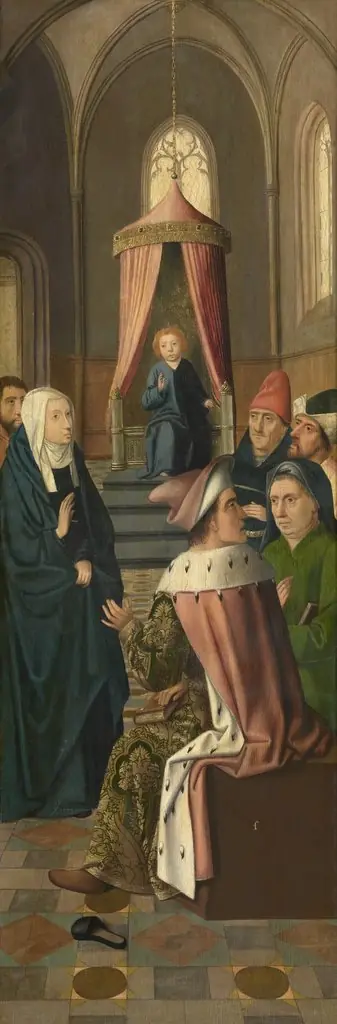 Christ's Dispute with the Doctors
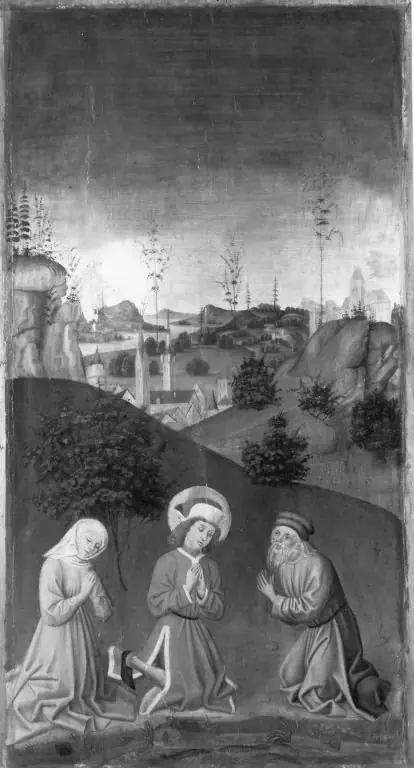 The Saints Vitus, Modestus and Crescentia
 Darbringung im Tempel
 Saint Catherine refuses idolatry
 Beschneidungsaltar: Die hll. Barbara(?), Christina und Maria Magdalena
 Beweinungsaltar: Hl. Katharina mit Stifterin
 Saint Rumbold Taking Leave of his Parents