Artwork
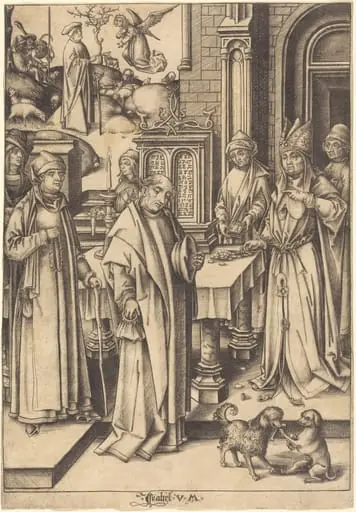
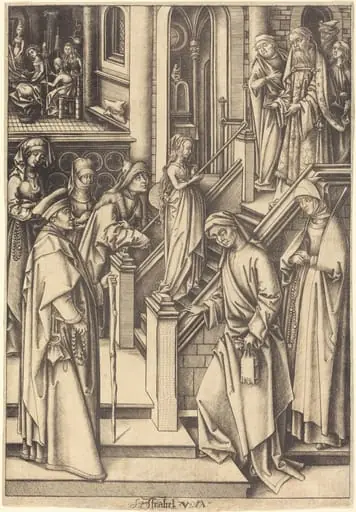
The Marriage of the Virgin
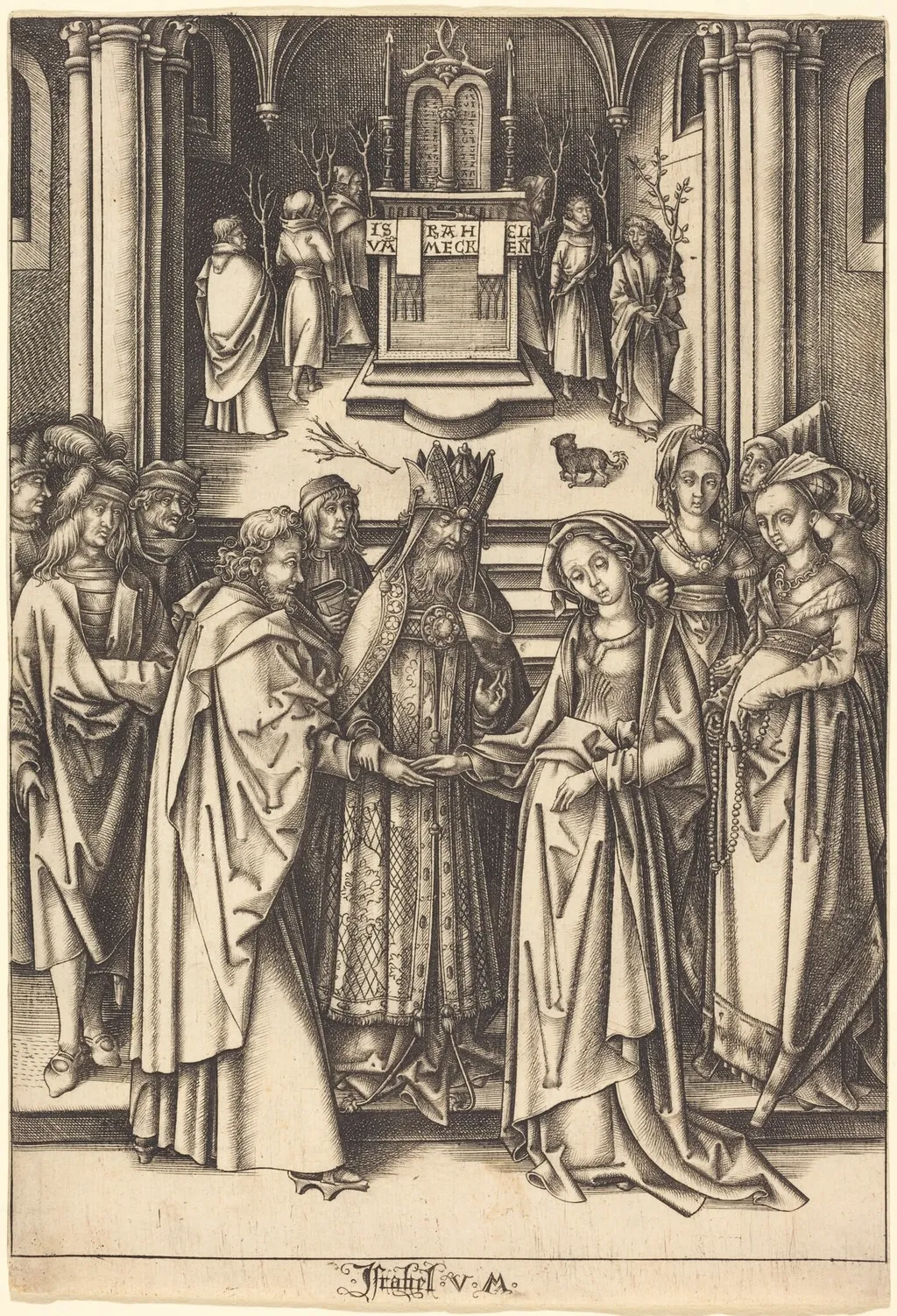
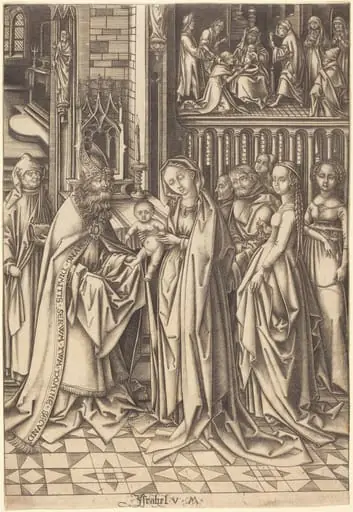
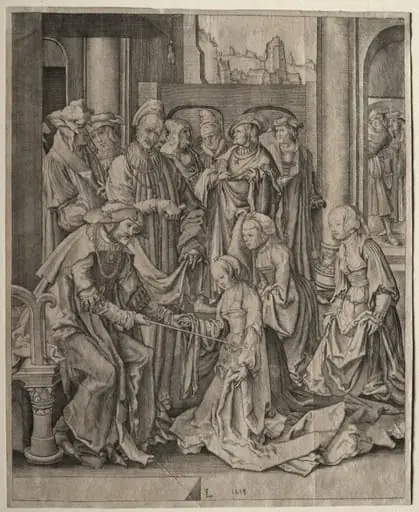
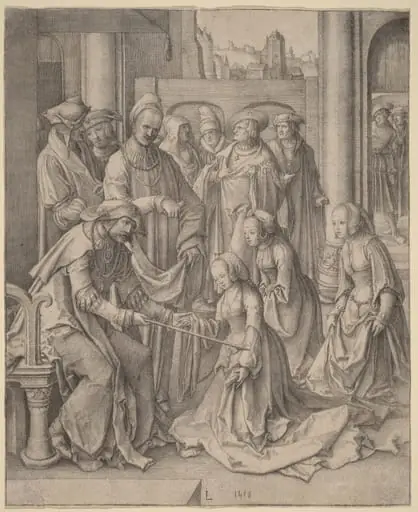
The Marriage of the Virgin is an ink print by the Renaissance artist Israhel van Meckenem. It dates from 1495 and is held in the collection of the National Gallery of Art. Created circa 1495, this engraving on laid paper portrays the biblical episode of Mary’s marriage to Joseph.
About this work
Overview
Created circa 1495, this engraving on laid paper portrays the biblical episode of Mary’s marriage to Joseph. The composition centers on the nuptial ceremony within an interior space that suggests a church, populated by a crowd of onlookers and a priest holding a branch. The work exemplifies the detailed, linear quality typical of late‑15th‑century Northern European prints.
Subject & Meaning
The image illustrates the traditional narrative of the Virgin’s betrothal, a moment often emphasized for its theological significance as the beginning of the Holy Family. By placing the ceremony in a clearly defined architectural setting, the artist underscores the sanctity of the union and invites contemplation of its role within the larger story of salvation.
Technique & Style
The intricate line work renders elaborate garments, folded drapery, and architectural details with remarkable realism.
Executed with fine cross‑hatching, the engraving achieves a nuanced sense of texture and spatial depth. The intricate line work renders elaborate garments, folded drapery, and architectural details with remarkable realism. Such meticulous carving of the copper plate reflects the mature engraving practices emerging in the German lands during the Renaissance, where line density conveyed tonal variation.
History & Provenance
The print is attributed to Israhel van Meckenel, a prolific German goldsmith and printmaker active between 1465 and 1503. Van Meckenel produced more than six hundred prints, frequently reproducing designs by contemporaries such as Albrecht Dürer. This work illustrates his engagement with popular religious subjects and his contribution to the early diffusion of print culture in Northern Europe.
Context
In the late fifteenth century, engraving became a primary medium for disseminating devotional imagery across Europe. Van Meckenel’s output, including this depiction of the Virgin’s marriage, reflects the demand for portable, affordable religious prints that could reach a broad audience beyond the confines of churches and illuminated manuscripts.
Artist & collection
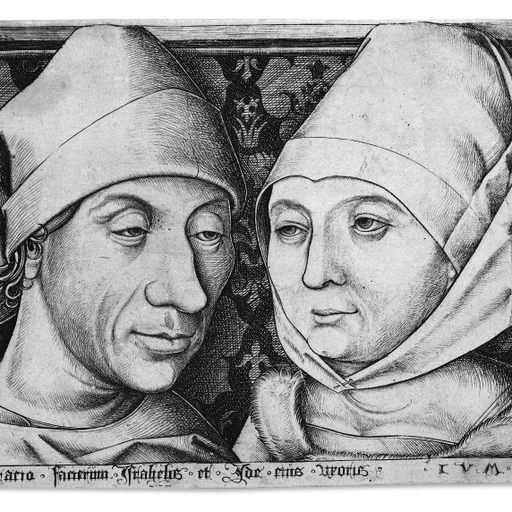
Artist
Israhel van Meckenem (c. 1445 – 10 November 1503), also known as Israhel van Meckenem the Younger, was a German printmaker and goldsmith, perhaps of a Dutch family origin. He was the most prolific engraver of the…