Artwork
Uttarabhadrapad
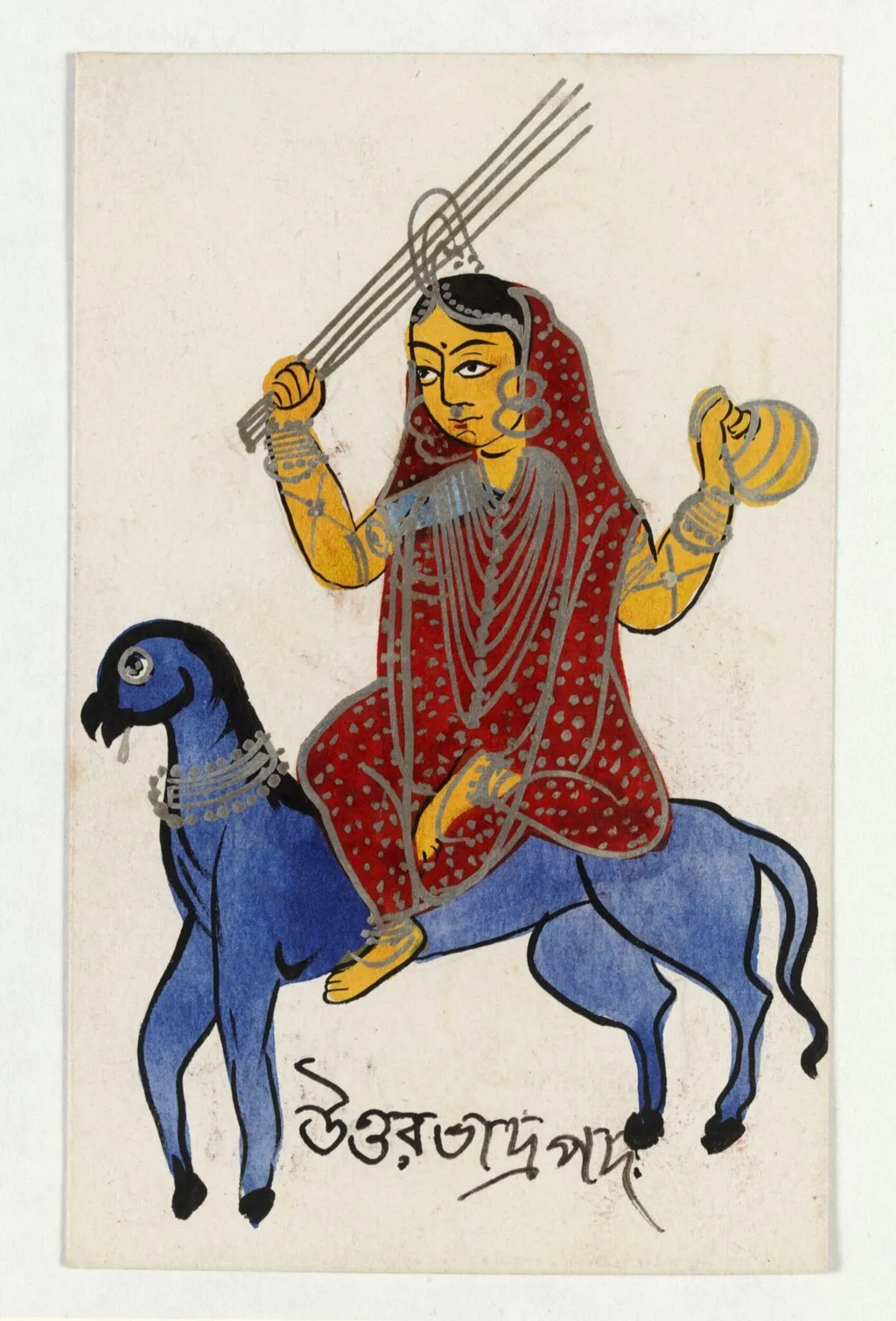
Uttarabhadrapad is a paint painting by the Impressionist artist Unknown. It dates from 1890 and is held in the collection of the Victoria and Albert Museum.
About this work
Overview
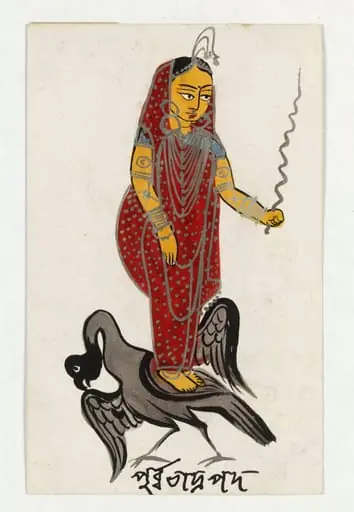
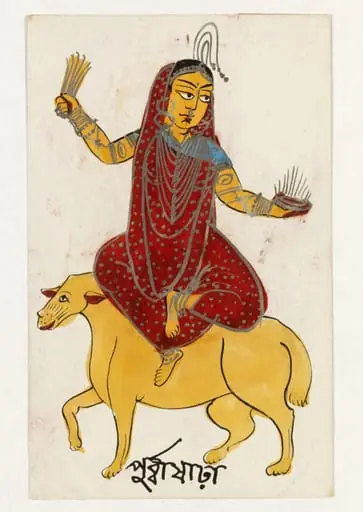
Uttarabhadrapad is a small-scale painting executed in watercolor combined with tin alloy on a cardboard support. The composition features a female figure mounted on a fantastical animal, rendered in vivid, flat colors against an unadorned background. The work is identified as a visual representation of the twenty‑sixth lunar mansion in traditional Indian astronomy.
Subject & Meaning
The central figure is a woman dressed in a red garment with gold‑patterned trim, holding a spear in one hand and a rounded object in the other. She rides a creature that merges equine and avian traits—a blue horse with a bird‑headed hound motif—symbolising the celestial entity Uttarabhadrapad and its associated mythic narratives.
Technique & Style
The artist employed watercolor washes for the luminous fields of color, while tin alloy was applied to outline forms and add metallic accents. The resulting surface is flat and graphic, reminiscent of cut‑out silhouettes, with bold outlines that separate the figure, animal, and minimal background.
History & Provenance
The painting’s material palette of watercolor, tin alloy, and cardboard suggests a 19th‑century Indian workshop practice, though its precise origin and creator remain undocumented. It entered the collection of the Victoria and Albert Museum as part of a broader acquisition of South Asian decorative arts.
Context
Uttarabhadrapad belongs to a series of lunar mansion illustrations used in astrological and calendrical texts. Such images served both instructional and devotional purposes, linking celestial observations with mythic personifications that were visualised in a stylised, accessible manner for a lay audience.
Artist & collection

 Domestic Scene
 Giacomo and Cardinal Marco, investing Andrea, Abbot of San Zeno, with his Benefice
 The Nymph of Fontainebleau
 Portrait of a Woman
 Madonna and Child with Saints in the Enclosed Garden
 Venus and Minerva
 Family Group of Four on Sofa
 Wall painting from Room H of the Villa of P. Fannius Synistor at Boscoreale