Artwork
Purvabhadrapad
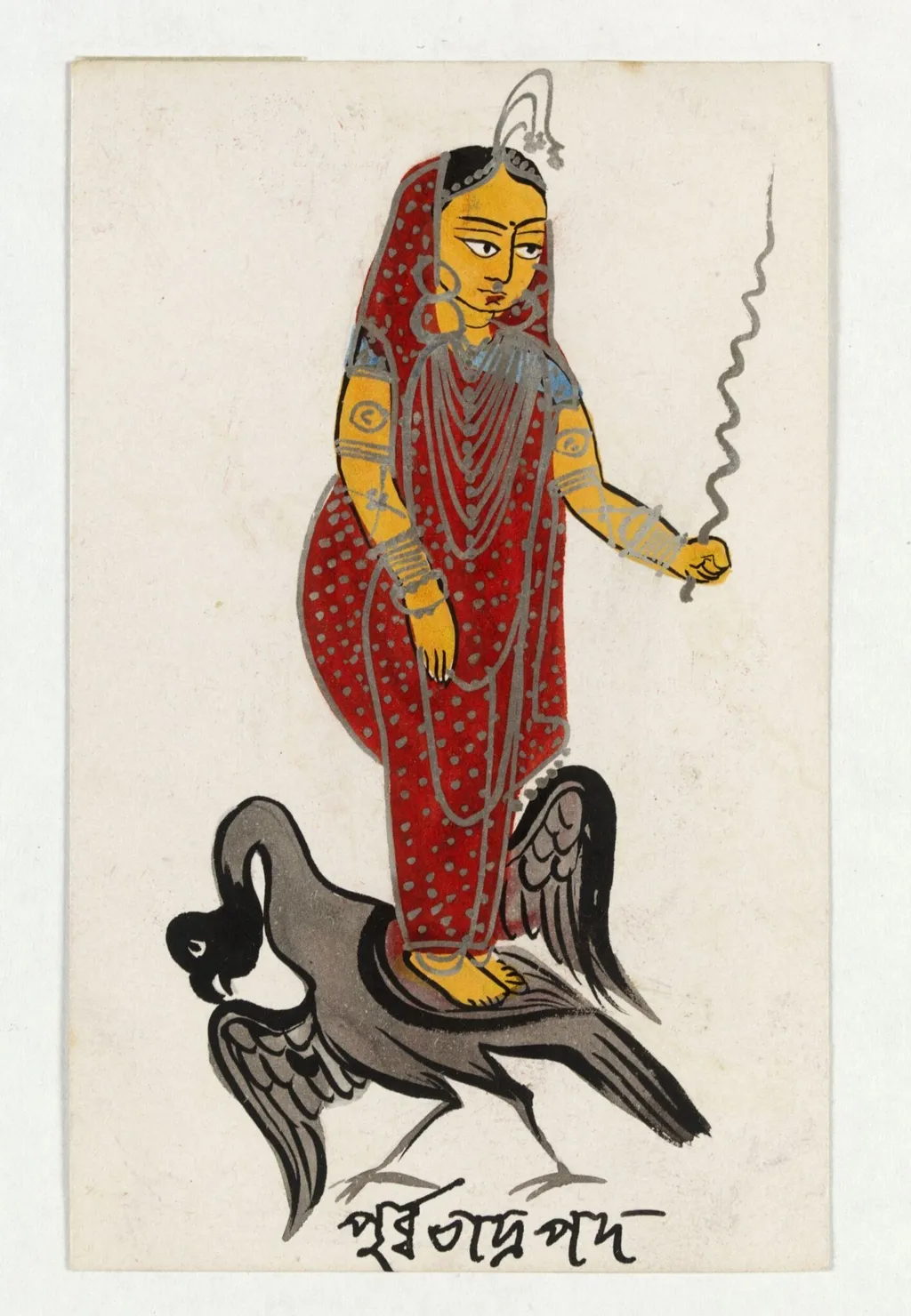
Purvabhadrapad is a paint painting by the Impressionist artist Unknown. It dates from 1890 and is held in the collection of the Victoria and Albert Museum.
About this work
Overview
The work is rendered in watercolour and tin alloy on cardboard, adhering to regional visual codes for celestial symbolism.
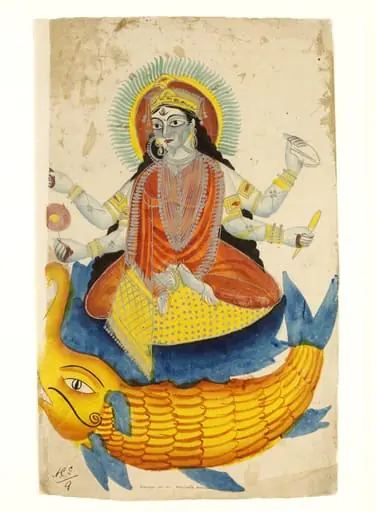
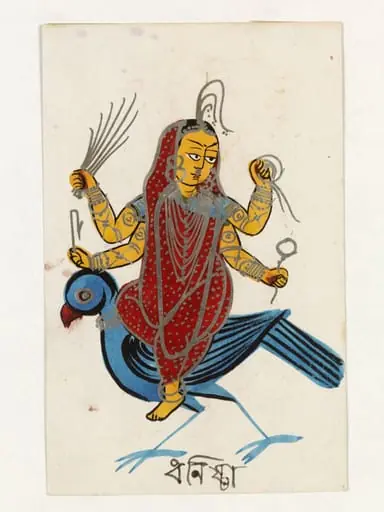
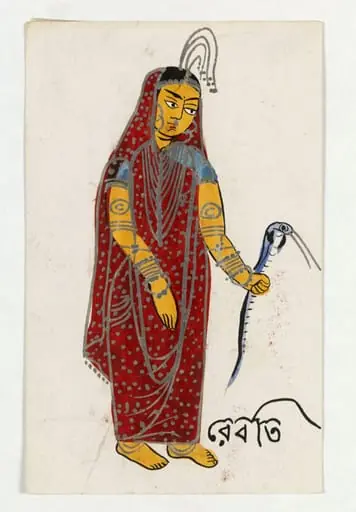
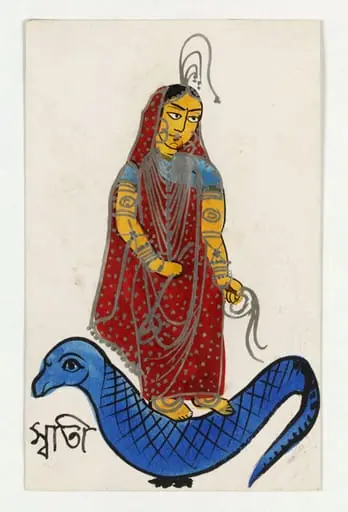
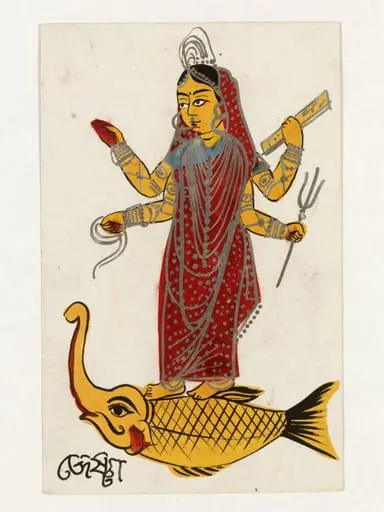
Created in 1890, *Purvabhadrapad* is a painted representation of a lunar mansion from Indian astronomical tradition. The work is rendered in watercolour and tin alloy on cardboard, adhering to regional visual codes for celestial symbolism. Its composition centers on a solitary female figure, elevated above a hybrid winged creature, with minimal background detail to emphasize symbolic presence over spatial depth.
Subject & Meaning
The figure represents the twenty-sixth lunar mansion, Purvabhadrapad, associated with divine power and transformation. She stands atop a creature combining avian and equine features, possibly symbolizing the movement of celestial bodies. In her hand, she holds a lightning bolt, a traditional emblem of the mansion’s energetic influence. The imagery draws from astrological texts, translating cosmic concepts into human and mythic form.
Technique & Style
The painting employs flat planes of color with no attempt at chiaroscuro or perspective. Outlines are crisp, and patterns on the figure’s garments are rendered with decorative precision using watercolour and metallic tin alloy. The lack of shading and stylized forms reflect a deliberate adherence to indigenous pictorial traditions, prioritizing symbolic clarity over naturalistic representation.
History & Provenance
The work originates from a tradition of celestial diagrams used in regional astrological practice, likely produced in western or central India during the late 19th century. Its materials—cardboard, watercolour, and tin alloy—suggest local, accessible resources rather than courtly patronage. While its exact origin remains undocumented, its style aligns with manuscript illustrations and devotional paintings of the period.
Context
Purvabhadrapad belongs to a broader system of nakshatra imagery, where lunar mansions were visualized as deities or symbolic figures to aid in ritual and calendrical calculations. These paintings were not merely decorative but served as mnemonic and spiritual tools. The flat, bold aesthetic reflects a continuity with pre-colonial Indian painting practices, distinct from emerging Western naturalism.
Legacy
Though not widely exhibited, *Purvabhadrapad* exemplifies the persistence of indigenous cosmological visualization in the face of colonial artistic influence. Its stylistic choices preserve a visual language rooted in astrological texts and regional craft, offering insight into how celestial knowledge was materially encoded in everyday artistic practice during the late 19th century.
Artist & collection

 Domestic Scene
 Giacomo and Cardinal Marco, investing Andrea, Abbot of San Zeno, with his Benefice
 The Nymph of Fontainebleau
 Portrait of a Woman
 Madonna and Child with Saints in the Enclosed Garden
 Venus and Minerva
 Family Group of Four on Sofa
 Wall painting from Room H of the Villa of P. Fannius Synistor at Boscoreale