Artwork
Vamana
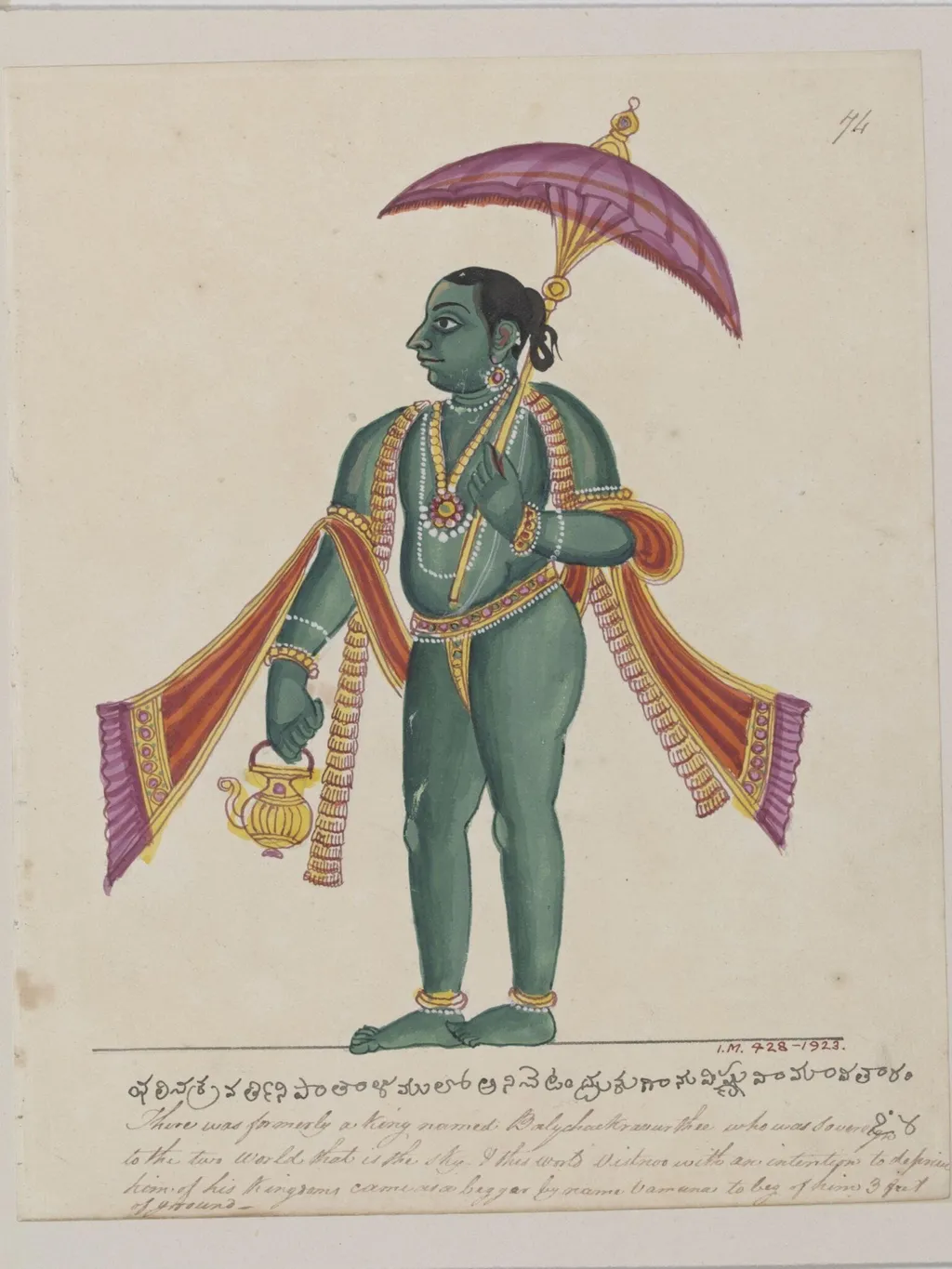
Vamana is a paint painting by the Romanticist artist Unknown. It dates from 1825 and is held in the collection of the Victoria and Albert Museum.
About this work
Overview
This work portrays Vamana, the fifth incarnation of the Hindu god Vishnu, in the moment he confronts the demon king Bali. The composition captures the pivotal episode in which Bali promises to give Vamana as much ground as he can cover in three strides, after which the avatar expands to claim the earth, the heavens, and finally places his third step upon Bali’s head.
Subject & Meaning
The narrative illustrates the triumph of divine order over hubris, a theme central to Hindu mythology. Vamana’s dwarf form and his subsequent enlargement symbolize the power of humility and the capacity of the divine to transcend mortal limits, reinforcing the moral that true sovereignty rests with the cosmic principle rather than earthly rulers.
Technique & Style
Rendered with vivid pigments, the figure’s green skin, golden pot, and purple parasol stand out against a light background, while a red‑and‑yellow sash, beaded necklaces, and a feathered headpiece add ornamental detail. The bold coloration and dynamic pose reflect a 19th‑century South Indian aesthetic that merges narrative drama with decorative richness.
History & Provenance
Created in 1825 as part of a series of one hundred drawings depicting Hindu deities, the piece originates from South India. The series was likely commissioned to document mythological subjects for a regional audience, and the work now serves as a visual record of early 19th‑century devotional art practices.
Artist & collection

 Domestic Scene
 Giacomo and Cardinal Marco, investing Andrea, Abbot of San Zeno, with his Benefice
 The Nymph of Fontainebleau
 Portrait of a Woman
 Madonna and Child with Saints in the Enclosed Garden
 Venus and Minerva
 Family Group of Four on Sofa
 Wall painting from Room H of the Villa of P. Fannius Synistor at Boscoreale
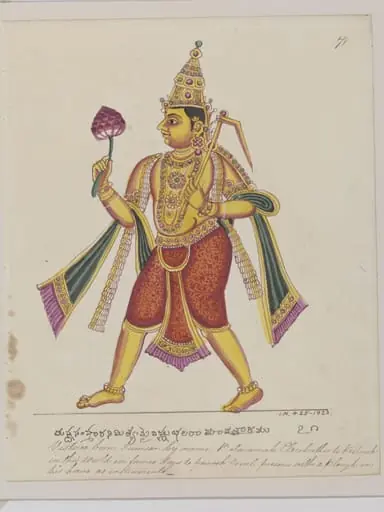 Balarama
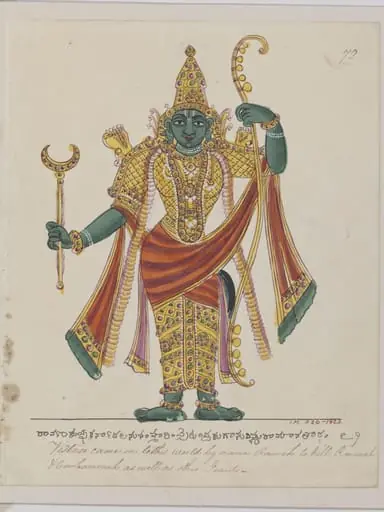 Rama holding a bow and a crescent tipped arrow
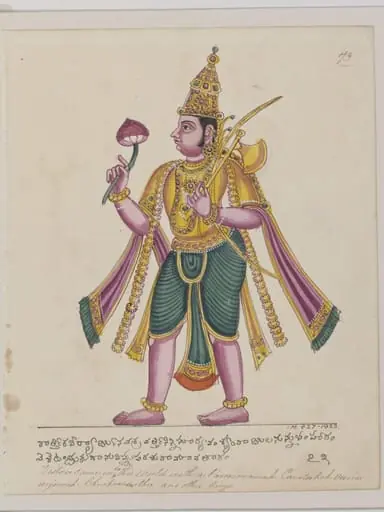 Parasurama Holding an axe and a Lotus Bud
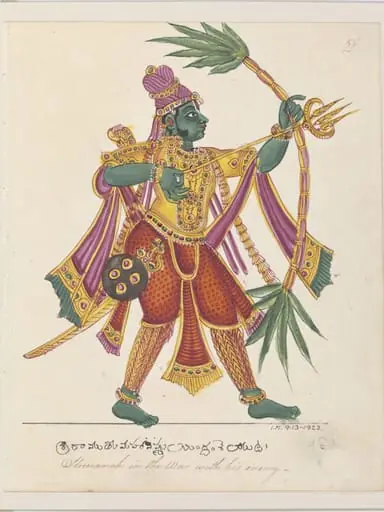 A green-skinned warrior
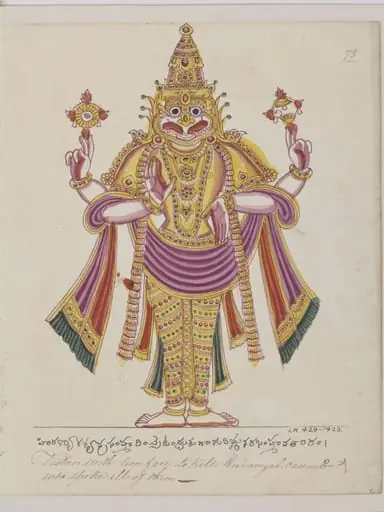 Narasimha, the man-lion, the fourth avatar (incarnation) of Vishnu
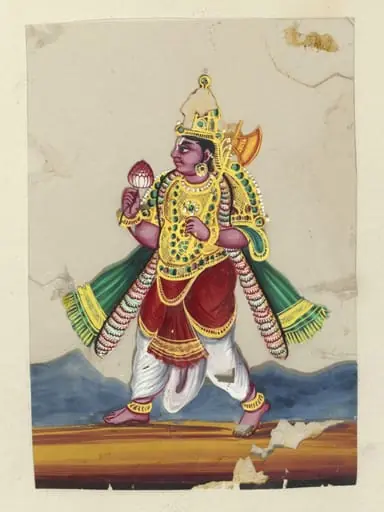 One of five paintings of Hindu deities.
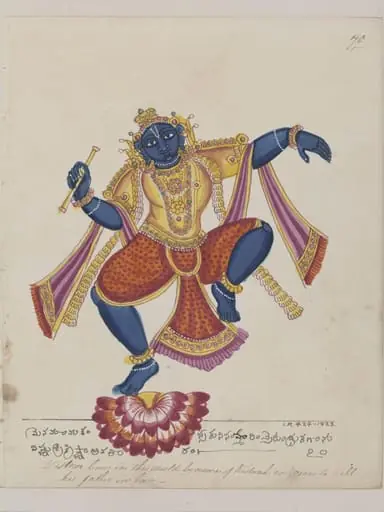 Krishna Holding a Flute and Dancing on a Lotus
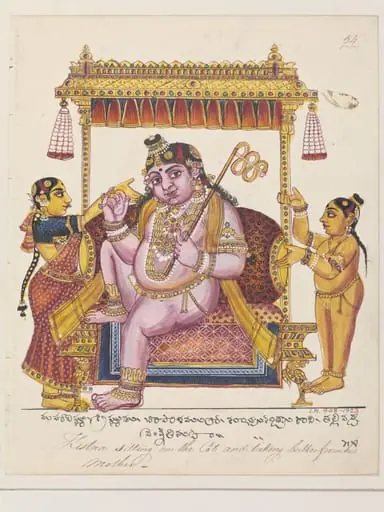 Krishna and Yasoda with Balarama.
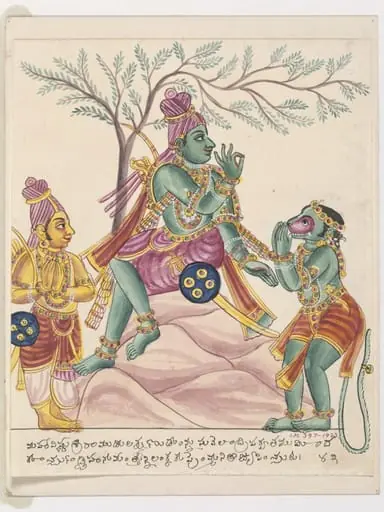 A scene from the Ramayana.
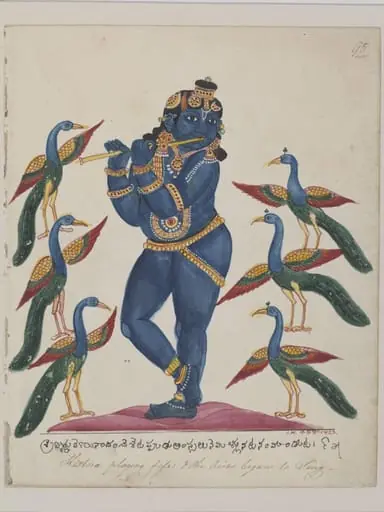 Krishna playing the flute