Artwork
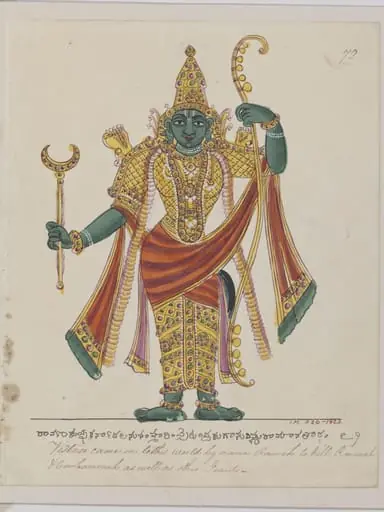
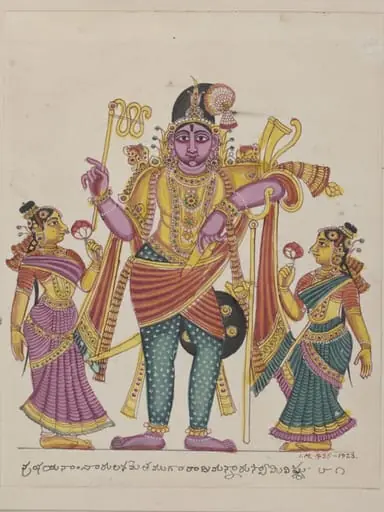
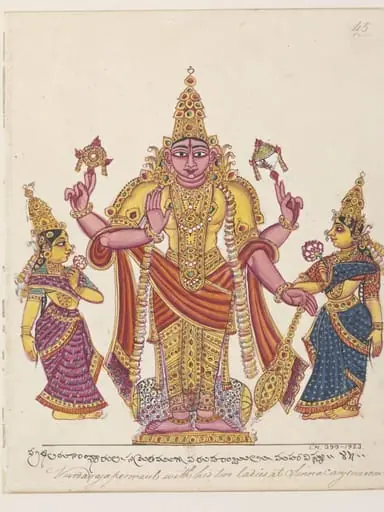
One of five paintings of Hindu deities.
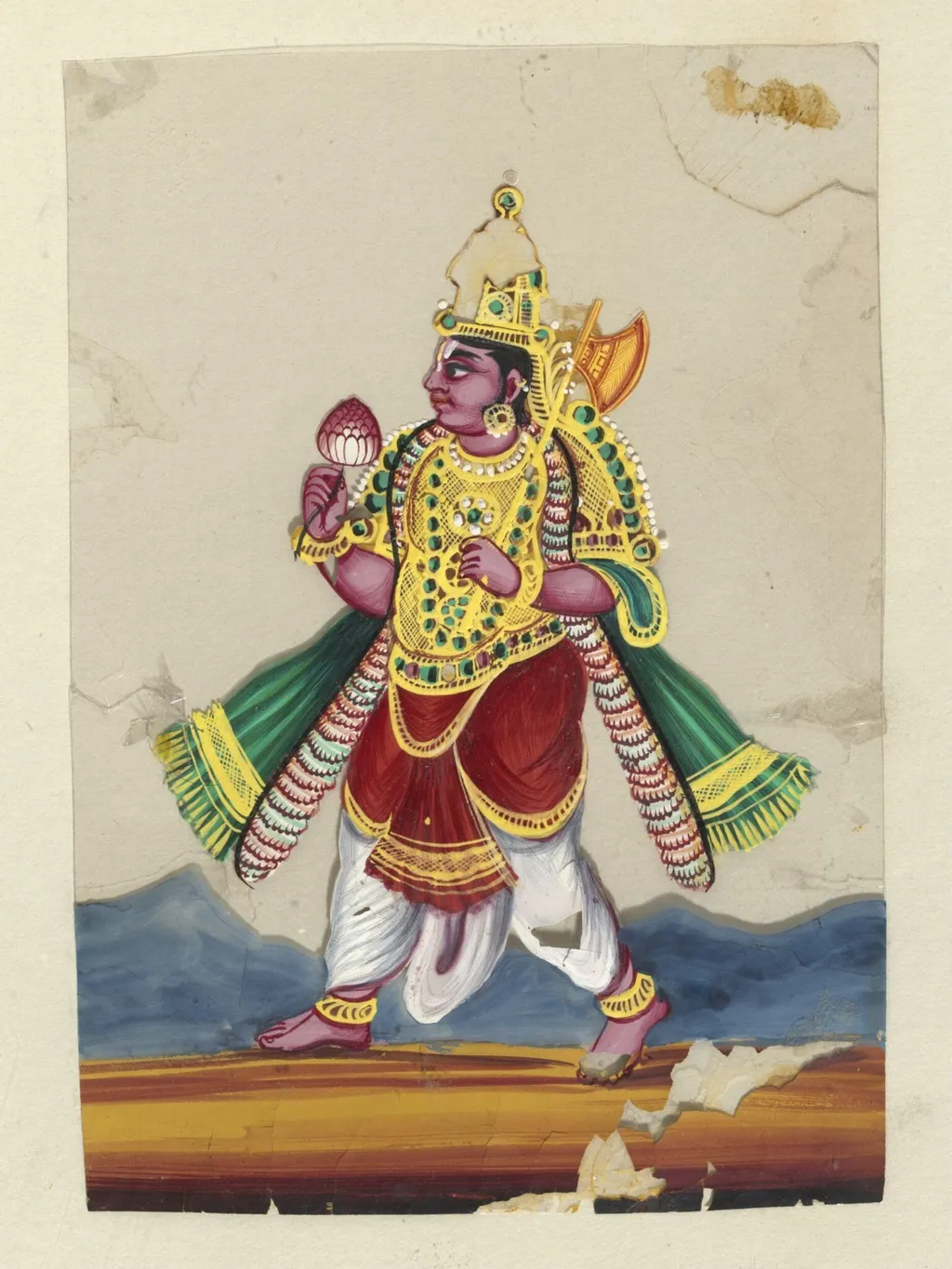
One of five paintings of Hindu deities. is a paint painting by the Patna School of Painting artist Unknown. It dates from 1860 and is held in the collection of the Victoria and Albert Museum.
About this work
Overview
The painting’s edges show signs of wear, suggesting prolonged handling or display, and its decorative intensity reflects its ritual or ceremonial function.
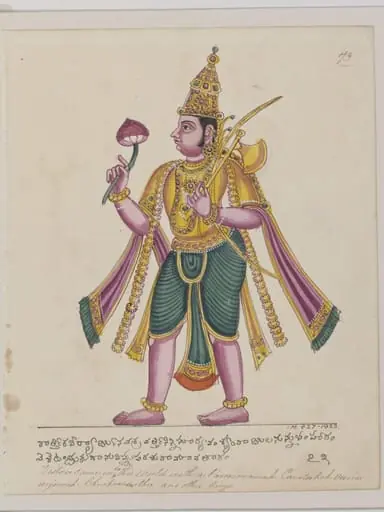
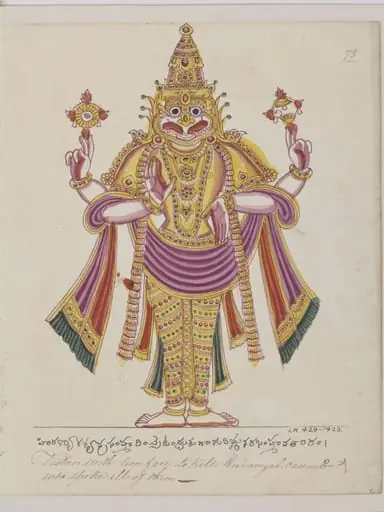
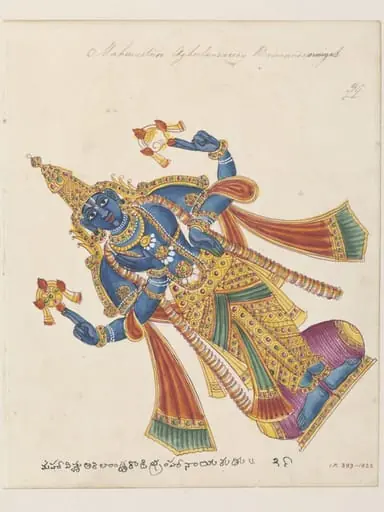
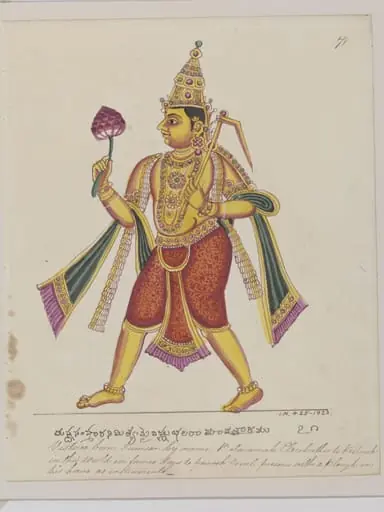
This work is one of five related paintings depicting Hindu deities, created in a vibrant, ornamental style typical of regional Indian court art. The central figure is rendered with intense color and intricate detail, set against a minimal background of blue sky and brown earth. The painting’s edges show signs of wear, suggesting prolonged handling or display, and its decorative intensity reflects its ritual or ceremonial function.
Subject & Meaning
The figure, identified by its golden crown, red complexion, and symbolic attributes, likely represents a deity associated with purity and divine power. The pink lotus signifies spiritual unfolding, while the green feathered fan, often held by deities in Indian iconography, denotes protection and royal authority. The elaborate attire and jewelry reinforce the figure’s divine status and connection to cosmic order.
Technique & Style
The painting employs bold, flat areas of color with sharp outlines, emphasizing clarity and visual impact. Fine brushwork renders intricate patterns on the garments and ornate jewelry, demonstrating skilled craftsmanship. The limited background—blue sky and brown ground—focuses attention on the figure, a common compositional strategy in devotional paintings to enhance spiritual presence.
History & Provenance
As part of a set of five, this painting likely originated in a royal or temple context in northern India, possibly during the 18th or early 19th century. Its worn edges and preserved condition suggest it was used in ritual settings or private devotion before entering a collection. The Victoria and Albert Museum holds similar works, indicating its probable provenance within colonial-era Indian art acquisitions.
Context
These paintings were produced in workshops associated with Hindu courts or religious centers, where artists followed established iconographic rules while incorporating local aesthetic preferences. The emphasis on color, ornamentation, and symbolic objects aligns with devotional traditions that valued visual splendor as a means of invoking the divine. Such works were often displayed during festivals or kept in personal shrines.
Legacy
The painting contributes to a broader corpus of Indian devotional art that continues to inform understandings of regional religious expression. Its preservation in major collections like the Victoria and Albert Museum underscores its role as a cultural artifact, offering insight into the interplay of faith, craftsmanship, and visual symbolism in pre-modern South Asia.
Artist & collection

 Domestic Scene
 Giacomo and Cardinal Marco, investing Andrea, Abbot of San Zeno, with his Benefice
 The Nymph of Fontainebleau
 Portrait of a Woman
 Madonna and Child with Saints in the Enclosed Garden
 Venus and Minerva
 Family Group of Four on Sofa
 Wall painting from Room H of the Villa of P. Fannius Synistor at Boscoreale