Artwork
Vanitas Still Life
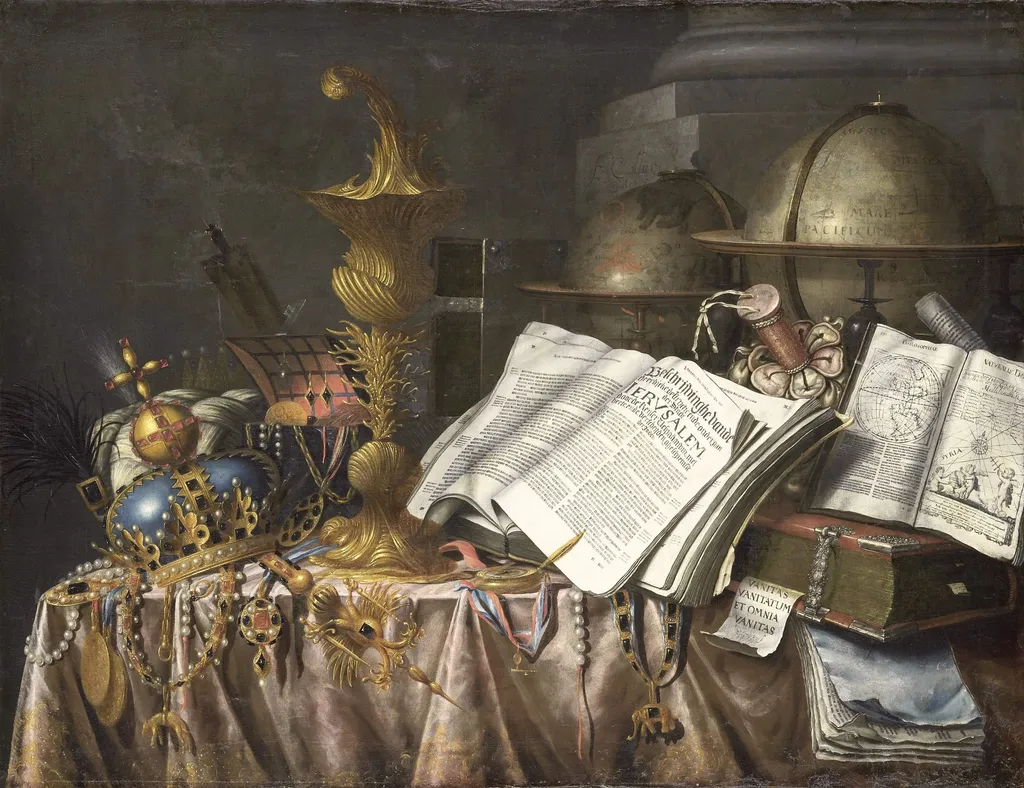
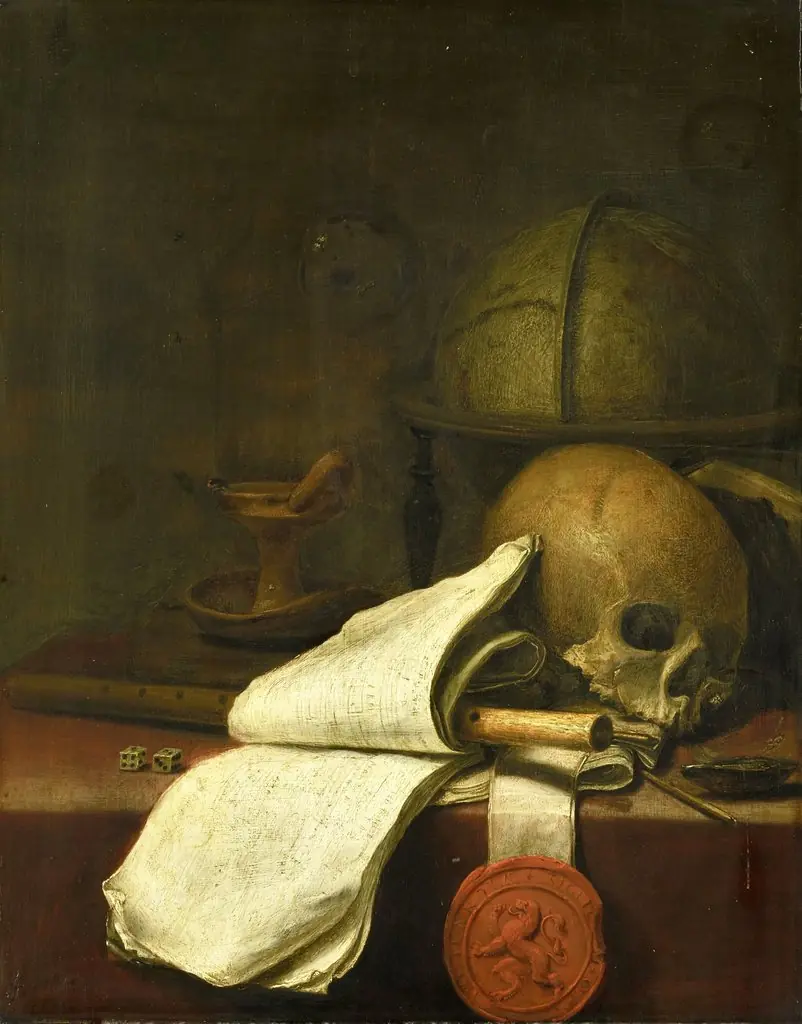
Vanitas Still Life is an unspecified painting by the Dutch Golden Age artist Unknown. It dates from 1662 and is held in the collection of the Rijksmuseum. This painting belongs to the vanitas tradition, a genre of still life that reflects on the transience of earthly pursuits.
About this work
Overview
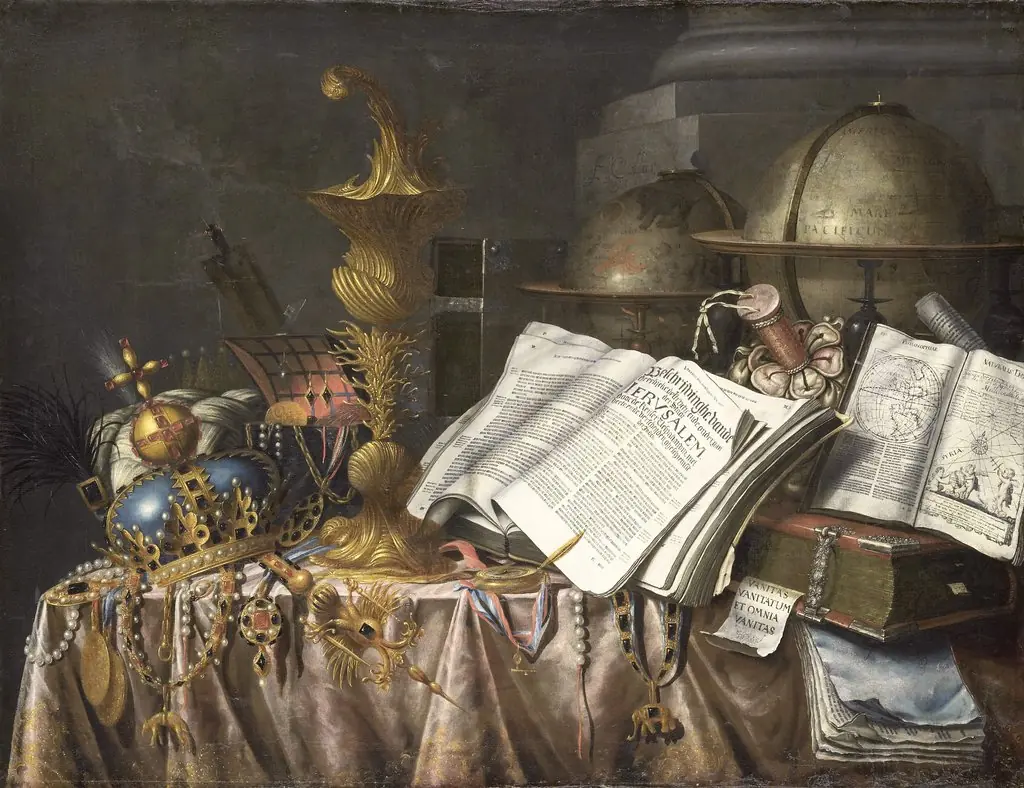
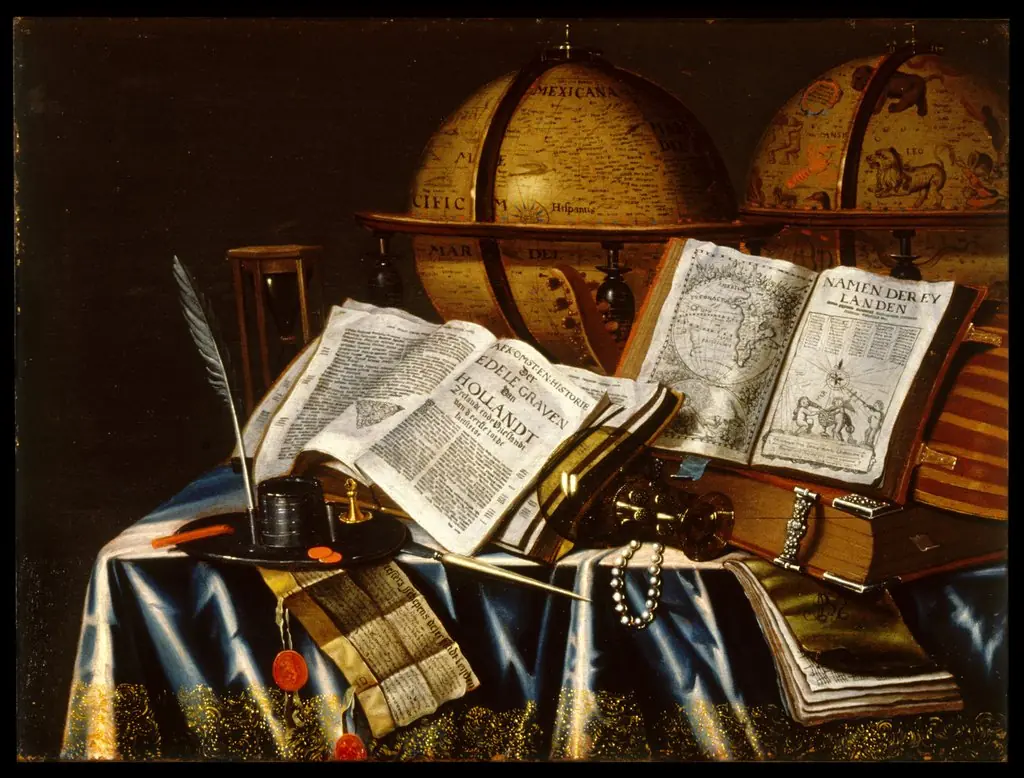
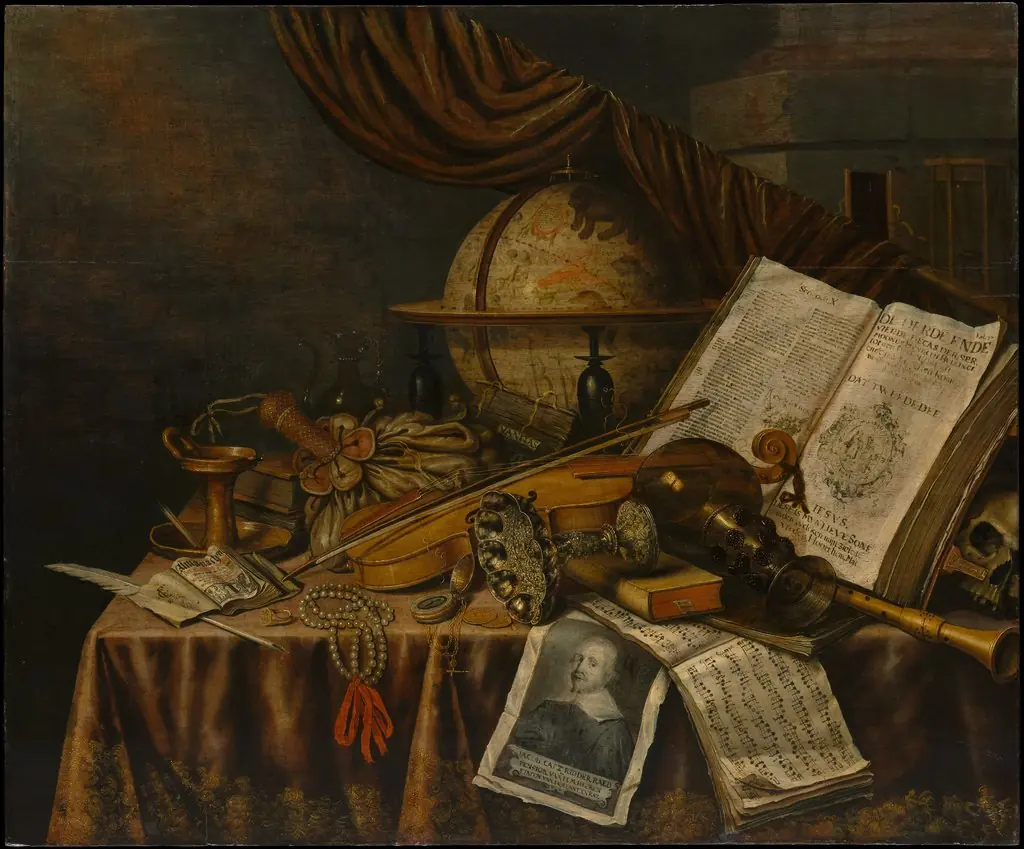
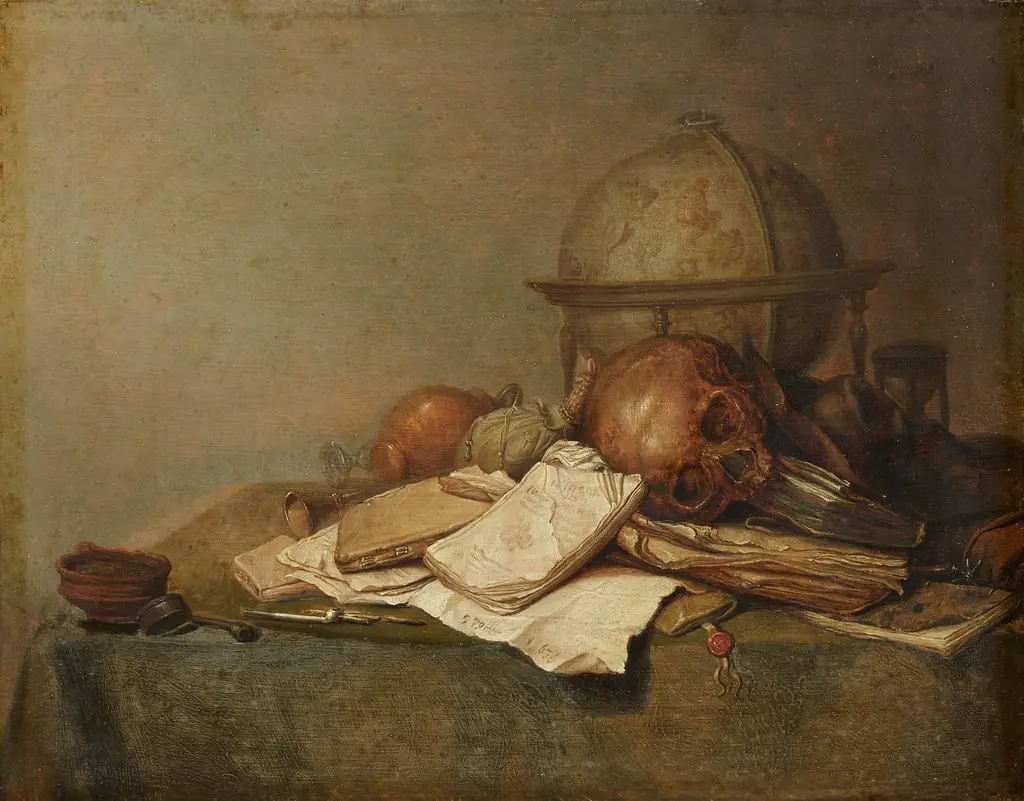
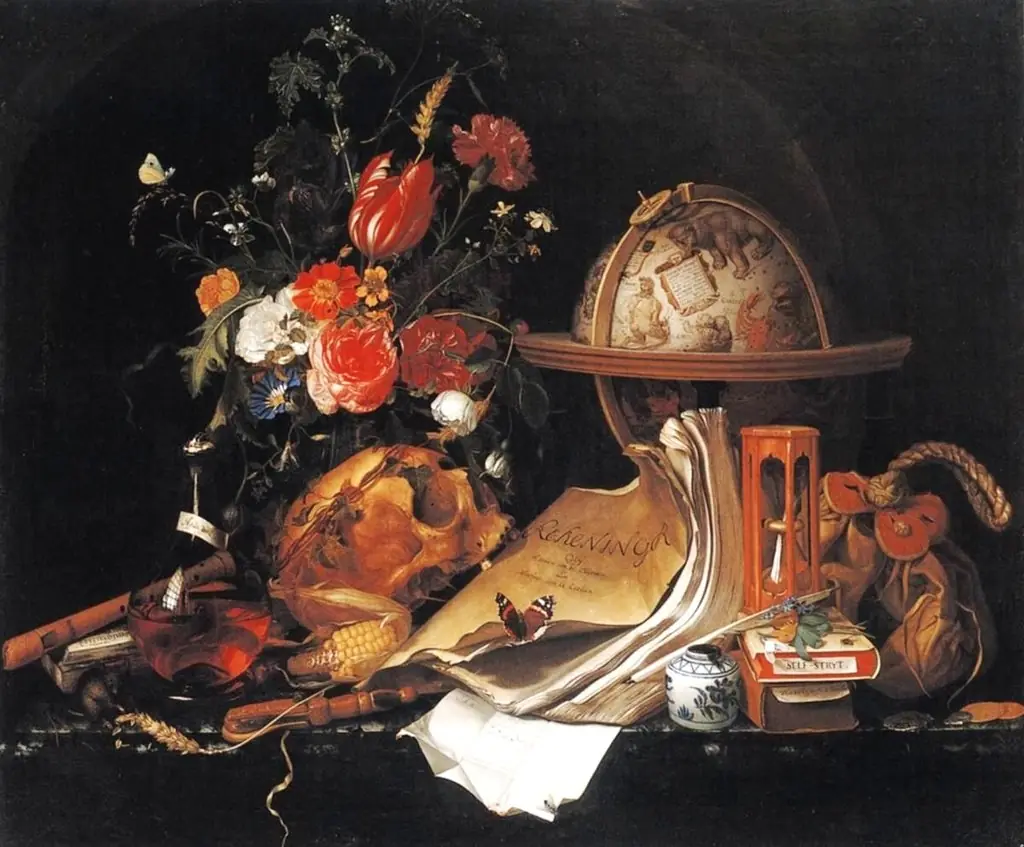
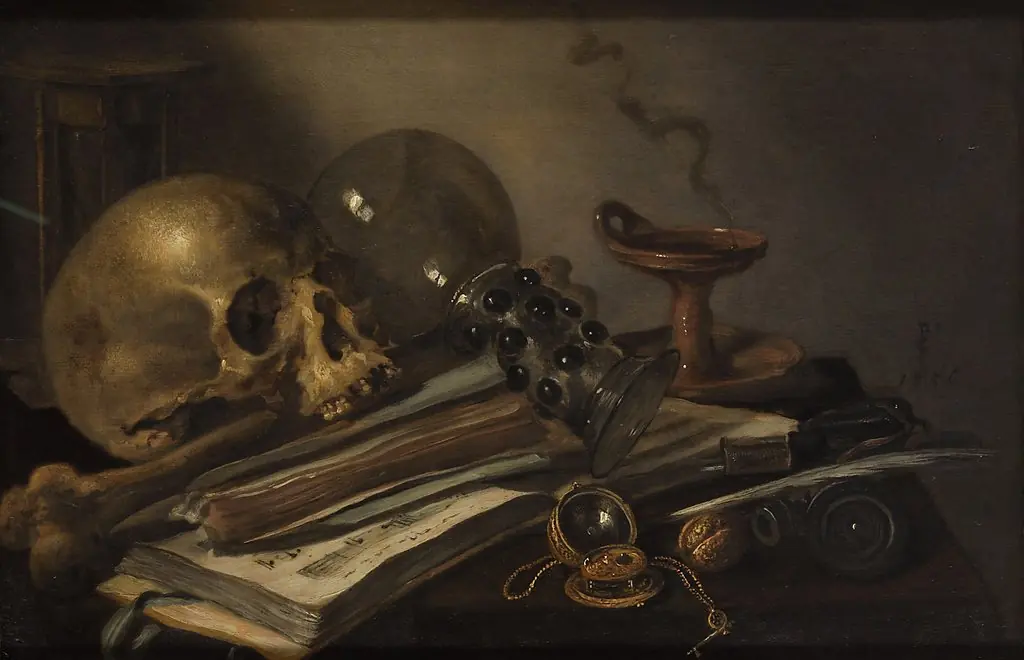
Objects arranged on a table—books, globes, a crown, a money bag, a timepiece, and a ornate vessel—collectively suggest human achievements and possessions.
This painting belongs to the vanitas tradition, a genre of still life that reflects on the transience of earthly pursuits. Objects arranged on a table—books, globes, a crown, a money bag, a timepiece, and a ornate vessel—collectively suggest human achievements and possessions. Their arrangement, however, conveys stillness and neglect, as if abandoned by time. The quiet decay of these once-valued items underscores a meditation on impermanence.
Subject & Meaning
Each object carries symbolic weight: the globes represent geographic and cosmic knowledge, the crown signifies temporal power, and the money bag stands for wealth. Open books imply intellectual pursuit, yet their stillness suggests halted inquiry. The clock, central to the composition, marks the inevitable passage of time. Together, these elements form a visual allegory drawn from Ecclesiastes, reminding viewers that all worldly endeavors ultimately fade.
Technique & Style
The artist employs subtle chiaroscuro to model surfaces with soft transitions between light and shadow, lending tangible weight to each object. Textures vary—dust gathers on velvet, metal glints faintly, leather bindings show wear—without overt drama. The composition is tightly controlled, avoiding clutter despite the abundance of items. This restraint enhances the somber tone, making the stillness feel deliberate and contemplative.
History & Provenance
Painted in the early 17th century, likely in the Netherlands, this work emerged during a period when Protestant values emphasized humility and the futility of materialism. Vanitas paintings were popular among urban elites who valued moral reflection alongside their wealth. While the specific provenance of this piece is unrecorded, its style aligns with works from Haarlem and Leiden, centers of meticulous still-life painting at the time.
Context
Vanitas imagery flourished in the Dutch Republic amid economic prosperity and religious reform. As trade and science expanded, so did awareness of life’s fragility. These paintings responded not to fear, but to a cultural impulse toward self-examination. Unlike religious altarpieces, vanitas works spoke to private contemplation, often displayed in homes as quiet moral guides rather than public declarations.
Legacy
The vanitas tradition influenced later still-life painting and philosophical art, embedding the theme of mortality into visual culture. Its emphasis on material transience resonated beyond religious contexts, informing Enlightenment-era reflections on human ambition. Though no longer dominant, its visual language persists in modern still lifes that question value, memory, and the passage of time.
Artist & collection

 Domestic Scene
 Giacomo and Cardinal Marco, investing Andrea, Abbot of San Zeno, with his Benefice
 The Nymph of Fontainebleau
 Portrait of a Woman
 Madonna and Child with Saints in the Enclosed Garden
 Venus and Minerva
 Family Group of Four on Sofa
 Wall painting from Room H of the Villa of P. Fannius Synistor at Boscoreale