Artwork
"Vanitas" Still Life
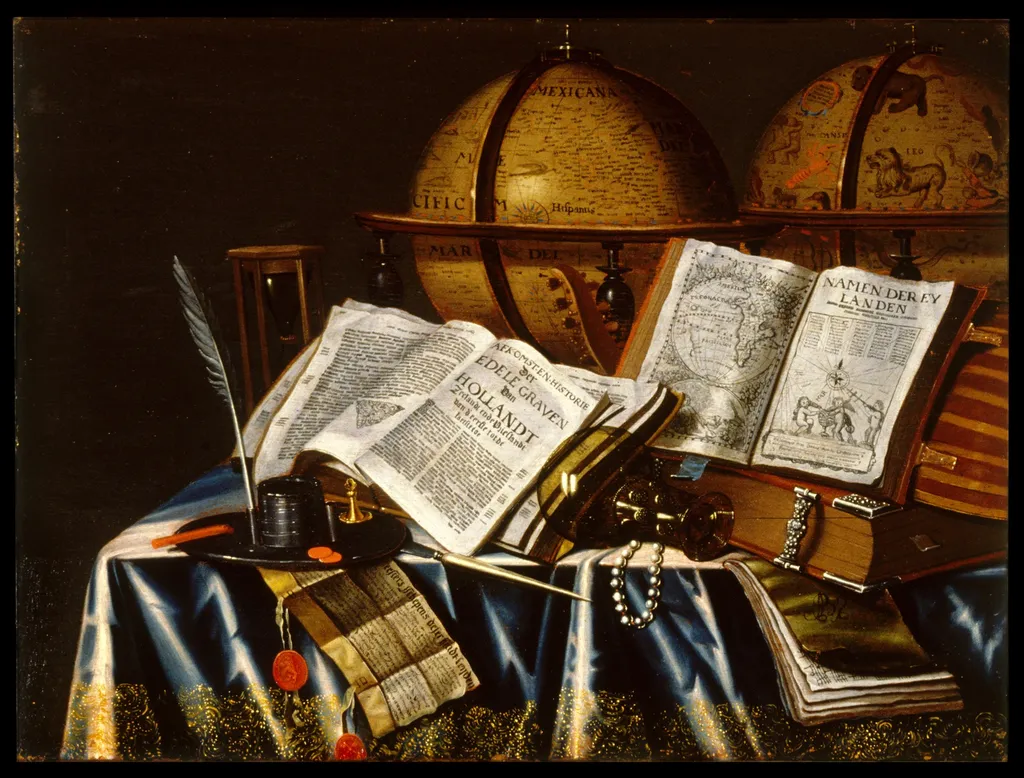
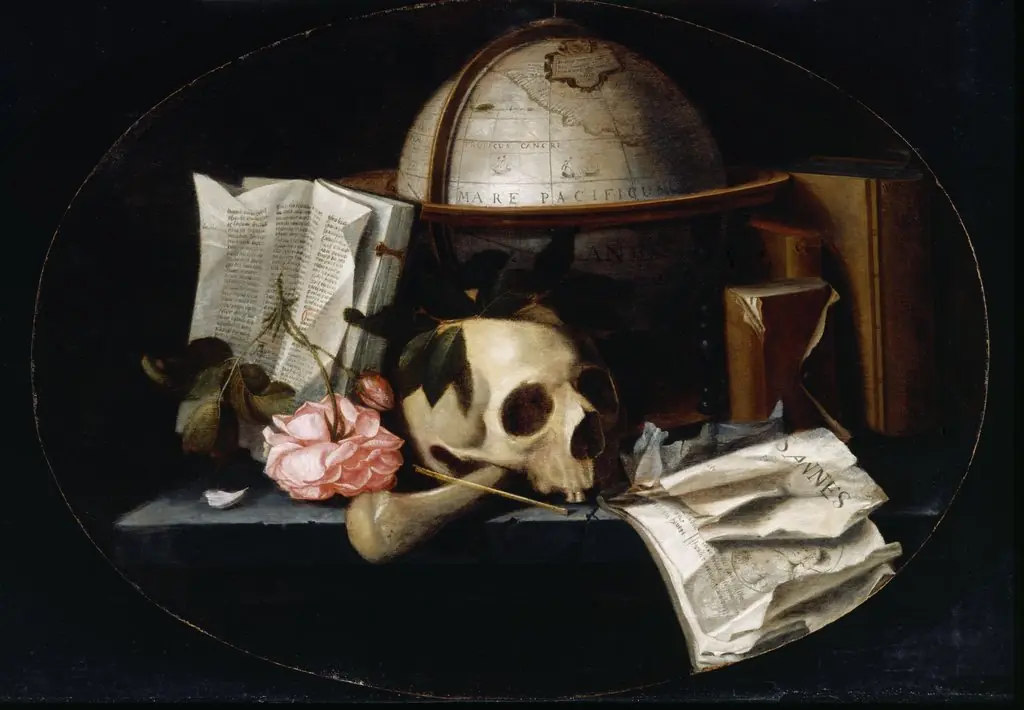
"Vanitas" Still Life is an oil painting by Adam Bernaert. It dates from 1665 and is held in the collection of the Walters Art Museum.
About this work
The painting's use of chiaroscuro, a technique that uses strong contrasts between light and dark to create a sense of volume, adds to its visual appeal.
This painting is a still life titled "Vanitas" Still Life, created by Adam Bernaert in 1665. It features a table with a blue cloth, adorned with various objects such as books, a globe, a quill pen, and a feather. The objects are arranged in a way that creates a sense of depth and dimensionality.
The painting's use of chiaroscuro, a technique that uses strong contrasts between light and dark to create a sense of volume, adds to its visual appeal. The artist's attention to detail is evident in the intricate textures and patterns of the objects, which are rendered with precision and care.
If you're interested in learning more about the artist's work, you can explore the paintings of Adam Bernaert.
Overview
Adam Bernaert’s 1665 oil painting, titled “Vanitas” Still Life, is part of the collection at the Walters Art Museum. The work presents a tabletop draped in a blue cloth, upon which a carefully selected group of objects is arranged to create a convincing sense of space and three‑dimensionality.
Subject & Meaning
The composition brings together books, a terrestrial globe, a quill pen and a feather—items traditionally associated with learning, travel and the transience of human achievement. Their juxtaposition reflects the vanitas genre’s meditation on the fleeting nature of worldly pursuits and the inevitability of mortality.
Technique & Style
Bernaert employs chiaroscuro, contrasting illuminated surfaces with deep shadows to model form and give volume to each object. The rendering shows meticulous attention to texture: the smoothness of the globe, the vellum‑like pages, and the delicate feather are all depicted with precise brushwork and subtle tonal variation.
History & Provenance
Created in the mid‑seventeenth century, the painting has remained in public hands, entering the Walters Art Museum’s holdings where it is displayed as an example of Flemish still‑life practice. Its provenance prior to museum acquisition is not extensively documented, but it reflects the period’s interest in moralizing still‑life subjects.
Own this work as a print
Artist & collection
Artist
Dutch painters in the 1660s loved to pack still lifes with shiny goblets, drooping flowers, and a human skull to remind viewers life is short.

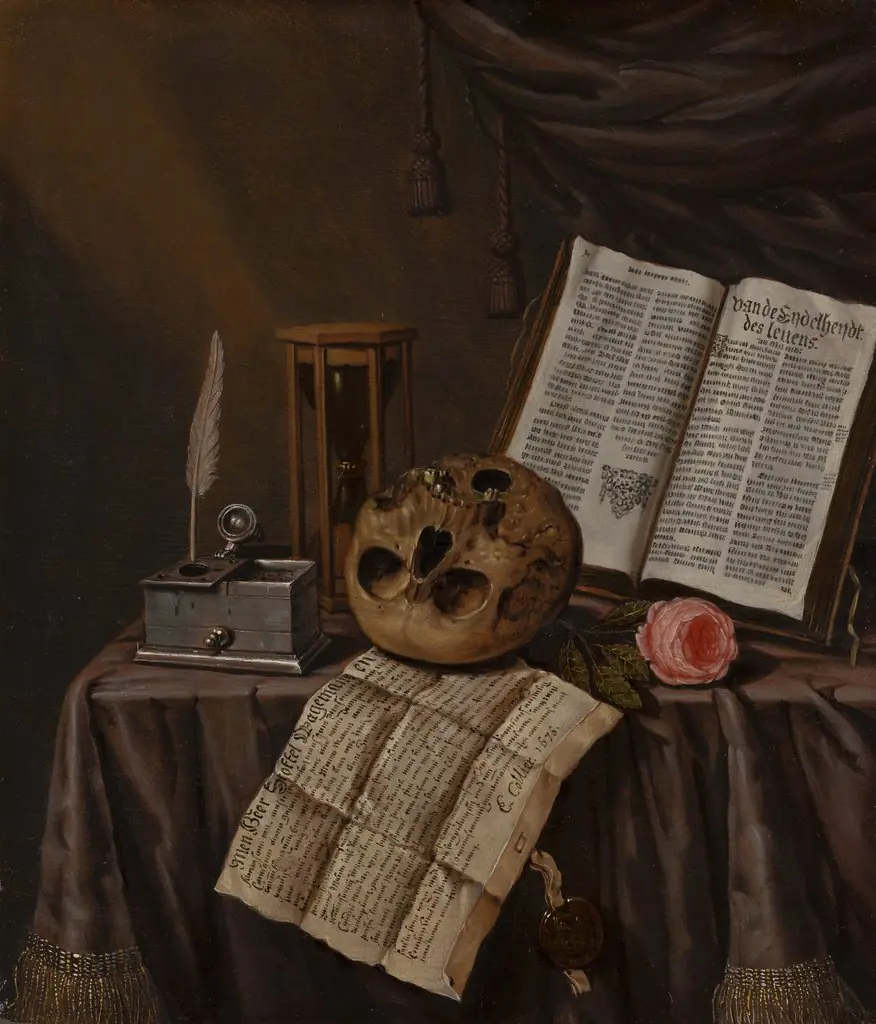
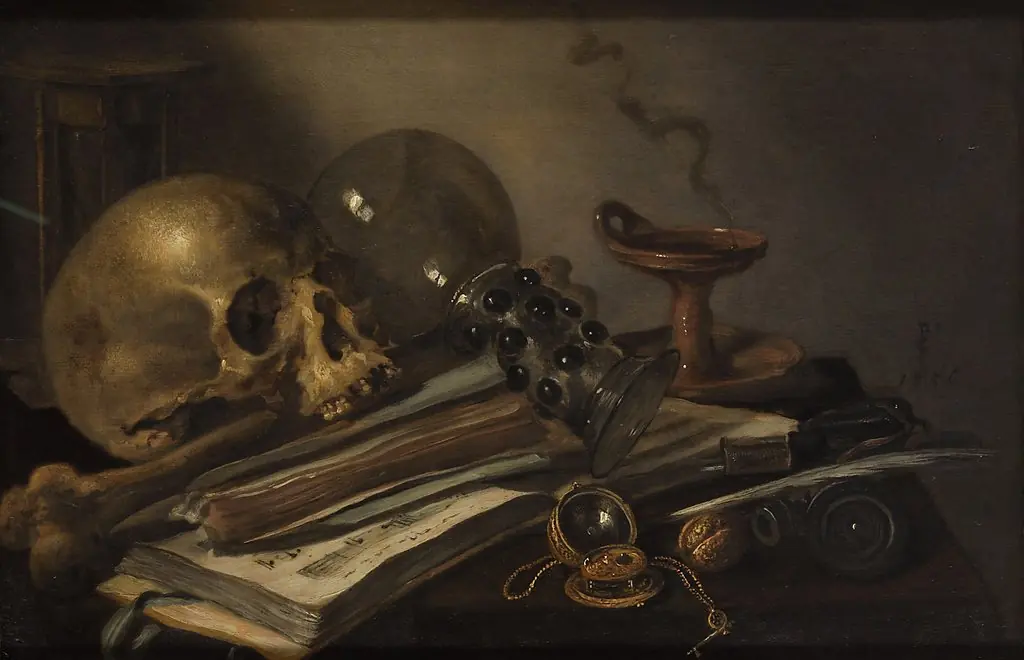
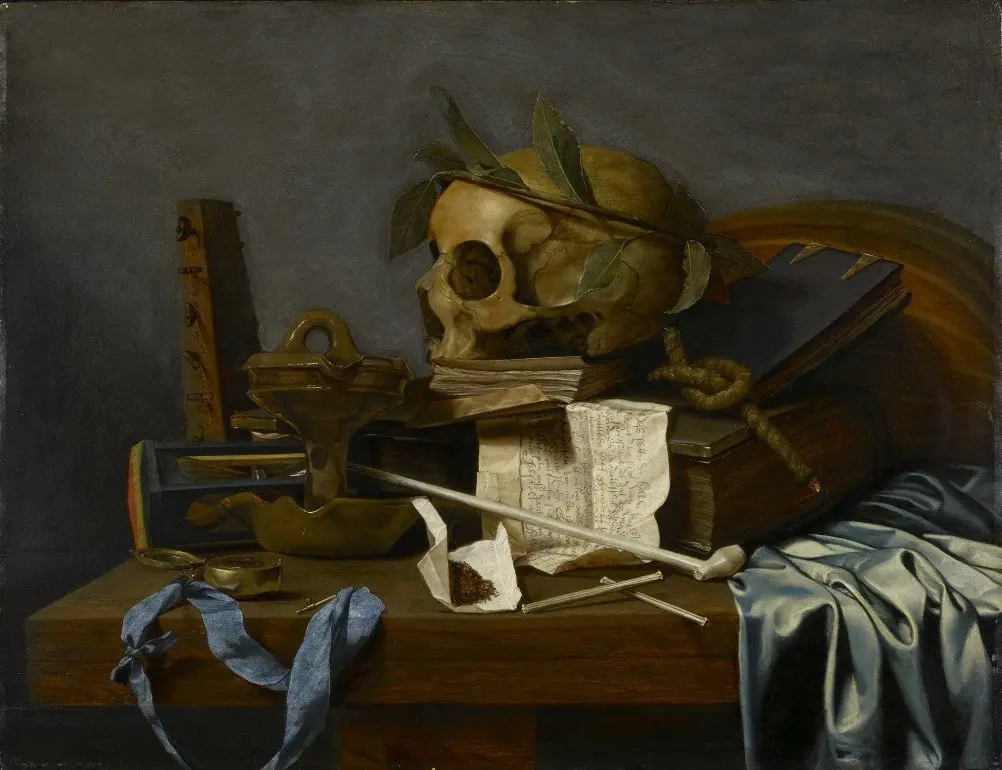
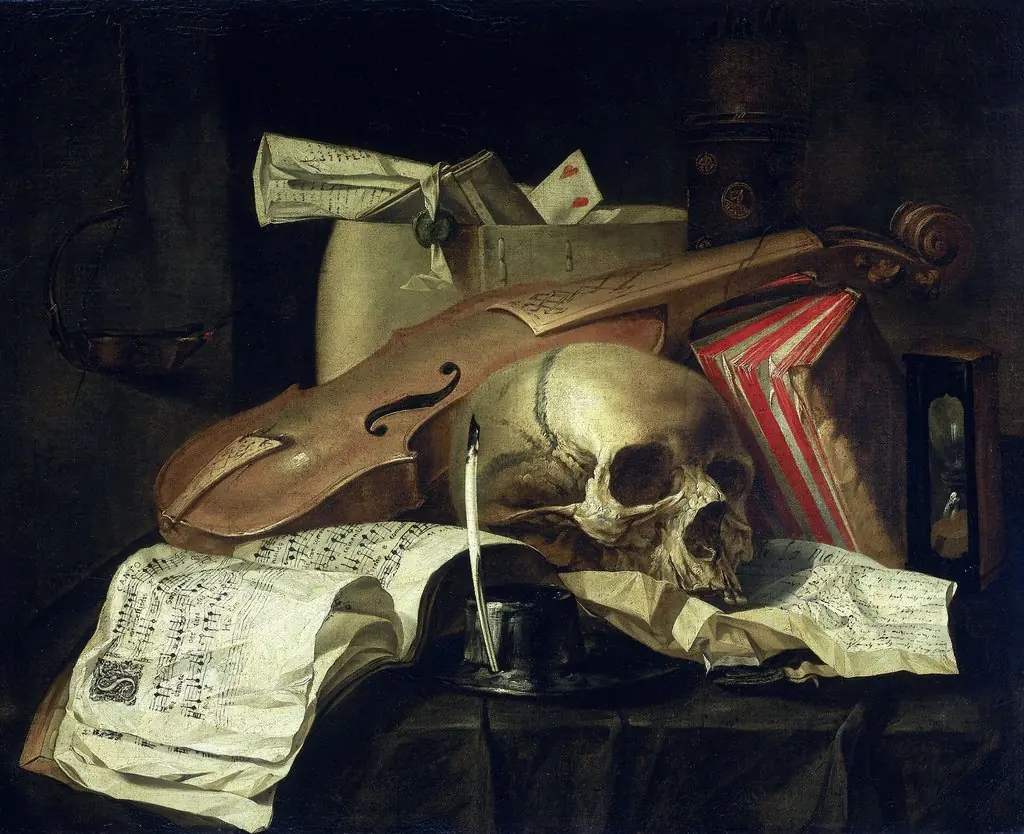
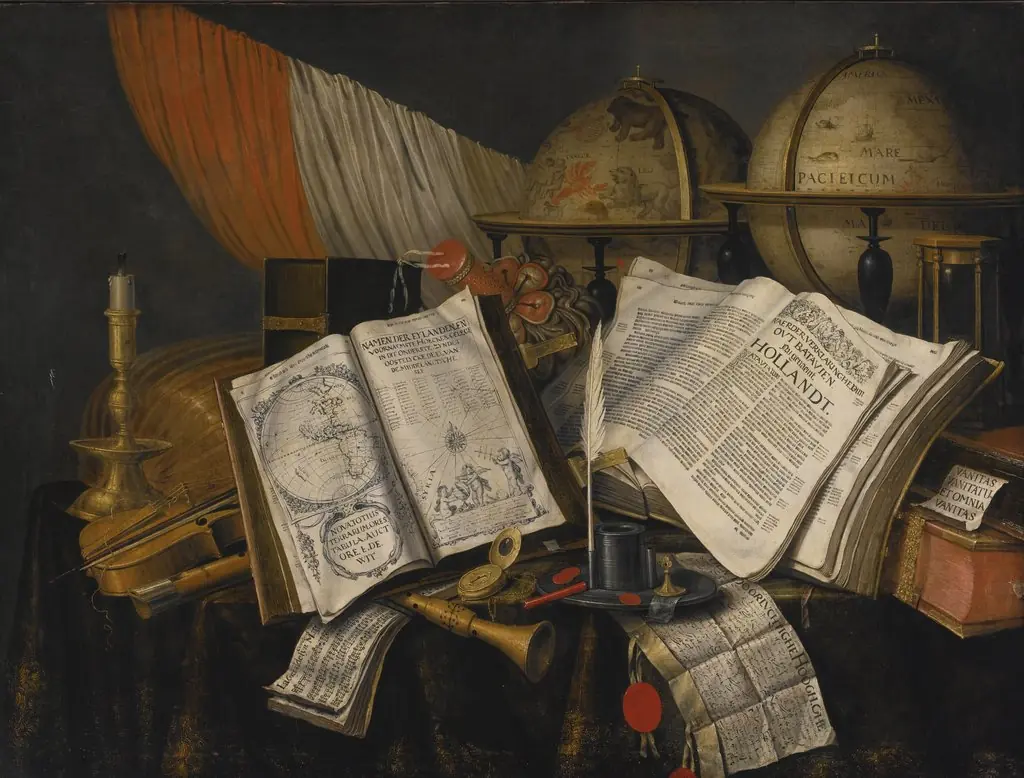 Vanitas Still Life with a Candlestick, Musical Instruments, Dutch Books, a Writing Set, an Astrological and a Terrestial Globe and an Hourglass, All on a Draped Table
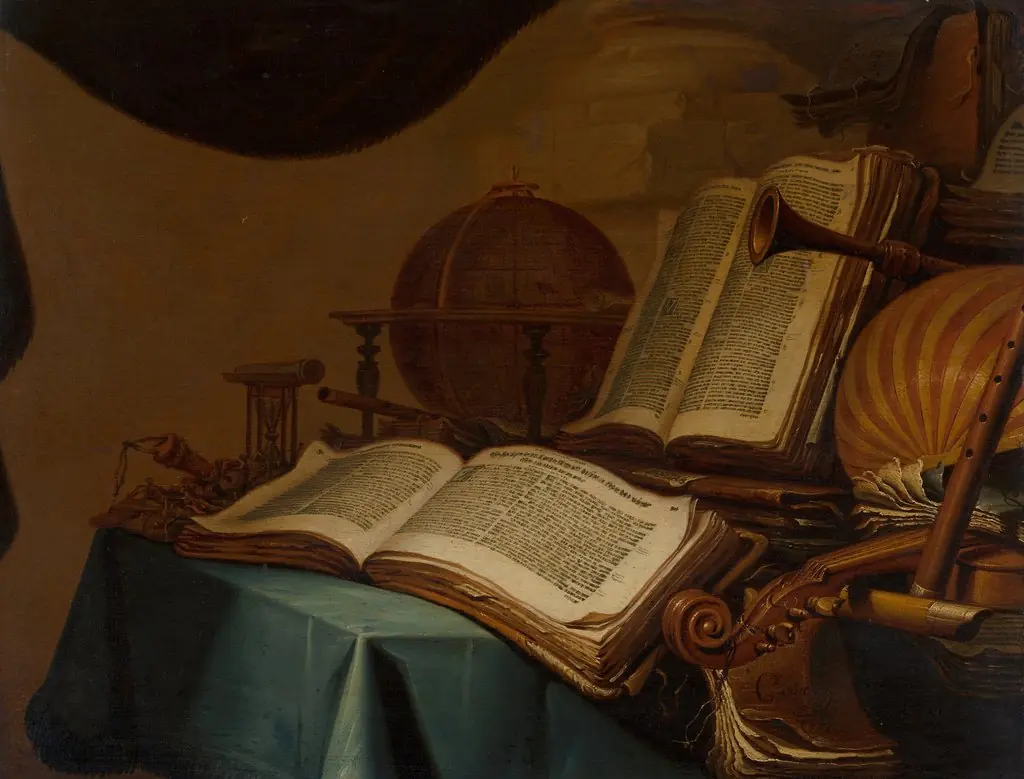 Still Life with Books, a Globe and Musical Instruments
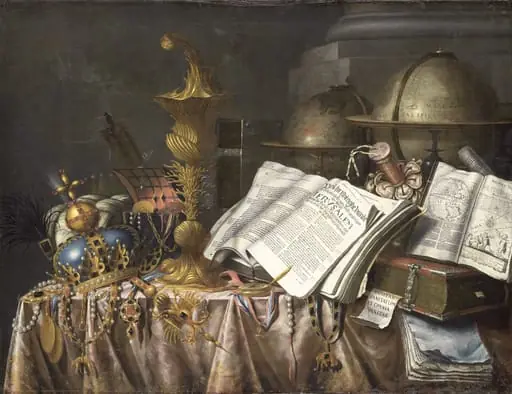 Vanitas Still Life
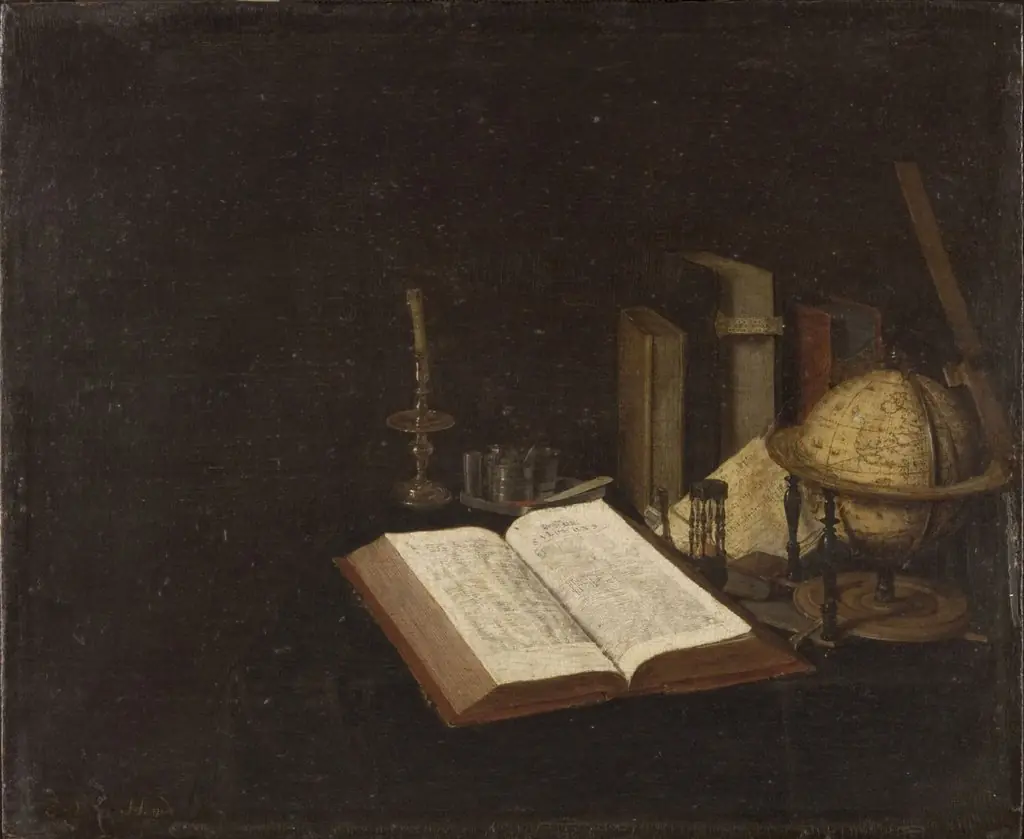 Still Life with Books and a Globe
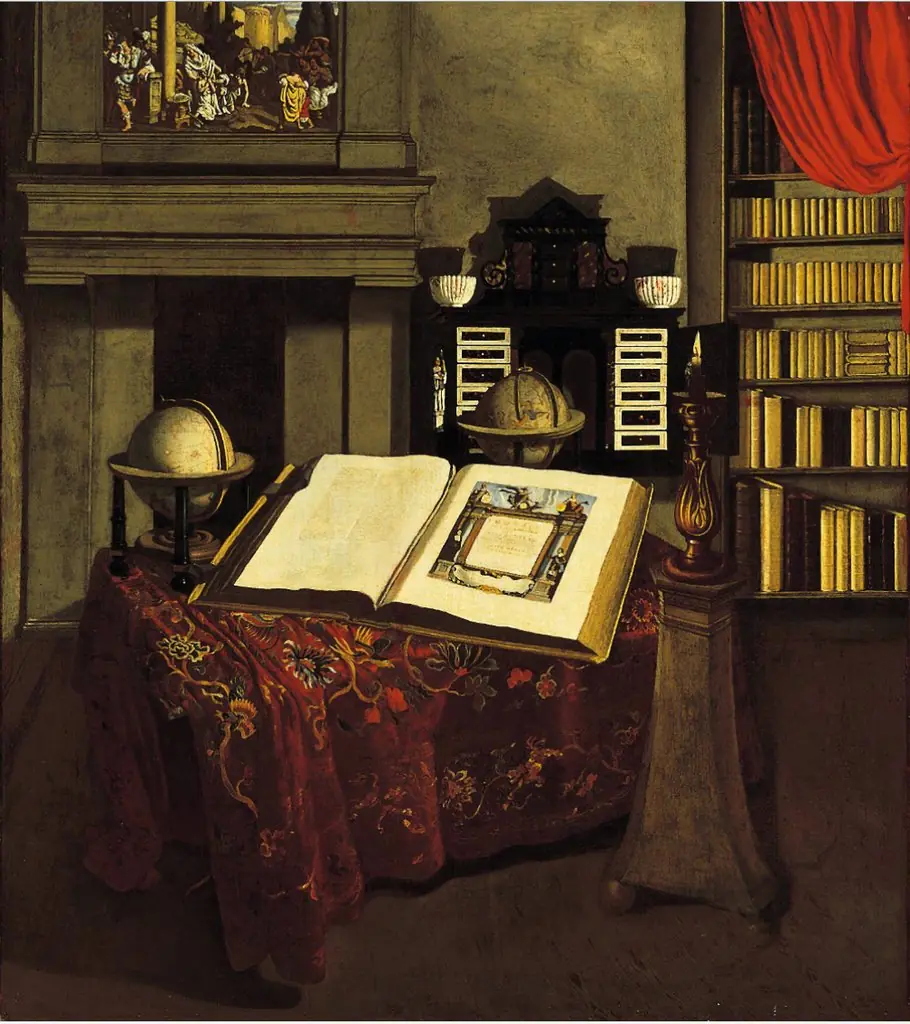 Library Interior with Still Life
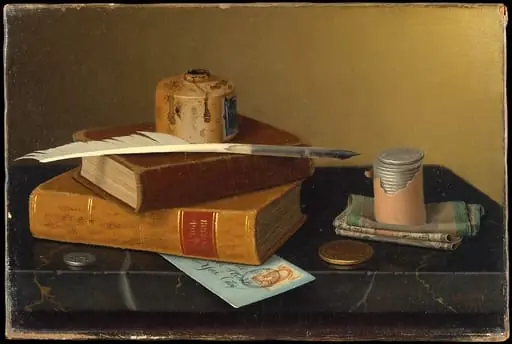 The Banker's Table
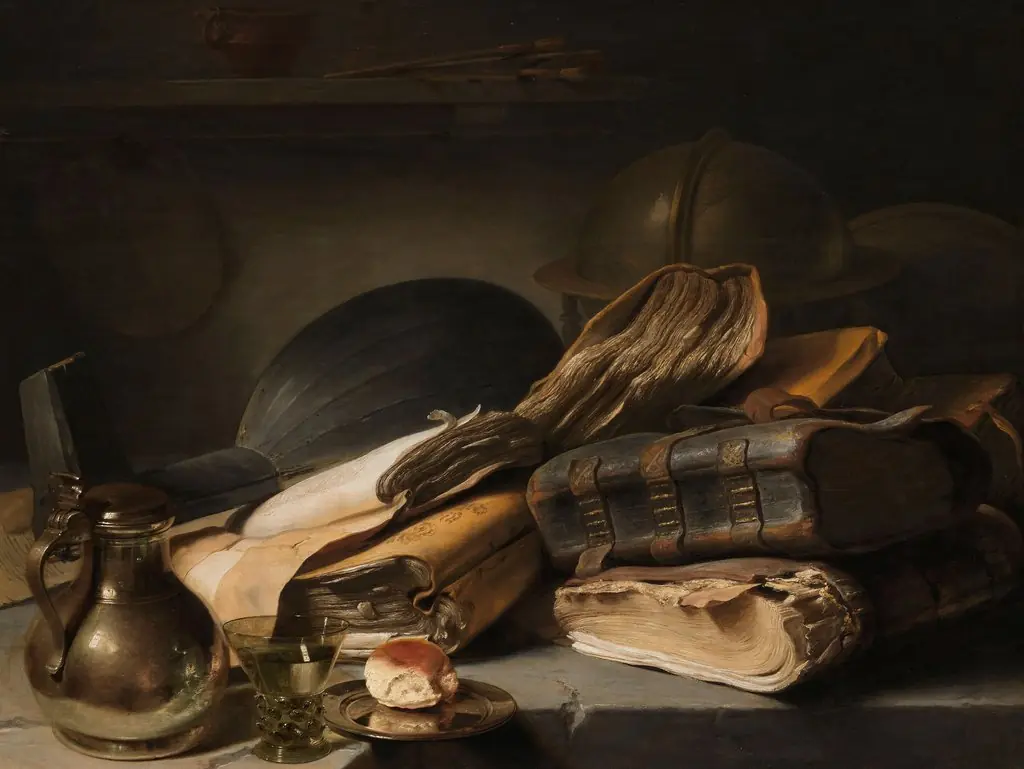 Still Life with Books
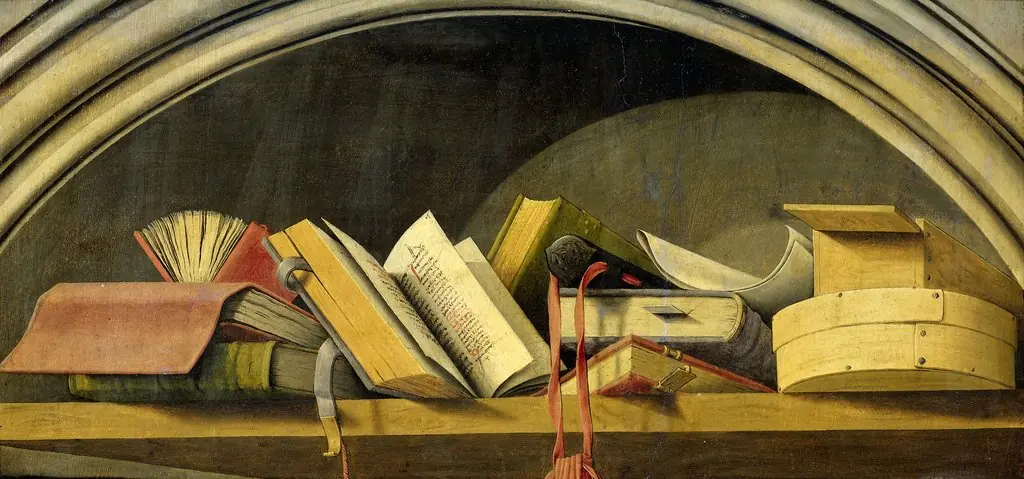 Still Life with Books in a Niche