Artwork
Vas bitronconic, adâncit de culoare cărămizie, smălțuit în interior. Prezintă decorații executate în culoarea albă cu motive geometrice val (pe margini) și, în interior, spirală pe fundul vasului.
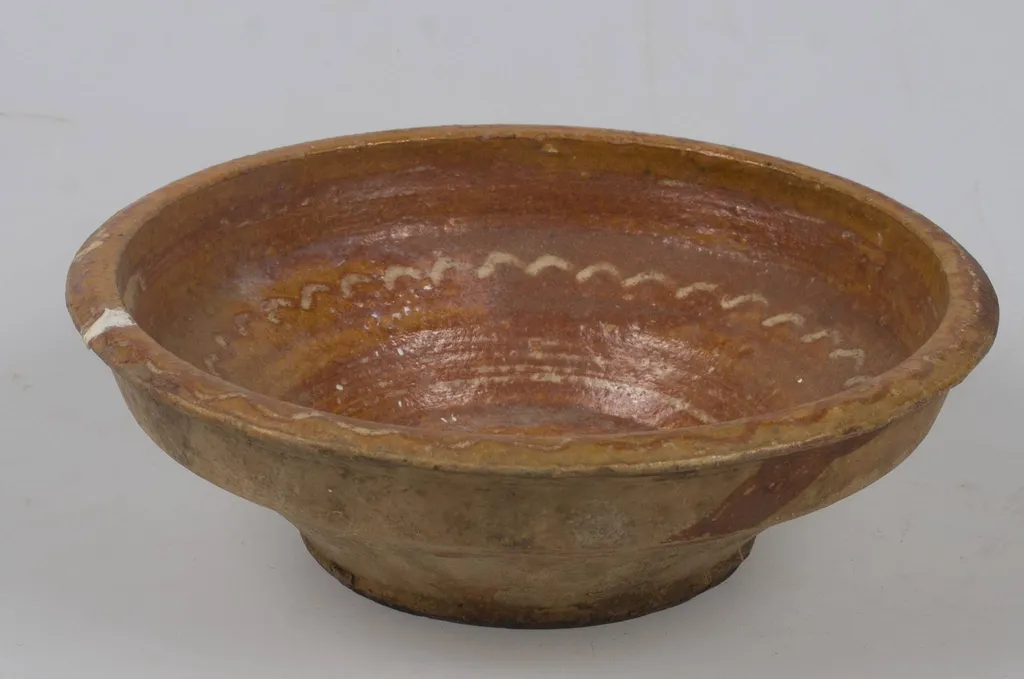
Vas bitronconic, adâncit de culoare cărămizie, smălțuit în interior. Prezintă decorații executate în culoarea albă cu motive geometrice val (pe margini) și, în interior, spirală pe fundul vasului. is a photography by Unknown. It dates from 1850 and is held in the collection of the ASTRA National Museum Complex. The object is a shallow, circular clay vessel with a wide mouth.
About this work
Overview
The object is a shallow, circular clay vessel with a wide mouth. Its exterior bears a muted, uneven brown surface, while the interior is coated in a richer, reddish‑brown tone reminiscent of aged brick. Simple white geometric motifs—zigzag bands along the rim and a central spiral at the base—decorate the pot, offering a modest visual contrast.
Subject & Meaning
The white designs appear to serve a decorative function rather than convey narrative content. The zigzag band framing the rim may have marked the vessel’s functional edge, while the central spiral could symbolize a cyclical or cosmological concept common in traditional pottery motifs, though no specific iconography is identified.
Technique & Style
The vessel was hand‑formed from low‑temperature clay, likely by coiling or pinching, and then fired to achieve its coarse, matte finish. The interior slip of deeper red‑brown suggests a secondary coating applied before firing. White pigments, possibly derived from mineral chalk, were painted post‑fire to create the geometric patterns, indicating a two‑stage decorative process.
History & Provenance
The pot’s worn surface, including cracks and edge chips, points to extensive use before its acquisition. No explicit provenance is recorded, but its material qualities and decorative scheme align with vernacular pottery traditions found in Eastern European or Balkan rural contexts, where such utilitarian vessels were commonplace.
Context
Objects of this type functioned as everyday containers for food, water, or storage, often produced within household workshops. The modest ornamentation reflects a balance between practicality and aesthetic expression typical of community‑level craft, where decorative effort was limited to visible rims and interior focal points.
Artist & collection

 Domestic Scene
 Giacomo and Cardinal Marco, investing Andrea, Abbot of San Zeno, with his Benefice
 The Nymph of Fontainebleau
 Portrait of a Woman
 Madonna and Child with Saints in the Enclosed Garden
 Venus and Minerva
 Family Group of Four on Sofa
 Wall painting from Room H of the Villa of P. Fannius Synistor at Boscoreale
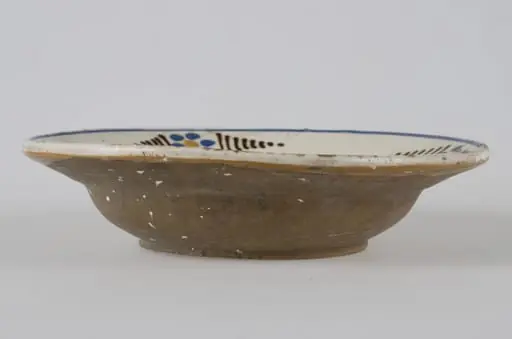 Vas adânc din lut, de formă tronconică, cu marginea evazată. Pe fundalul de culoare albă este decorat cu motive geometrice: linie circulară, linii curbe, puncte pe buza vasului; motive vegetale și florale, pe centrul vasului. Cromatică: fond: alb; motive: albastru; verde; maro; cărămiziu.
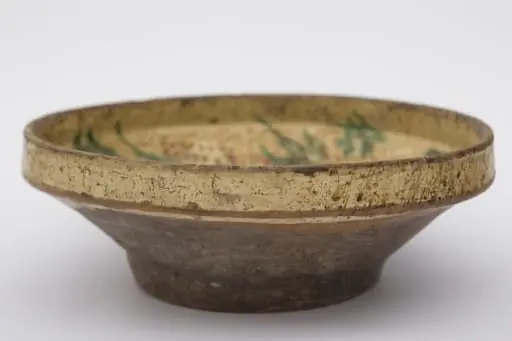 Vas din lut de formă circulară cu profil tronconic, smălțuit la interior, cu buza rotunjită. Decorat cu motive vegetal-florale pictate cu pensula pe suprafața interioară: pe fundul vasului, central, este pictată o floare cu frunze iar pe pereții vasului un șir de flori cu frunze multiple, lunguiețe si punctate. Rol decorativ. Prezintă urme de uzură funcțională. Cromatică: fundal exterior cărămiziu , fundal interior galben; motive: verde, cărămiziu, maro.
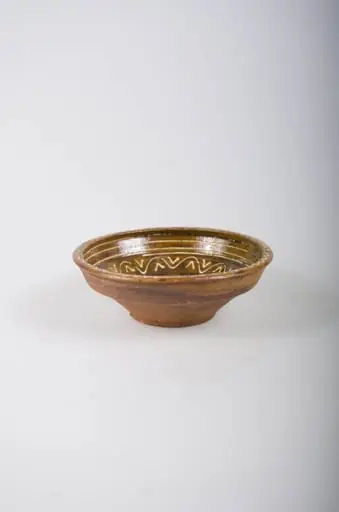 Recipient tronconic, cu gura mai largă decât baza, cu buza dreaptă și înaltă. Acesta este smălțuit doar la interior. Vasul este decorat prin pictare cu cornul, cu ornamente geometrice: spirală pe fund, linii circulare, linii vălurite și ”V”-uri înscrise pe pereți și decorații de tip val pe margine. Din punct de vedere al cromaticii, se observă un fond ocru la interior, cărămiziu la exterior, motivele fiind pictate cu alb.
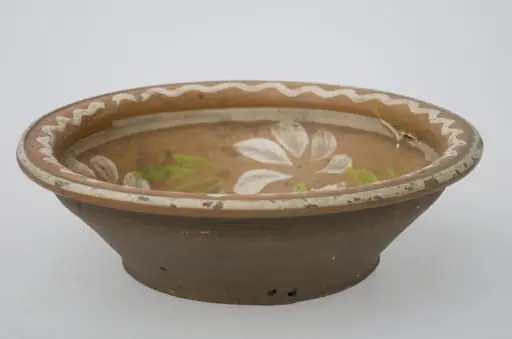 Vas adânc de formă tronconică, cu marginea bombată și evazată marcată de o linie în relief. Smălțuit numai în interior. Prezintă decor floral, iar pe margine două cercuri încadrează o linie frântâ. Cromatică: fond: cărămiziu; motive: alb, verde.
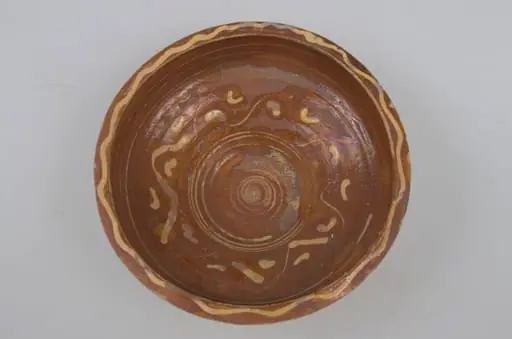 Vas tronconic puțin adâncit de culoare cărămizie smălțuit în interior. Prezintă decorații executate cu culoare albă sub formă de val pe margini, alternanță val-puncte și linii în interior. Spirală pe fundul vasului.
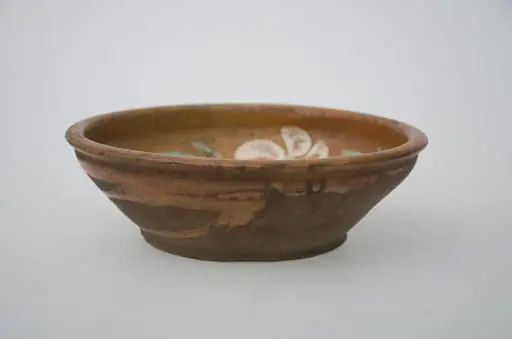 Blid de formă tronconică, smălțuit în interior cu buza larg rasfrântă. Prezintă decor floral fundul șu corpul vasului. Cromatică: fond: maro; motive: alb; verde; albastru.
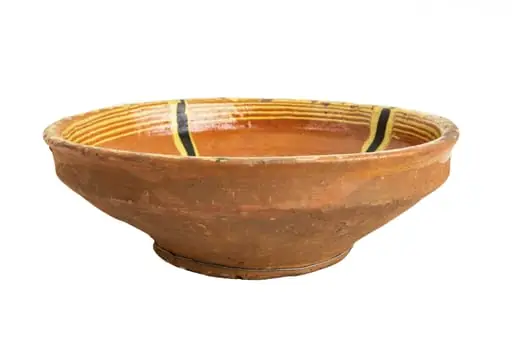 Formă tronconică; fond cărămiziu. Pe fundul vasului, în centru este amplasată o spirală de culoare galbenă încadrată de o serie de cercuri concentrice subțiri de aceeași culoare. Pe peretele vasului sînt dispuse vertical patru linii de culoare brună cu contururi galbene. Buza vasului este decorată cu un val circular de culoare galbenă.
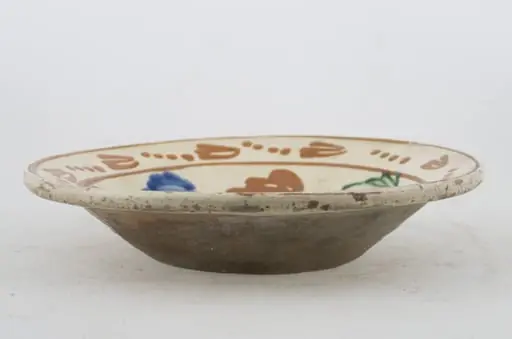 Vas ceramic de formă tronconică cu baza plată, pereții larg evazați și buza profilată. După modelarea la roată, uscarea și arderea recipientului, a fost aplicat un strat de angobă în interiorul vasului, peste care a fost pictat decorul floral și vegetal stilizat, format din două registre. Primul registru, situat pe fundul și pereții vasului, și încadrat de o linie circulară, a fost decorat cu motive florale stilizate: pe fundul vasului se află o floare, cu petalele de diferite culori. Pereții recipientului ceramic au fost decorați la rândul lor cu opt flori, dispuse concentric. Al doilea registru, cel care decorează buza recipientului ceramic, și este mărginit la rândul lui de o linie circulară, prezintă un brâu compus din nouă flori cu tulpinile formate din patru puncte. Cromatică: alb la interior; cărămiziu la exterior; motive: albastru; verde; maro-roșcat.