Artwork
Vas de formă tronconică cu buza largă. Smălțuit în interior și buza la exterior. Decorată pe toată suprafața interioară: corpul și buza sunt delimitate de cercuri. În centrul farfuriei se întâlnețte o spirală, înconjurată de motive florale și vegetale. Cromatică: fond: ocru deschis; motive: albastru; negru.
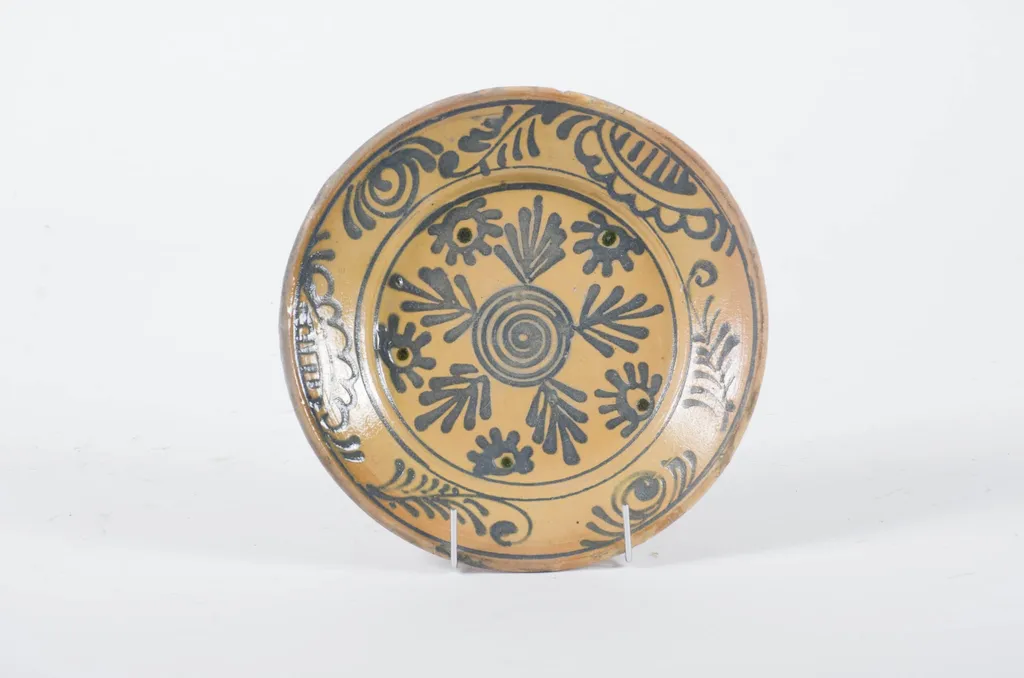
Vas de formă tronconică cu buza largă. Smălțuit în interior și buza la exterior. Decorată pe toată suprafața interioară: corpul și buza sunt delimitate de cercuri. În centrul farfuriei se întâlnețte o spirală, înconjurată de motive florale și vegetale. Cromatică: fond: ocru deschis; motive: albastru; negru. is a photography by Unknown. It dates from 1850 and is held in the collection of the ASTRA National Museum Complex. A shallow, conical vessel with a broad rim, this ceramic dish features an interior glazed in a pale ochre tone.
About this work
Overview
A shallow, conical vessel with a broad rim, this ceramic dish features an interior glazed in a pale ochre tone. The exterior rim is also glazed, while the entire inner surface is adorned with intricate linear decoration. Thin black outlines define geometric and organic motifs, creating a structured yet fluid visual field centered on a spiral form.
Subject & Meaning
The central spiral, encircled by floral and vegetal patterns, suggests a symbolic connection to growth or cyclical natural processes. The arrangement of repeated motifs—flowers, leaves, and starburst shapes—may reflect a decorative tradition rooted in agricultural or seasonal cycles, though no explicit narrative is conveyed. The design emphasizes harmony between form and ornament.
Technique & Style
The vessel was hand-thrown and coated with a slip glaze inside and along the rim. Decoration was applied using pigments in dark blue and black, drawn with precision to form fine lines and dense patterns. The contrast between the light background and sharp, dark contours enhances legibility of the motifs, indicating skilled hand-painting techniques common in regional ceramic practices.
History & Provenance
This piece belongs to a tradition of pottery from the Balkans or Anatolia, dating likely to the late Neolithic or early Bronze Age. Similar vessels have been found in archaeological contexts across southeastern Europe, often in domestic or ritual settings. Its preservation suggests it was carefully handled or intentionally deposited, possibly as part of a burial or ceremonial offering.
Context
The decorative style aligns with contemporaneous ceramic traditions that favored abstracted natural forms over figurative representation. The use of limited pigments—ochre, blue, and black—reflects locally available materials and a preference for restrained palettes. Such vessels were likely used for storage or serving, with ornamentation serving both aesthetic and cultural functions.
Legacy
The design vocabulary of this vessel influenced later regional pottery traditions, particularly in the use of spirals and botanical motifs framed by linear borders. Its aesthetic principles—balance, repetition, and contrast—persist in folk ceramics across the Balkans, where similar patterns continue to be reproduced in both functional and ceremonial wares.
Artist & collection

 Domestic Scene
 Giacomo and Cardinal Marco, investing Andrea, Abbot of San Zeno, with his Benefice
 The Nymph of Fontainebleau
 Portrait of a Woman
 Madonna and Child with Saints in the Enclosed Garden
 Venus and Minerva
 Family Group of Four on Sofa
 Wall painting from Room H of the Villa of P. Fannius Synistor at Boscoreale
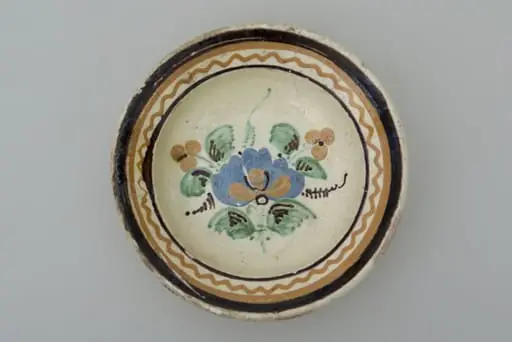 Blid de formă tronconică cu buza evazată. Smălțuit. Decorat cu motive florale: buchet, plasat pe fundul vasului și motive geoemtrice plasate pe gură: alternantă de cercuri și spirale ce se închid îm cerc. Cromatică: fond: alb; motive: maro; crem; verde; albastru.
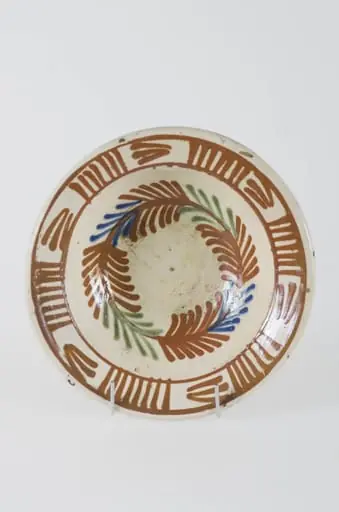 Blid de formă tronconică, lucrat la roată fiind smălțuit la interior cu smalț alb. Prezintă la exterior scurgeri de smalț și de vopsea. Buza este puternic profilată, îngroșată. Motivele decorative sunt vegetale, motivul brăduțului, pe fundul vasului, dispuse într-un registru circular, iar pe buza interioară se identifică un alt registru circular în interiorul căruia sunt pictate linii verticale paralele. Cromatică: fond: alb-gălbui; motive: cărămiziu; albastru; verde.
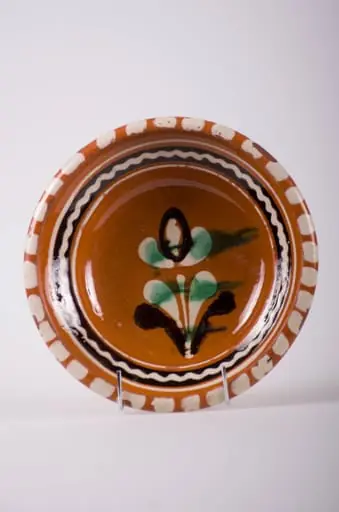 Vas de formă tronconică, adâncită. Pe fund are gaură pentru agățare; este smălțuit interior și exterior (doar buza); este decorat cu motive geometrice: linie, linie în val; în interior este decorat cu motive florale. Cromatică: fond: cărămiziu; motive: cărămiziu; maro; negru; verde.
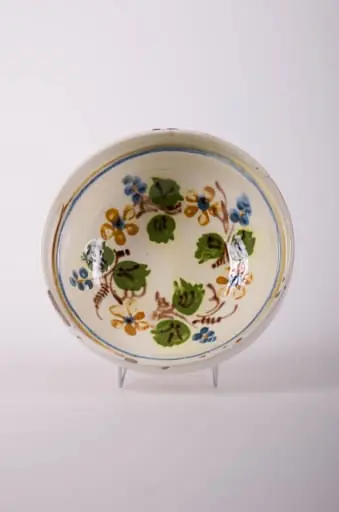 Farfurie de formă tronconică, adâncită, cu buza foarte înaltă; pe fund are găuri pentru agățare. Este smălțuit în interior și exterior (buza). Decorat cu motive geometrice: linie; motive fitomorfe; motive florale. Cromatică: fond: alb; motive: verde; maro; albastru.
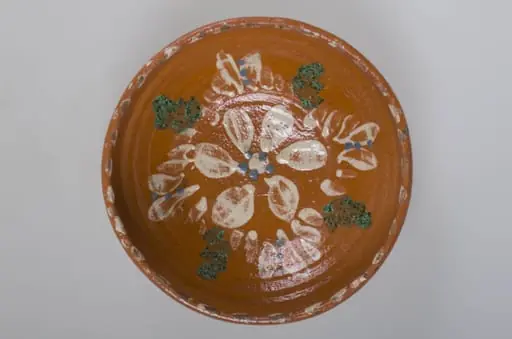 Blidul de formă tronconică este unul adânc, smălțuit pe interior, ornamentat cu motive florale, cu buză înaltă, neornamentat la exterior. Obiectul este smălțuit, la exterior, doar pe buză. Acesta prezintă puncte pictate cu pensula pe buză, la interior. Blidul este prevăzut cu două orificii pentru prindere, pe fund. Cromatică: fondul este cărămiziu, iar motivele sunt pictate cu alb, verde și albastru.
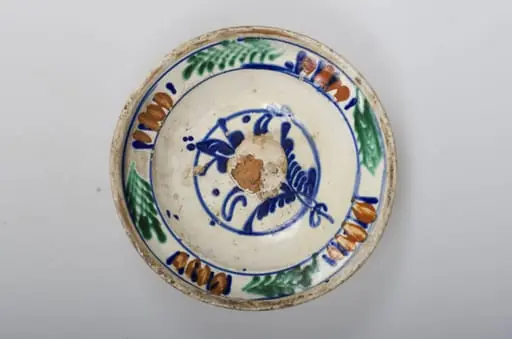 Vas de formă tronconică adâncit, smălțuit în interior cu buză profilată spre exterior. Este decorat în interior cu motive vegetale și florale (motivul brăduțului) dispuse într-un registru circular pictat pe în zona diametrului maxim al vasului. Cromatică: fond cărămiziu (exterior) cu scurgeri de smalț alb spre baza vasului; fond crem (interior); albastru; maro; verde; galben.
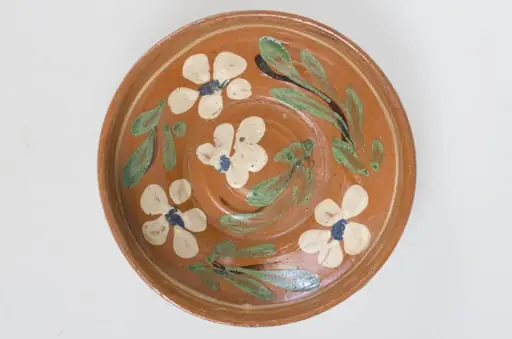 Blidul de formă tronconică adânc, smălțuit (la interior). Acesta este ornamentat cu motive florale, având cu buza înaltă. Blidul este neornamentat la exterior, fiind smălțuit (la exterior) doar pe buză. Pe exteriorul buzei este incizată o linie. Fundul obiectului are formă circulară, fiind prevăzut cu două orificii pentru prindere. Cromatică: fond: cărămiziu (exterior); alb (interior); decor: verde; alb; albastru; maro.