Artwork
Vas de formă tronconică adâncit, smălțuit în interior cu buză profilată spre exterior. Este decorat în interior cu motive vegetale și florale (motivul brăduțului) dispuse într-un registru circular pictat pe în zona diametrului maxim al vasului. Cromatică: fond cărămiziu (exterior) cu scurgeri de smalț alb spre baza vasului; fond crem (interior); albastru; maro; verde; galben.
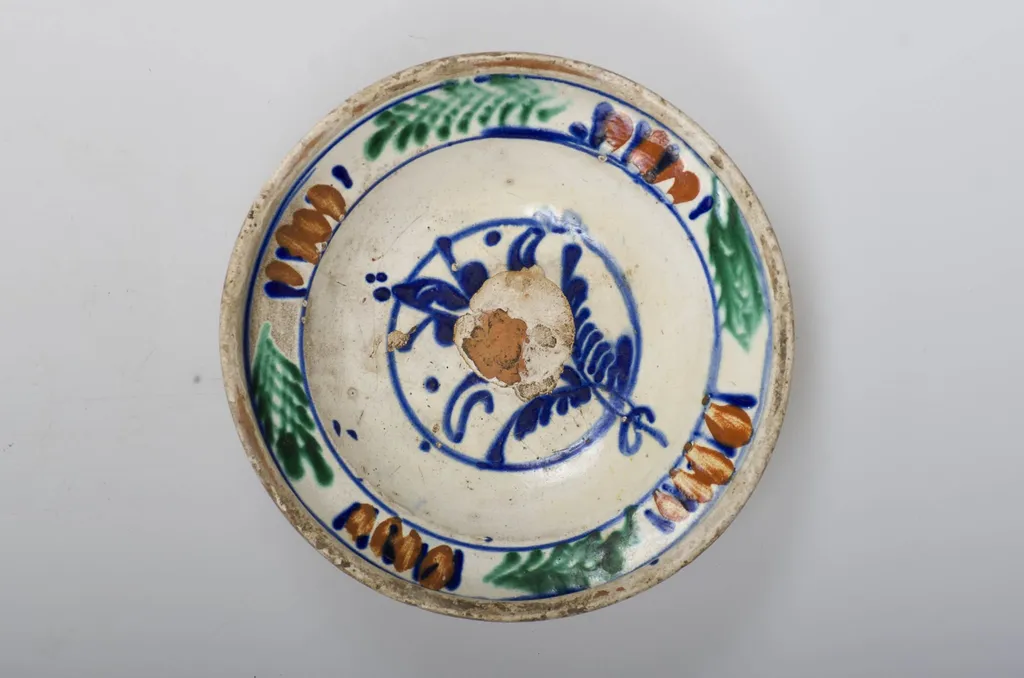
Vas de formă tronconică adâncit, smălțuit în interior cu buză profilată spre exterior. Este decorat în interior cu motive vegetale și florale (motivul brăduțului) dispuse într-un registru circular pictat pe în zona diametrului maxim al vasului. Cromatică: fond cărămiziu (exterior) cu scurgeri de smalț alb spre baza vasului; fond crem (interior); albastru; maro; verde; galben. is a photography by Unknown. It dates from 1850 and is held in the collection of the ASTRA National Museum Complex. This ceramic vessel features a truncated conical form with a flared rim and a narrow base, suggesting functional use as a bowl.
About this work
Overview
The handmade quality is evident in subtle irregularities of form and glaze application, reflecting artisanal rather than industrial production methods.
This ceramic vessel features a truncated conical form with a flared rim and a narrow base, suggesting functional use as a bowl. Its interior is glazed, while the exterior retains a matte, earth-toned surface with natural glaze drips pooling near the foot. The handmade quality is evident in subtle irregularities of form and glaze application, reflecting artisanal rather than industrial production methods.
Subject & Meaning
The interior decoration centers on a single horizontal band of stylized botanical motifs, including pine-like sprigs, leaves, and flowers arranged in a continuous circle. These natural forms—likely drawn from local flora—carry no overt symbolic narrative but evoke seasonal cycles and rural life. The repetition of the pattern reinforces a sense of harmony and order within the vessel’s functional space.
Technique & Style
The piece was formed by hand and coated with a lead-based glaze that melted unevenly during firing, creating soft, organic transitions between colors. Pigments in blue, green, brown, and yellow were applied beneath the glaze, preserving their muted tones. The decorative scheme avoids complexity, favoring flat, outlined shapes and a restrained palette that aligns with regional folk traditions rather than courtly aesthetics.
History & Provenance
Though exact origins are undocumented, the vessel’s form and decoration resemble ceramics produced in Eastern European rural workshops between the late 18th and early 20th centuries. Similar pieces appear in ethnographic collections from Romania and Moldova, suggesting a shared regional craft tradition. Its survival in private or institutional hands indicates it was valued for utility and aesthetic simplicity rather than elite status.
Context
This bowl belongs to a broader category of utilitarian ceramics made for domestic use in agrarian communities. Its decoration, though decorative, was not ornamental in a ceremonial sense—it likely served to personalize everyday objects. The use of local clays and mineral pigments, along with wood-fired kilns, reflects a self-sufficient craft economy tied to seasonal rhythms and inherited techniques.
Legacy
The vessel exemplifies a quiet continuity in folk ceramic traditions, where form and decoration were shaped by practical needs and local materials rather than artistic trends. Its preservation in museum collections underscores its value as a material record of non-elite craftsmanship. Similar pieces continue to inform contemporary interpretations of regional pottery and sustainable making practices.
Artist & collection

 Domestic Scene
 Giacomo and Cardinal Marco, investing Andrea, Abbot of San Zeno, with his Benefice
 The Nymph of Fontainebleau
 Portrait of a Woman
 Madonna and Child with Saints in the Enclosed Garden
 Venus and Minerva
 Family Group of Four on Sofa
 Wall painting from Room H of the Villa of P. Fannius Synistor at Boscoreale
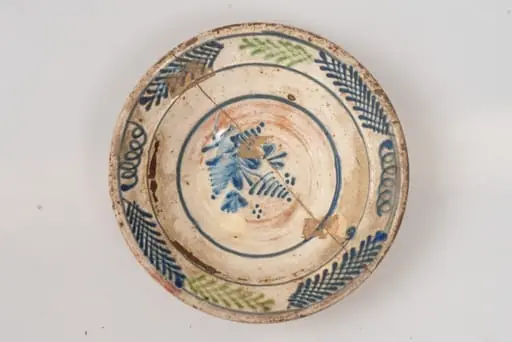 Farfurie adâncă, acoperită pe fața interioară cu un strat de humă albă peste care este pictat cu cornul decorul format din motive florale și vegetale stilizate: central pe fundul farfuriei este pictată o tulpină cu trei flori albastre (realizate din linii paralele descrescătoare ca mărime, dispuse sub formă de triunghi), și frunze albastre, încadrată într-un cerc albastru. Buza farfuriei este decorată cu șase grupuri de motive realizate din linii hașurate intersectat, patru grupuri de culoare albastră, celălalte două de culoare verde, sugerând niște ramuri cu frunze. Două linii mici buclate, așezate diametral opus, completează decorul de pe buza farfuriei. Muchia interioară a buzei și marginea ei sunt marcate de câte o linie circulară de culoare albastră, linii ce încadrează decorul din această zonă. Suprafața ornamentată a farfuriei este acoperită cu un strat de smalț transparent. Cromatica: alb, albastru, verde.
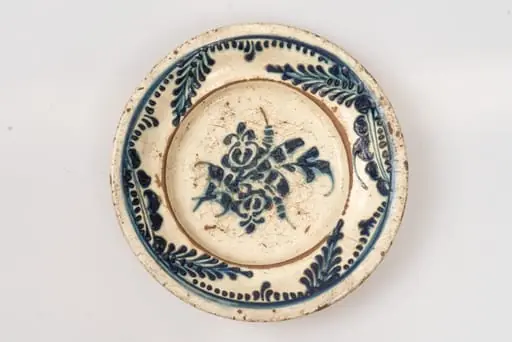 Farfurie semi-adâncă, cu fund larg și buză evazată; este acoperită pe fața interioară cu un strat de angobă albă, peste care este pictat cu cornul decorul monocromatic format din motive vegetale și florale stilizate: un buchet cu două flori și frunze, ce formează registrul decorativ central, de pe fundul farfuriei, iar buza acesteia este decorată cu patru motive vegetale (frunze) formate din linii în formă de brăduț, completate cu motive formate din puncte și șiruri de linii mici, sub formă de virgulă. Marginea buzei este marcată de o linie albastră. Cromatica: alb, albastru. Fața ornamentată a farfuriei este acoperită cu un strat de smalț transparent.
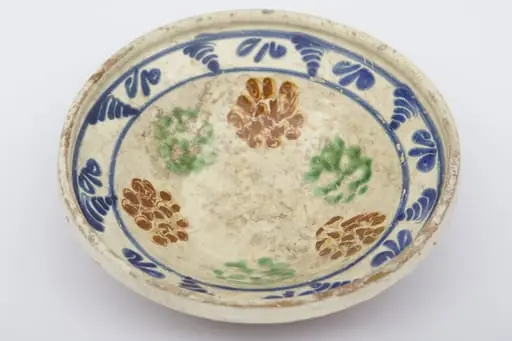 Vas ceramic de dimensiuni medii, smălțuit la interior, având formă tronconică. Blidul a fost decorat cu motive geometrizante și fitomorfe stilizate. Primul registru, dispus pe fundul piesei este format din șase flori verzi și maro, intercalate. Marginal, pe buza profilată a fost realizat cel de-al doilea registru, fiind trasate două linii circulare, care încadrează motive vegetale albastre, succesive. Blidul era folosit pentru servirea hranei. Prezintă uzură funcțională. Cromatică: fond: cărămiziu; crem; motive: albastru; maro; verde.
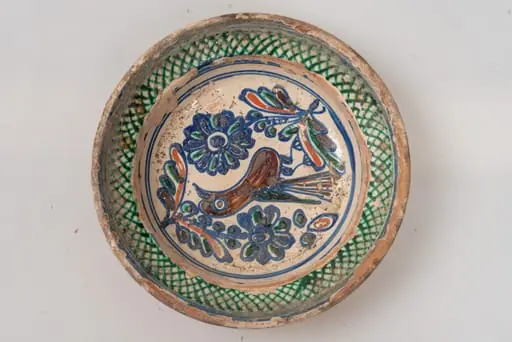 Farfurie semi-adâncă, cu fund larg și buză evazată cu muchia ușor ridicată. Piesa este angobată pe fața interioară cu un strat de humă albă peste care este pictat cu pensula și cu cornul decorul format din motive avimorfe, florale și vegetale stilizate: central pe fundul farfuriei, înscrisă într-un cerc albastru, este reprezentată o pasăre maro între două tulpini cu flori și frunze. Buza farfuriei este decorată în întregime cu linii hașurate intersectat de culoare verde. Suprafața ornamentată a farfuriei este acoperită cu un strat de smalț transparent. Cromatica: alb, albastru, verde, maro.
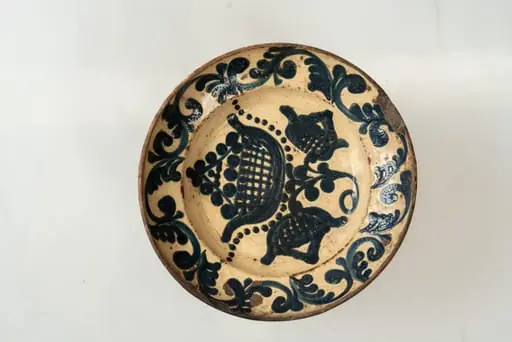 Farfurie semi-adâncă, cu corp scund și buză lată, răsfrântă și muchia buzei ușor concavă spre interior. Piesa este modelată la roata olarului, angobată cu humă albă pe fața interioară a acesteia. Decorul este realizat prin pictare cu pensula și cu cornul, cu linii groase, și constă în motive decorative florale și vegetale stilizate (flori și frunze), dispuse pe toată suprafața farfuriei. Cromatica decorului: alb, albastru. Farfuria este smălțuită pe interior, cu smalț transparent.
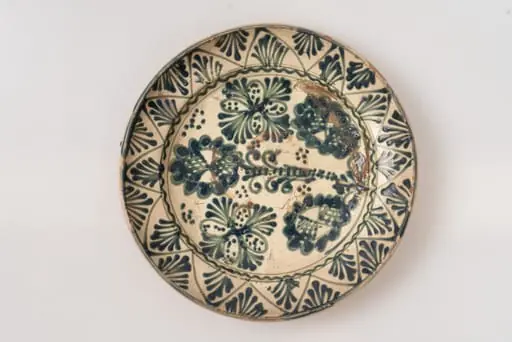 Farfurie de formă semi-adâncă, cu buză lată, răsfrântă; este angobată pe fața interioară cu un strat de humă albă, peste care este pictat cu cornul decorul monocromatic, format din motive florale și fitomorfe foarte stilizate (tulpină cu cinci flori și frunze, reprezentate pe centrul farfuriei) și geometrice (o linie în formă de zig-zag, pe toată lungimea buzei, completată cu motive formate din linii verticale, dispuse în formă de triunghi; linii circulare simple și linie circulară ondulată ce marchează bordura interioară a farfuriei; puncte, linii hașurate). Buza farfuriei este marcată cu o dungă de culoare albastră. Cromatica: alb, albastru. Farfuria este acoperită pe fața decorată cu un strat de smalț transparent.
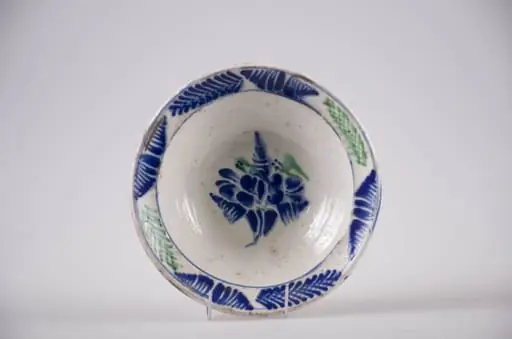 Blid de formă tronconică cu buza evazată, Smălțuit la interior. Decorul este format din ornamente florale dispuse pe motiv central: floare; motive marginale, fitomorfe: brăduț. Cromatică: verde și albastru pe fond alb.
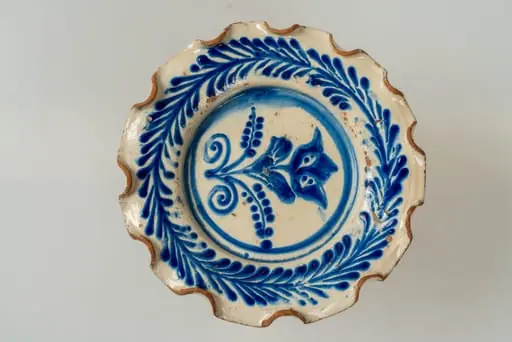 Farfurie mică, joasă, de formă plată, cu buză lată, răsfrântă, ușor concavă spre margine și cu muchie ondulată. Piesa este modelată la roata olarului, angobată cu humă albă pe fața interioară a acesteia. Decorul este realizat prin pictare cu cornul și cu pensula și constă în motive decorative florale și vegetale (flori și frunze), dispuse astfel: central, pe fundul farfuriei un motiv floral, încadrat în două cercuri concentrice, iar pe toată buza farfuriei este zugrăvit un decor vegetal sub formă de ghirlandă continuă din frunze. Cromatica: alb, albastru. Farfuria este smălțuită pe interior, cu smalț transparent.