Artwork
Vasakasajja Nayika
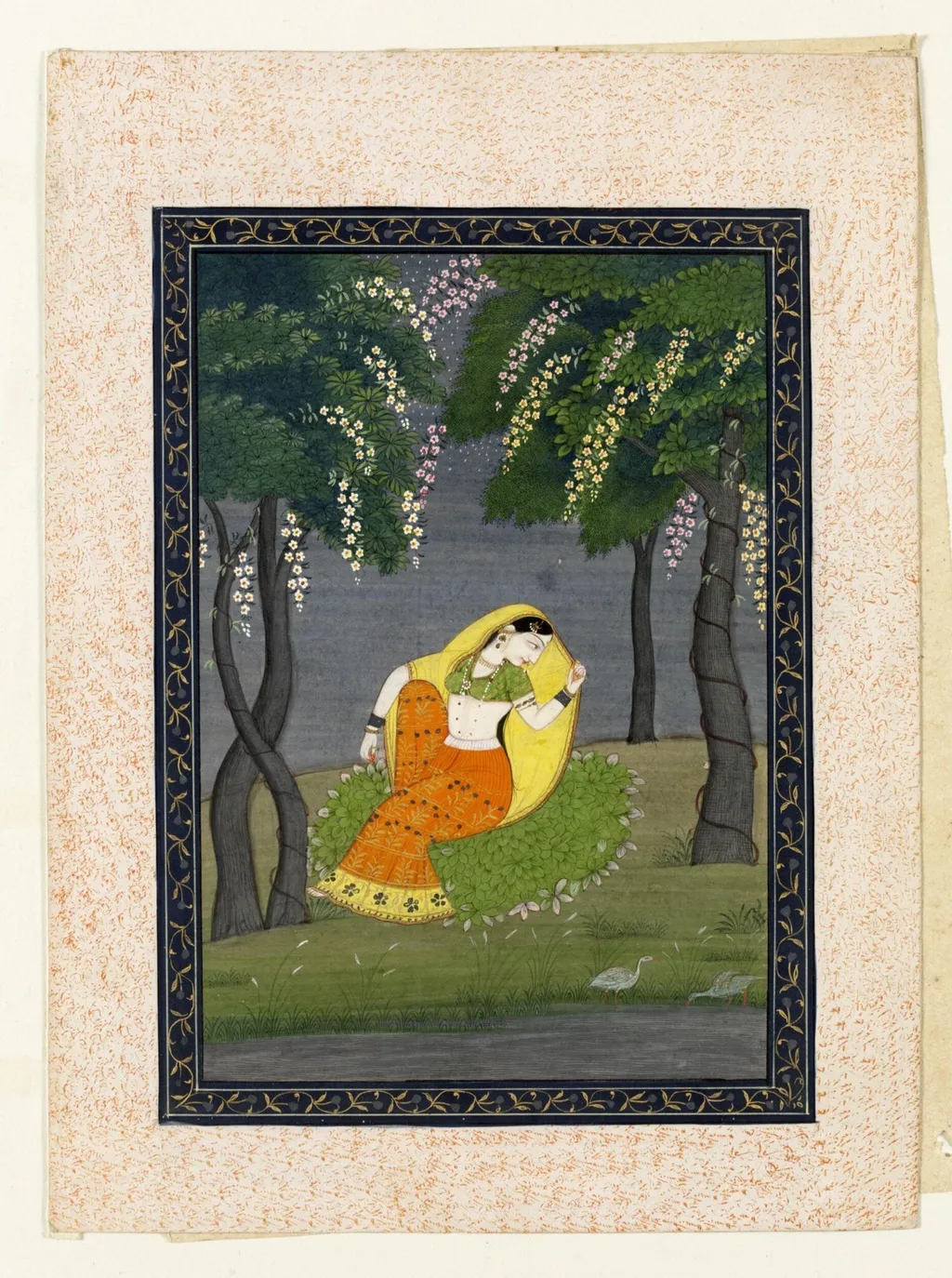
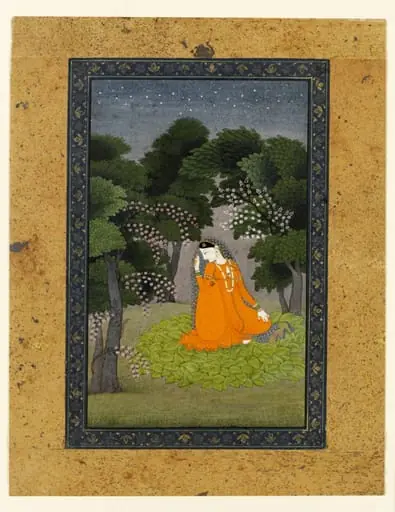
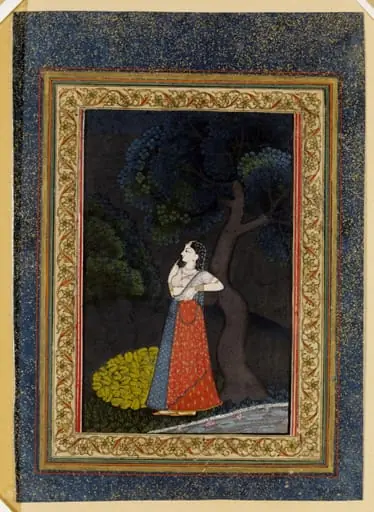
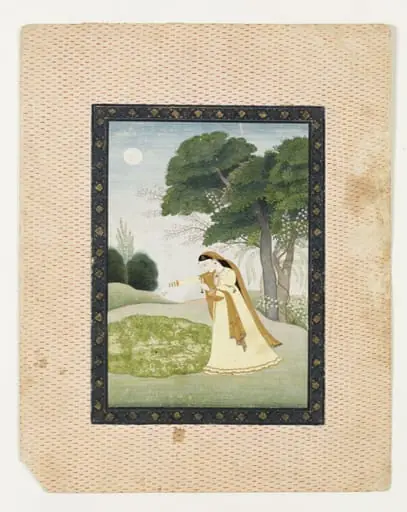
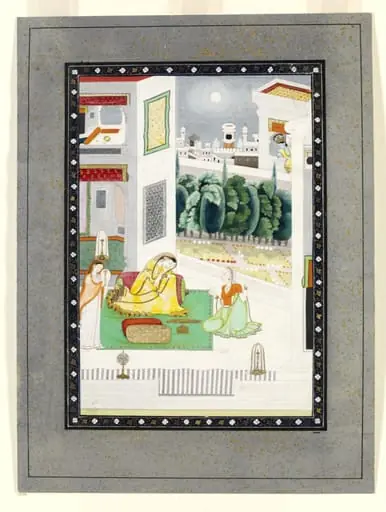
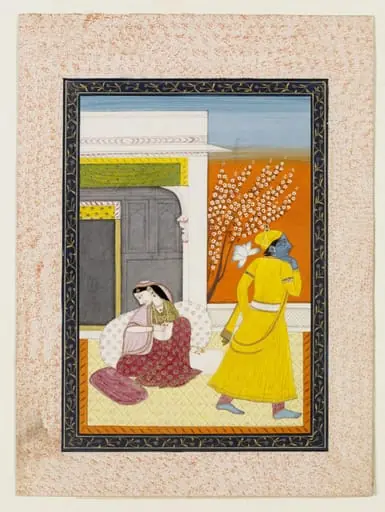
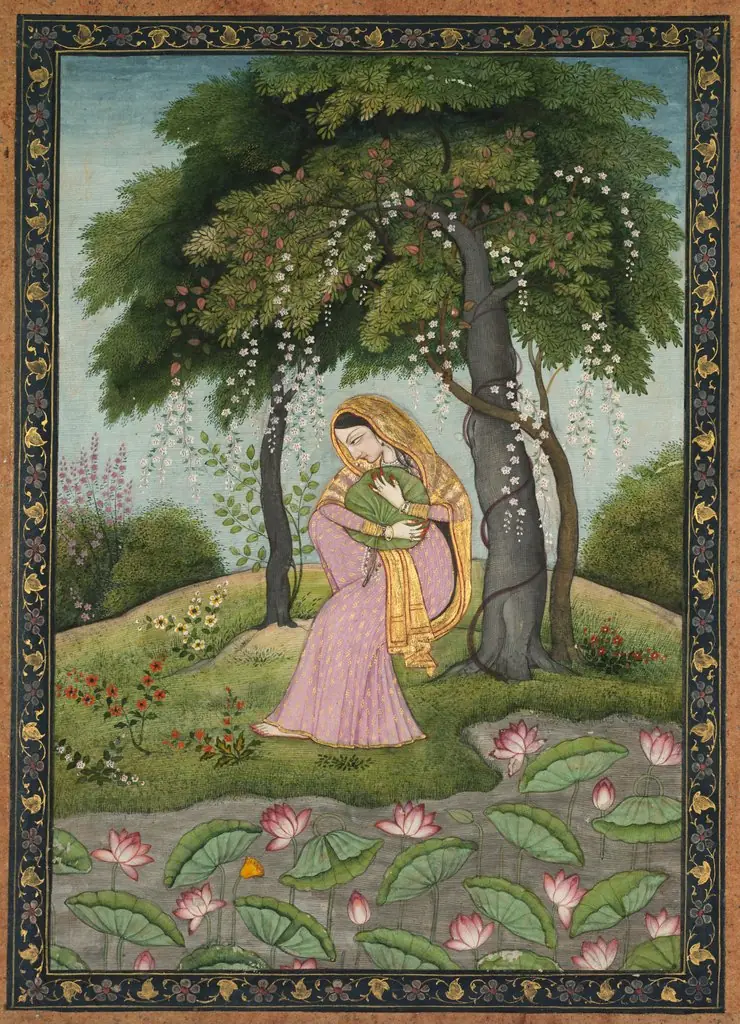
Vasakasajja Nayika is a paint painting by the Romanticist artist Unknown. It dates from 1830 and is held in the collection of the Victoria and Albert Museum. This opaque watercolor on paper, created circa 1830 in the Harkhu style, portrays a tranquil scene of two figures beneath a blooming tree.
About this work
Overview
Executed with fine brushwork, the painting reflects regional Pahari traditions, emphasizing naturalism and intimate domesticity within a lyrical landscape.
This opaque watercolor on paper, created circa 1830 in the Harkhu style, portrays a tranquil scene of two figures beneath a blooming tree. The composition is framed by dark, almost monochromatic tones that heighten the vibrancy of the figures’ garments. Executed with fine brushwork, the painting reflects regional Pahari traditions, emphasizing naturalism and intimate domesticity within a lyrical landscape.
Subject & Meaning
The figures, one in vivid yellow and orange with gold detailing, the other in white and green, are likely representations of a Nayika—heroine from Indian poetic tradition—engaged in a quiet, contemplative moment. The presence of ducks on water and blooming flora suggests themes of seasonal renewal and romantic anticipation, common in texts like the Rasikapriya, where the Nayika awaits her beloved in nature’s embrace.
Technique & Style
The artist employed fine-line brushwork and layered opaque pigments to achieve luminous color effects. The garments are rendered with precise detailing, particularly the gold trim, while the background uses muted grays and blues to create depth without distraction. The contrast between the saturated foreground and subdued surroundings reflects a deliberate compositional strategy to focus attention on the figures and their emotional stillness.
History & Provenance
This work originates from the Harkhu school, a regional tradition in the Punjab Hills known for its delicate handling of courtly and literary themes. Likely produced for a local patron, it aligns with a broader 19th-century trend of illustrating poetic narratives in miniature form. Its survival suggests continued appreciation within private collections, though its exact early provenance remains undocumented.
Context
The painting emerges from a cultural milieu where poetry and visual art intersected, particularly in the depiction of Nayikas from Sanskrit and Brajabhasha literature. Similar scenes of women in gardens or by streams were common in Pahari painting, reflecting both spiritual ideals and courtly aesthetics. The inclusion of birds and blossoms aligns with seasonal symbolism tied to love and longing in North Indian literary traditions.
Legacy
Though not widely exhibited, this work contributes to the understanding of regional Indian painting beyond the more famous Mughal or Rajasthani schools. Its quiet intensity and refined color use influenced later artists in the Hill states, preserving a visual language of emotional subtlety. Today, it remains a quiet testament to the enduring appeal of poetic imagery in Indian miniature art.
Artist & collection

 Domestic Scene
 Giacomo and Cardinal Marco, investing Andrea, Abbot of San Zeno, with his Benefice
 The Nymph of Fontainebleau
 Portrait of a Woman
 Madonna and Child with Saints in the Enclosed Garden
 Venus and Minerva
 Family Group of Four on Sofa
 Wall painting from Room H of the Villa of P. Fannius Synistor at Boscoreale