Artwork
Vasakasajja Nayika
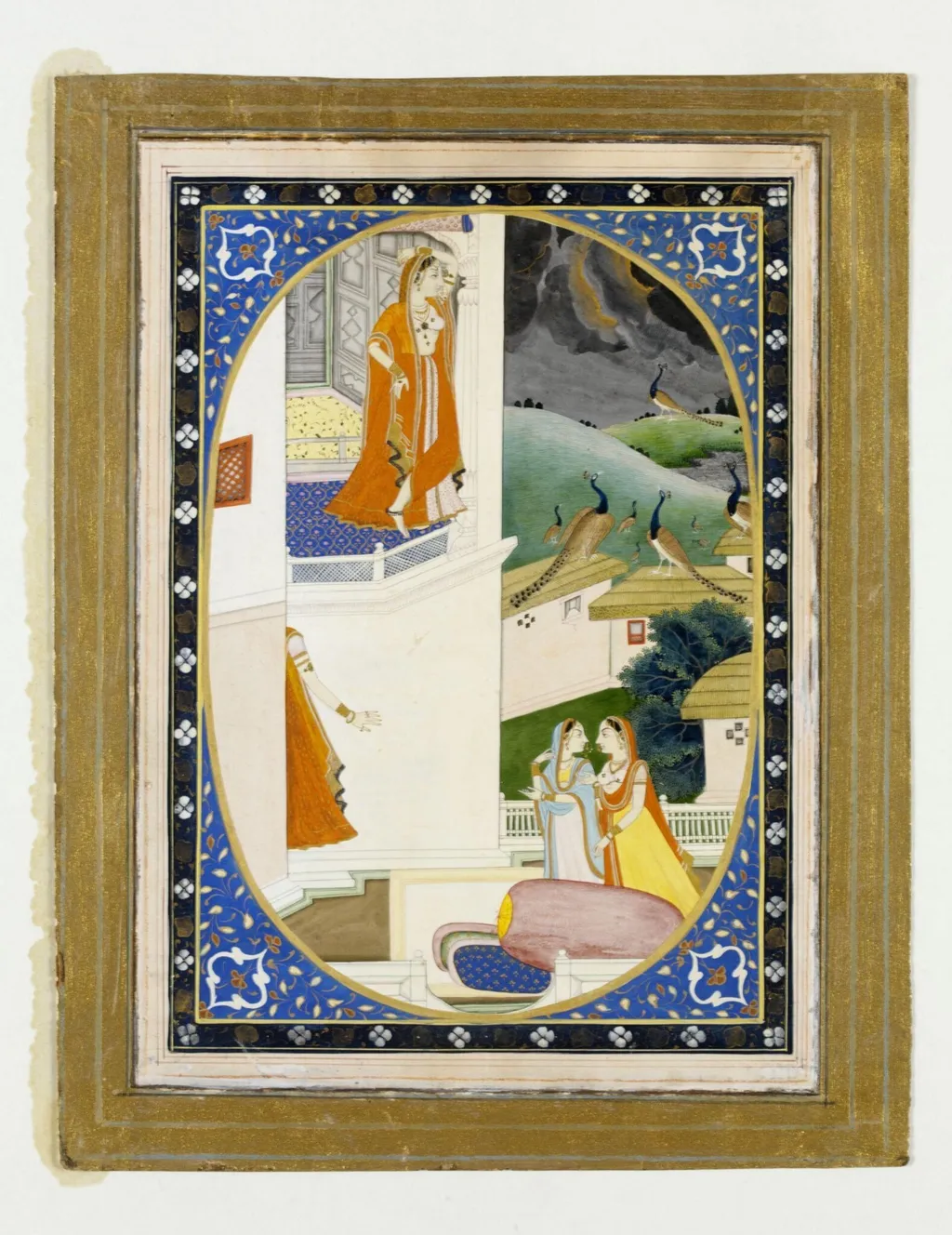
Vasakasajja Nayika is a paint painting by the Romanticist artist Unknown. It dates from 1840 and is held in the collection of the Victoria and Albert Museum.
About this work
Overview
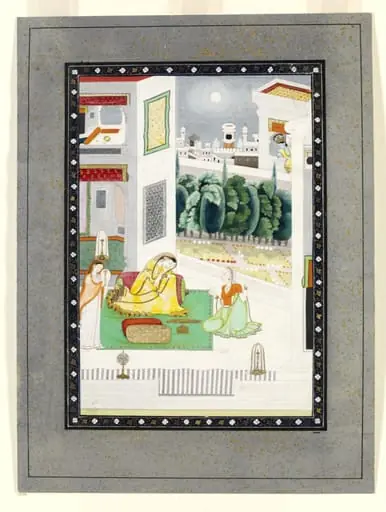
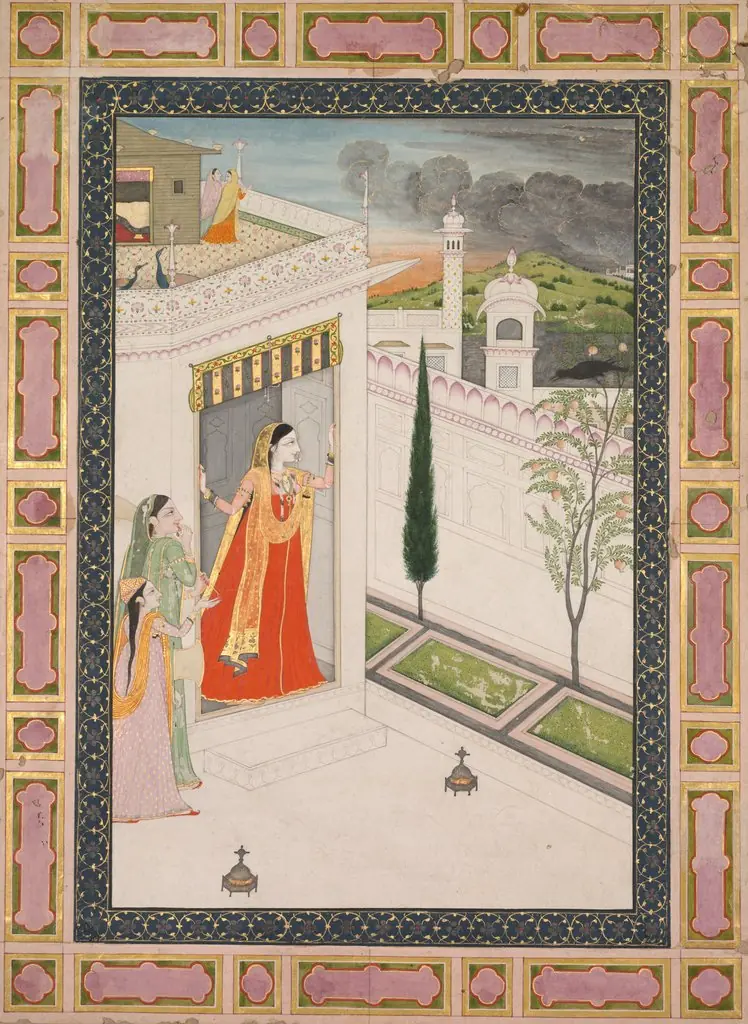
The composition is divided by a curved border, separating two moments: one of anticipation on a balcony, the other of natural renewal in a garden.
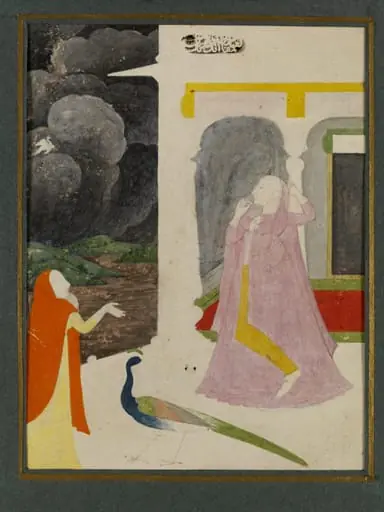
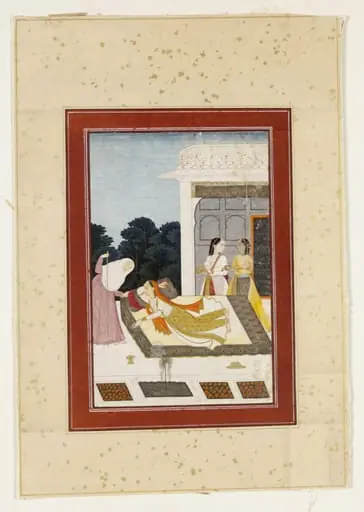
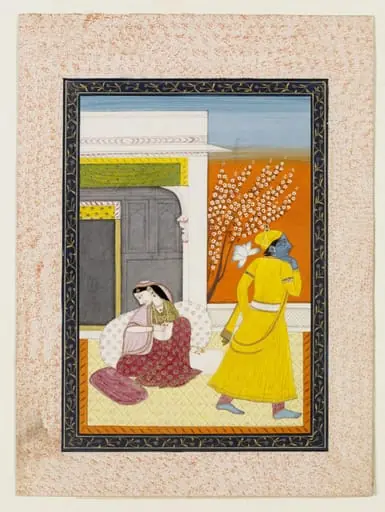
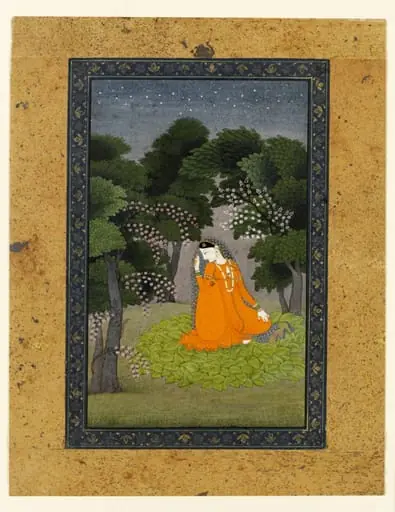
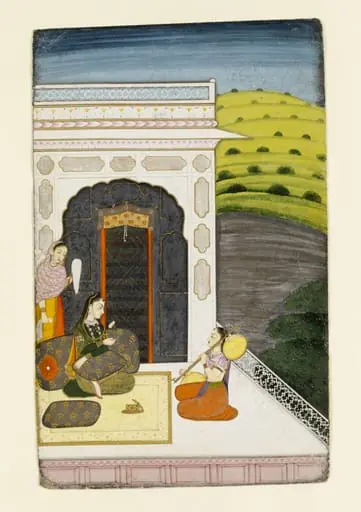
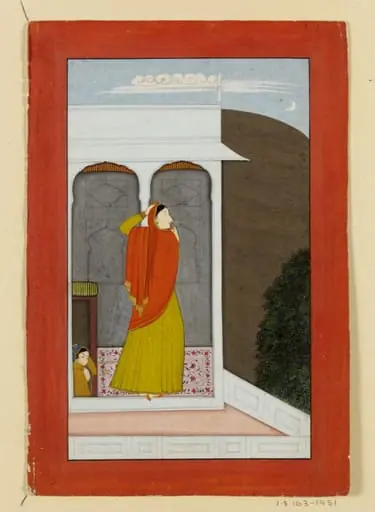
This opaque watercolor and gold painting on paper portrays a scene from the Nayika-bheda tradition, a genre of Indian miniature art that illustrates poetic archetypes of women awaiting lovers. The composition is divided by a curved border, separating two moments: one of anticipation on a balcony, the other of natural renewal in a garden. Rich pigments and intricate gold detailing frame the figures, emphasizing both emotional nuance and decorative refinement characteristic of Rajasthani court painting.
Subject & Meaning
The Vasakasajja Nayika, a woman preparing for her lover’s return, is shown gazing toward the horizon as storm clouds begin to clear. Peacocks, symbols of renewal and divine presence, respond to the rain, subtly signaling the lover’s imminent arrival. Servants below scramble for shelter, contrasting her stillness and quiet hope. The scene merges personal longing with natural cycles, aligning her emotional state with the changing weather.
Technique & Style
The work employs fine brushwork and layered opaque watercolors to render detailed textiles, architectural elements, and foliage. Gold leaf outlines architectural borders and decorative motifs, enhancing luminosity. The division of space by a curved band allows two temporal moments to coexist, a common device in Rajasthani miniatures. Patterns on floors and garments reflect regional aesthetics, while the palette—vivid blues, oranges, and greens—creates visual harmony and emotional warmth.
History & Provenance
Created in the late 17th or early 18th century, likely in a Rajasthani court workshop, the painting reflects the patronage of local rulers who commissioned illustrated poetic texts. Its style aligns with the Kishangarh or Bundi schools, known for lyrical depictions of love and nature. The intact gold frame with black-and-white floral borders suggests it was part of a larger manuscript or album, preserved as a valued object within royal collections.
Context
This painting emerges from a tradition where poetry and visual art intertwined, drawing from Sanskrit and vernacular love poetry. The Nayika-bheda classification system categorized women by their emotional states, offering artists a structured yet expressive framework. Such works were not merely illustrations but meditations on devotion, time, and longing, appreciated within courtly circles for their intellectual and aesthetic depth.
Legacy
The painting exemplifies how Indian miniature traditions encoded complex emotional narratives within tightly composed scenes. Its influence persists in later regional styles and modern reinterpretations of classical themes. Unlike Western Romanticism, which emphasized individual emotion against nature, this work integrates personal feeling within a culturally codified symbolic language, preserving a distinct South Asian aesthetic continuity.
Artist & collection

 Domestic Scene
 Giacomo and Cardinal Marco, investing Andrea, Abbot of San Zeno, with his Benefice
 The Nymph of Fontainebleau
 Portrait of a Woman
 Madonna and Child with Saints in the Enclosed Garden
 Venus and Minerva
 Family Group of Four on Sofa
 Wall painting from Room H of the Villa of P. Fannius Synistor at Boscoreale