Artwork
Vasul din lut de formă tronconică cu fundul adâncit prezintă marginea superioară dreapta. Obiectul este smălțuit în exterior brun iar în interior prezintă un fond alb pe care sunt dispuse ornamente prin stropire, cu pete de diferite dimensiuni de culoare maro și verde. Cromatică: fond exterior: cărămiziu; fond interior: alb; motive: maro; verde.
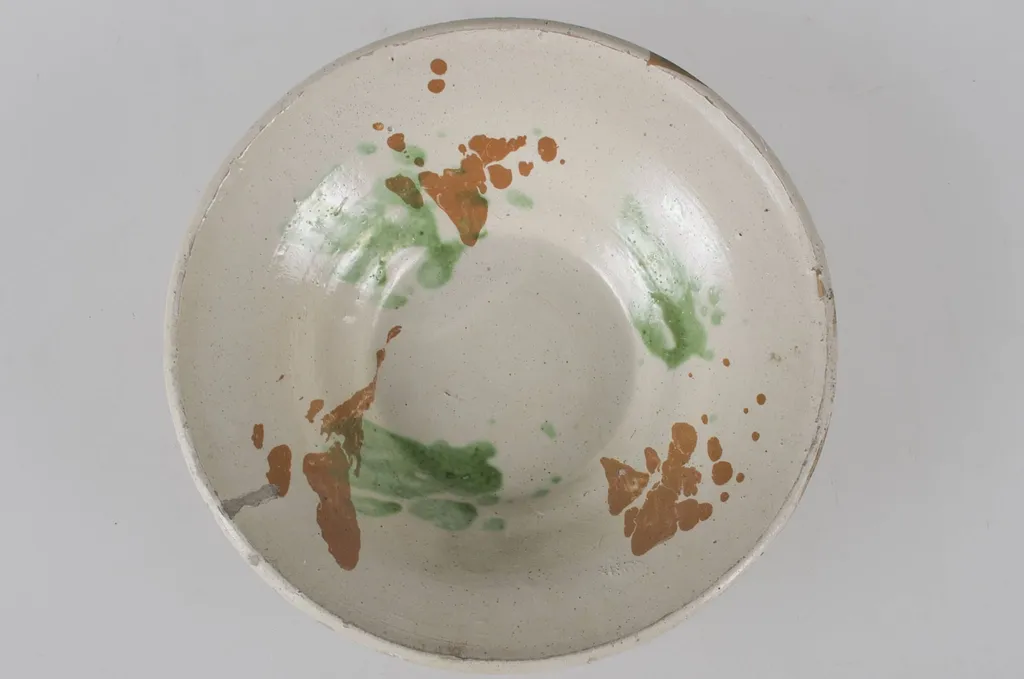
Vasul din lut de formă tronconică cu fundul adâncit prezintă marginea superioară dreapta. Obiectul este smălțuit în exterior brun iar în interior prezintă un fond alb pe care sunt dispuse ornamente prin stropire, cu pete de diferite dimensiuni de culoare maro și verde. Cromatică: fond exterior: cărămiziu; fond interior: alb; motive: maro; verde. is a print by Unknown. It dates from 1850 and is held in the collection of the ASTRA National Museum Complex. This ceramic vessel is shaped as a truncated cone with a deeply recessed base and a straight upper rim.
About this work
Overview
The simplicity of the form and the spontaneity of the ornamentation suggest a functional object with deliberate aesthetic care.
This ceramic vessel is shaped as a truncated cone with a deeply recessed base and a straight upper rim. Its exterior is coated in a brown glaze, while the interior features a white slip. Decorative elements are applied through a splashing technique, producing irregular spots in brown and green. The simplicity of the form and the spontaneity of the ornamentation suggest a functional object with deliberate aesthetic care.
Subject & Meaning
The vessel likely served a domestic or ritual purpose, its form suited for storage or serving. The abstract patterns created by splashed pigment do not depict recognizable figures but may reflect natural phenomena or symbolic gestures tied to local traditions. The contrast between the dark exterior and light interior could imply a separation between the visible and the contained, though no explicit iconography is present.
Technique & Style
The decoration was applied by splattering pigment onto the wet or leather-hard clay surface, resulting in uneven, organic marks in varying sizes. This method required control over viscosity and force, suggesting skilled handling. The use of two colors—brown and green—on a white ground creates visual rhythm without complexity. The glaze on the exterior enhances durability while the unglazed interior preserves the white slip’s purity.
History & Provenance
The object originates from a ceramic tradition that favored functional forms with minimal, expressive decoration. Its style aligns with regional practices in the Balkans or Eastern Europe during the late medieval or early modern period. No documented provenance is available, but similar vessels appear in archaeological contexts associated with rural or monastic communities where utilitarian ceramics were commonly produced.
Context
This vessel belongs to a broader category of handmade ceramics where decoration emerged from process rather than planned design. Splashed ornamentation was a practical alternative to painting or stamping, especially in settings with limited tools or time. Its color palette—brown, green, white—reflects locally available pigments and glazes, indicating adaptation to regional resources and aesthetic preferences.
Legacy
The vessel exemplifies how everyday objects carried subtle artistic expression through material and technique. Its splashed decoration influenced later folk pottery traditions in Southeastern Europe, where spontaneity and local materials remained valued. Though not widely documented, such pieces contribute to understanding the diversity of ceramic practices beyond elite or industrial production.
Artist & collection

 Domestic Scene
 Giacomo and Cardinal Marco, investing Andrea, Abbot of San Zeno, with his Benefice
 The Nymph of Fontainebleau
 Portrait of a Woman
 Madonna and Child with Saints in the Enclosed Garden
 Venus and Minerva
 Family Group of Four on Sofa
 Wall painting from Room H of the Villa of P. Fannius Synistor at Boscoreale
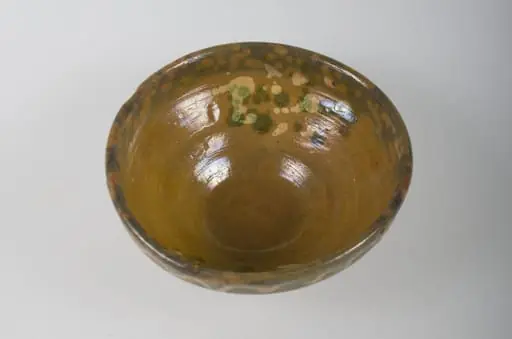 Vas de formă tronconică, cu pereții oblici și buza înaltă, lucrat neîngrijit. Este smălțuit în interior și exterior (parțial). Este decorat pe interior cu un mănunchi de puncte albe și verzi. Buza este decorată în exterior cu motive geometrice: linie în val. Cromatică: motive: fond: maro; motive: alb; verde.
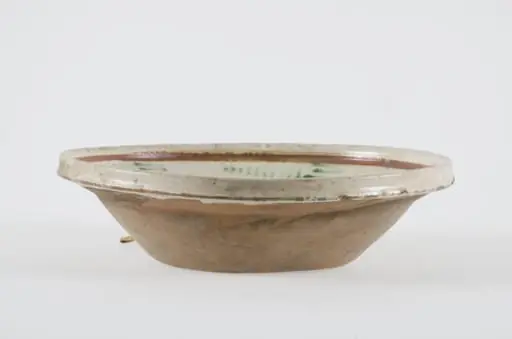 Blid de formă tronconică, adâncit, lucrat la roata rapidă și smălțuit la interior. Smalțul interior este alb iar pe exterior se identifică scurgeri de smalț alb și maroniu. Farfuria este decorată cu motive vegetale și florale stilizate dispuse în zona centrală a vasului dar și într-un registru geometric pe buza interioară a vasului. Cromatică: alb; motive: verde; maro.
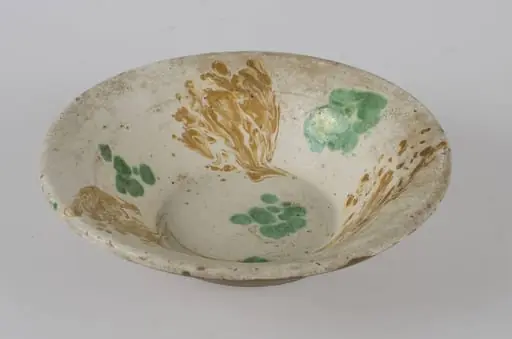 Vas adânc din lut, de formă tronconică, cu marginea evazată. Pe fundalul de culoare crem, sunt pictate în șapte registre pete de diferite forme și dimensiuni de culoare maro și verde. Blidul este smălțuit la interior și pe buză, la exterior.
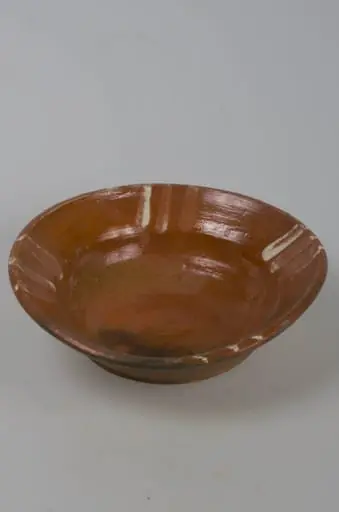 Farfurie de formă tronconică, cu fundul adânc, rotunjit în interior, iar în exterior plat. Buza farfuriei lată și răsfrântă oblic. Decorată cu motive geometrice, pe margine sunt patru grupuri de câte trei linii de culoare albă ca ornament. Interiorul farfuriei este smălțuit. Cromatică: fond: cărămiziu; motive: alb.
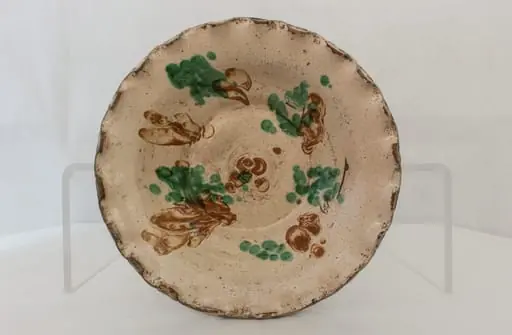 Vas de formă rotundă, cu pereții ușor evazați, smălțuit în interior, cu marginea vălurită, decorat (în mod unic) pe suprafața interioară cu motive punctiforme și neregulate, dispuse aleatoriu, realizate cu pensula. Cromatică: verde, maro, bej.
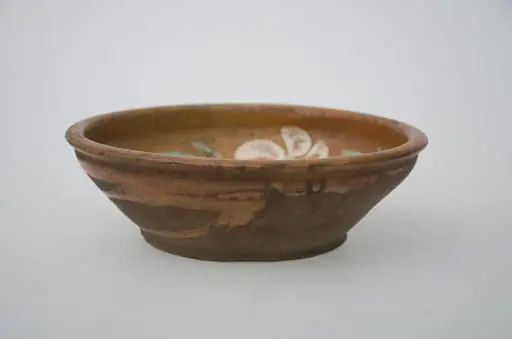 Blid de formă tronconică, smălțuit în interior cu buza larg rasfrântă. Prezintă decor floral fundul șu corpul vasului. Cromatică: fond: maro; motive: alb; verde; albastru.
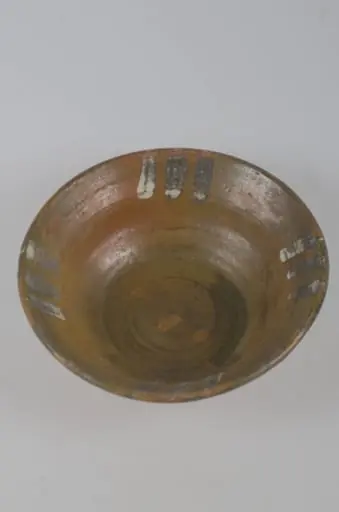 Farfurie de formă tronconică, adâncită, cu buza lată și evazată. Este smălțuit în interior și în exterior (buza). Prezintă decor pe buză cu motive geometrice dispuse în patru registre a câte trei linii albe cu negru; smalț verzui. Cromatică: fond: cărămiziu; motive: verzui; alb; gri.
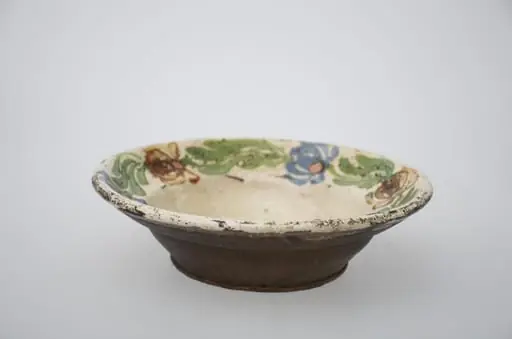 Farfurie de formă tronconică adâncă cu buza largă și decor pe fund, spre margini. Ornamentat cu motive florale. Cromatică: fond: alb; motive: maro; verde; albastru.
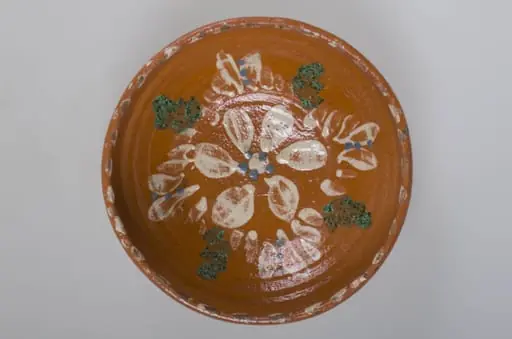 Blidul de formă tronconică este unul adânc, smălțuit pe interior, ornamentat cu motive florale, cu buză înaltă, neornamentat la exterior. Obiectul este smălțuit, la exterior, doar pe buză. Acesta prezintă puncte pictate cu pensula pe buză, la interior. Blidul este prevăzut cu două orificii pentru prindere, pe fund. Cromatică: fondul este cărămiziu, iar motivele sunt pictate cu alb, verde și albastru.
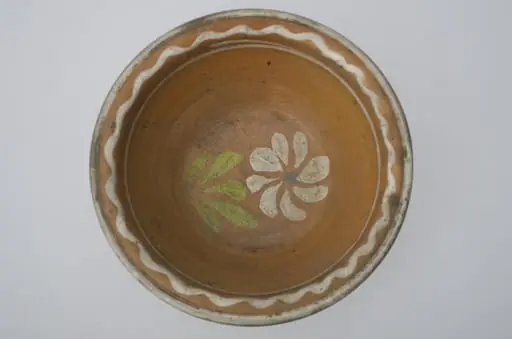 Farfurie adânca, de formă tronconică, smălțuită în interior. Pe margine prezintă decor geometric: linia vălurită; central o floare. Cromatică: fond: cărămiziu; motive: alb; verde; albastru.