Artwork
Vază din porțelan, fond albastru, tip amforă, cu anse, decorată cu două medalioane, unul reprezentând portret Nicolae Ceaușescu, cel de-al doilea un buchet cu flori. Pe gâtul vazei o dedicație ”Omagiu, Ianuarie 1989”. Vază oferită lui Nicolae Ceaușesacu de Consiliul Național al Femeilor cu ocazia aniversării zilei de naștere, ianuarie 1989.
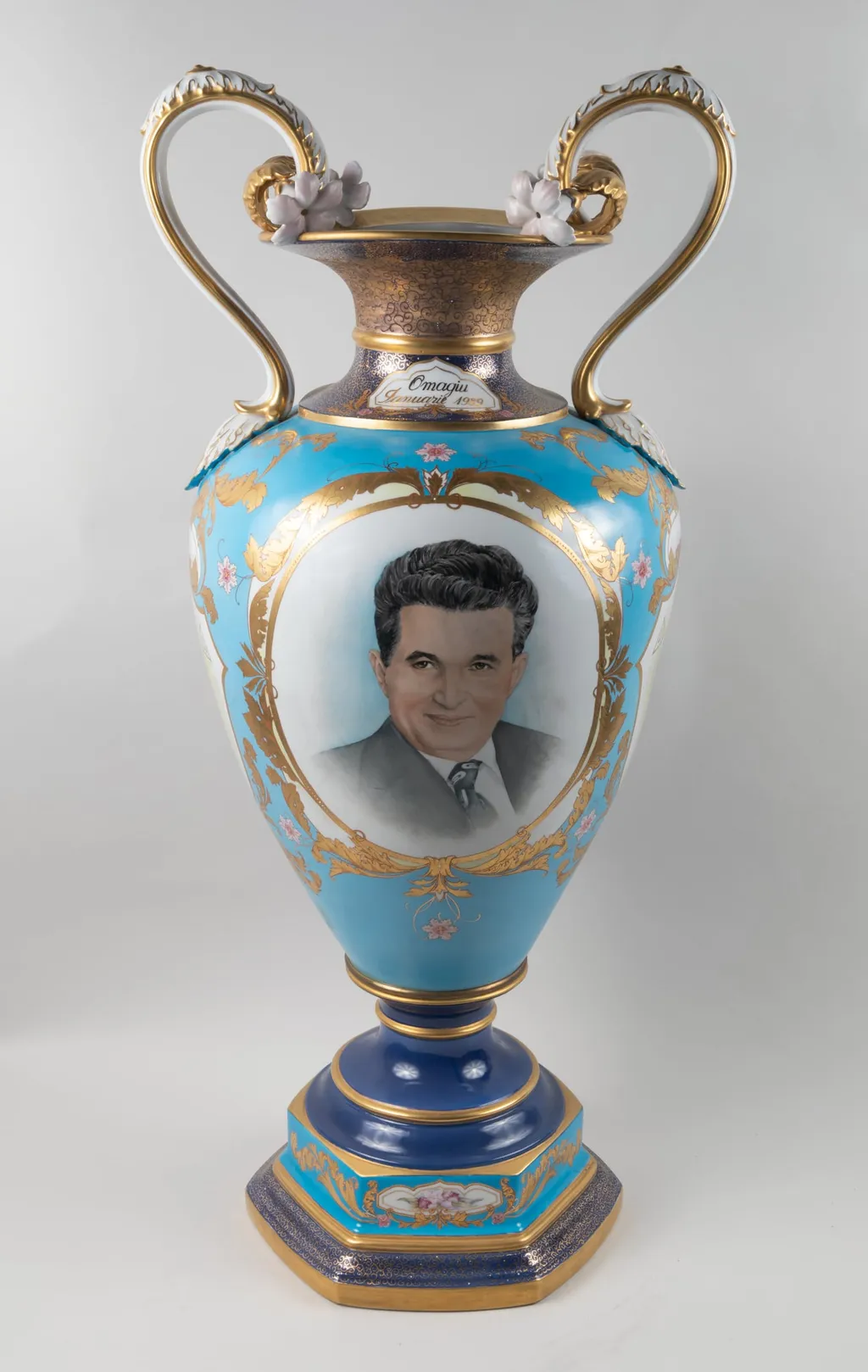
Vază din porțelan, fond albastru, tip amforă, cu anse, decorată cu două medalioane, unul reprezentând portret Nicolae Ceaușescu, cel de-al doilea un buchet cu flori. Pe gâtul vazei o dedicație ”Omagiu, Ianuarie 1989”. Vază oferită lui Nicolae Ceaușesacu de Consiliul Național al Femeilor cu ocazia aniversării zilei de naștere, ianuarie 1989. is an unspecified painting by Unknown. It dates from 1850 and is held in the collection of the National Museum of Romanian History. A porcelain vase in the shape of an amphora, finished with a blue ground, bears two circular medallions.
About this work
It was given to him by the National Council of Women on his birthday in 1989, which is an interesting fact about this piece.
This painting shows a porcelain vase with a blue background and two medalions.
The vase is decorated with a portrait of Nicolae Ceaușescu and a bouquet of flowers.
It was given to him by the National Council of Women on his birthday in 1989, which is an interesting fact about this piece.
The dedication on the vase reads "Omagiu, Ianuarie 1989", or "Tribute, January 1989", which provides more context.
You can learn more about similar objects at the Museum of Ethnography.
Overview
A porcelain vase in the shape of an amphora, finished with a blue ground, bears two circular medallions. One medallion displays a likeness of Nicolae Ceaușescu, while the other presents a floral bouquet. A dedication encircles the neck, reading “Omagiu, Ianuarie 1989,” indicating the object’s commemorative purpose.
Subject & Meaning
The portrait medallion serves as a personal homage to the Romanian leader, aligning the object with the cult of personality that characterized his regime. The accompanying flower motif offers a conventional decorative counterpoint, perhaps intended to soften the political emphasis with a more universal symbol of celebration.
Technique & Style
Executed in glazed porcelain, the vase combines a smooth, glossy surface with painted enamel details. The blue background follows a traditional Eastern European decorative palette, while the medallions employ low‑relief relief and hand‑painted imagery typical of state‑commissioned gifts of the late communist period.
History & Provenance
The National Council of Women presented the vase to Ceaușescu on his birthday in January 1989, shortly before the collapse of his government. The piece remained in the leader’s private collection until it entered public holdings after the 1989 revolution, where it now serves as a material record of the era’s political patronage.
Context
Gift‑giving by mass organizations to political figures was a common practice in socialist Romania, reinforcing loyalty and public visibility. The vase reflects this tradition, embodying both the aesthetic preferences of the time and the ritualized celebration of the head of state.
Artist & collection

 Domestic Scene
 Giacomo and Cardinal Marco, investing Andrea, Abbot of San Zeno, with his Benefice
 The Nymph of Fontainebleau
 Portrait of a Woman
 Madonna and Child with Saints in the Enclosed Garden
 Venus and Minerva
 Family Group of Four on Sofa
 Wall painting from Room H of the Villa of P. Fannius Synistor at Boscoreale
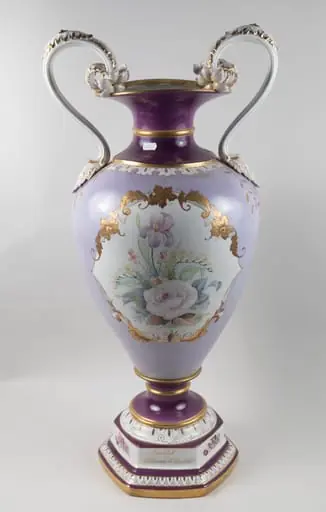 Vază din porțelan, tip amforă, cu două anse, decorată pe un fond mov cu două medalioane, unul reprezentând portretul Elenei Ceaușescu. cel de-al doilea medalion este decorat un buchet cu flori. Pe gâtul vazei o dedicație ”Omagiu, Ianuarie 1989”. Oferită de Consiliul Național al Femeilor. Vază oferită Elenei Ceaușescu de Consiliul Național al Femeilor cu ocazia aniversării zilei de naștere, ianuarie 1989.
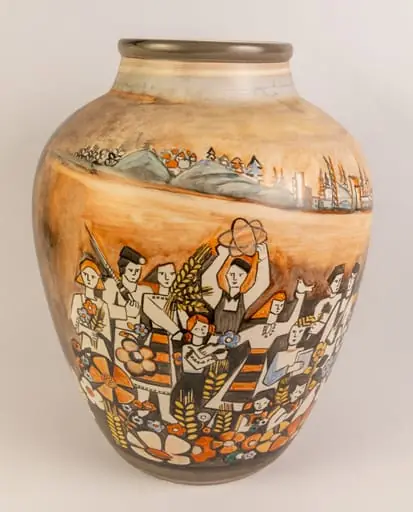 Vas din ceramică pictat manual. Decorul este împărțit în două registre. Primul registru este dominat de portretul lui Mihai Viteazul alături de scene de luptă, cel de-al doilea registru este alcătuit din imaginea unei tinere femei în costum popular cu o fotă în culorile tricolorului ținând deasupra capului un porumbel alb - porumbelul păcii, alături de personaje masculine și feminine reprezentând ”oamenii muncii”. Vas oferit lui Nicolae Ceaușescu de Ministerul Educației și Învățământului.
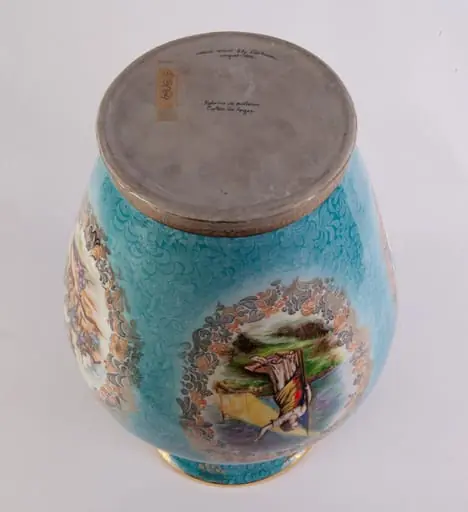 Vas mare din porțelan bleu cu auriu, decorată cu patru medalioane încadrate cu motive florale. Primul medalion reprezentarea unei bătălii din perioada medievală; al doilea medalion reproducerea lucrării lui C. Rosenthal ”România rupându-și cătușele pe Câmpia Libertății”; cel de-al treilea medalion prezintă o scenă de luptă din perioada Marelui Război. Cel de-al partulea medalion prezintă stema RSR, steagul tricolor și un citat dintr-un discurs a lui Nicolae Ceaușescu ”....actul de la 23 August nu a venit din cer ci a fost rezultatul luptelor îndelungate ale poporului român”. Buza vazei este decorată cu o bandă metalică aurie. Pe verso numele artistului Ely Gârboan. Vază oferită lui Nicolae Ceaușescu de reprezentanții Fabricii de Porțelan Curtea de Argeș cu ocazia vizitei de lucru din jud.Argeș, 17 septembrie 1976.
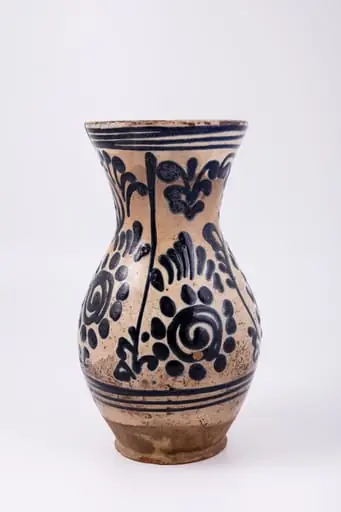 Cană cu corpul bombat, gât scurt, puternic evazat, toarta dispusă de la gât la diametrul maxim al vasului. Suprafața decorativă a vasului este încadrată între linii subțiri dispuse în partea superioară și inferioare. Decorul central reprezintă calea cu sori stilizată alcătuită din lujeri și floarea-soarelui. Cromatica: alb și albastru cobalt.
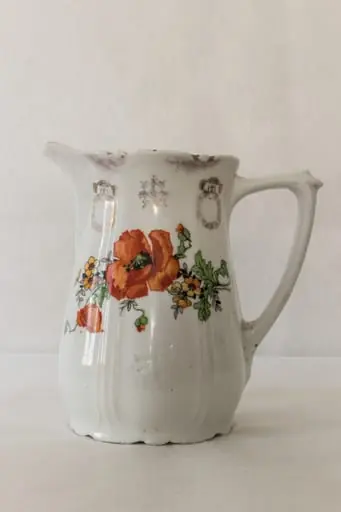 Vas cu corpul ușor bombat în partea centrală, prevăzut cu o toartă prinsă în două puncte și un cioc ușor alungit, smălțuit (glazurat) în exterior și interior, cu fine creneluri dispuse pe verticală, cu gura și fundul vălurite parțial. Este decorat pe suprafața exterioară cu două motive florale (buchete de maci și gălbenele), motive florale stilizate și elemente heraldice. Pe fundul vasului apare marca producătorului Kuno Steinmann, sub forma unei coroane regale (în care apar înscrise literele K.St.T.), un S deasupra și SILESIA sub coroană. Cromatică: alb, roșu, galben, portocaliu, verde, argintiu, negru.
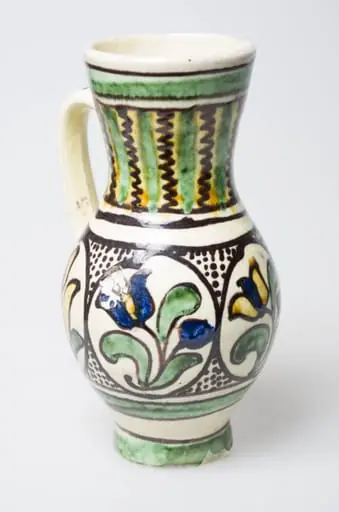 Recipient ceramic de formă ovoidală, smălțuit, cu gâtul lung, fund inelar și buza dreaptă. Prevăzut cu o toartă arcuită, care pleacă din mijlocul gâtului spre partea inferioară a vasului. Intens stilizat cu motive florale, vegetale și geometrice, pictate cu pensula, în două registre diferite. În primul registru, situat în zona gâtului, sunt pictate dungi late și linii meandrice dispuse pe verticală, alternativ. Aproape de gura vasului, sunt prezente dungi late și linii circulare. În al doilea registru întâlnim patru flori încadrate în cercuri și între acestea, puncte mici, umplând astfel cu decorații toată zona bombată a recipientului. Registrele sunt delimitate între ele de trei linii circulare. În partea inferioară, întâlnim ca și la gură, o dungă lată încadrată de două linii circulare. Prezent motiv geometric pe toartă sub formă de linie vălurită. Cromatică: fundal: alb; motive: galben; albastru; verde; maro închis.