Artwork
Cană cu corpul bombat, gât scurt, puternic evazat, toarta dispusă de la gât la diametrul maxim al vasului. Suprafața decorativă a vasului este încadrată între linii subțiri dispuse în partea superioară și inferioare. Decorul central reprezintă calea cu sori stilizată alcătuită din lujeri și floarea-soarelui. Cromatica: alb și albastru cobalt.
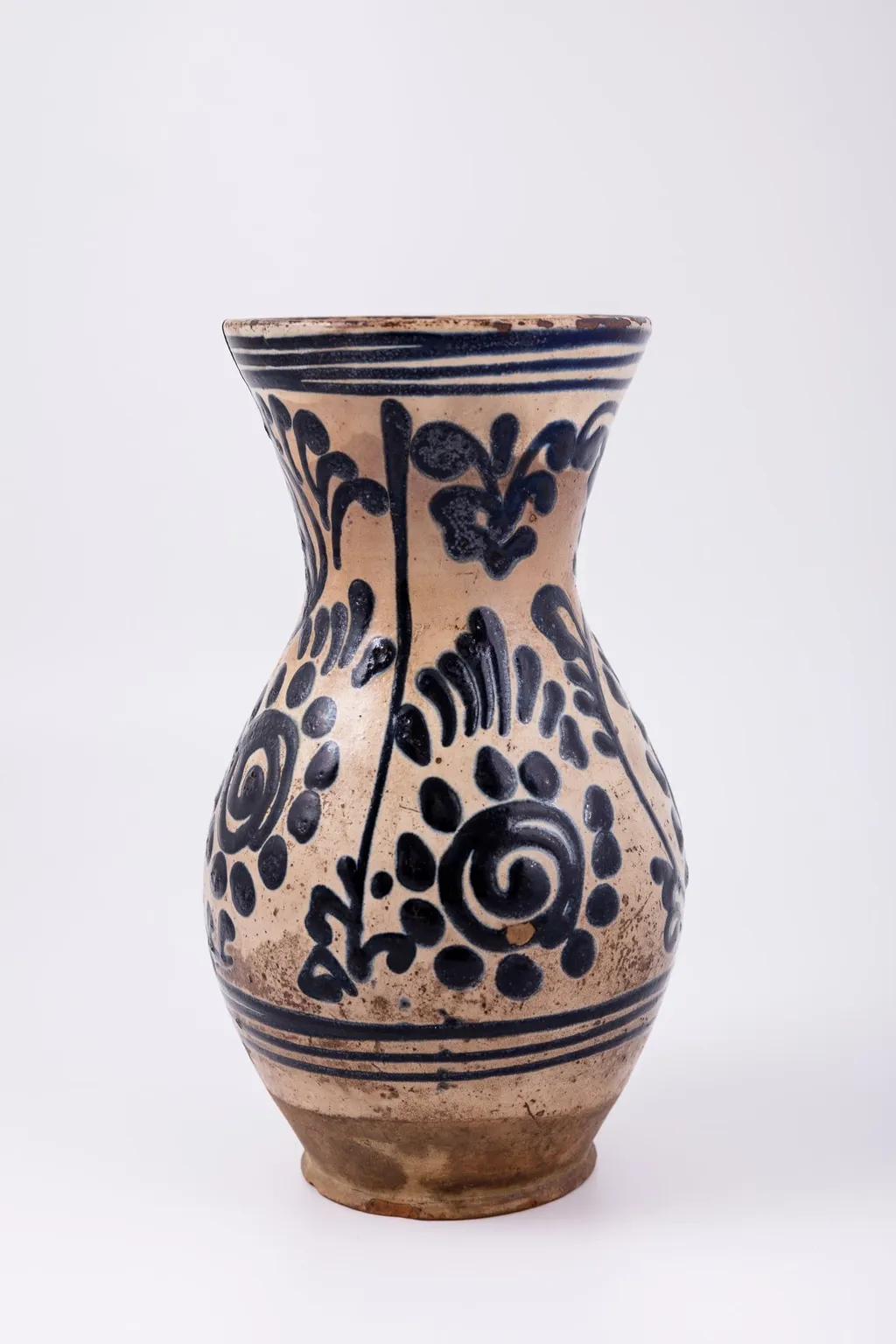
Cană cu corpul bombat, gât scurt, puternic evazat, toarta dispusă de la gât la diametrul maxim al vasului. Suprafața decorativă a vasului este încadrată între linii subțiri dispuse în partea superioară și inferioare. Decorul central reprezintă calea cu sori stilizată alcătuită din lujeri și floarea-soarelui. Cromatica: alb și albastru cobalt. is a photography by Unknown. It dates from 1850 and is held in the collection of the ASTRA National Museum Complex. This ceramic vessel features a swollen body, a short neck, and a flaring rim that widens toward its maximum diameter.
About this work
Overview
The surface is minimally outlined by fine horizontal bands at the top and bottom, creating a clean frame for the central decoration.
This ceramic vessel features a swollen body, a short neck, and a flaring rim that widens toward its maximum diameter. The surface is minimally outlined by fine horizontal bands at the top and bottom, creating a clean frame for the central decoration. Its form suggests utility, yet the precision of its shaping and decoration points to deliberate artistic intent, typical of refined ceramic production in its cultural context.
Subject & Meaning
The central motif consists of a stylized pathway adorned with sunflowers and leaf-like forms, arranged in a rhythmic, linear pattern. These elements, rendered without naturalistic detail, suggest symbolic rather than literal representation. The repetition of floral motifs may imply growth, continuity, or seasonal cycles, common themes in decorative arts where nature is abstracted into ornament.
Technique & Style
The decoration employs a two-color palette of white and cobalt blue, applied with controlled brushwork over a glazed surface. The lines are crisp and uniform, indicating the use of stencils or fine-tipped tools. The style is reductive, emphasizing clarity and balance over detail, reflecting a preference for geometric harmony and restrained ornamentation characteristic of its tradition.
History & Provenance
Though specific origins are unrecorded, the vessel’s form and palette align with ceramic traditions from regions where blue-and-white glazing was widely practiced, particularly from the late medieval to early modern periods. Similar pieces have been found in domestic and ceremonial contexts, suggesting this object may have served both practical and aesthetic functions in its original setting.
Context
This vase belongs to a broader category of ceramics where floral patterns were adapted into abstract, repeating motifs to suit the constraints of glazing and firing. Its design reflects a cultural preference for order and symmetry, often seen in household wares produced in workshops that standardized forms and decorations for efficiency and visual coherence.
Legacy
The enduring appeal of blue-and-white ceramic decoration, as seen here, influenced later regional and international styles. Its simplicity and durability allowed it to be replicated across cultures, contributing to a shared visual language in domestic ceramics. This vessel stands as an example of how functional objects carried aesthetic values across generations.
Artist & collection

 Domestic Scene
 Giacomo and Cardinal Marco, investing Andrea, Abbot of San Zeno, with his Benefice
 The Nymph of Fontainebleau
 Portrait of a Woman
 Madonna and Child with Saints in the Enclosed Garden
 Venus and Minerva
 Family Group of Four on Sofa
 Wall painting from Room H of the Villa of P. Fannius Synistor at Boscoreale
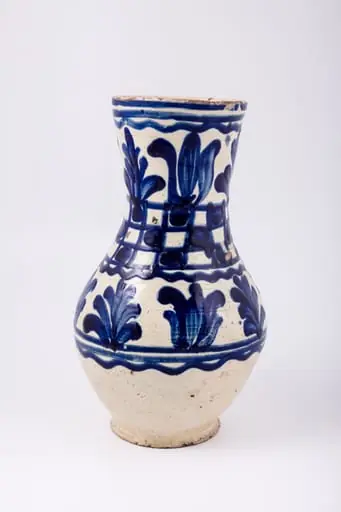 Cănceu piriform prevăzut cu o toartă, gât zvelt și ușor evazat, corpul pântecos, toarta de la gât la diametrul maxim al vasului. Decorul este împărțit în trei registre verticale încadrate în partea superioară și inferioară de linii subțiri și vălurite. Primul și al treilea registru sunt decorate cu motive florale și fitomorfe, câte o lalea înflorită intercalată de brăduți stilizați. Al doilea registru este decorat cu tabla de șah. Cromatica: alb și albastru cobalt.
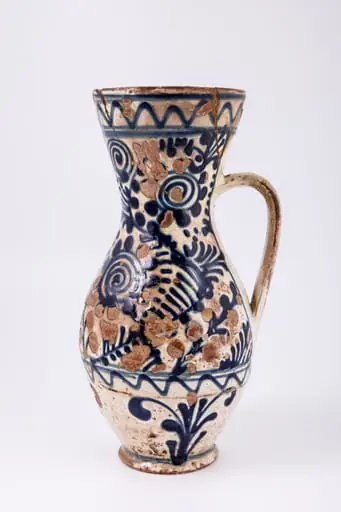 Cană cu corpul bombat, gât scurt, toarta dispusă de la gât la diametrul maxim al vasului. Suprafața decorativă a vasului este încadrată între linii subțiri și vălurite dispuse în partea superioară și inferioare. Decorul central reprezintă calea cu sori alcătuită din lujeri, linii paralel dispuse sub formă de raze, cercuri pline și floarea-soarelui stilizată. Cromatica: alb și albastru cobalt.
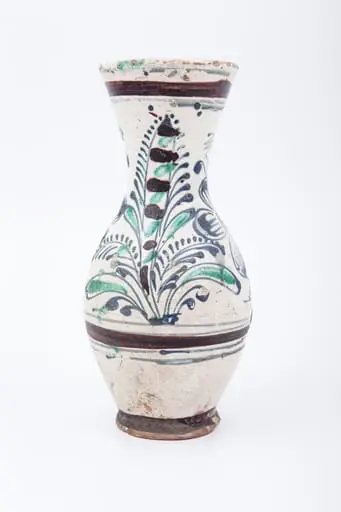 Cănceu piriform, gât înalt, buza evazată, prevăzut cu o toartă. Toarta este montată de la gât la diametrul maxim al vasului. Suprafața decorativă reprezintă două flori mari, margarete, dispuse pe laterale, cu petale rotunde și hașurate, iar mijlocul redat printr-un cerc de culoare verde. Central este așezată o frunză mare redată prin linii oblice și puncte albastre și galbene. Întreg decorul este încadrat în partea superioară și inferioară de o bandă maro, mărginită de linii subțiri albastre, trasate cu cornul și pensula. Talpa este pictată cu maro. Cromatică: alb; albastru; verde; maro.
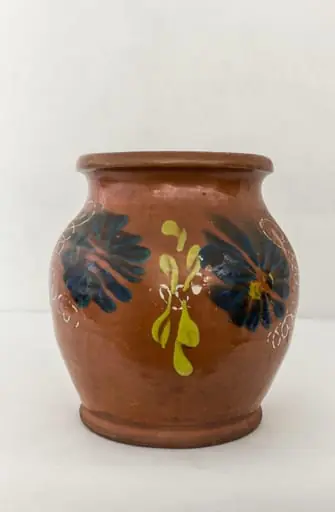 Vas cu corp bombat, cu buza răsfrântă, cu o toartă prinsă în două puncte, smălțuit în exterior și parțial în interior, decorat pe suprafața exterioară prin pictare cu motive fitomorfe (frunze) și florale (albăstrele), încadrate de linii spiralate. Cromatică: albastru, alb, galben, verde, maro, cărămiziu.
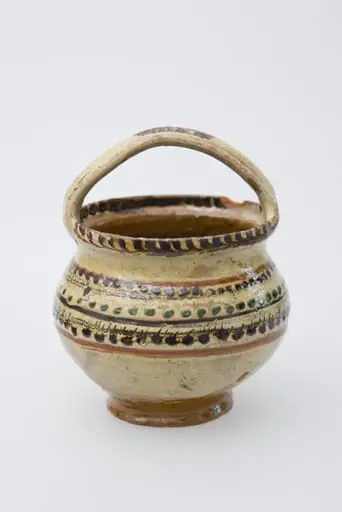 Vas ceramic de mici dimensiuni, pe bază inelară, pântecos, cu fundul și gura late. Deasupra gurii vasului a fost pusă o toartă de prindere. Buza vasului a fost pictată printr-un brâu de crenguțe. Pe pântecul vasului brâuri de puncte și două benzi subțiri jirăvite. Smălțuit în interior și exterior. Cromatică: fond: crem; motive: verde; maro; bej.
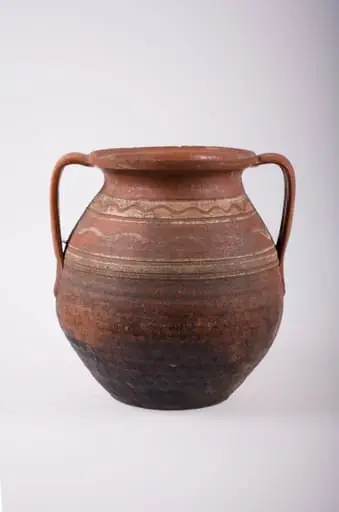 Oala bombată cu două toarte late, aplatizate, dispuse de o parte și de alta a gurii vasului; buză evazată; decorată în exterior cu motive geometrice: linii, linii vălurite pe un registru de cromatică albă. Cromatică: fond: maro; motive: alb-gălbui. Smălțuită pe gura vasului, interior și pe mânerul vasului.
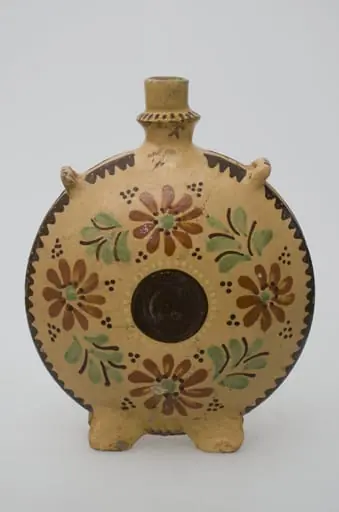 Recipient sferoidal cu gât îngust și patru picioare. Prezintă tortițe lânga gât. Decorat cu motive florale și un disc plasat central, pe ambele fețe. Cromatică: fond: crem; motive: maro închis; verde; mov; galben.