Artwork
Vibhasa ragini
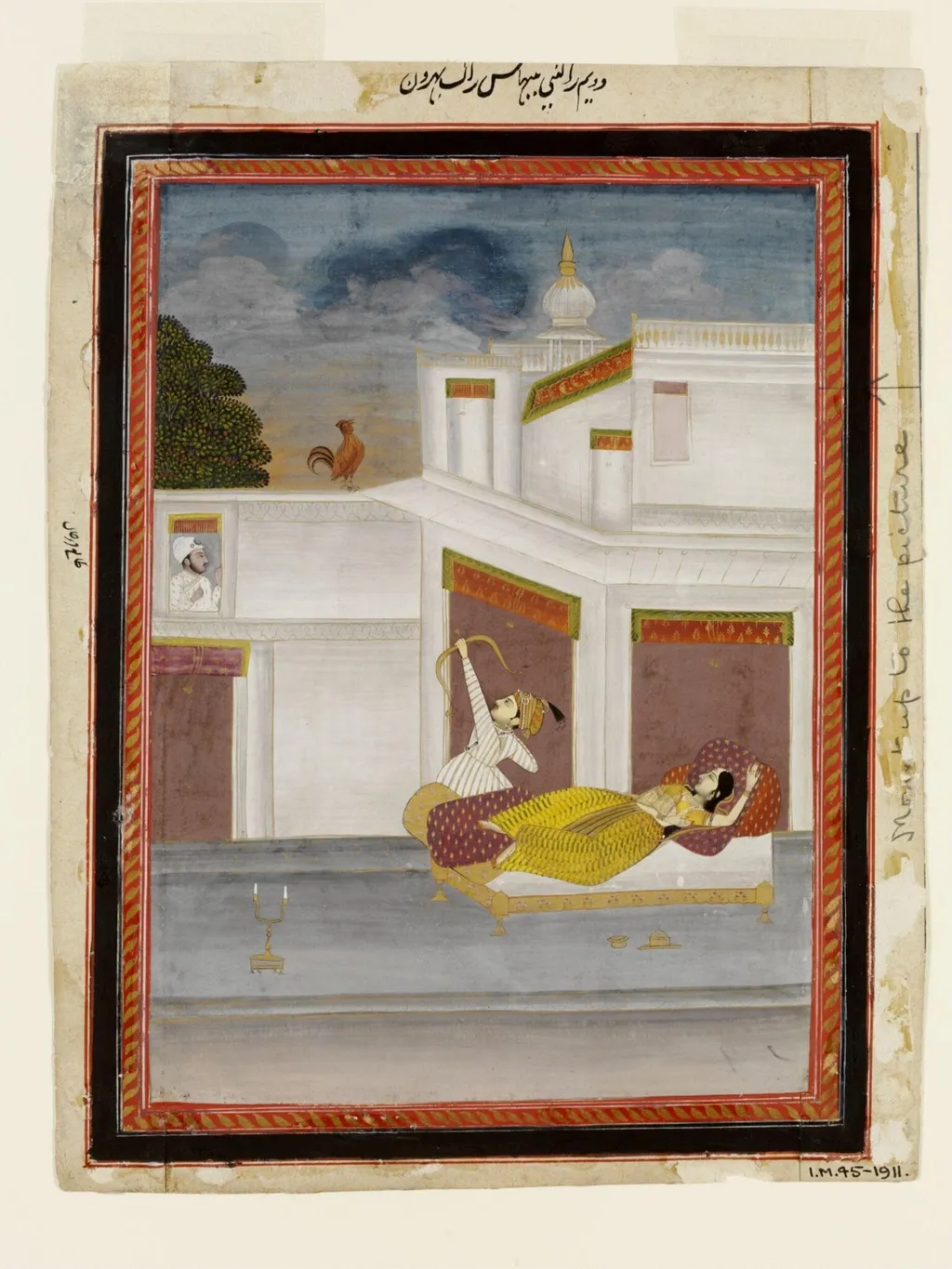
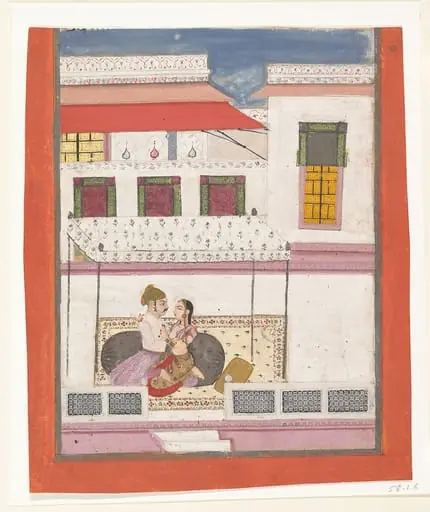
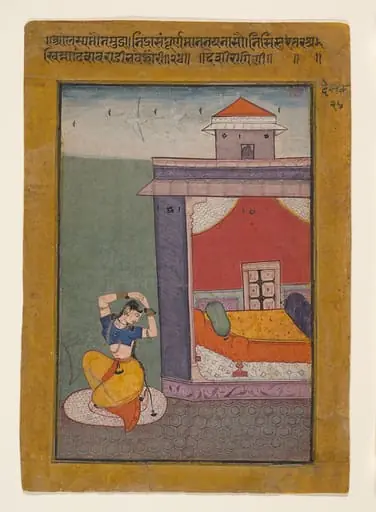
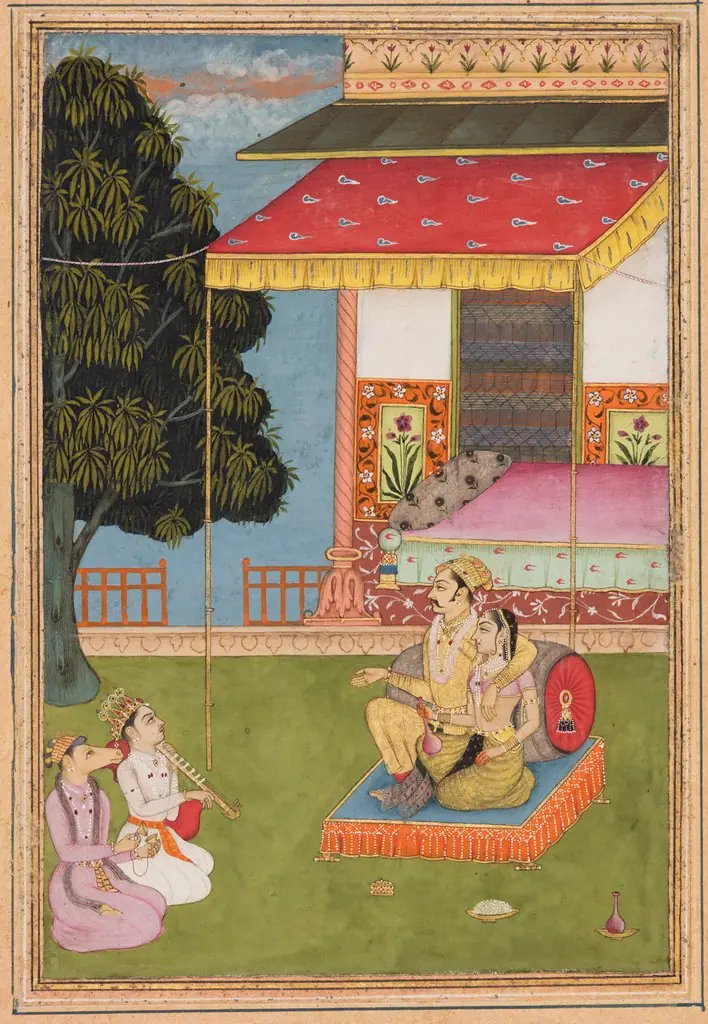
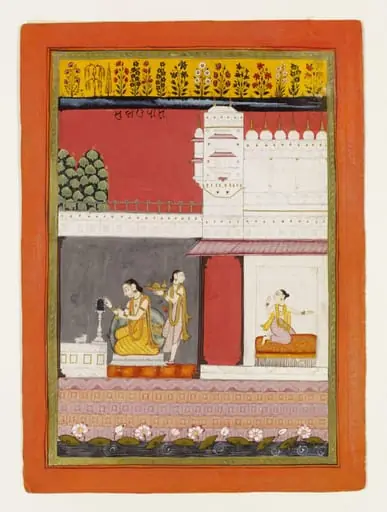
Vibhasa ragini is a paint painting by the Rococo painting artist Unknown. It dates from 1760 and is held in the collection of the Victoria and Albert Museum.
About this work
Overview
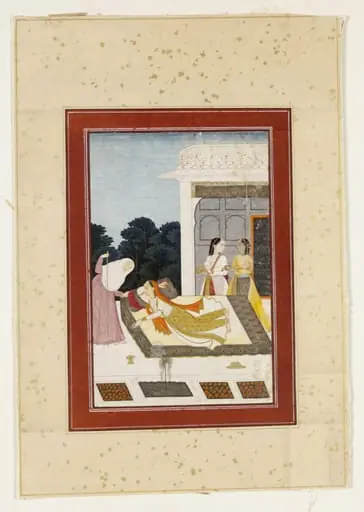
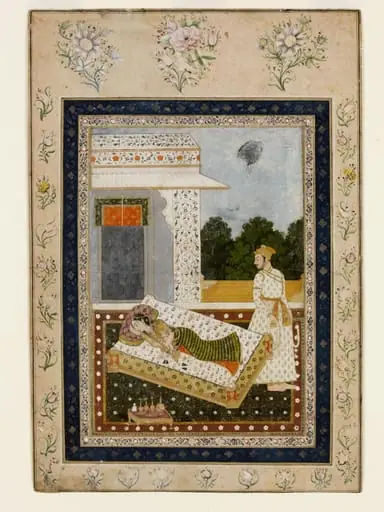
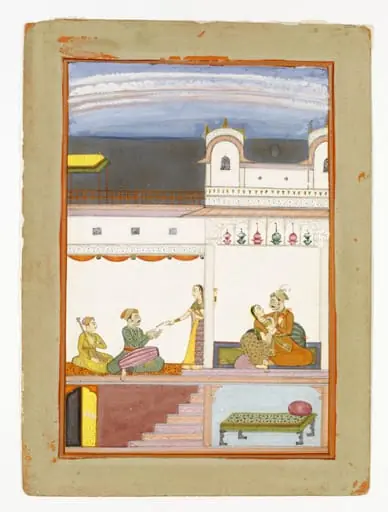
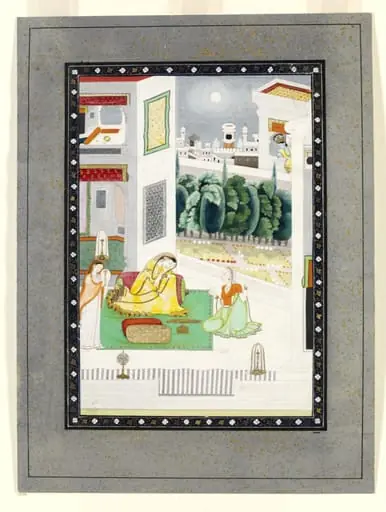
Vibhasa ragini is a painting belonging to a series of ragamala works, which visually represent Indian musical modes through conventional scenes. The composition depicts a prince at daybreak, attempting to quiet a crowing rooster by shooting arrows, a motif traditionally associated with this particular ragini.
Subject & Meaning
The central figure, a princely hunter, is shown aiming at a rooster that heralds the sunrise. Within the ragamala tradition, this narrative serves as an allegorical illustration of the Vibhasa musical mode, linking the auditory qualities of the ragini to the visual tension between human effort and natural sound.
Technique & Style
Executed in a painting medium, the work employs subtle gradations of tone reminiscent of the sfumato technique, allowing forms to blend softly into one another. This approach creates a gentle atmospheric effect appropriate to the early‑morning setting and enhances the sense of motion in the prince’s arrows.
Context
Ragamala series were popular in Indian art from the 16th to 19th centuries, providing visual aids for musicians and scholars. Each ragini is paired with a standardized iconographic scene; the prince‑and‑rooster tableau is the established representation for Vibhasa, facilitating recognition across diverse audiences.
Legacy
By adhering to the conventional ragamala schema, the painting contributes to the broader visual codex that links music and imagery in South Asian culture. Its preservation aids contemporary study of how artistic conventions were employed to convey abstract musical concepts through everyday narratives.
Artist & collection

 Domestic Scene
 Giacomo and Cardinal Marco, investing Andrea, Abbot of San Zeno, with his Benefice
 The Nymph of Fontainebleau
 Portrait of a Woman
 Madonna and Child with Saints in the Enclosed Garden
 Venus and Minerva
 Family Group of Four on Sofa
 Wall painting from Room H of the Villa of P. Fannius Synistor at Boscoreale