Artwork
Vinoda Ragini
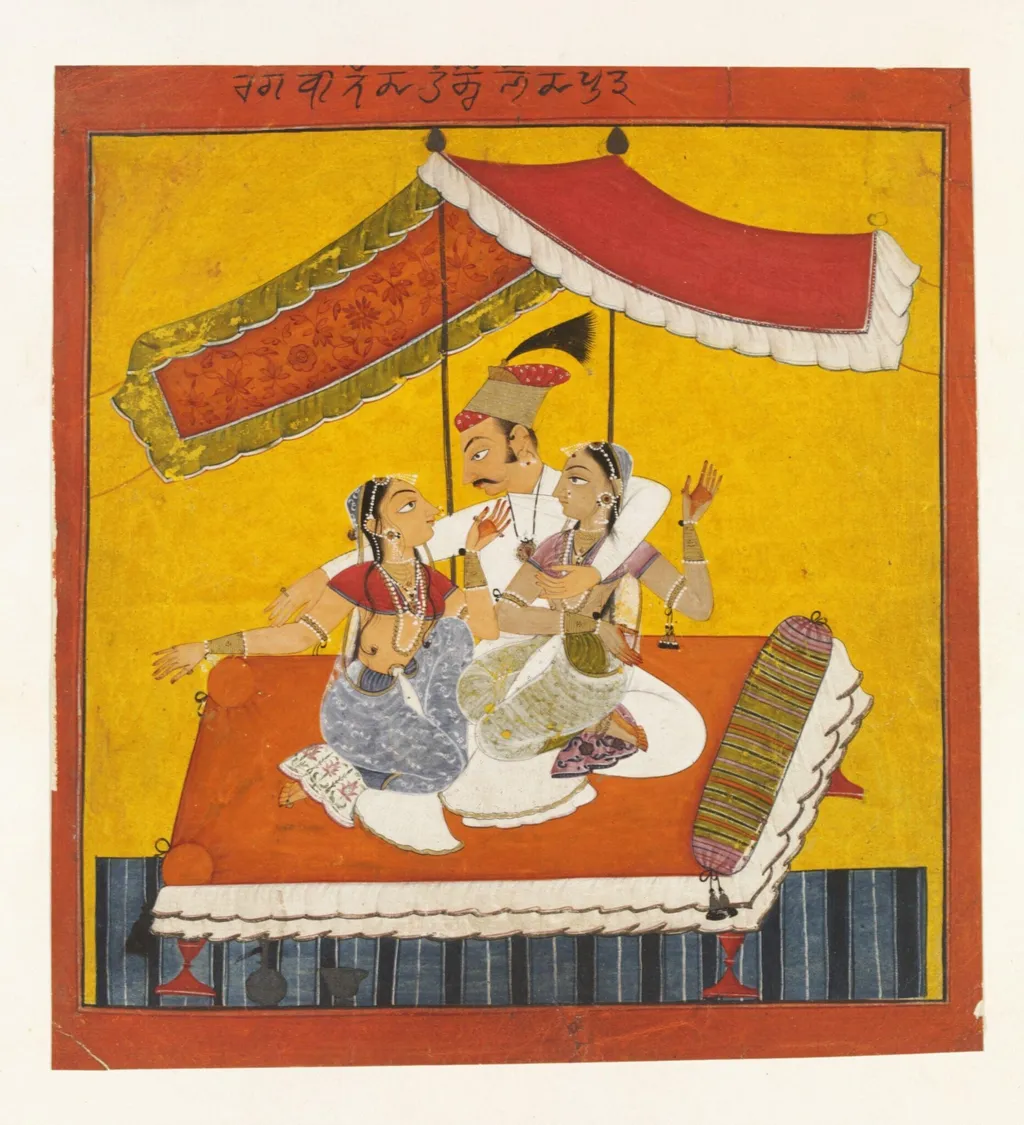
Vinoda Ragini is a paint painting by the Baroque artist Unknown. It dates from 1715 and is held in the collection of the Victoria and Albert Museum.
About this work
Overview
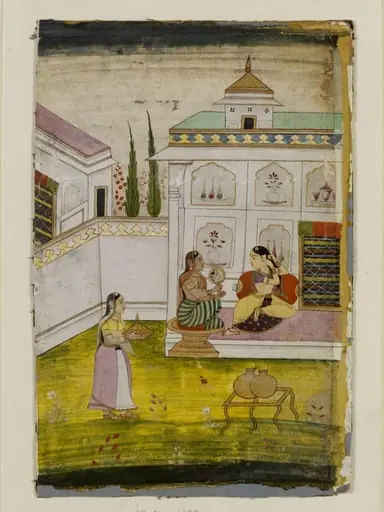
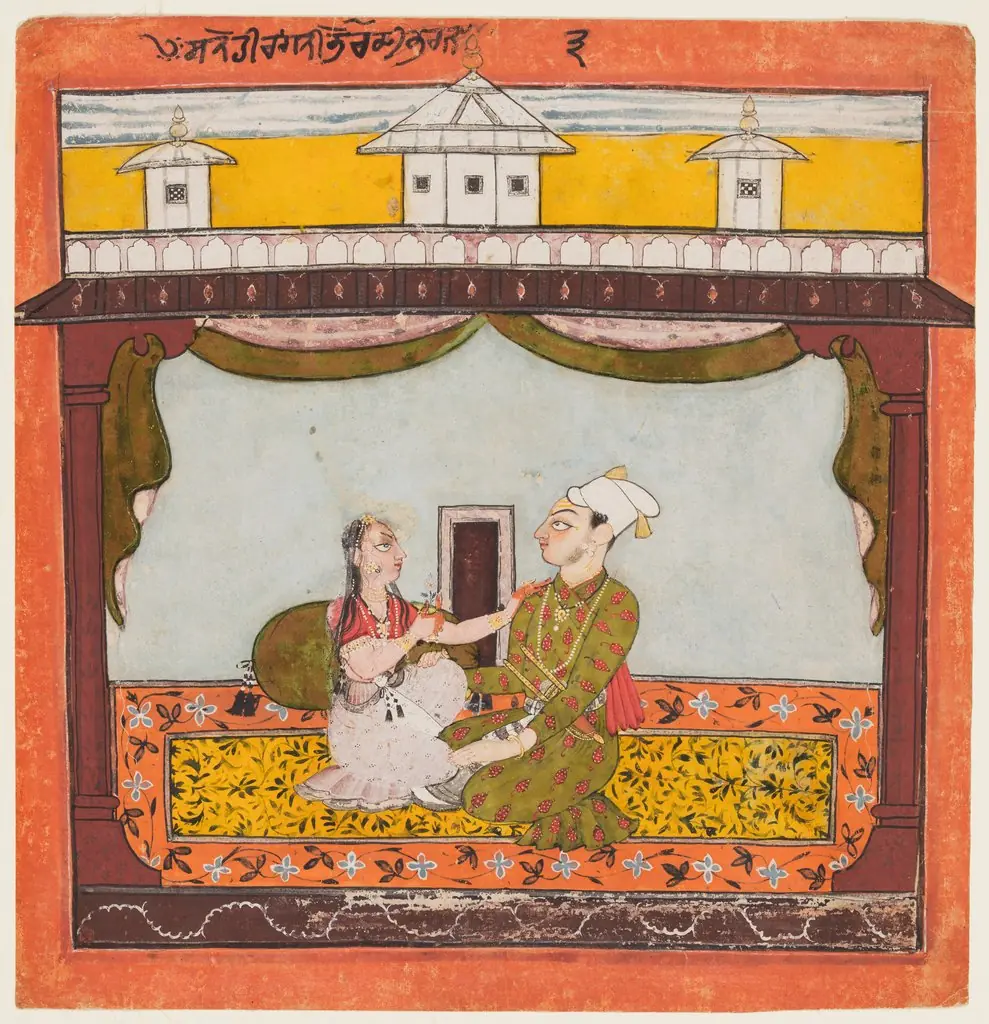
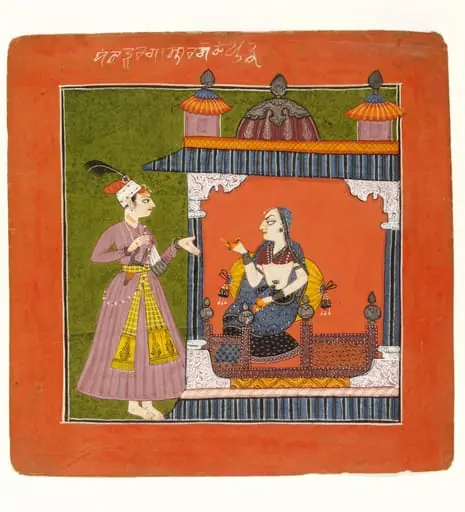
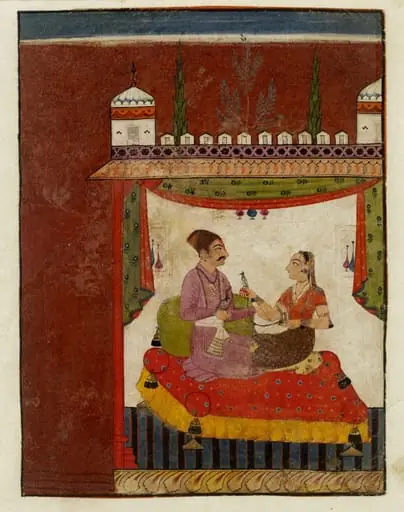
This 1715 painting, created in opaque watercolour and gold on paper, illustrates the Vinoda Ragini, a musical mode associated with leisure and courtly pleasure.
This 1715 painting, created in opaque watercolour and gold on paper, illustrates the Vinoda Ragini, a musical mode associated with leisure and courtly pleasure. It originates from the Rajput tradition of miniature painting, where music and emotion are visually encoded. The composition centers on a nobleman surrounded by attendants beneath a vividly colored canopy, rendered with flat, saturated hues typical of the period’s aesthetic.
Subject & Meaning
The scene portrays a prince in repose, flanked by two women from his household, one of whom appears to gesture in a rhythmic motion, suggesting performance or dance. The imagery aligns with the Vinoda Ragini’s thematic focus on joy and intimate amusement. The presence of a waiting palanquin implies movement or transition, reinforcing the notion of refined leisure as a transient, curated experience within royal life.
Technique & Style
The work employs opaque watercolour with gold leaf accents, characteristic of Rajput manuscript illumination. Forms are outlined with precision, and color is applied in flat, unmodulated planes without shading or perspective. The palette—dominated by reds, golds, and greens—creates visual harmony through contrast rather than depth. Textiles and jewelry are rendered with fine detail, emphasizing status and ornamentation over naturalism.
History & Provenance
Created around 1715, likely in a Rajput court studio, the painting belongs to a series illustrating the Ragamala tradition—musical modes personified as visual scenes. Its survival suggests it was preserved in royal collections, possibly in Rajasthan or the Punjab Hills. While its exact early ownership is undocumented, its style and materials align with other known works from the early 18th-century Rajput ateliers.
Context
Ragamala paintings emerged as a fusion of devotional poetry and courtly culture, translating musical structures into visual narratives. Vinoda, meaning 'amusement,' was one of many ragas linked to specific times, moods, and social settings. This painting reflects the elite’s engagement with music as both art and identity, where performance, attire, and setting collectively conveyed emotional and spiritual resonance.
Legacy
The painting contributes to a broader corpus of Indian miniature art that preserved regional aesthetics and musical symbolism through the 18th century. Though not widely exhibited, it remains a reference for scholars studying the intersection of sound, image, and courtly ritual. Its preservation in institutional collections ensures continued access for study and cultural continuity beyond its original context.
Artist & collection

 Domestic Scene
 Giacomo and Cardinal Marco, investing Andrea, Abbot of San Zeno, with his Benefice
 The Nymph of Fontainebleau
 Portrait of a Woman
 Madonna and Child with Saints in the Enclosed Garden
 Venus and Minerva
 Family Group of Four on Sofa
 Wall painting from Room H of the Villa of P. Fannius Synistor at Boscoreale