Artwork
Kasta Raga
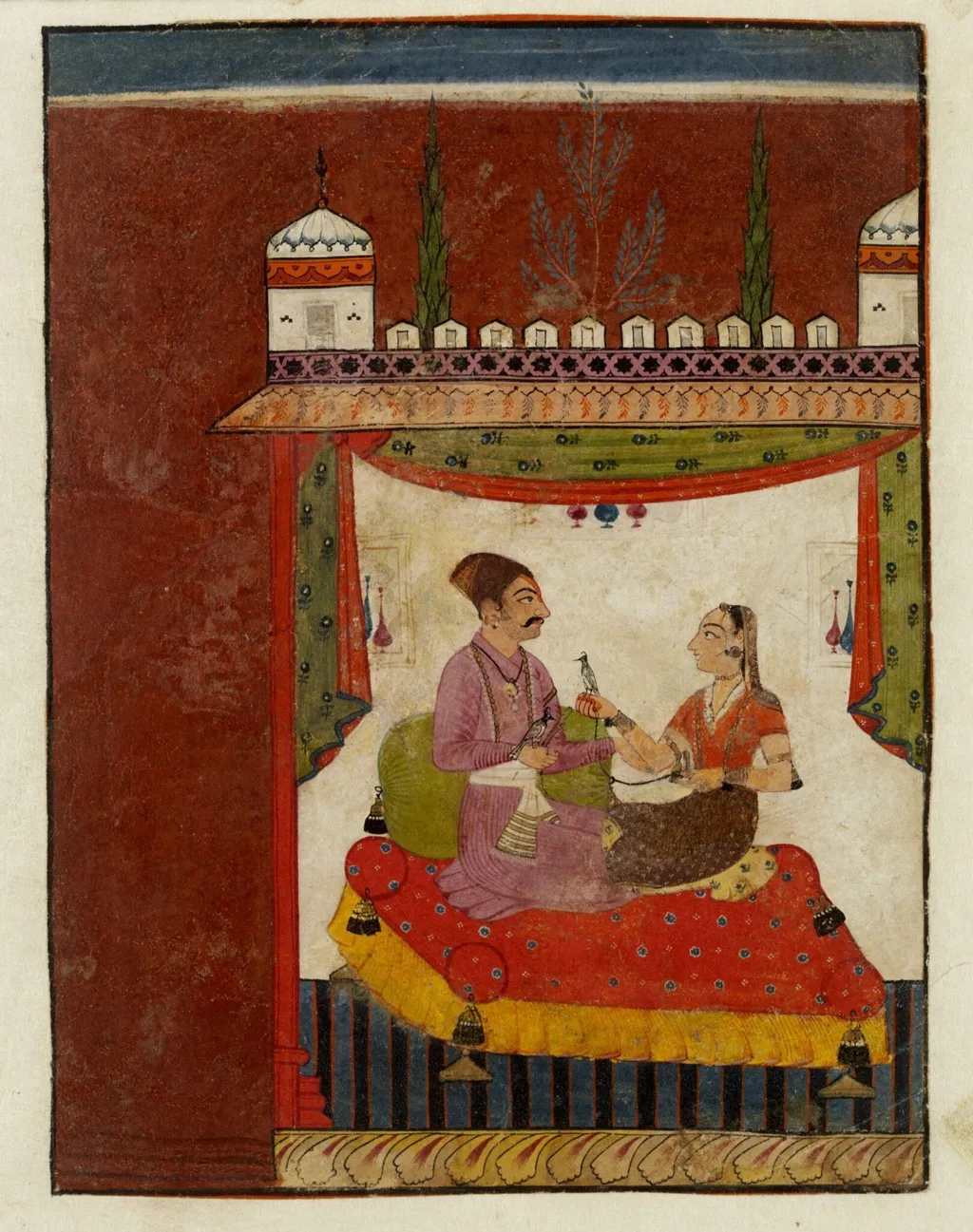
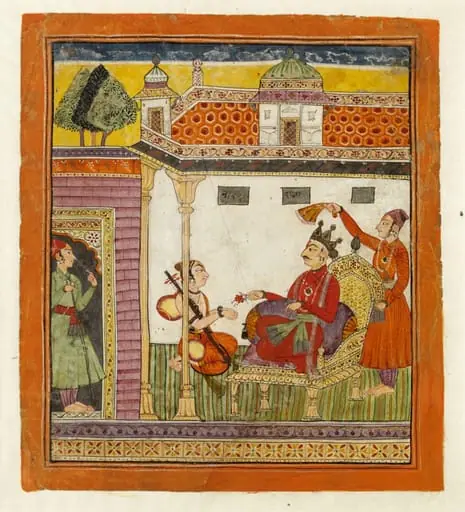
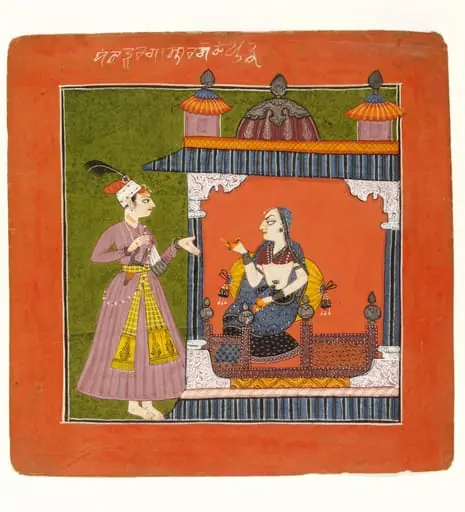
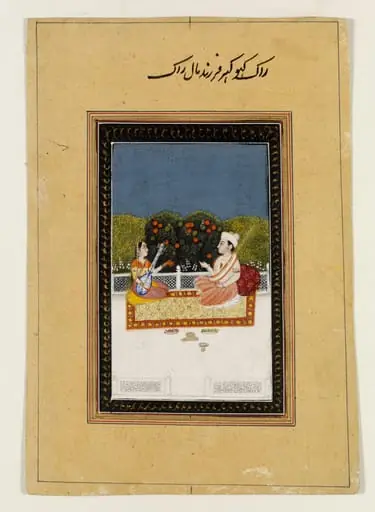
Kasta Raga is a paint painting by the Baroque artist Unknown. It dates from 1690 and is held in the collection of the Victoria and Albert Museum. This work is an opaque watercolor painting on paper belonging to the Pahari Ragamala tradition, which visualizes musical modes.
About this work
Overview
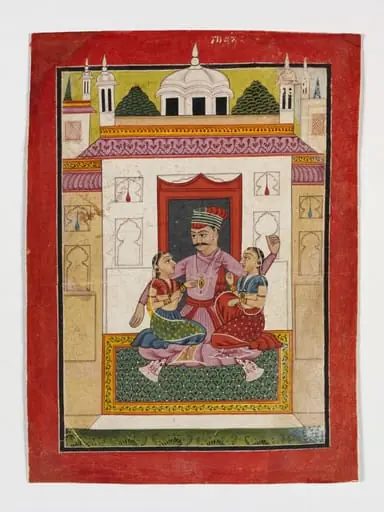
This work is an opaque watercolor painting on paper belonging to the Pahari Ragamala tradition, which visualizes musical modes. It portrays the ragamala associated with Kasta Raga, a melodic pattern considered a derivative of Malkaus Raga. The scene is set on a richly colored couch, with two figures seated closely together, each cradling a small bird in their right hand.
Subject & Meaning
The composition presents a pair of lovers sharing an intimate moment, their proximity suggesting a bond reinforced by the shared bird. In Ragamala iconography, such narratives often embody the emotional character of the raga; Kasta Raga’s association with tenderness and subtlety is reflected in the calm demeanor of the birds and the gentle interaction of the couple.
Technique & Style
Executed in opaque watercolour, the painting employs vivid pigments—purples, reds, yellows, and greens—to delineate clothing, furnishings, and background architecture. The figures are rendered with delicate brushwork, while the patterned wall with miniature domed towers adds a decorative, courtly ambience typical of Pahari miniature aesthetics.
History & Provenance
The piece originates from the Pahari region of northern India, where Ragamala series were popular from the 17th to 19th centuries. Specific details of its creation, patronage, or later ownership are not recorded, but its stylistic traits align with the late Pahari school that blended local traditions with broader Indian miniature conventions.
Artist & collection

 Domestic Scene
 Giacomo and Cardinal Marco, investing Andrea, Abbot of San Zeno, with his Benefice
 The Nymph of Fontainebleau
 Portrait of a Woman
 Madonna and Child with Saints in the Enclosed Garden
 Venus and Minerva
 Family Group of Four on Sofa
 Wall painting from Room H of the Villa of P. Fannius Synistor at Boscoreale