Artwork
Viraja and Krishna
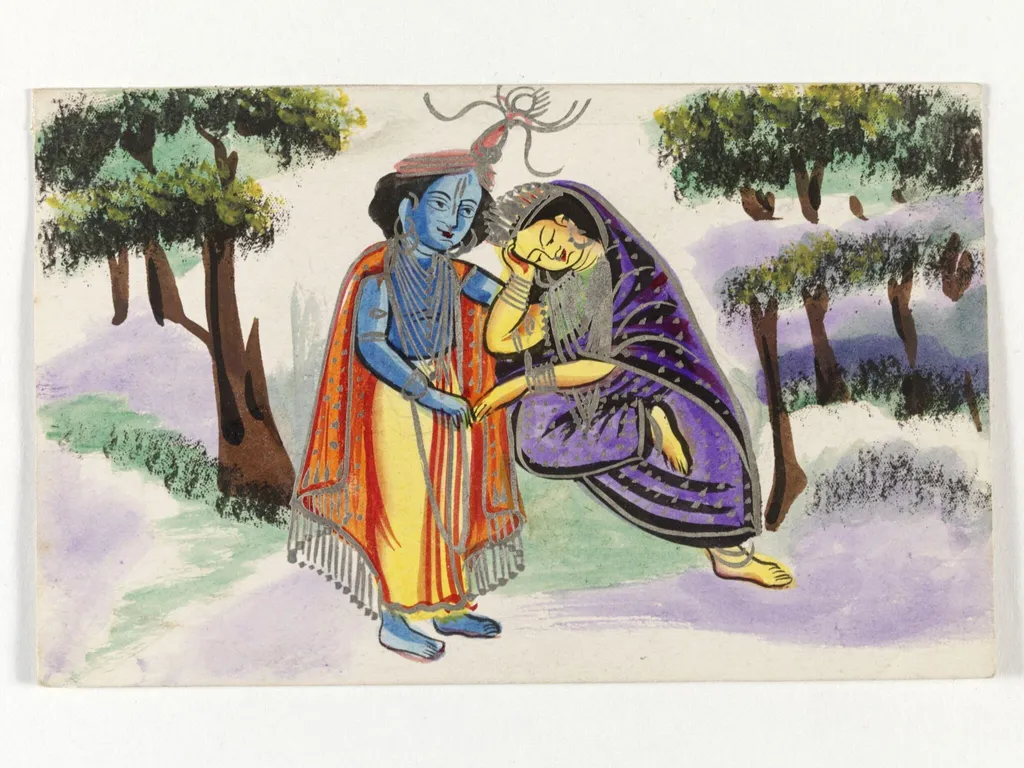
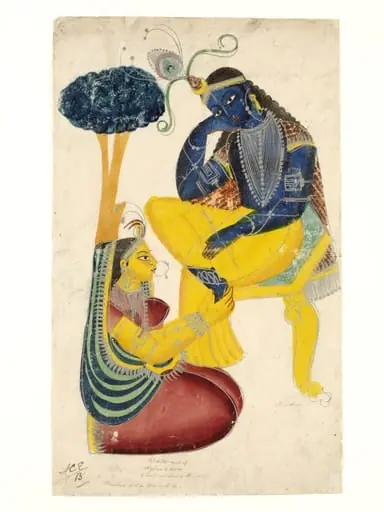
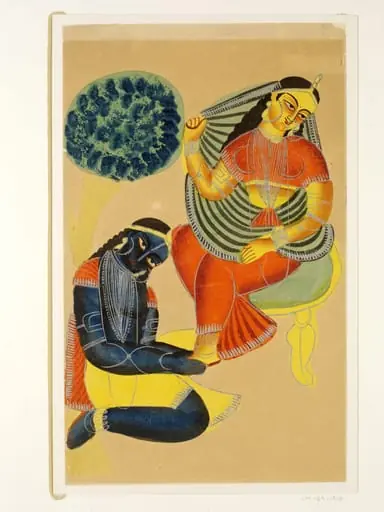
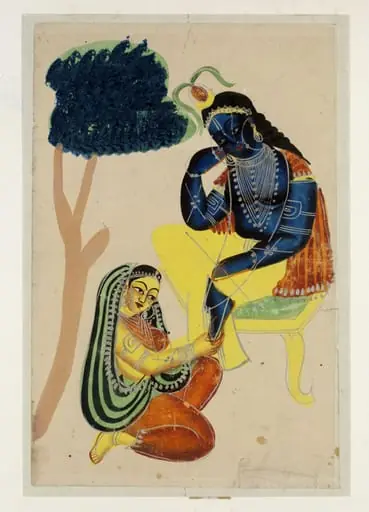
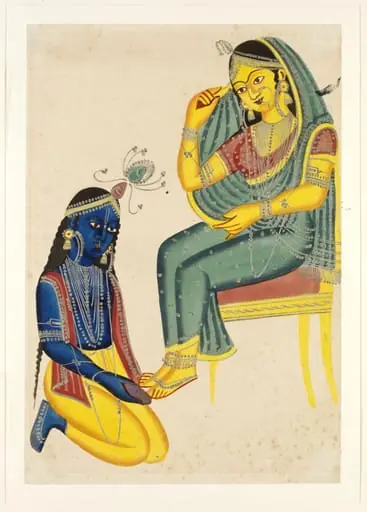
Viraja and Krishna is a paint painting by the Impressionist artist Unknown. It dates from 1890 and is held in the collection of the Victoria and Albert Museum. Created in 1890, this work combines watercolor with tin alloy on a cardboard support.
About this work
Overview
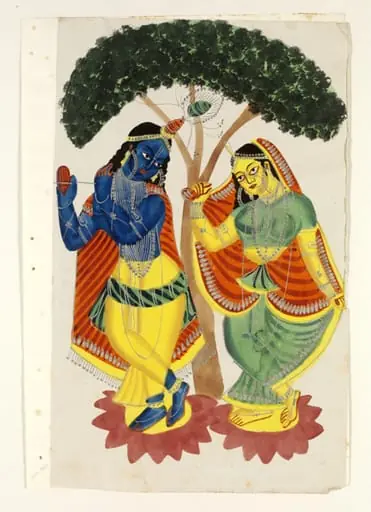
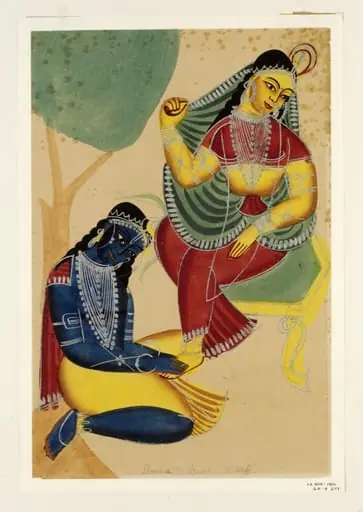
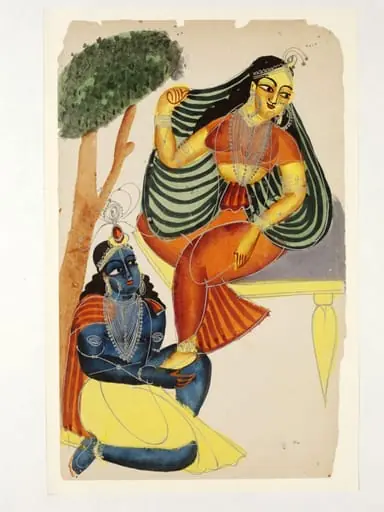
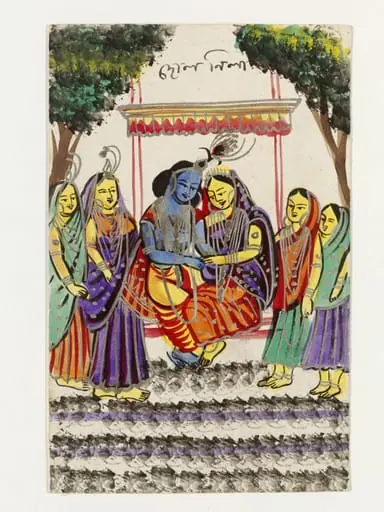
Created in 1890, this work combines watercolor with tin alloy on a cardboard support. It portrays two mythological figures, Viraja—identified as the sister of Vishnu—and the deity Krishna, positioned together in an outdoor setting.
Subject & Meaning
Viraja is shown on the left, dressed in a blue‑yellow garment and a red head covering, while Krishna sits on the right, wrapped in a purple mantle edged with gold, cross‑legged and holding a fan. Their joined hands suggest a narrative of familial or devotional connection within Hindu tradition.
Technique & Style
The artist employs bold, simplified outlines and vivid, flat areas of color, characteristic of a storybook illustration. The background consists of loosely rendered trees and a faint sky, achieved with quick brushstrokes that contrast with the more defined foreground figures.
History & Provenance
The painting’s creator remains unidentified, and it is attributed to the late nineteenth‑century Indian popular art market. Its material composition—watercolor and tin alloy on cardboard—aligns with works produced in the Kalighat school of Kolkata during that period.
Context
Kalighat paintings, emerging from the bustling pilgrimage site of Kolkata, often depicted religious narratives for a broad audience. This piece reflects that tradition, merging devotional subject matter with an accessible visual language suited to mass reproduction.
Artist & collection

 Domestic Scene
 Giacomo and Cardinal Marco, investing Andrea, Abbot of San Zeno, with his Benefice
 The Nymph of Fontainebleau
 Portrait of a Woman
 Madonna and Child with Saints in the Enclosed Garden
 Venus and Minerva
 Family Group of Four on Sofa
 Wall painting from Room H of the Villa of P. Fannius Synistor at Boscoreale