Artwork
Radha and Krishna
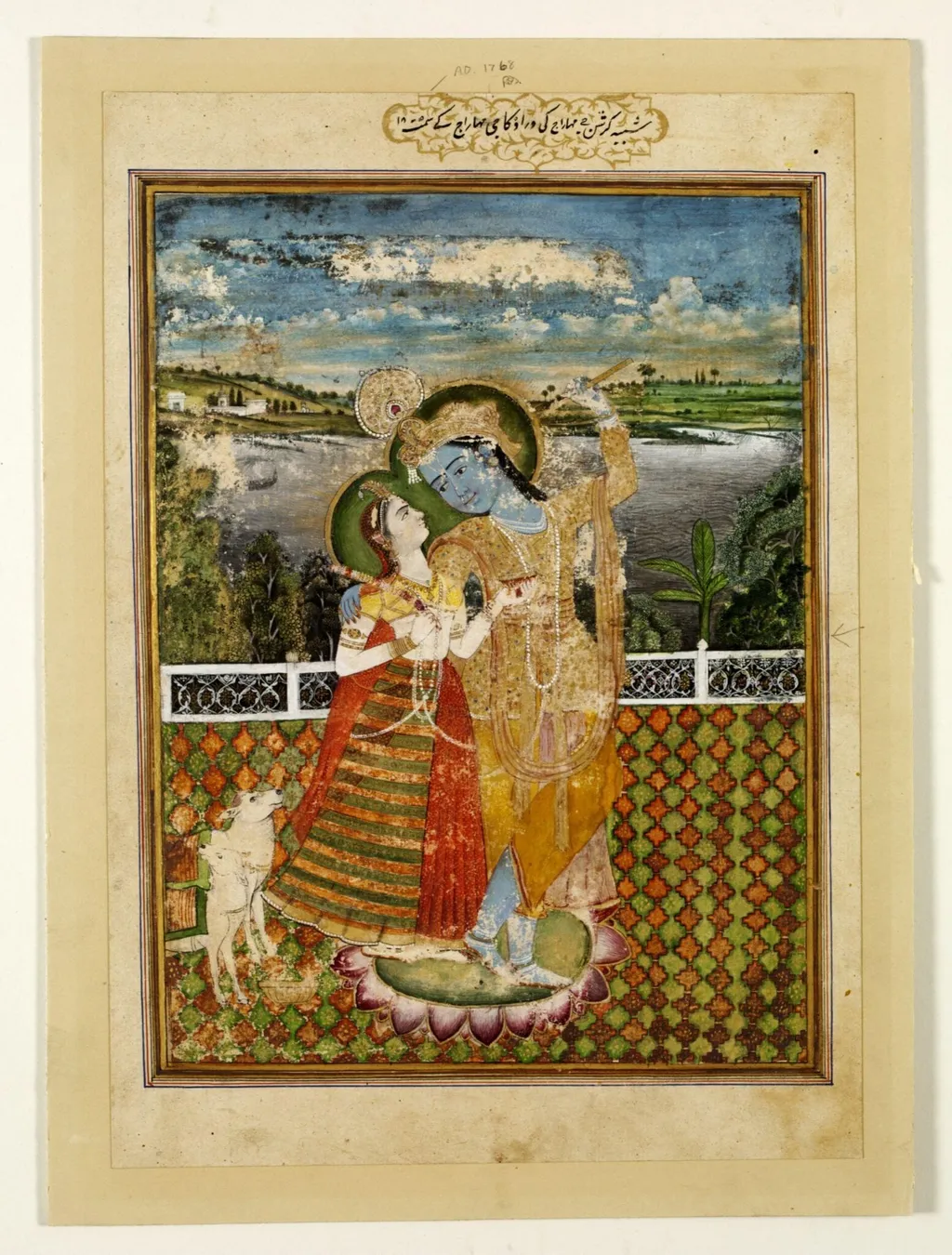
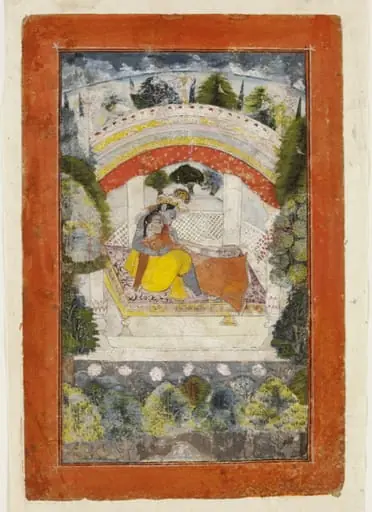
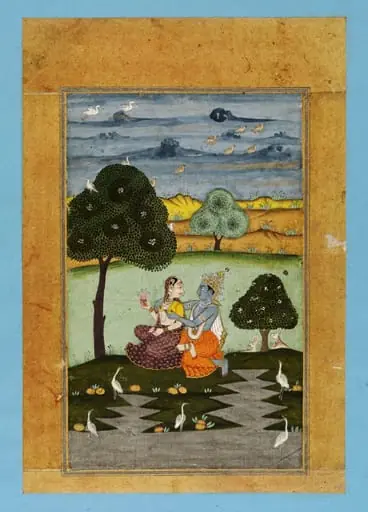
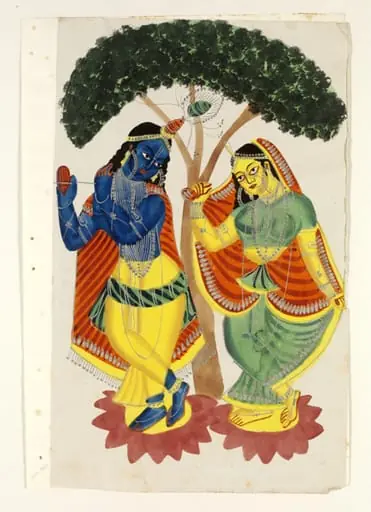
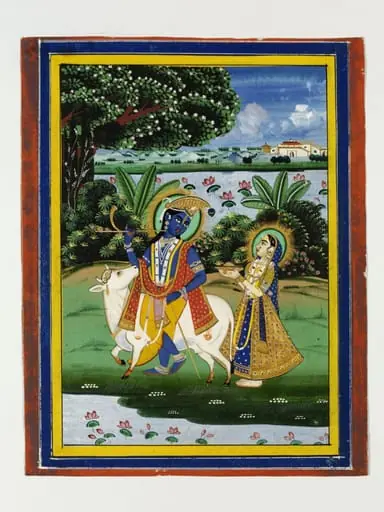
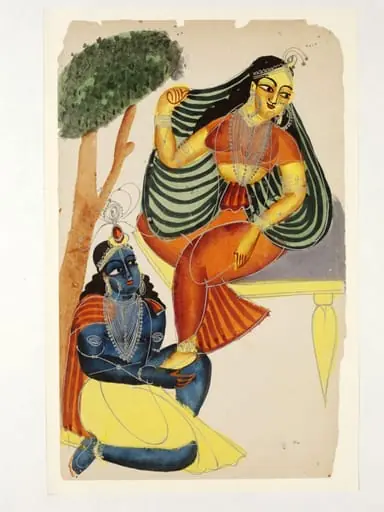
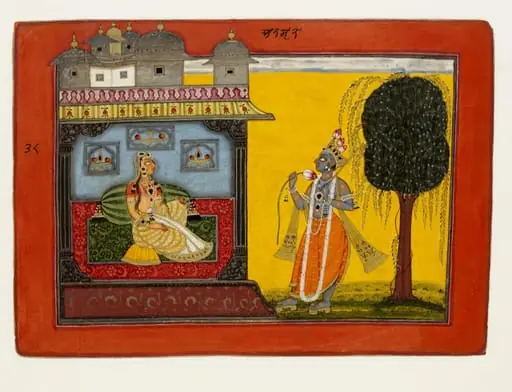
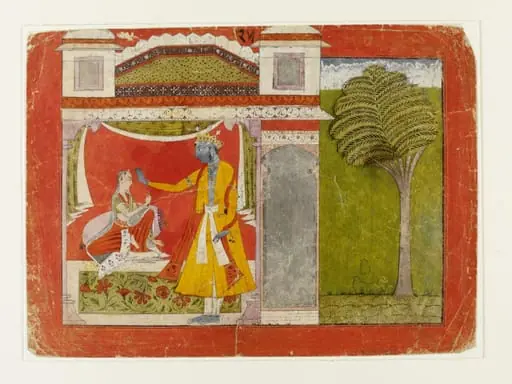
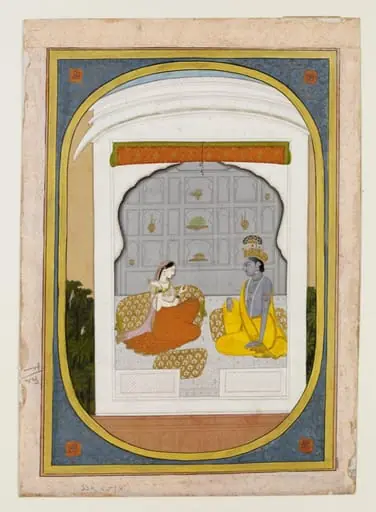
Radha and Krishna is a paint painting by the Rococo painting artist Unknown. It dates from 1768 and is held in the collection of the Victoria and Albert Museum.
About this work
Overview
They stand atop a terrace adorned with a red-and-green checkerboard floor, surrounded by symbolic elements of devotion and nature.
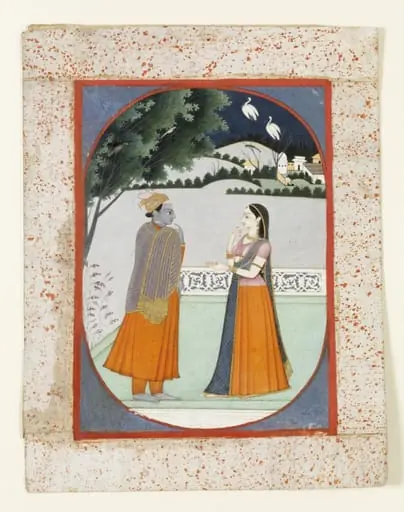
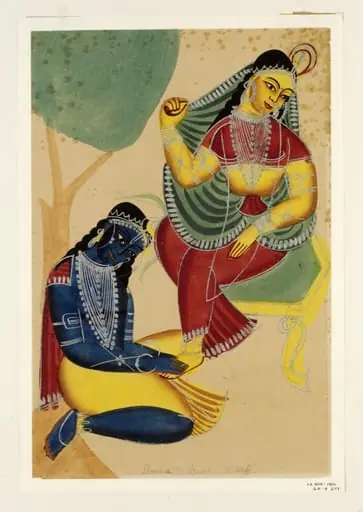
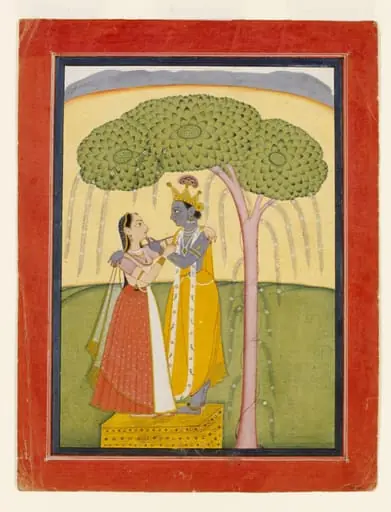
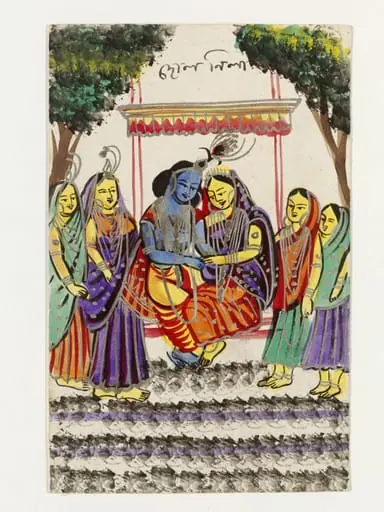
This painting portrays the divine lovers Radha and Krishna in a serene, elevated setting. They stand atop a terrace adorned with a red-and-green checkerboard floor, surrounded by symbolic elements of devotion and nature. The composition centers their intimate embrace, framed by celestial figures scattering blossoms and a tranquil landscape beyond. The scene blends earthly and heavenly realms, characteristic of Pahari miniature traditions.
Subject & Meaning
Radha and Krishna are depicted not merely as romantic figures but as embodiments of spiritual union in Vaishnavite devotion. Their closeness symbolizes the soul’s longing for the divine. The lotus beneath them signifies purity, while the celestial flower showers represent divine blessing. The two white cows, often associated with Krishna’s pastoral origins, reinforce his identity as Gopala, the cowherd god.
Technique & Style
Executed in the Pahari miniature style, the work employs fine brushwork, flat planes of color, and intricate detailing. Krishna’s blue skin and Radha’s contrasting red and yellow garments create visual harmony. Gold leaf highlights the celestial beings and ornamental patterns, while the checkerboard terrace and layered landscape demonstrate a deliberate, stylized spatial arrangement typical of 18th-century Himalayan court painting.
History & Provenance
The painting likely originated in the Kangra or Guler region of the Punjab Hills during the late 18th century, a period when Pahari artists flourished under royal patronage. Such works were often commissioned for private devotional use or courtly display. While its exact provenance remains undocumented, its stylistic features align with other known Kangra school pieces from the same era.
Context
This work emerged during a time when devotional poetry, particularly the Bhakti movement, inspired visual art across North India. Artists translated lyrical descriptions of Radha and Krishna’s love into intimate, lyrical compositions. Unlike Mughal court scenes, these paintings emphasized emotional resonance over realism, reflecting regional religious aesthetics and the influence of Sanskrit literary traditions.
Legacy
The painting exemplifies the enduring influence of Pahari miniature painting in shaping Indian visual culture. Its emphasis on emotional intimacy and spiritual symbolism influenced later regional styles and continues to inform contemporary interpretations of Hindu iconography. Though not widely exhibited, it remains a reference point in studies of devotional art and the aesthetics of love in South Asian traditions.
Artist & collection

 Domestic Scene
 Giacomo and Cardinal Marco, investing Andrea, Abbot of San Zeno, with his Benefice
 The Nymph of Fontainebleau
 Portrait of a Woman
 Madonna and Child with Saints in the Enclosed Garden
 Venus and Minerva
 Family Group of Four on Sofa
 Wall painting from Room H of the Villa of P. Fannius Synistor at Boscoreale