Artwork
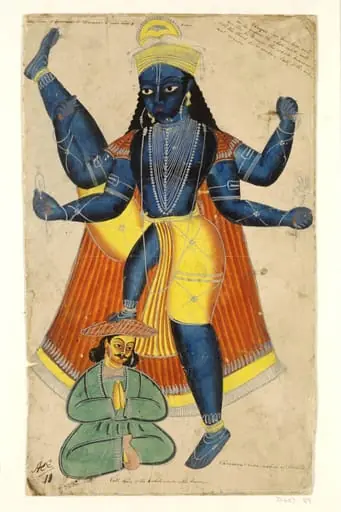
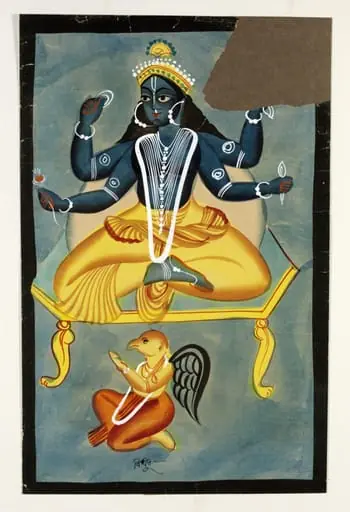
Vishnu as Vishvarupa (cosmic or universal man)
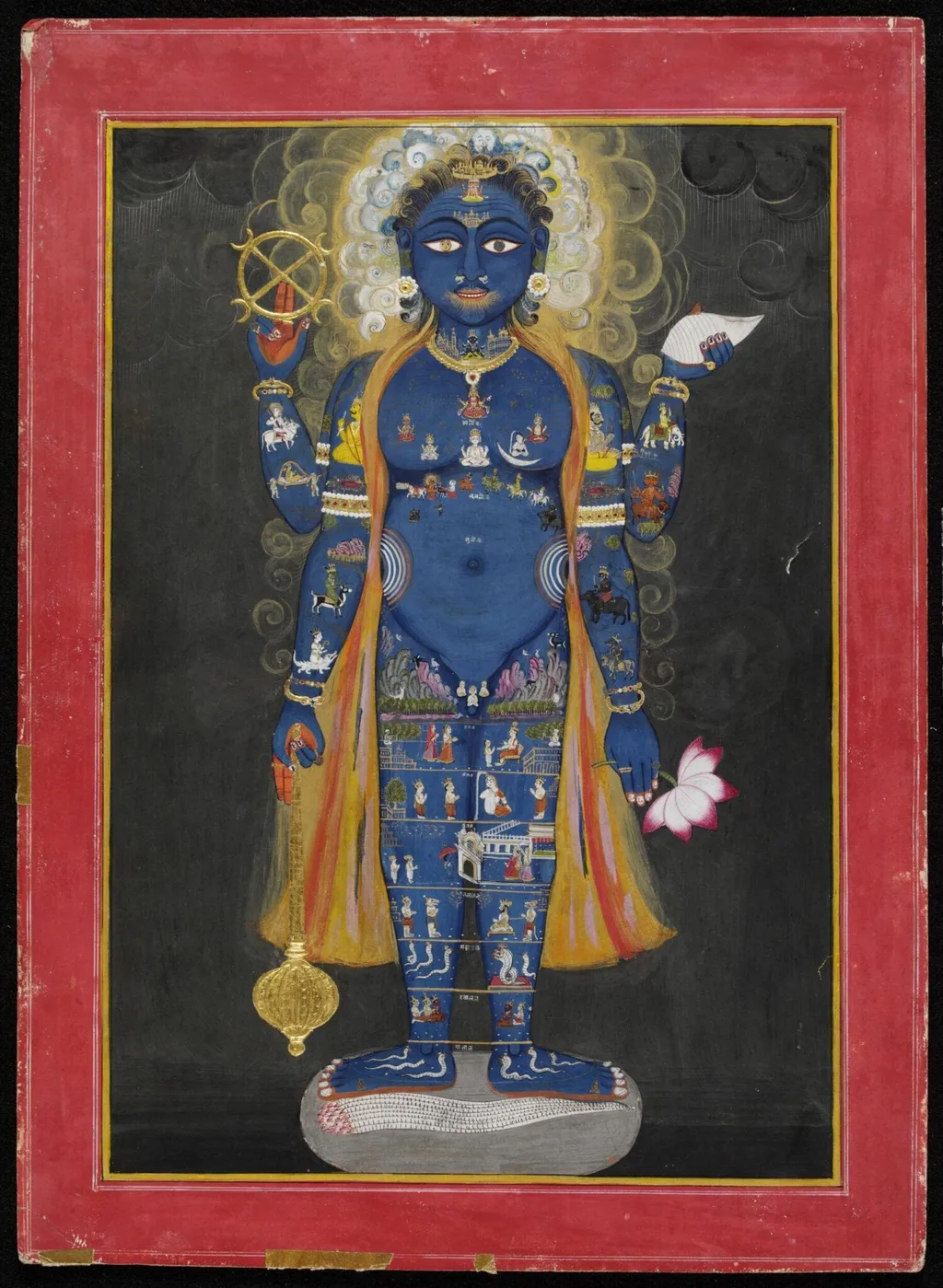
Vishnu as Vishvarupa (cosmic or universal man) is a paint painting by the Romanticist artist Unknown. It dates from 1810 and is held in the collection of the Victoria and Albert Museum. The work is a painted depiction of the Hindu deity Vishnu rendered in his Vishvarupa, or universal form.
About this work
Overview
The work is a painted depiction of the Hindu deity Vishnu rendered in his Vishvarupa, or universal form. Executed in the early nineteenth century, the image presents a blue‑skinned figure with four arms, each bearing a traditional attribute. Small human and animal figures are painted across his body, symbolising his all‑encompassing presence within creation.
Subject & Meaning
Vishvarupa conveys Vishnu’s role as the cosmic totality, a concept expressed through the multitude of miniature beings that populate his skin.
Vishvarupa conveys Vishnu’s role as the cosmic totality, a concept expressed through the multitude of miniature beings that populate his skin. The four arms hold a conch shell, a lotus flower, a mace, and the Sudarshana chakra, each representing specific divine powers: sound, purity, strength, and the protective disc of the deity. Together they illustrate the god’s capacity to sustain and govern the universe.
Technique & Style
The painting reflects the courtly aesthetic of early‑nineteenth‑century Rajasthan, employing a vivid blue pigment for the deity’s complexion and fine brushwork to render the intricate figures on his body. The composition balances a frontal, monumental stance with detailed iconographic elements, characteristic of Jaipur’s devotional art that blends narrative richness with precise symbolic rendering.
History & Provenance
Created likely in Jaipur, Rajasthan, between 1800 and 1805, the piece exemplifies regional devotional painting of the period. While its original patron remains unidentified, the work has entered the museum collection through acquisition in the twentieth century, joining other South Asian religious artworks that document the visual culture of Hindu iconography.
Artist & collection

 Domestic Scene
 Giacomo and Cardinal Marco, investing Andrea, Abbot of San Zeno, with his Benefice
 The Nymph of Fontainebleau
 Portrait of a Woman
 Madonna and Child with Saints in the Enclosed Garden
 Venus and Minerva
 Family Group of Four on Sofa
 Wall painting from Room H of the Villa of P. Fannius Synistor at Boscoreale