Artwork
Kali
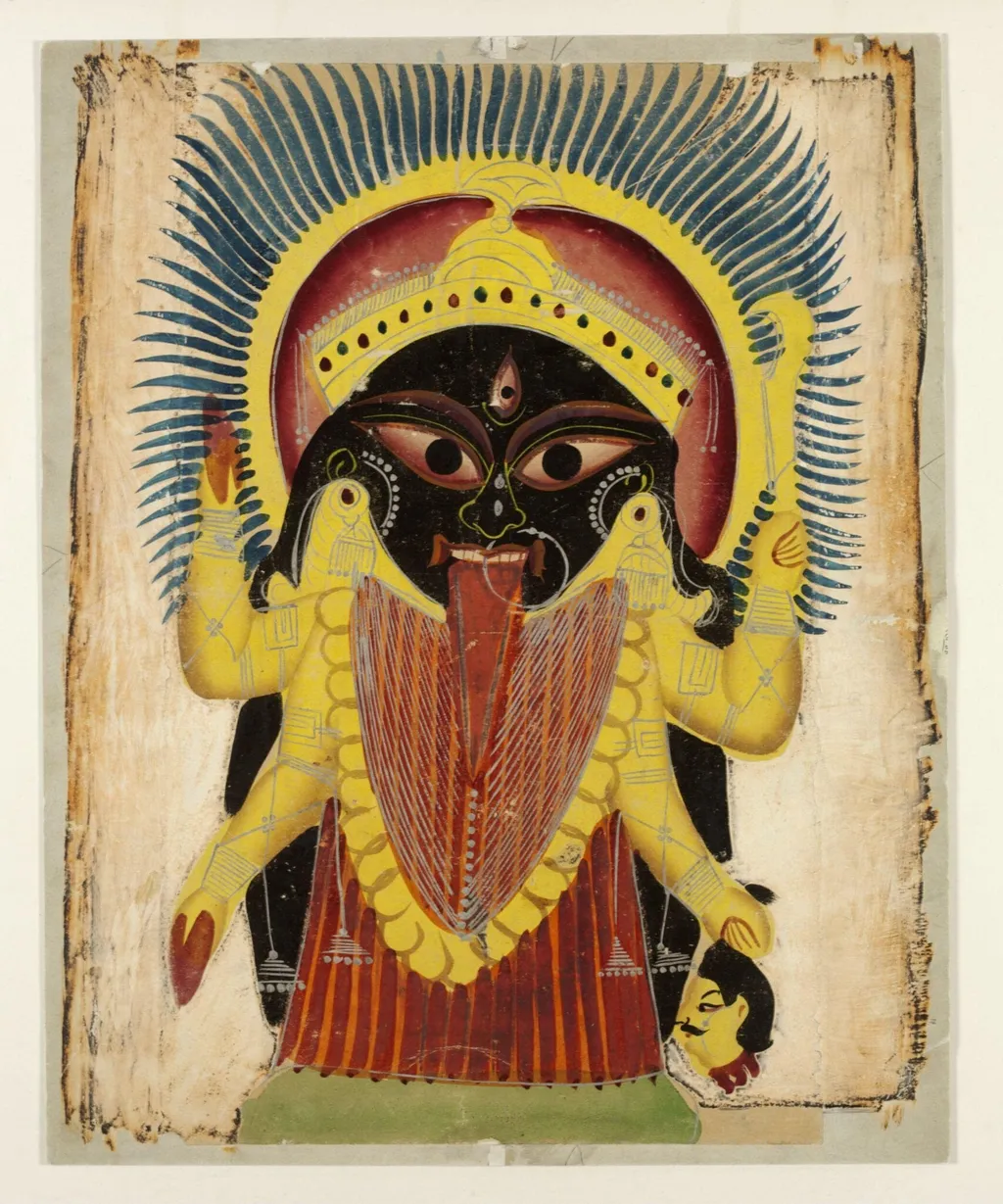
Kali is a paint painting by the Impressionist artist Unknown. It dates from 1865 and is held in the collection of the Victoria and Albert Museum.
About this work
Overview
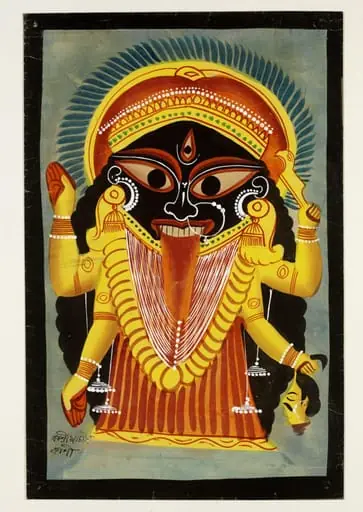
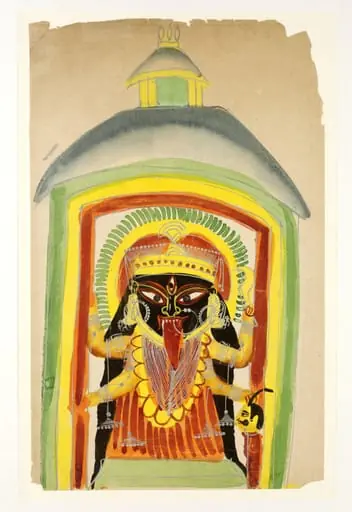
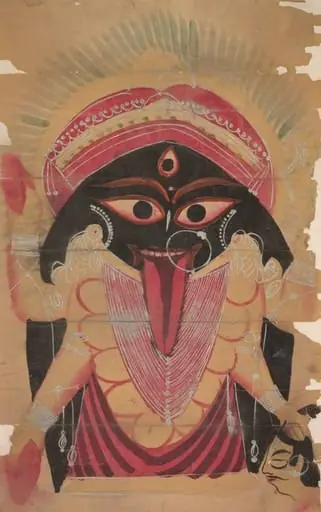
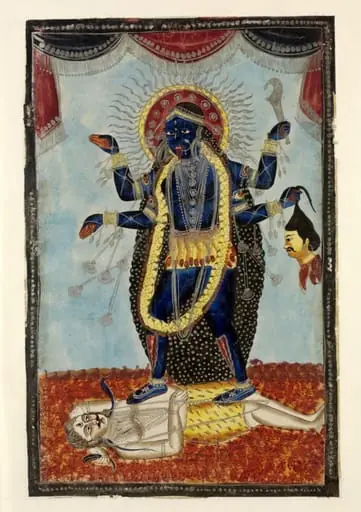
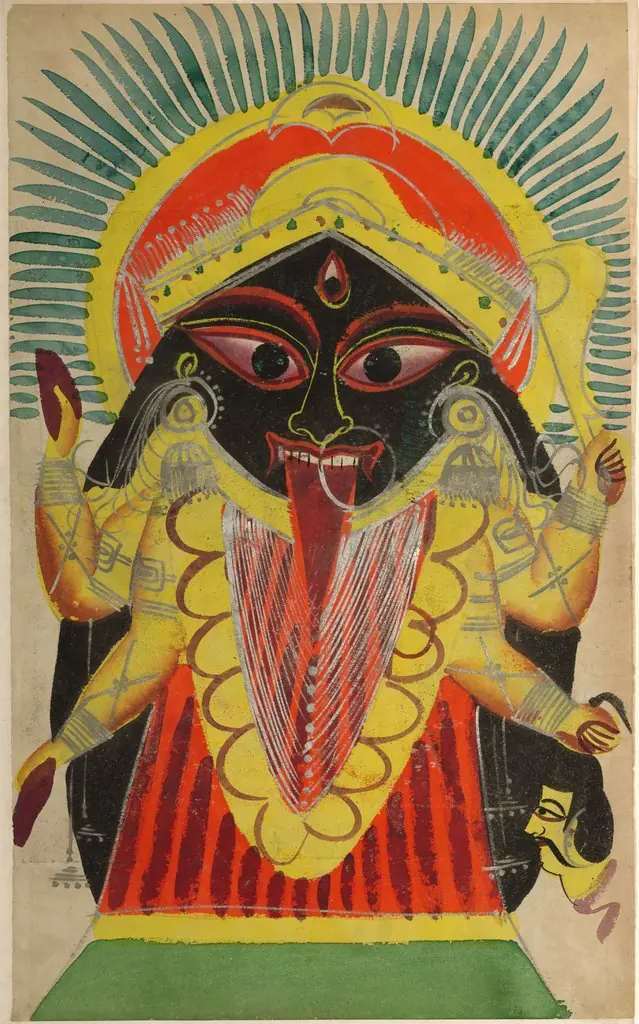
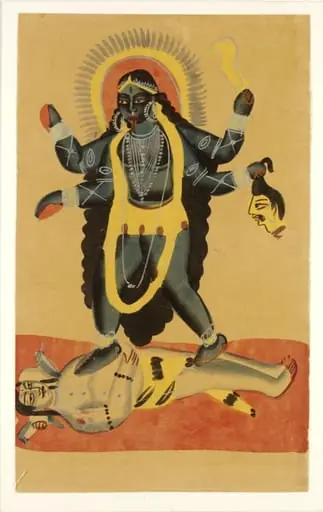
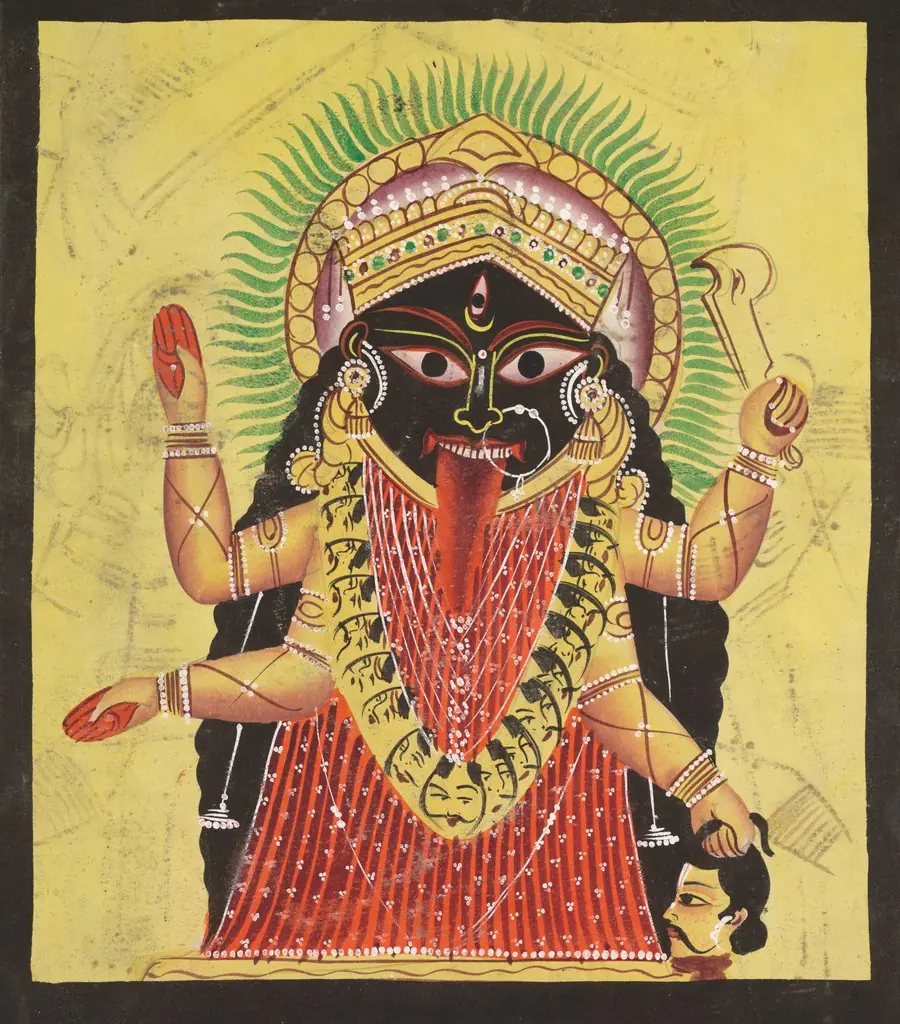
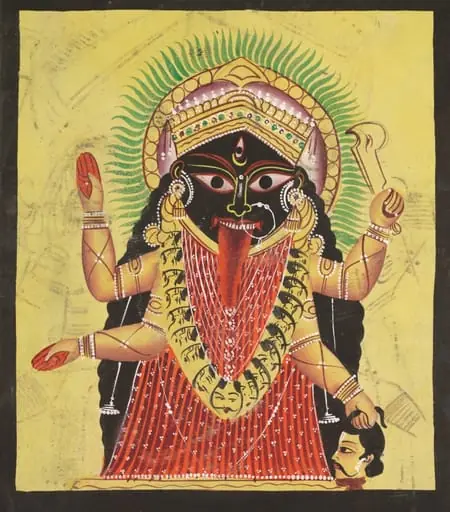
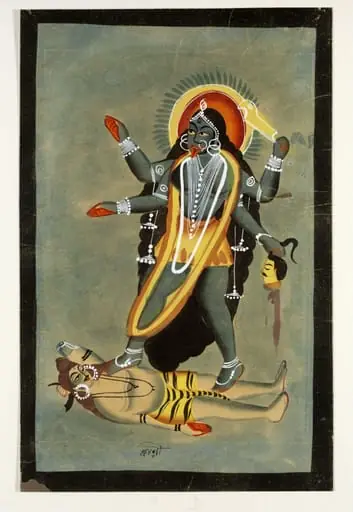
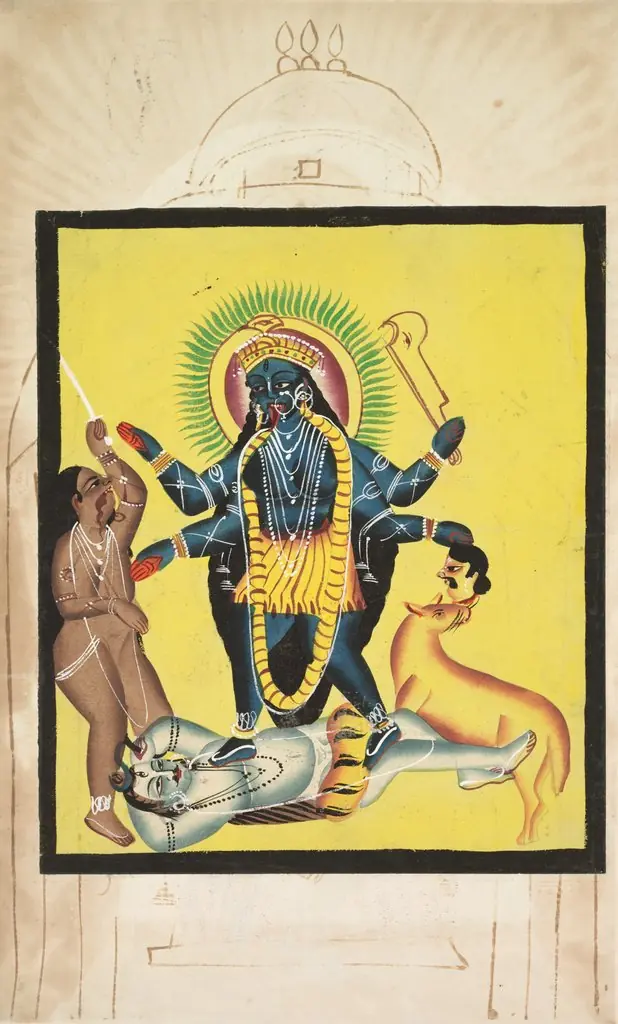
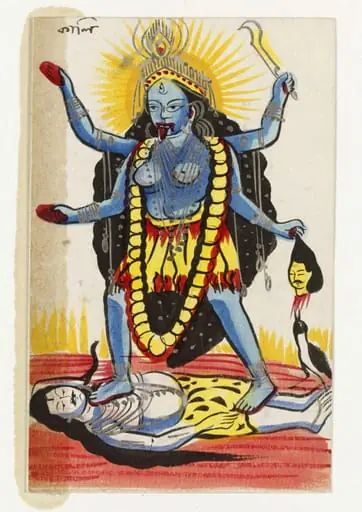
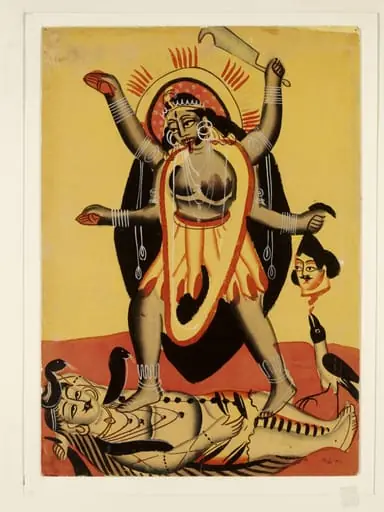
Created in 1865, this painting depicts the Hindu goddess Kali using opaque watercolour and tin alloy on paper.
Created in 1865, this painting depicts the Hindu goddess Kali using opaque watercolour and tin alloy on paper. The work was donated to a collection in 1949 by Mrs. E. Mary Milford, acting on behalf of the Church Missionary Society in London. Its materials and composition reflect a blend of traditional Indian iconography and colonial-era artistic practices, resulting in a vivid, detailed representation that stands apart from conventional Western religious imagery of the period.
Subject & Meaning
Kali is portrayed with four arms and three eyes, symbols of her divine power and all-seeing awareness. She wears a garland of skulls and holds a severed head, referencing her role as a destroyer of ego and ignorance in Hindu cosmology. Her fierce expression and dynamic posture convey both wrath and protection. The red circle around her head and blue feathers suggest spiritual energy and transcendence, reinforcing her status as a force beyond ordinary human limits.
Technique & Style
The artist employed opaque watercolour with tin alloy to achieve luminous, saturated hues and sharp outlines, enhancing the figure’s intensity against a muted background. Bold contours define the goddess’s form, while intricate detailing in her jewelry and attire reflects regional decorative traditions. The use of metallic pigments adds a tactile richness, and the contrast between vivid foreground elements and faded surroundings directs focus to Kali’s commanding presence.
History & Provenance
The painting entered its current collection in 1949 through a donation by Mrs. E. Mary Milford, linked to the Church Missionary Society’s activities in India. Its origins likely trace to a colonial-era Indian artist working for or influenced by missionary patrons. While its exact place of creation is unconfirmed, the stylistic choices suggest it was produced in a region where Hindu iconography was adapted for Western audiences during the 19th century.
Context
In mid-19th century India, religious imagery was often produced for both local devotion and European collectors. This painting reflects a hybrid context: traditional Hindu symbolism was rendered with materials and techniques accessible under colonial influence. Missionary groups sometimes collected such works as ethnographic artifacts, viewing them through a lens of religious contrast rather than spiritual understanding.
Legacy
The painting remains a rare example of 19th-century Indian devotional art preserved in a Western institutional setting. It offers insight into how Hindu deities were visually interpreted during a period of cultural exchange and colonial oversight. Its survival and display contribute to ongoing scholarly discussions about the representation of non-Western religious figures in museum collections.
Artist & collection

 Domestic Scene
 Giacomo and Cardinal Marco, investing Andrea, Abbot of San Zeno, with his Benefice
 The Nymph of Fontainebleau
 Portrait of a Woman
 Madonna and Child with Saints in the Enclosed Garden
 Venus and Minerva
 Family Group of Four on Sofa
 Wall painting from Room H of the Villa of P. Fannius Synistor at Boscoreale