Artwork
Karma Amitayus, From a Mandala of the Ninefold Amitayus
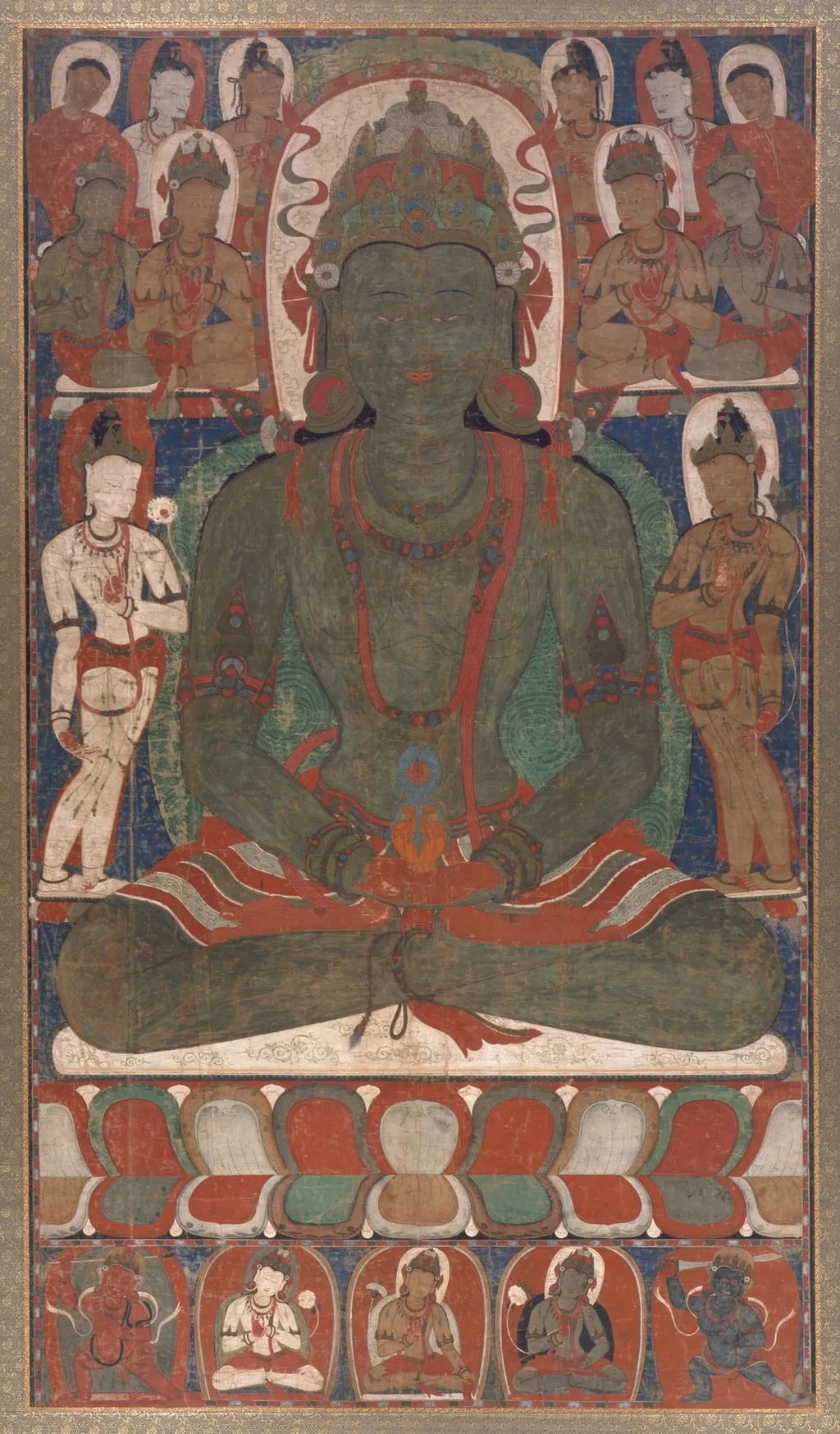
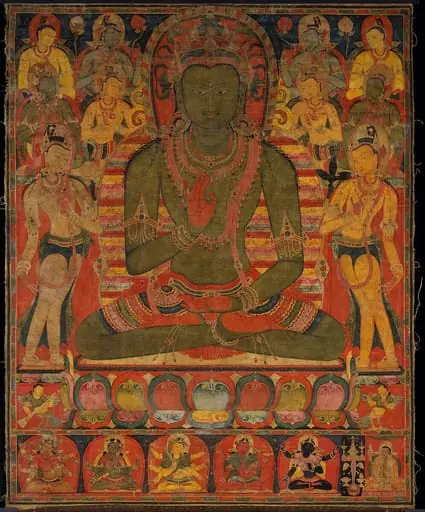
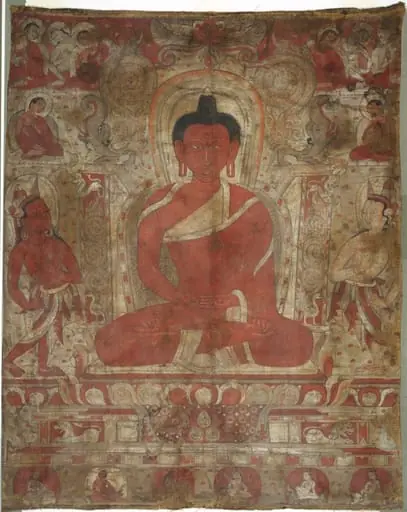
Karma Amitayus, From a Mandala of the Ninefold Amitayus is an unspecified painting by the Byzantine icon painting artist Unknown. It dates from 1150 and is held in the collection of the Los Angeles County Museum of Art. This painting depicts a central figure of Amitayus, a Buddha associated with longevity, seated in meditation within a mandala composition.
About this work
Overview
This painting depicts a central figure of Amitayus, a Buddha associated with longevity, seated in meditation within a mandala composition.
This painting depicts a central figure of Amitayus, a Buddha associated with longevity, seated in meditation within a mandala composition. Surrounding the central figure are eight smaller attendant forms, each distinct in color and attire, arranged in symmetrical rows. The palette favors subdued reds, greens, and blues, contributing to a quiet, contemplative atmosphere. Fine detailing in textile patterns and adornments underscores the ritual precision of the work.
Subject & Meaning
The central dark green figure represents Amitayus, the Buddha of Infinite Life, embodying compassion and extended existence. The eight surrounding figures correspond to aspects of his enlightened qualities, forming a symbolic mandala of the Ninefold Amitayus. Each attendant’s unique hue and garment reflects a specific spiritual function, collectively illustrating the interconnectedness of wisdom, compassion, and cosmic order in Vajrayana Buddhist cosmology.
Technique & Style
Executed in mineral pigments on cloth, the painting employs fine brushwork to render intricate patterns on robes and jewelry. The figures are outlined with precision, and color transitions are subtle, avoiding sharp contrasts. The composition is strictly geometric, with concentric symmetry reinforcing spiritual harmony. The muted tones reflect traditional Tibetan Buddhist aesthetic values, prioritizing meditative focus over visual drama.
History & Provenance
This work originates from a Tibetan Buddhist ritual context, likely created in the 17th or 18th century for use in monastic meditation or ceremonial practice. Mandala paintings of this type were often commissioned by patrons or monasteries to support spiritual visualization. Its survival suggests careful preservation, possibly within a temple collection or by a lineage of practitioners who maintained its ritual integrity over generations.
Context
The Ninefold Amitayus mandala belongs to a broader tradition of Tibetan tantric art designed to aid meditative visualization. Such paintings were not merely decorative but served as sacred maps guiding practitioners through complex spiritual pathways. Their creation required strict adherence to iconographic rules, often under the guidance of a qualified lama, ensuring doctrinal accuracy and ritual efficacy.
Legacy
This painting continues to function as a reference for the preservation of Tibetan Buddhist iconographic standards. While no longer used in active ritual practice in many contexts, it remains a vital artifact for scholars and practitioners studying the transmission of tantric visual language. Its enduring presence in collections highlights the sustained cultural and spiritual value of mandala art beyond its original liturgical role.
Artist & collection

 Domestic Scene
 Giacomo and Cardinal Marco, investing Andrea, Abbot of San Zeno, with his Benefice
 The Nymph of Fontainebleau
 Portrait of a Woman
 Madonna and Child with Saints in the Enclosed Garden
 Venus and Minerva
 Family Group of Four on Sofa
 Wall painting from Room H of the Villa of P. Fannius Synistor at Boscoreale
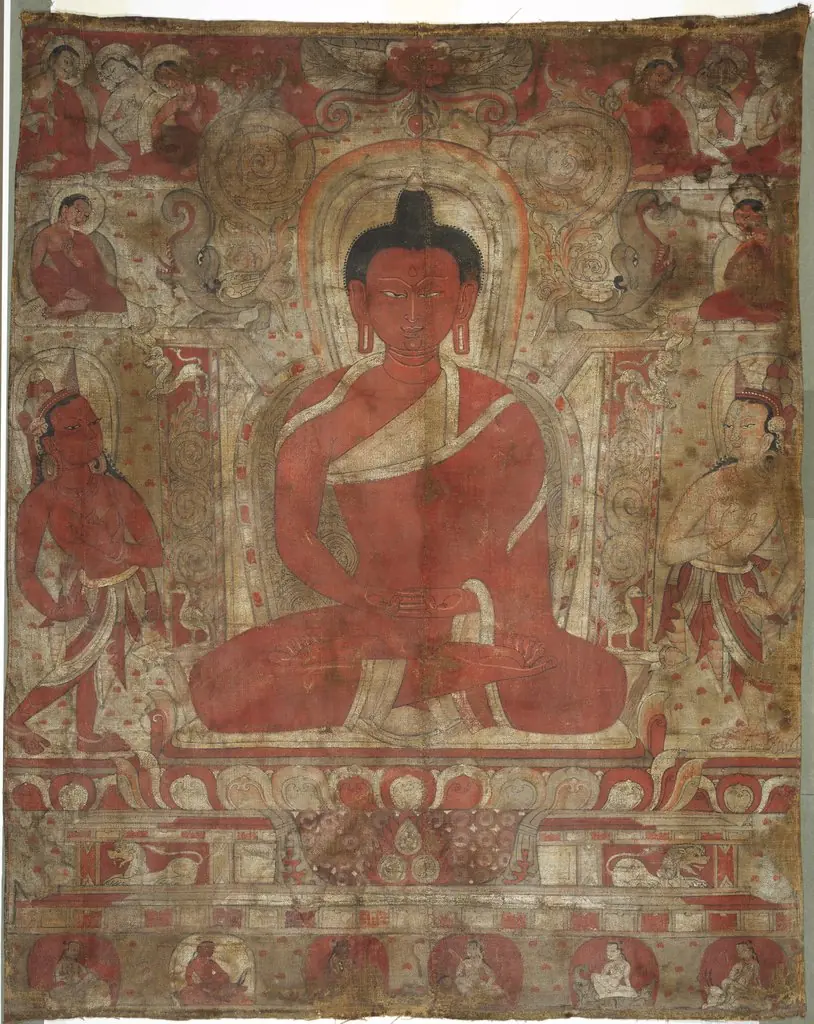 Seated Amitabha with Attendants
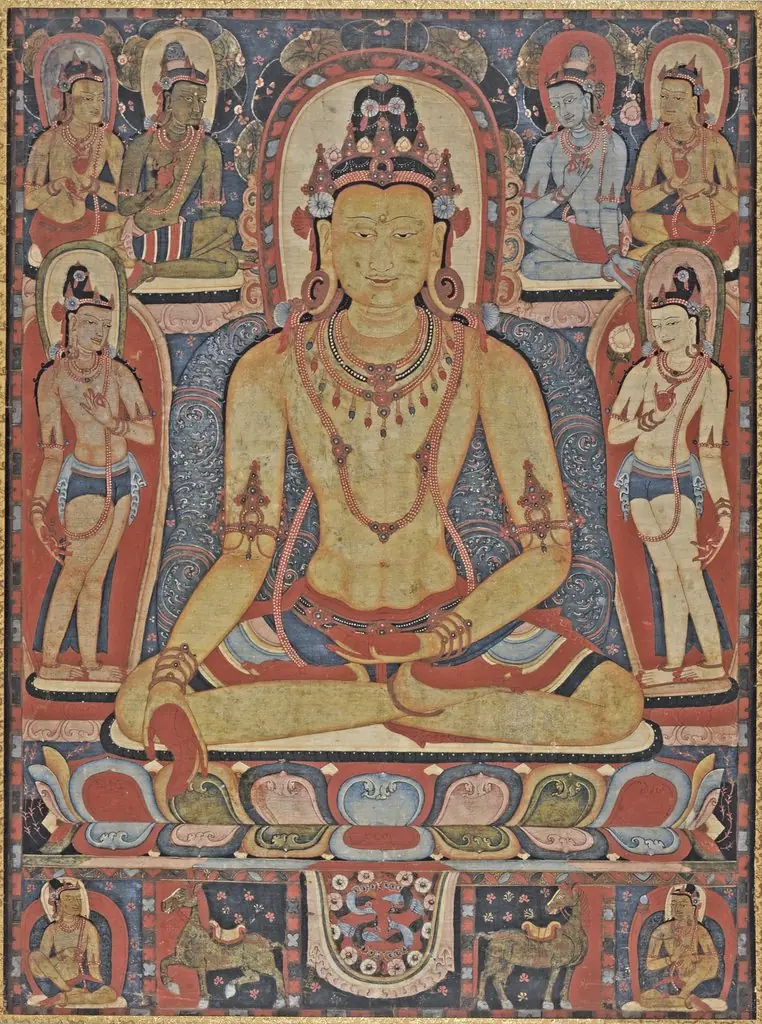 The Jina Buddha Ratnasambhava
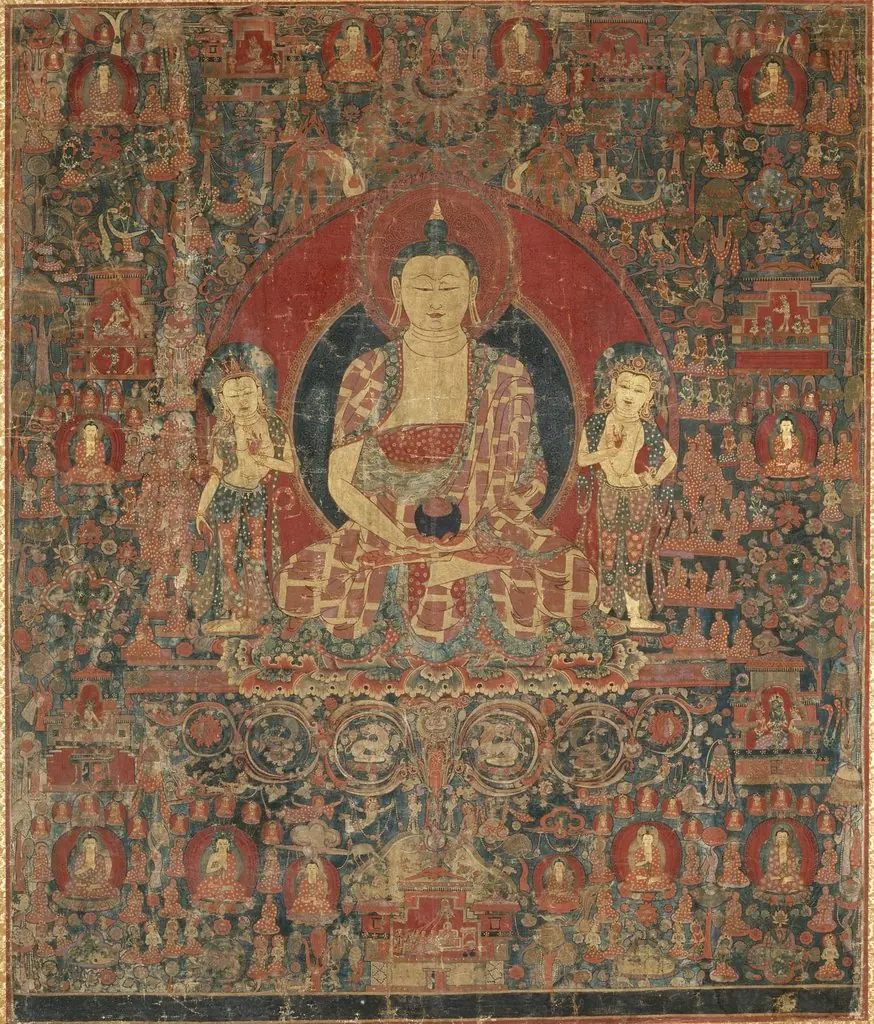 The Jina Buddha of Infinite Light (Amitabha) in His Pure Land Paradise (Sukhavati)
 Untitled
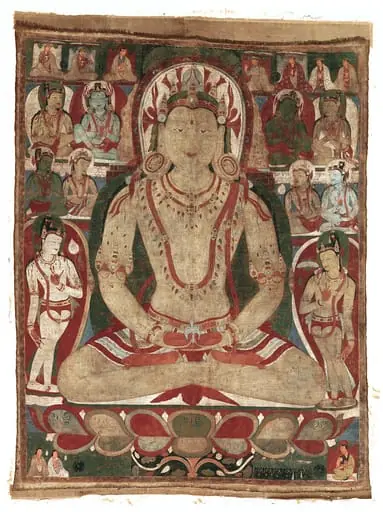 Untitled
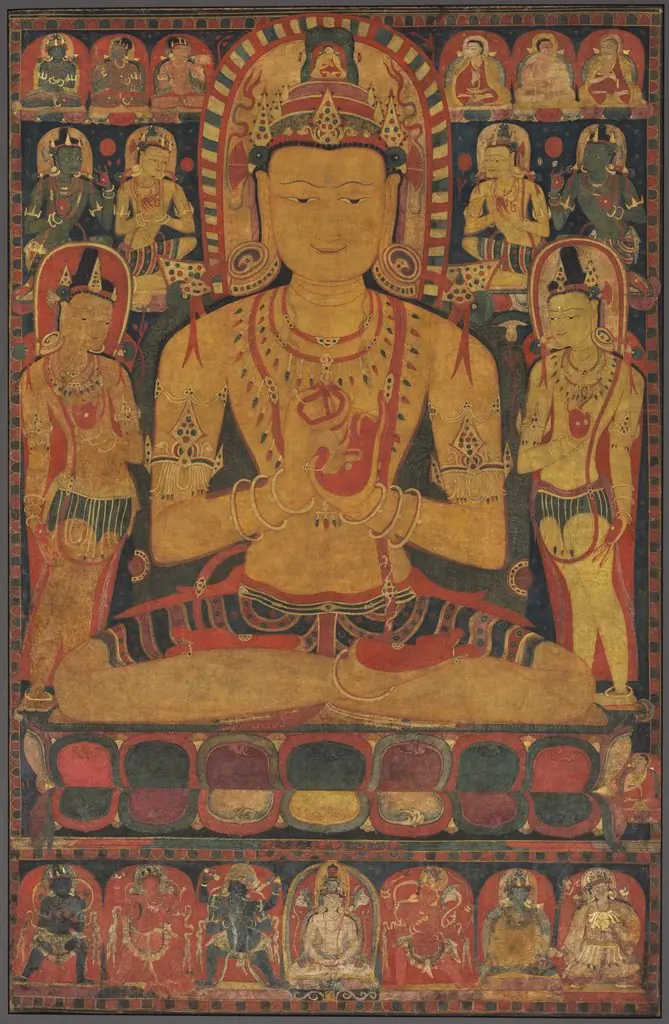 Tantric Buddha Vairochana as Vajrasattva
 Tantric Buddha Vairochana as Vajrasattva
 Green Tara
 Green Tara
 Painted Banner (Thangka) with the Medicine Buddha (Bhaishajyaguru)
 The Secret Five Bodhisattvas (Gohimitsu Bosatsu)
 Seated Amitabha with Attendants