Artwork
Vishnu, Varahi and Lakshmi
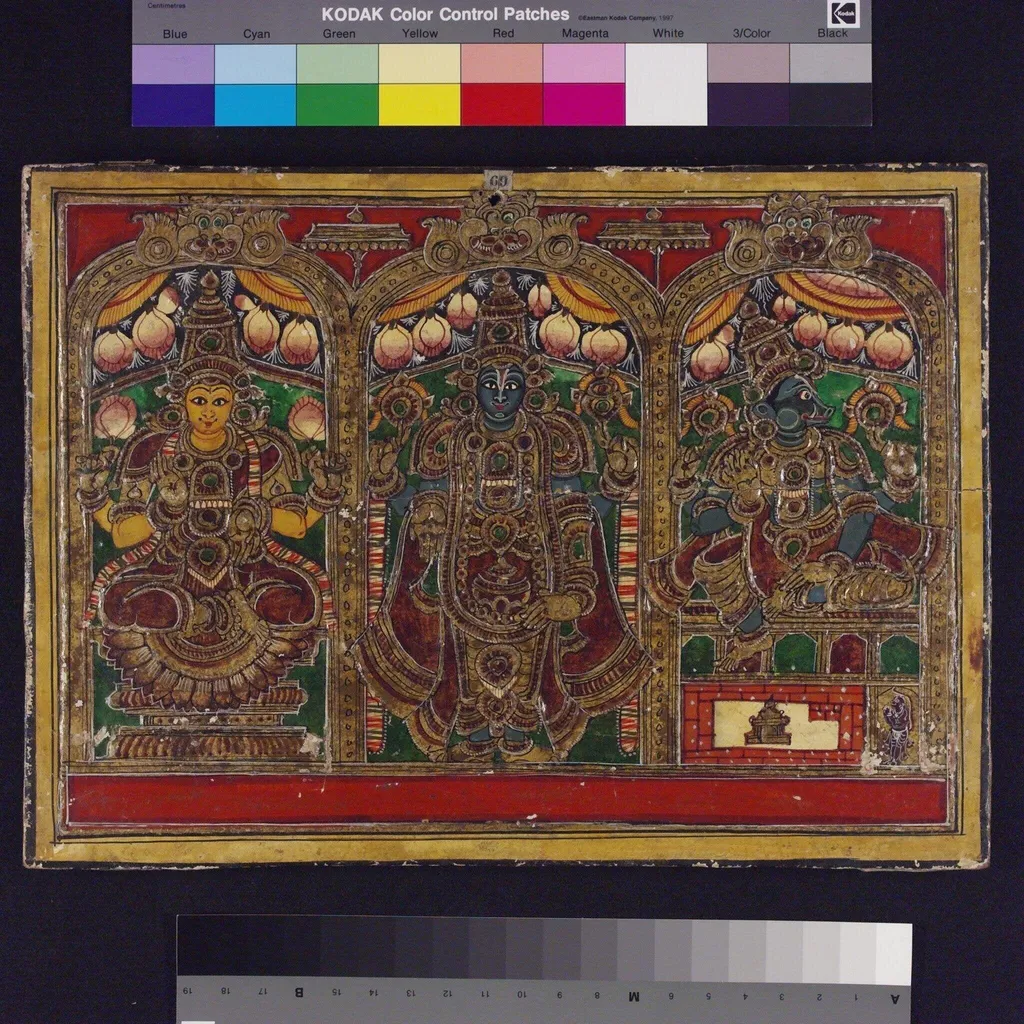
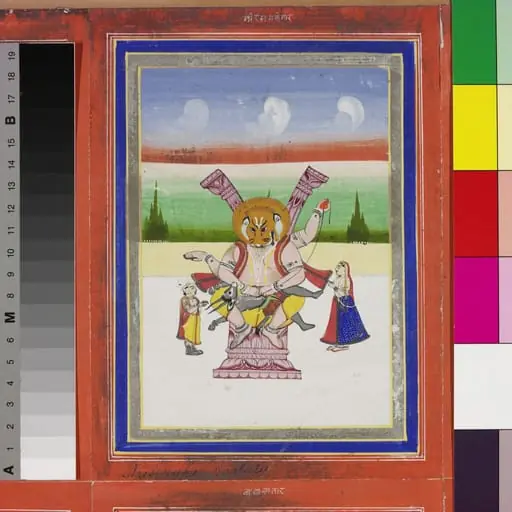
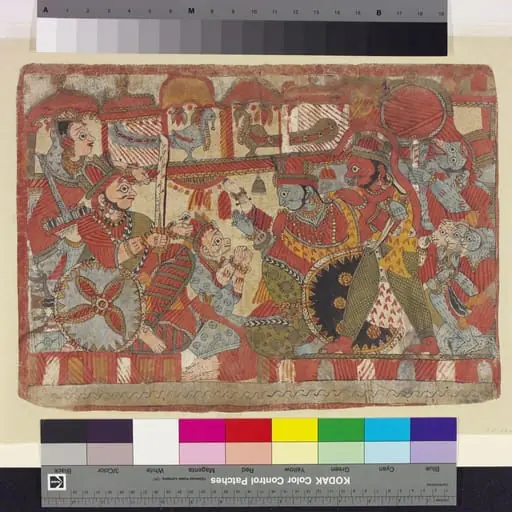
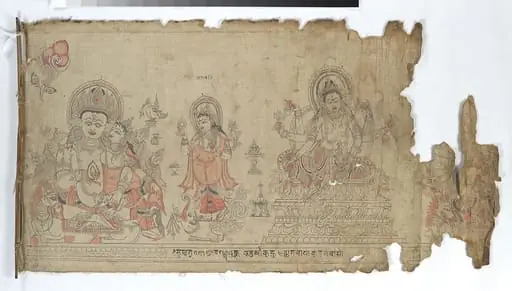
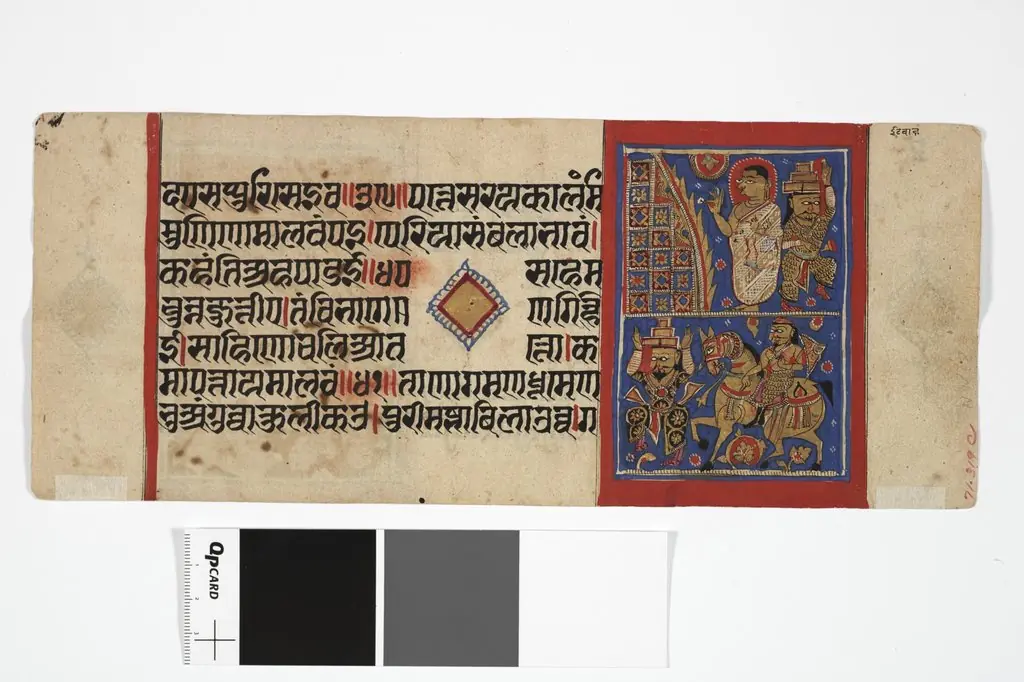
Vishnu, Varahi and Lakshmi is a paint painting by the Patna School of Painting artist Unknown. It dates from 1830 and is held in the collection of the Victoria and Albert Museum. This 1830 gouache on wood painting depicts three deities standing together against a vibrant red background.
About this work
Overview
This 1830 gouache on wood painting depicts three deities standing together against a vibrant red background. At the center is a figure with a blue face and intricately patterned attire adorned with gold, flanked by two deities with round faces, ornate jewelry, and brightly colored, detailed clothing. A decorated canopy above them features stylized fruit and ornaments.
Subject & Meaning
The central figure is identified as Vishnu, accompanied by Varahi on one side and likely Lakshmi on the other. Together, they embody a representation of divine harmony and balance, with Vishnu at the core. The inclusion of these specific deities suggests themes of protection, prosperity, and cosmic order.
Technique & Style
The painting showcases meticulous attention to detail through its intricate patterns, gold accents, and vibrant color palette. The use of gouache on wood allows for bold, opaque colors, contributing to the overall richness and sacramental feel of the work. The stylization of elements, such as the canopy's fruit and decorations, reflects a blend of traditional and regional artistic influences.
History & Provenance
Created in 1830, the painting's origins and ownership history prior to its current location are not detailed in available information. Its style and subject matter place it within the broader context of early 19th-century Indian religious art.
Context
This work would have been created for devotional or ceremonial purposes, given its sacred subjects and opulent execution. It reflects the artistic and religious practices of its time, possibly commissioned for a temple or a wealthy patron's private worship space.
Legacy
While not individually renowned in global art discourse, this painting contributes to the understanding and appreciation of 19th-century Indian religious art. Its preservation and display in museums facilitate research into regional artistic traditions and the evolution of devotional imagery.
Artist & collection

 Domestic Scene
 Giacomo and Cardinal Marco, investing Andrea, Abbot of San Zeno, with his Benefice
 The Nymph of Fontainebleau
 Portrait of a Woman
 Madonna and Child with Saints in the Enclosed Garden
 Venus and Minerva
 Family Group of Four on Sofa
 Wall painting from Room H of the Villa of P. Fannius Synistor at Boscoreale