Artwork
Vishnu as Narasimha
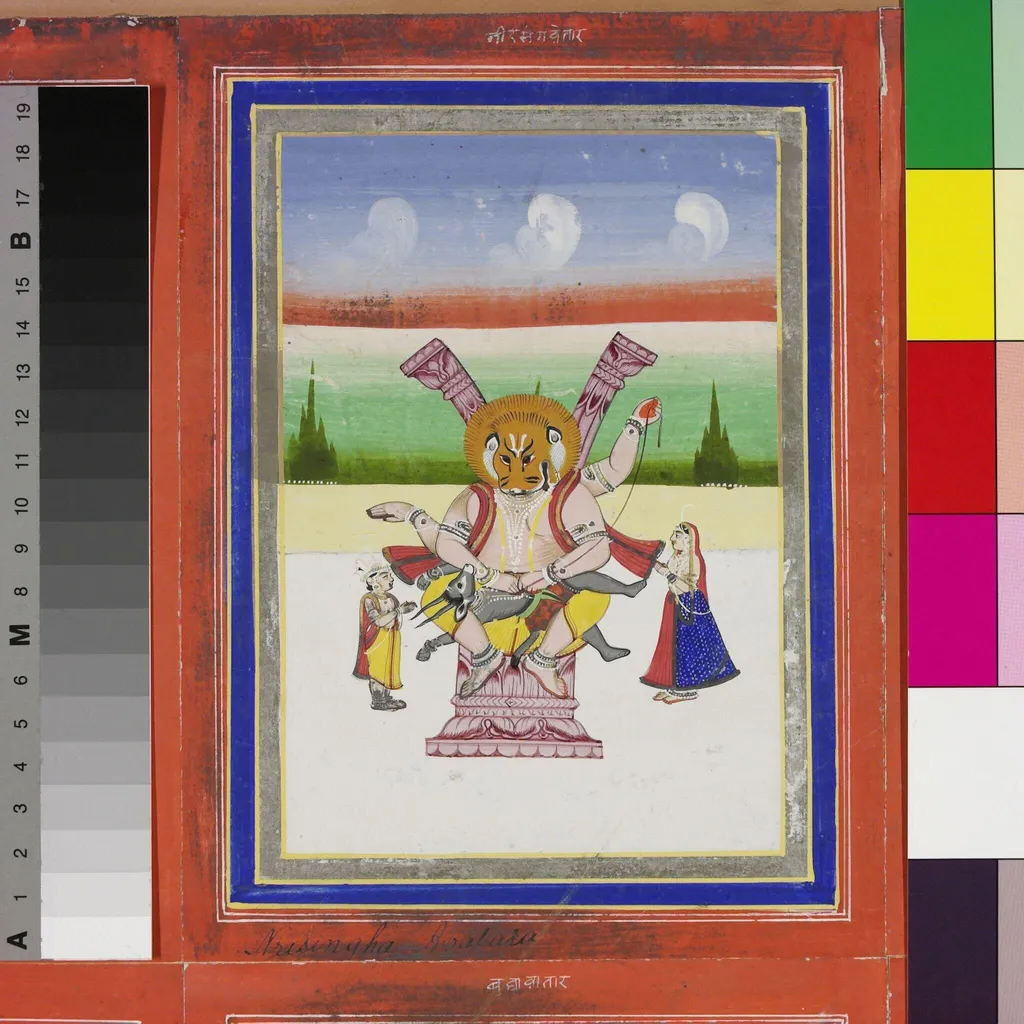
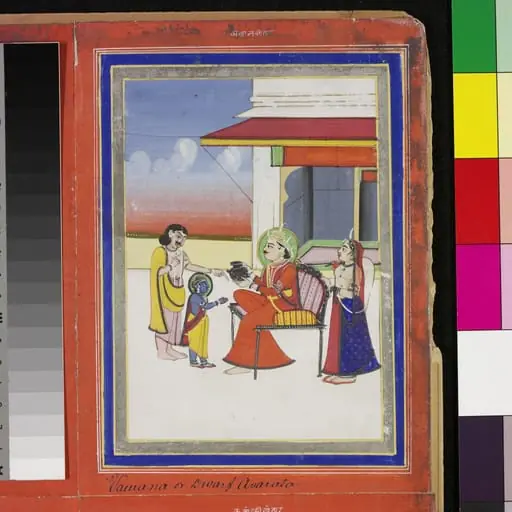
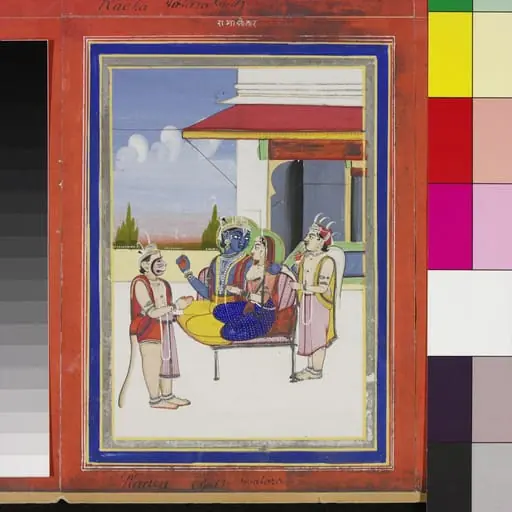
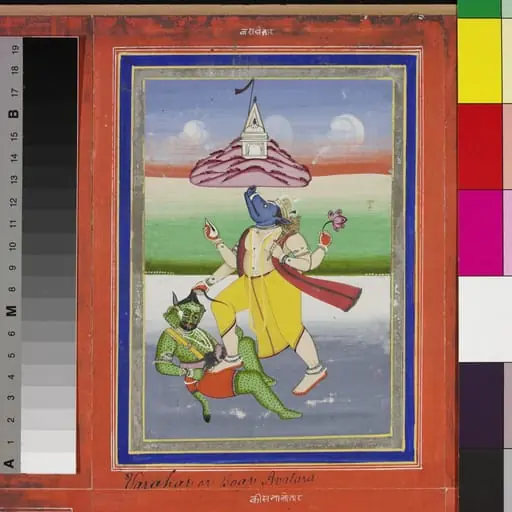
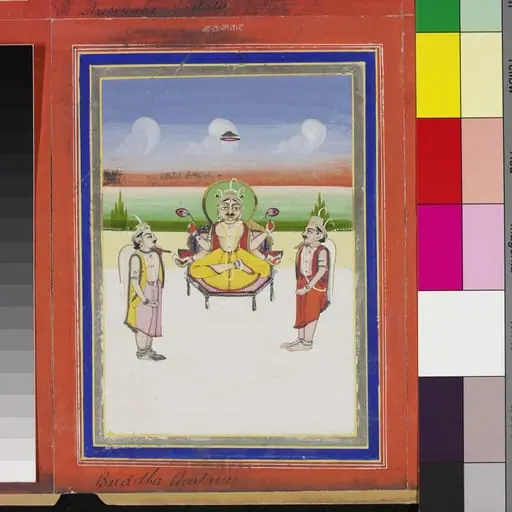
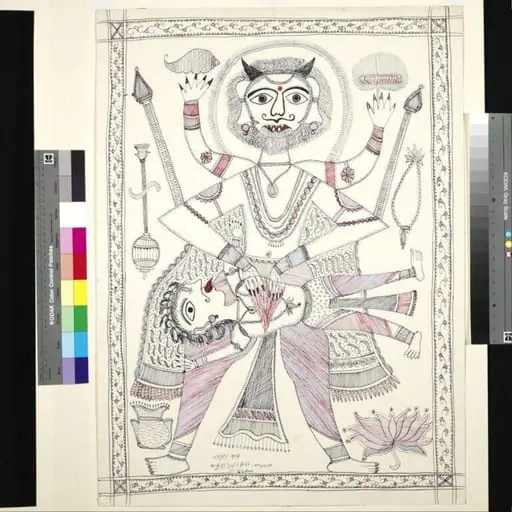
Vishnu as Narasimha is a paint painting by Unknown. It dates from 1850 and is held in the collection of the Victoria and Albert Museum. This opaque watercolor on paper portrays the Hindu deity Vishnu in his fierce Narasimha incarnation—a half‑human, half‑lion form.
About this work
Overview
This opaque watercolor on paper portrays the Hindu deity Vishnu in his fierce Narasimha incarnation—a half‑human, half‑lion form. The figure stands on a pedestal, four‑armed and clad in vivid red and yellow garments, against a backdrop of a green landscape, trees, and a blue sky dotted with clouds.
Subject & Meaning
In the composition, Narasimha emerges from a shattered pillar to confront the demon Hiranyakashipu, who is shown draped across the deity’s knees. The scene captures the mythic moment of divine retribution, emphasizing the triumph of righteousness over tyranny.
Technique & Style
Rendered in opaque watercolor, the work balances warm reds and yellows of the deity’s attire with cooler blues and greens of the surrounding environment. Detailed brushwork delineates the lion‑like features, the four arms, and the attendant figures, while the use of a solid pedestal adds spatial depth.
History & Provenance
The painting is part of the collection of the Victoria and Albert Museum in London. Its acquisition details are recorded in the museum’s catalog, confirming its status as a representative example of Indian devotional art in watercolor.
Context
Narasimha, one of Vishnu’s ten avatars, is traditionally depicted in moments of violent confrontation with the demon king. This work follows that iconographic tradition, incorporating attendant figures—one bearing a sword—who underscore the narrative’s martial aspect.
Artist & collection

 Domestic Scene
 Giacomo and Cardinal Marco, investing Andrea, Abbot of San Zeno, with his Benefice
 The Nymph of Fontainebleau
 Portrait of a Woman
 Madonna and Child with Saints in the Enclosed Garden
 Venus and Minerva
 Family Group of Four on Sofa
 Wall painting from Room H of the Villa of P. Fannius Synistor at Boscoreale