Artwork
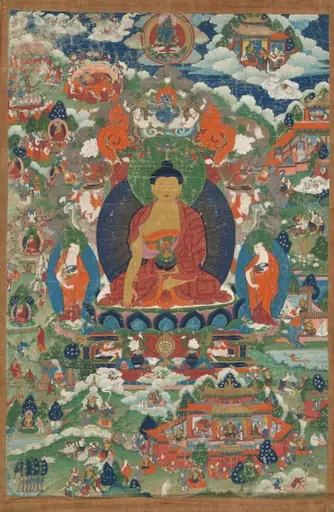
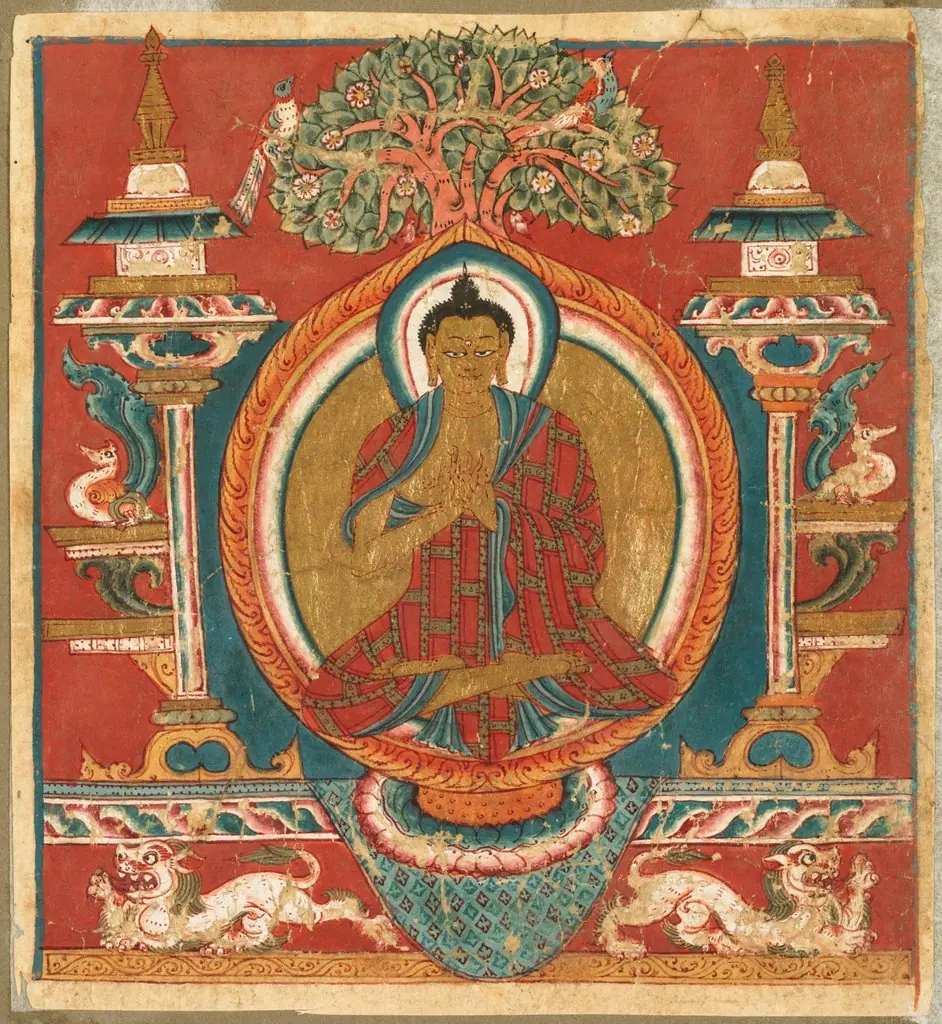
Votive initiation card (tsakali) with preaching Buddha Shakyamuni
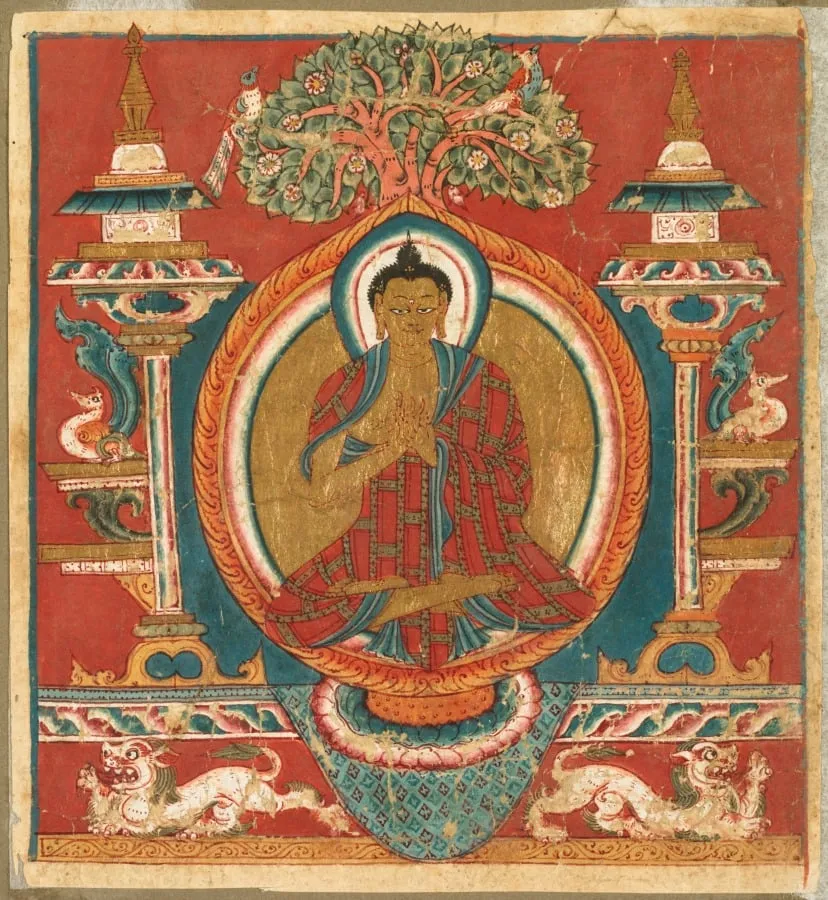
Votive initiation card (tsakali) with preaching Buddha Shakyamuni is an unspecified painting by Unknown. It dates from 1004 and is held in the collection of the Cleveland Museum of Art.
About this work
Overview
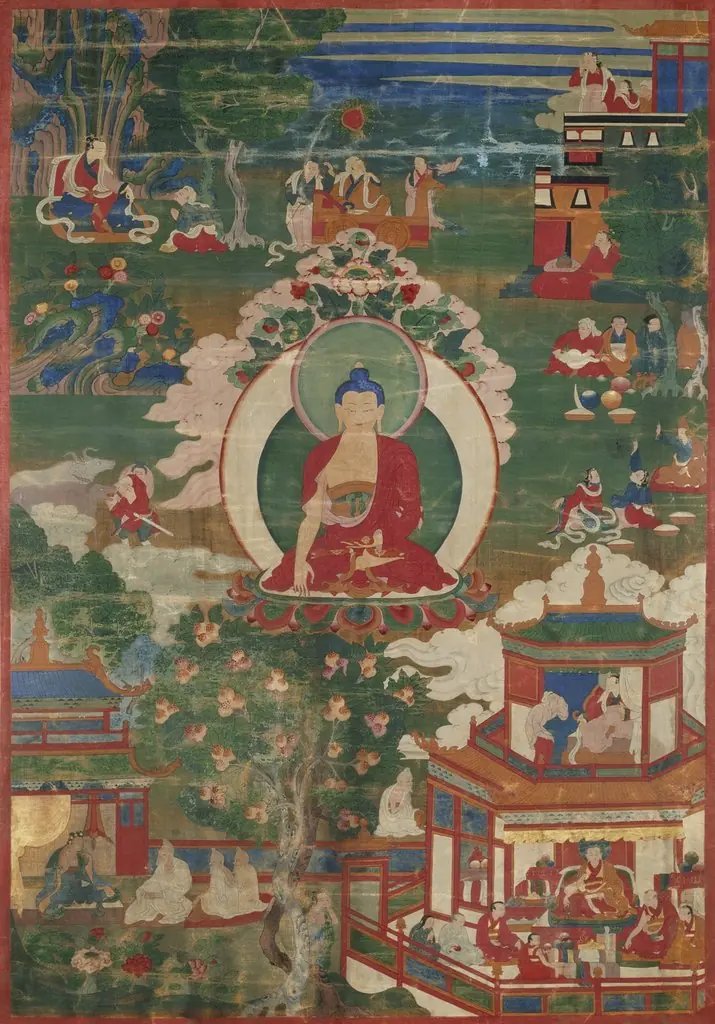
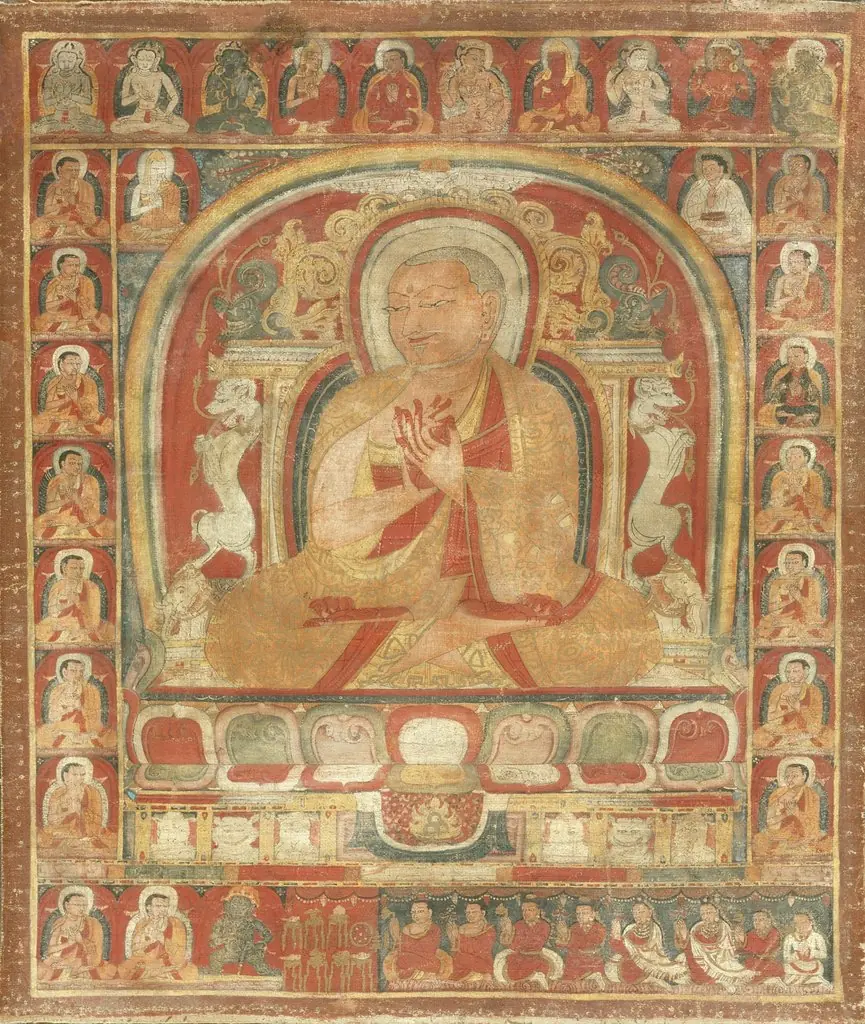
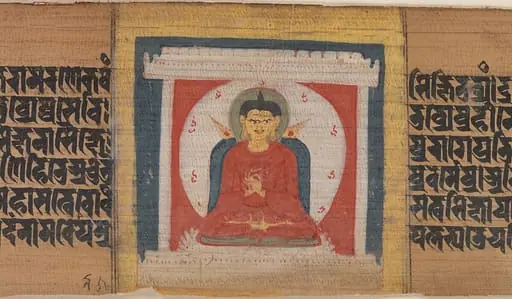
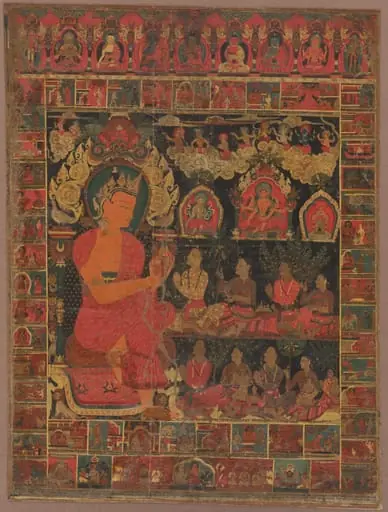
This small painted card, known as a tsa‑kali, depicts the preaching Buddha Shakyamuni standing on a lotus with his hands raised in gesture of teaching, surrounded by diminutive kneeling figures. Unlike typical manuscript illustrations, it was created as an independent votive object intended for offering.
Subject & Meaning
The central figure represents Shakyamuni Buddha delivering doctrine, a theme common in Tibetan devotional art. The surrounding supplicants emphasize the Buddha’s role as teacher and the act of reverence expected of practitioners.
Technique & Style
Executed in bright pigments on a miniature panel, the work reflects the stylistic conventions of 11th‑century western Himalayan painting, echoing the formal qualities seen in contemporary bronze and wooden Buddha statues of the region.
History & Provenance
Originating in the early second diffusion of Buddhism in Tibet, the painting survived the iconoclastic periods of the 9th and 10th centuries. It was recovered from Tholing Monastery, a foundation established by the translator Rinchensangpo under the patronage of King Yesheö of Guge.
Context
Tholing Monastery was a key center for the translation and dissemination of Buddhist texts during the 10th‑11th centuries. The painting’s style aligns with other surviving artifacts from that era, such as an 11th‑century standing bronze Buddha and a seated wooden Buddha, both in the museum’s collection.
Artist & collection

 Domestic Scene
 Giacomo and Cardinal Marco, investing Andrea, Abbot of San Zeno, with his Benefice
 The Nymph of Fontainebleau
 Portrait of a Woman
 Madonna and Child with Saints in the Enclosed Garden
 Venus and Minerva
 Family Group of Four on Sofa
 Wall painting from Room H of the Villa of P. Fannius Synistor at Boscoreale