Artwork
Votive offering dedicated to the Three Wisdom Kings
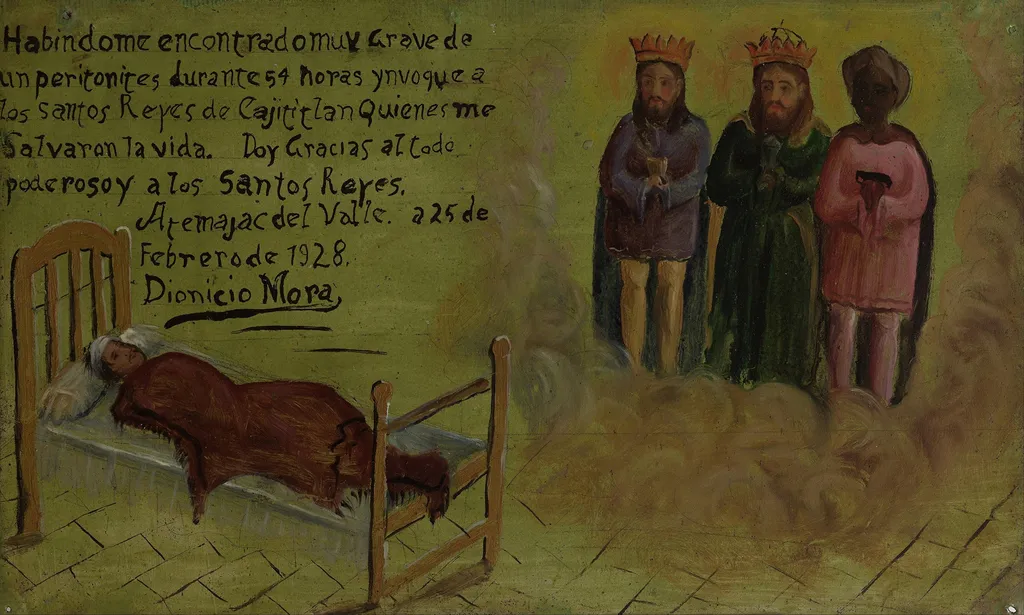
Votive offering dedicated to the Three Wisdom Kings is an unspecified painting by Unknown. It dates from 1928 and is held in the collection of the Frida Kahlo Museum. This painting serves as a devotional object, offered in supplication to the Three Wisdom Kings.
About this work
Overview
The work is housed in the Frida Kahlo Museum, where it is preserved as part of a broader tradition of Mexican votive art.
This painting serves as a devotional object, offered in supplication to the Three Wisdom Kings. It portrays a reclining woman under a blanket, seemingly at rest, while three crowned figures stand vigil nearby. Rendered with subdued tones and minimal background detail, the composition directs focus to the quiet interaction between the human figure and the celestial attendants. The work is housed in the Frida Kahlo Museum, where it is preserved as part of a broader tradition of Mexican votive art.
Subject & Meaning
The woman, depicted in repose, likely represents a petitioner seeking healing or divine protection. The three robed, crowned figures symbolize the Three Wisdom Kings—spiritual guardians invoked in times of vulnerability. Their stillness and elevated posture suggest watchfulness rather than action, reinforcing the painting’s function as an offering of gratitude or petition. The scene conveys spiritual intercession rather than narrative drama, aligning with devotional practices rooted in folk Catholicism and indigenous belief systems.
Technique & Style
The painting employs a restrained palette and soft contrasts to isolate the figures from the muted surroundings. Light falls gently on the forms, creating subtle depth without dramatic chiaroscuro. Details in the crowns and robes are rendered with precision, yet the overall approach remains intimate and unembellished. The lack of spatial depth and the frontal positioning of the figures reflect a folk aesthetic prioritizing symbolic presence over naturalistic illusion.
History & Provenance
The work entered the collection of the Frida Kahlo Museum through donations tied to mid-20th-century Mexican devotional practices. While its exact origin and artist remain undocumented, its style aligns with ex-voto paintings produced by amateur artisans for personal or communal spiritual needs. Its preservation in a museum context reflects a broader effort to recognize vernacular art as culturally significant, distinct from formal academic traditions.
Context
This piece belongs to a Mexican tradition of ex-votos—small paintings offered in thanks for divine intervention, often after illness or peril. Though typically depicting specific events, this variant abstracts the narrative into a timeless moment of guardianship. The Three Wisdom Kings, blending Christian and local cosmologies, were commonly invoked in healing rituals. The painting’s quiet tone reflects a personal, interiorized faith rather than public spectacle.
Legacy
As a preserved example of folk devotional art, the painting contributes to scholarly understanding of how spiritual beliefs were visually expressed outside institutional frameworks. Its inclusion in the Frida Kahlo Museum underscores a recognition of everyday religious practices as integral to Mexico’s cultural heritage. It stands not as a work of fine art, but as a testament to the enduring role of imagery in personal devotion.
Artist & collection

 Domestic Scene
 Giacomo and Cardinal Marco, investing Andrea, Abbot of San Zeno, with his Benefice
 The Nymph of Fontainebleau
 Portrait of a Woman
 Madonna and Child with Saints in the Enclosed Garden
 Venus and Minerva
 Family Group of Four on Sofa
 Wall painting from Room H of the Villa of P. Fannius Synistor at Boscoreale
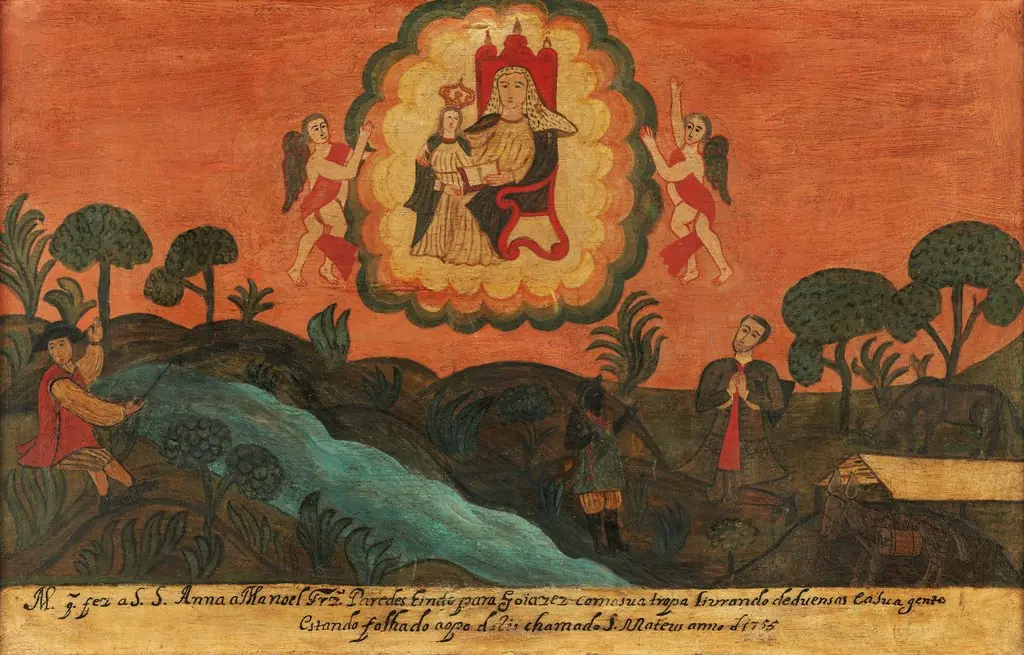 Ex-voto
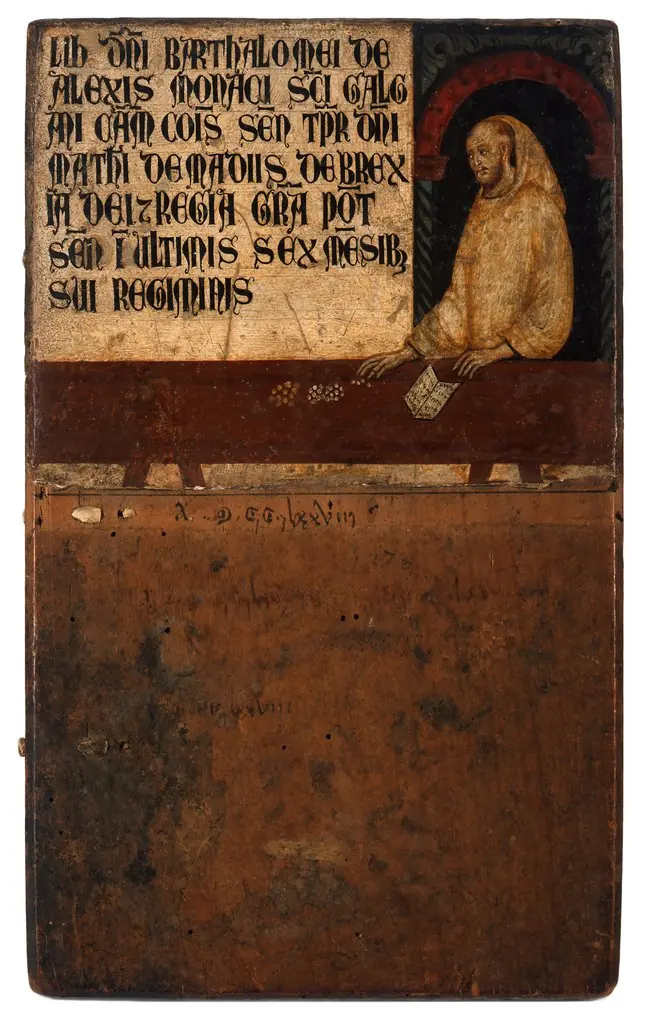 Cover of an account book of the Sienese tax authorities with the portrait of the treasurer
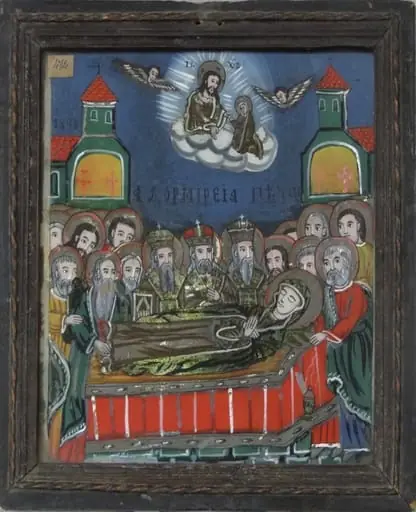 Adormirea Maicii Domnului
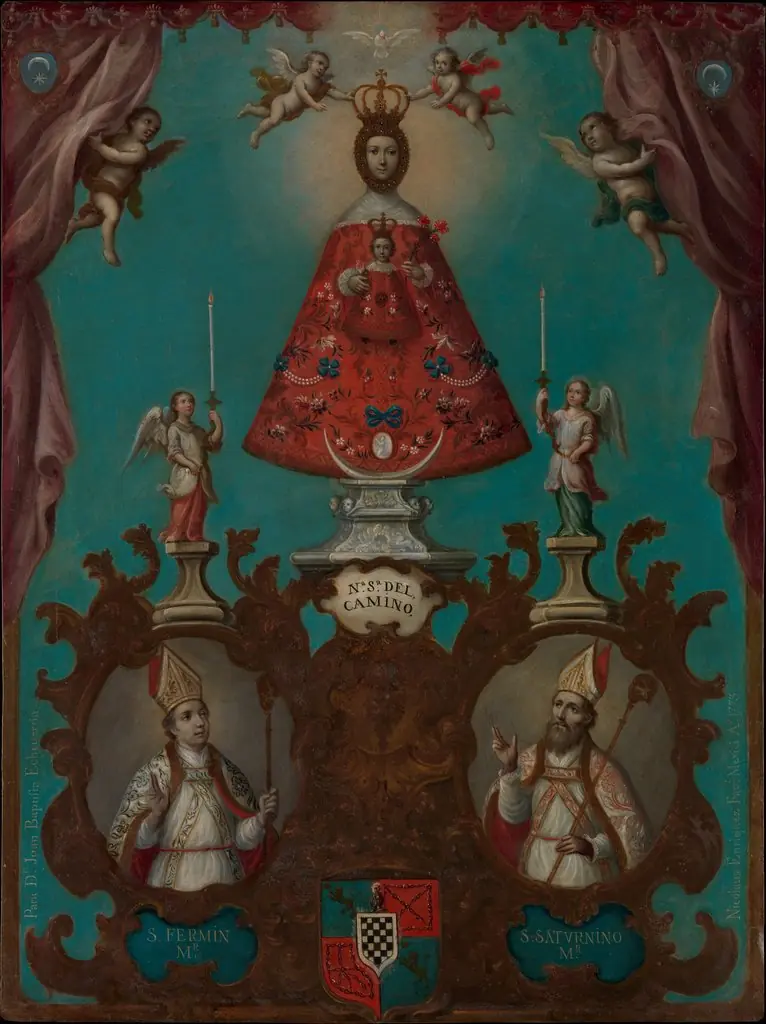 The Virgin of El Camino with St. Fermín and St. Saturnino
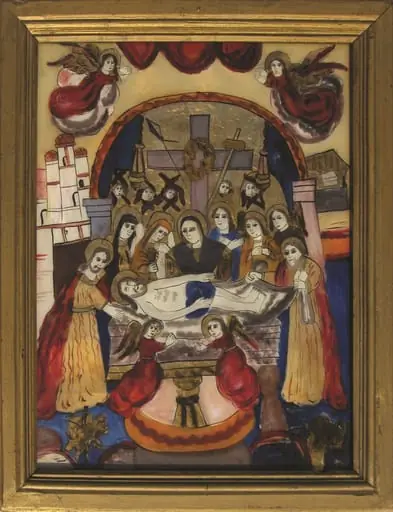 Prohodul lui Iisus
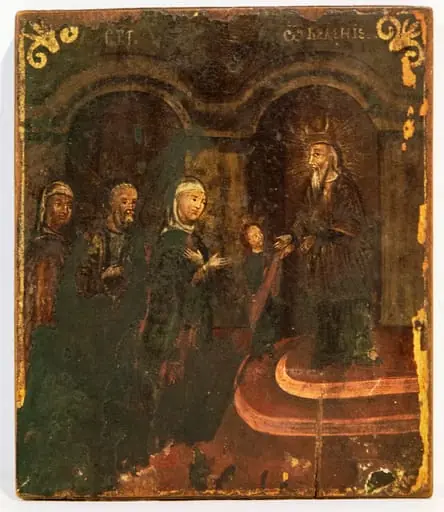 Icoana redă scena aducerii la Templu a Fecioarei la vârsta de trei ani, de către sfinții părinți Ioachim și Ana .Pictura respectă canoanele bizantine și indicațiile din erminii. În interiorul unui templu(redat prin coloane masive și arcade semicirculare)Fecioara Maria, cu capul descoperit urcă niște scări(textele vorbesc de 15 trepte) unde este așteptată cu brațele deschise de proorocul Zaharia. Acesta este bătrân, în veșmintele arhierești specifice epocii. În spatele Fecioarei vin smeriți Sfânta Ana și Sfântul Ioachim, urmat de o fecioară din suita celor care i-au însoțit la templu.Veșmintele sunt sobre, de culoare închisă, femeile cu năframe albe pe cap, Ioachim cu capul decoperit. În afară de fecioara din alai, toate personajele au aureole din raze subțiri. Compoziția este echilibrată, studiată, cu influențe occidentale. În colțurile de sus câte un ornament floral stilizat trasat cu auriu, ca și chenarul de pe margini. Stratul pictural este deteriorat în mare parte, în special colțul din stânga jos.
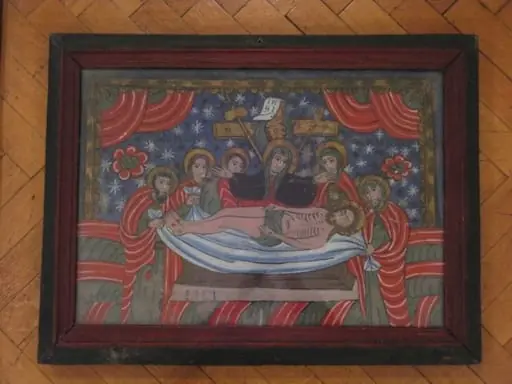 Plângerea lui Iisus Hristos (Prohodul)