Artwork
Adormirea Maicii Domnului
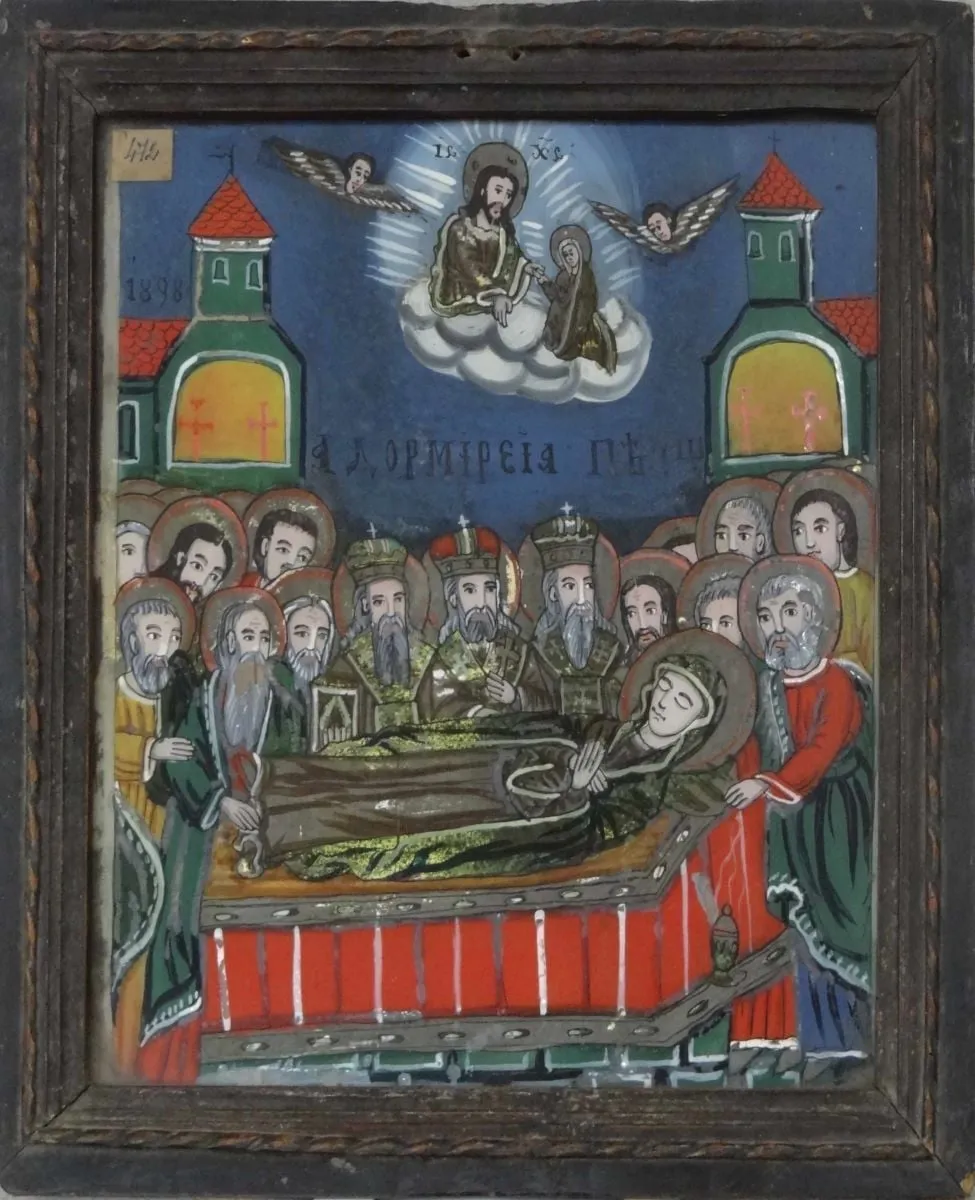
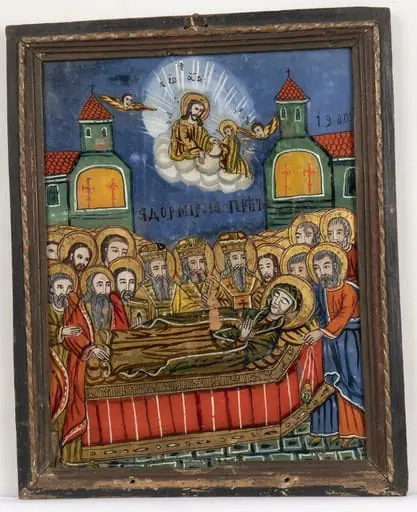
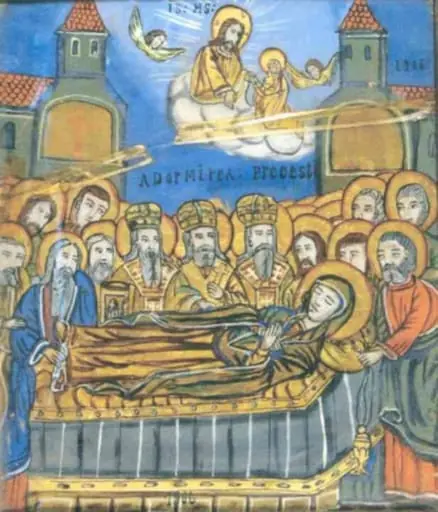
Adormirea Maicii Domnului is a drawing by the Impressionist artist Pavel Zamfir. It dates from 1898 and is held in the collection of the Alba Iulia Orthodox Archdiocese.
About this work
Overview
Painted in 1898 by Pavel Zamfir, this work depicts the Dormition of the Virgin, a subject rooted in Eastern Christian tradition.
Painted in 1898 by Pavel Zamfir, this work depicts the Dormition of the Virgin, a subject rooted in Eastern Christian tradition. Executed in a simplified, decorative style, it combines religious narrative with folk visual conventions. The painting is part of the Museum of Ethnography’s collection, reflecting its cultural rather than purely ecclesiastical significance in late 19th-century Romanian communities.
Subject & Meaning
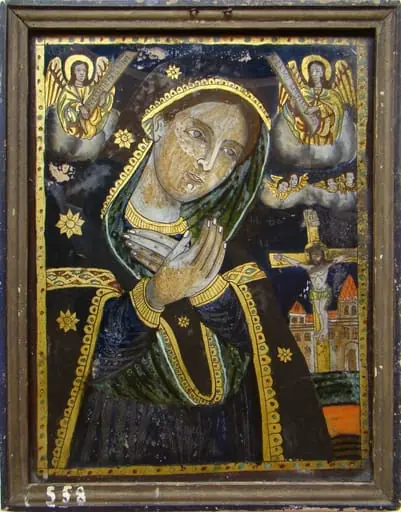
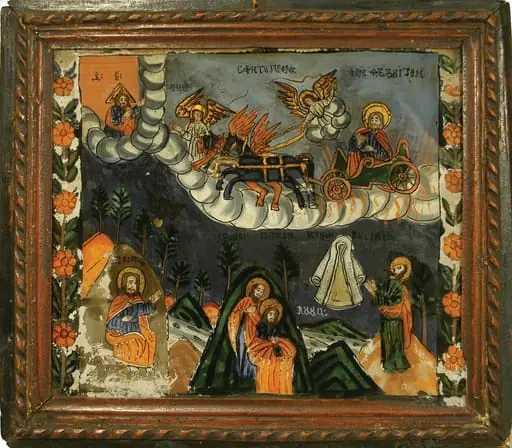
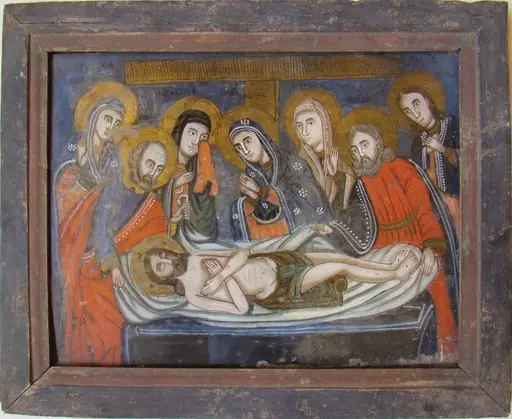
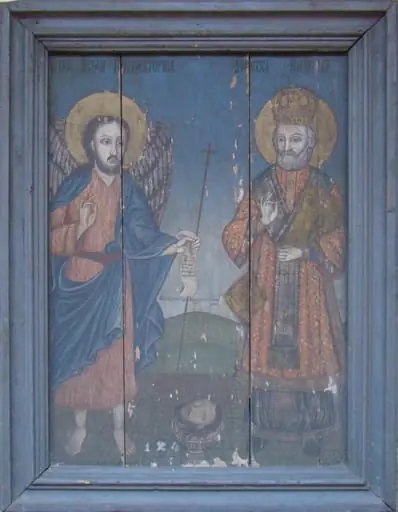
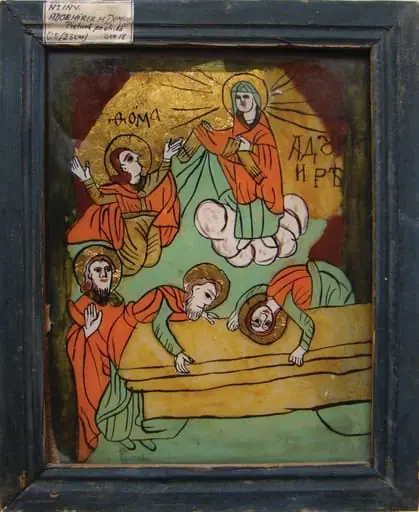
The scene portrays the Virgin Mary lying in repose, surrounded by apostles and clergy, as her soul is taken by Christ, represented by a celestial figure holding a cross. The presence of crowned figures suggests royal or saintly status among the mourners. The composition conveys solemnity and divine transition, emphasizing the sacred nature of death as passage rather than end, consistent with Orthodox theological views.
Technique & Style
Zamfir employs flat, unmodulated areas of color—deep reds, blues, and golds—to define forms and space. Figures are outlined clearly, with minimal shading or perspective, creating a stylized, almost icon-like quality. Architectural elements are reduced to symbolic silhouettes, reinforcing the spiritual over the naturalistic. The overall effect is deliberate and ceremonial, prioritizing symbolic clarity over realism.
History & Provenance
Created in 1898, the painting entered the Museum of Ethnography’s holdings as part of a broader effort to document regional religious art. Its preservation there reflects its value as a cultural artifact rather than a liturgical object. No records indicate prior ownership or commission, suggesting it may have been produced for local devotion or as a decorative piece for a household or chapel.
Context
In late 19th-century Romania, religious imagery often blended Orthodox traditions with folk aesthetics, especially in rural areas where trained iconographers were scarce. Zamfir’s work fits within this trend, using accessible visual language to convey theological concepts. The painting’s style aligns with regional practices that favored symbolic representation over academic naturalism.
Legacy
Though not widely known outside regional collections, the painting contributes to understanding how Orthodox themes were interpreted in vernacular art. It stands as an example of how religious narratives were adapted to local visual sensibilities, preserving spiritual meaning through simplified forms. Its presence in an ethnographic museum underscores its role in documenting popular piety rather than high art.
Artist & collection
Artist
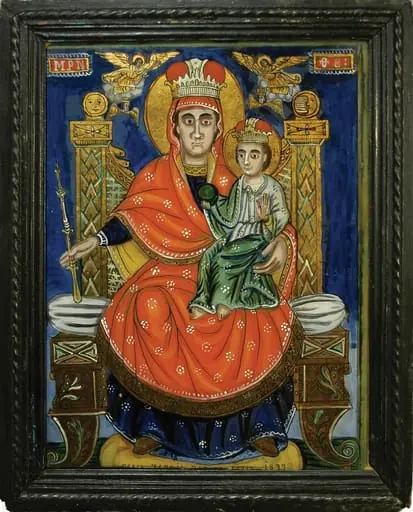
This artist made religious drawings and paintings in the late 1800s. Look at the soft pencil lines in *Maica Domnului cu Pruncul, împărăteasă tronând* (1897) or the solemn colors in *Adormirea Maicii Domnului* (1898).…