Artwork
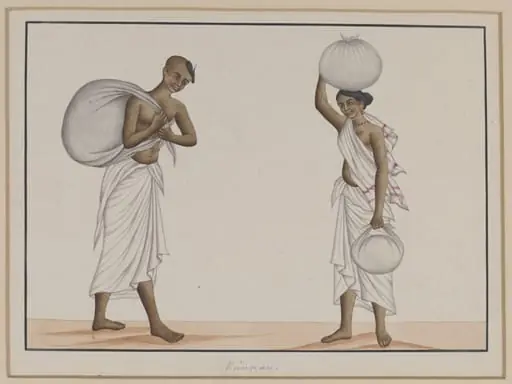
Washerman
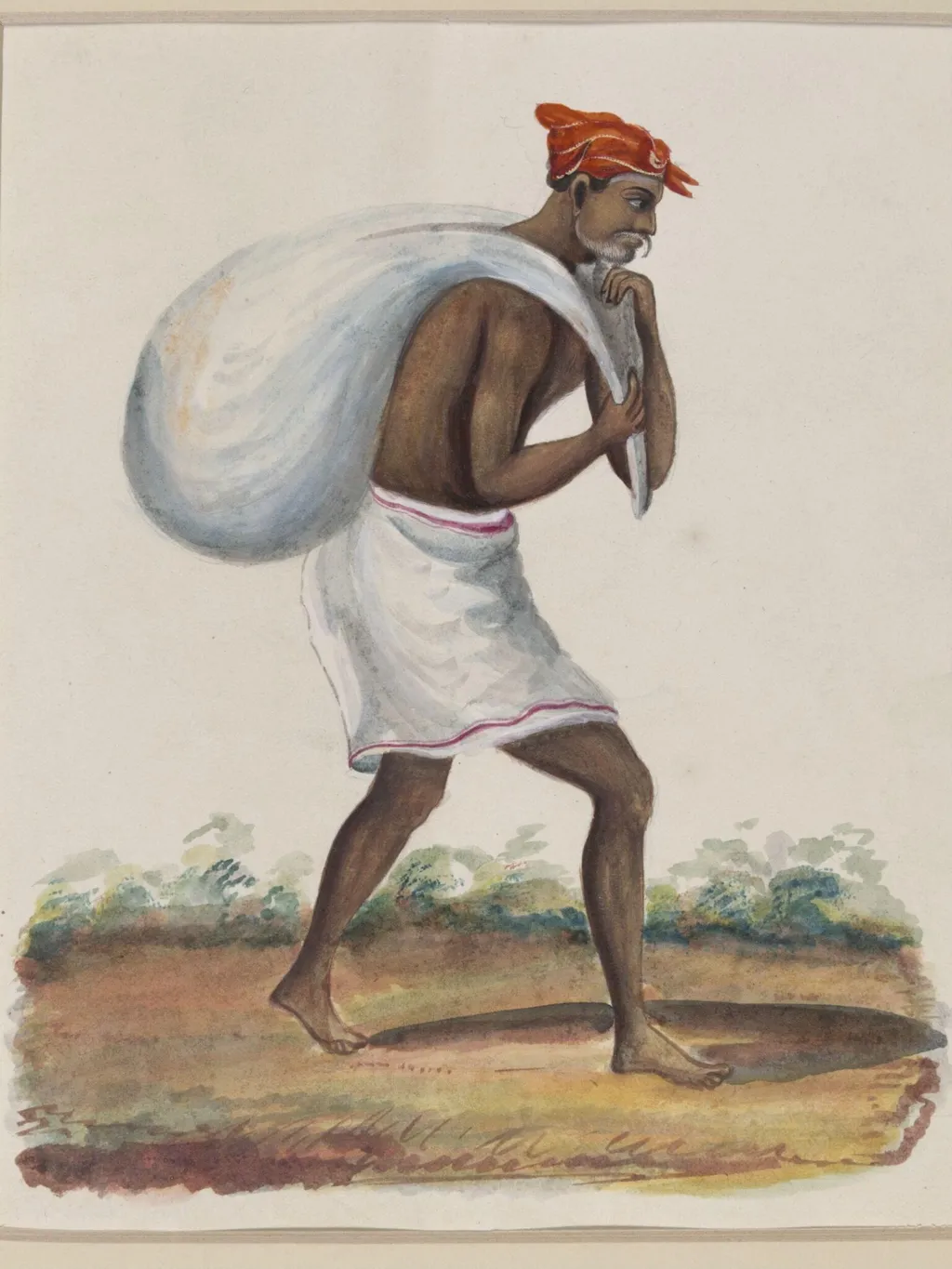
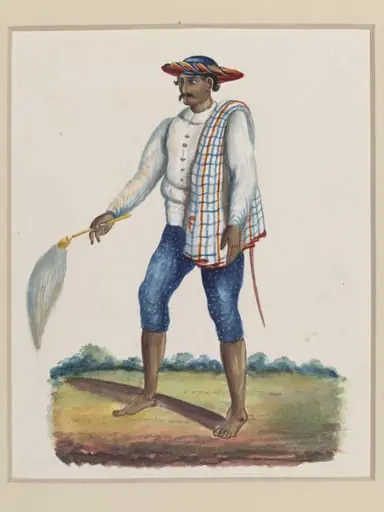
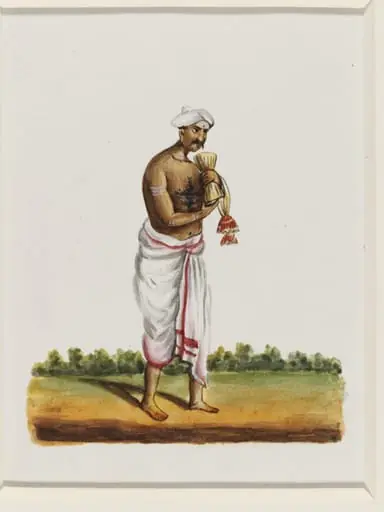
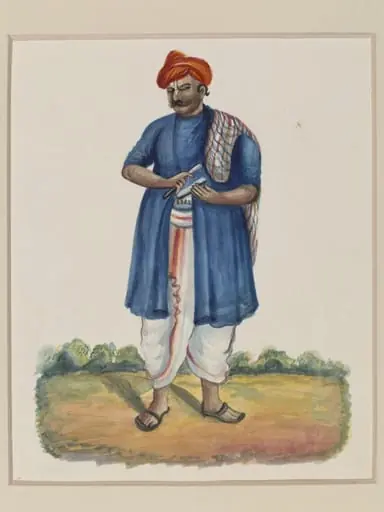
Washerman is a paint painting by the Impressionist artist Unknown. It dates from 1860 and is held in the collection of the Victoria and Albert Museum.
About this work
Overview
This painting is one of fifteen works from a series documenting daily labor in Trichinopoly, South India, during the late 18th or early 19th century.
This painting is one of fifteen works from a series documenting daily labor in Trichinopoly, South India, during the late 18th or early 19th century. Created for British audiences under the East India Company’s influence, it portrays a washerman engaged in routine work. The composition avoids ornate decoration, focusing instead on a single figure against a subdued natural backdrop, reflecting a growing interest in observational realism among local artists.
Subject & Meaning
The washerman, depicted mid-stride with a heavy bundle of laundry balanced on his shoulder, represents the laboring class whose work sustained colonial households. His bare feet, simple dhoti, and red turban signal regional identity and economic status. The quiet dignity of his posture, unembellished by narrative drama, suggests an intention to document rather than idealize, aligning with the British appetite for ethnographic imagery of Indian life.
Technique & Style
The artist employs loose, fluid brushwork and muted earth tones to render the landscape and figure with a sense of immediacy. Light falls naturally across the washerman’s face and shoulders, suggesting awareness of European chiaroscuro. The background—gently rolling hills and a winding river—is rendered with minimal detail, allowing the figure to dominate. This blend of Indian watercolor traditions with observational techniques marks a transitional phase in regional painting.
History & Provenance
Produced in Trichinopoly during the height of East India Company influence, these occupation scenes were likely commissioned by British officials or traders seeking visual records of local customs. The series circulated among colonial collectors and eventually entered institutional holdings, including the Victoria and Albert Museum. Their survival reflects both their documentary value and the shifting patronage networks of the period.
Context
As British presence in South India expanded, Indian artists adapted their methods to meet new demands, blending indigenous styles with European naturalism. This series emerged amid broader cultural exchange, where local artisans responded to colonial tastes without fully abandoning regional aesthetics. The washerman’s image is not a portrait of heroism but a quiet record of labor, shaped by the intersection of indigenous skill and foreign expectation.
Legacy
These paintings contributed to early ethnographic visual archives of India, influencing later documentation of caste and occupation. While once viewed as curiosities, they are now recognized as evidence of artistic adaptation under colonial conditions. Their understated realism offers insight into how Indian artists negotiated identity, patronage, and representation during a period of profound social and political change.
Artist & collection

 Domestic Scene
 Giacomo and Cardinal Marco, investing Andrea, Abbot of San Zeno, with his Benefice
 The Nymph of Fontainebleau
 Portrait of a Woman
 Madonna and Child with Saints in the Enclosed Garden
 Venus and Minerva
 Family Group of Four on Sofa
 Wall painting from Room H of the Villa of P. Fannius Synistor at Boscoreale