Artwork
A Sais
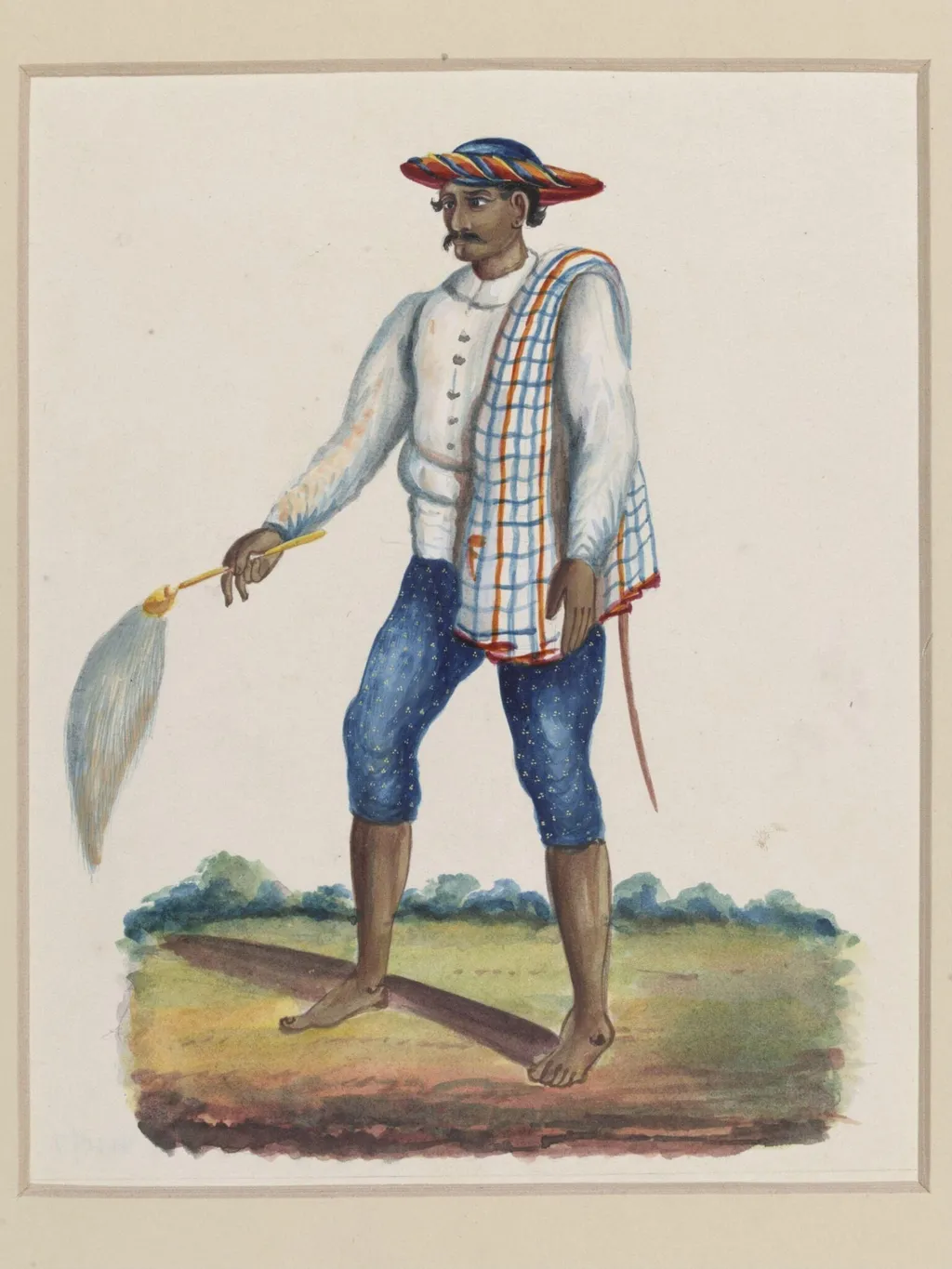
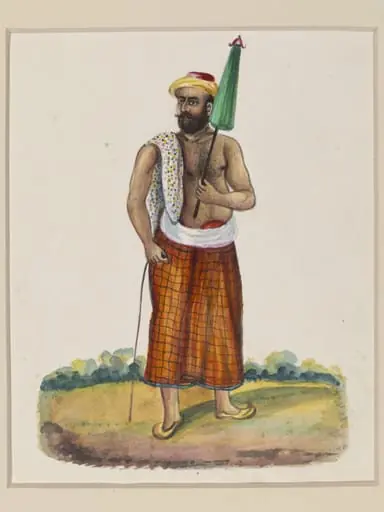
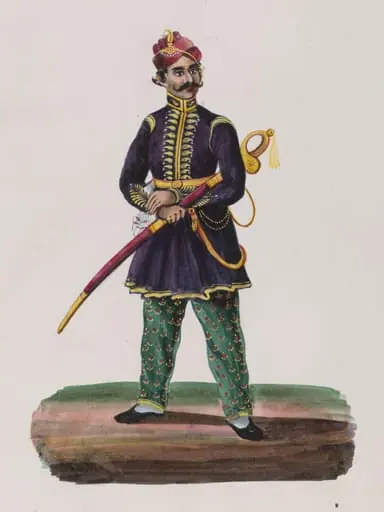
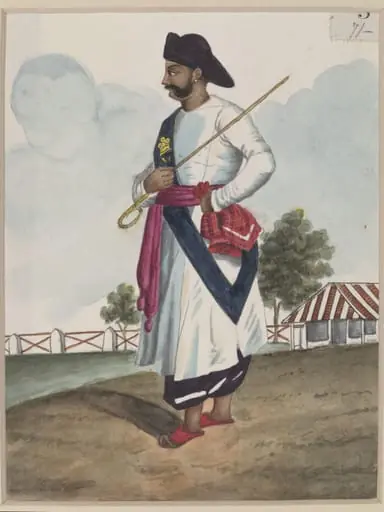
A Sais is a paint painting by the Impressionist artist Unknown. It dates from 1860 and is held in the collection of the Victoria and Albert Museum.
About this work
Overview
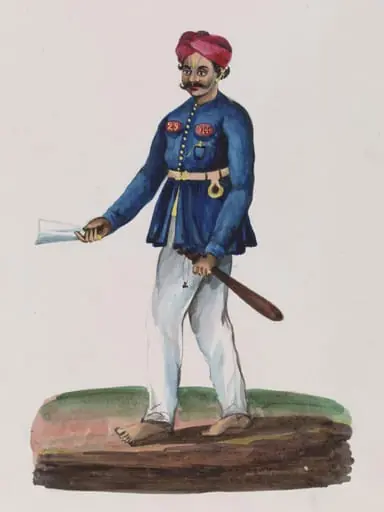
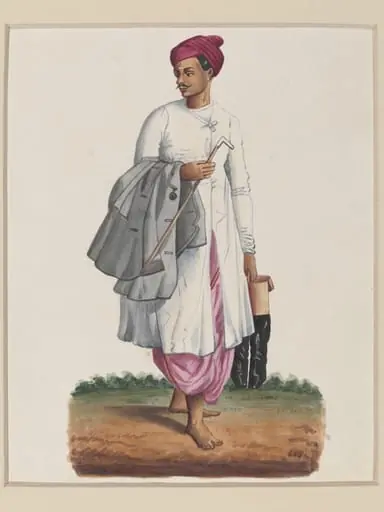
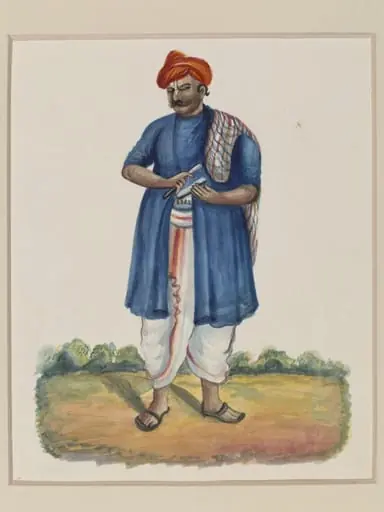
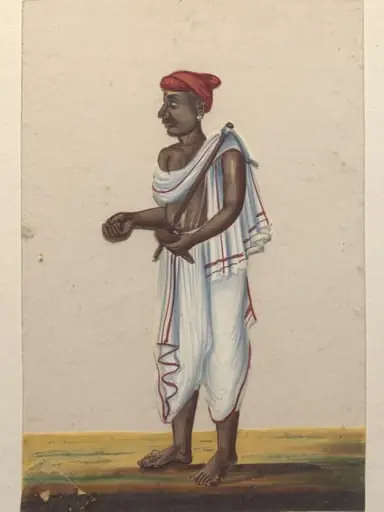
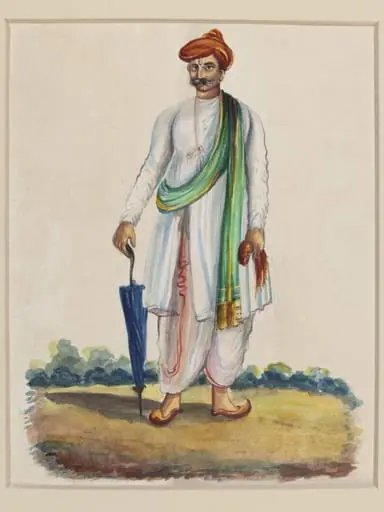
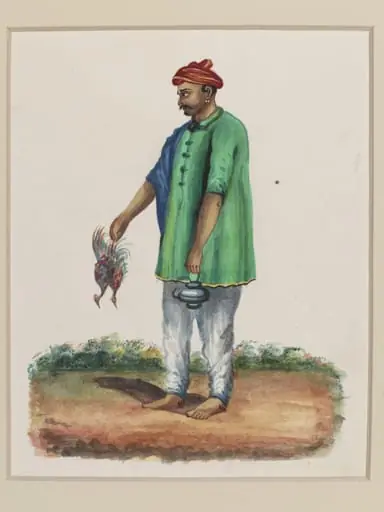
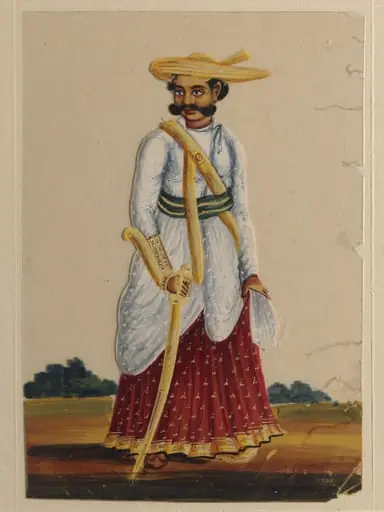
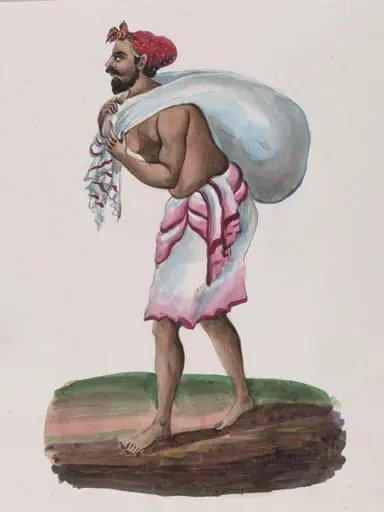
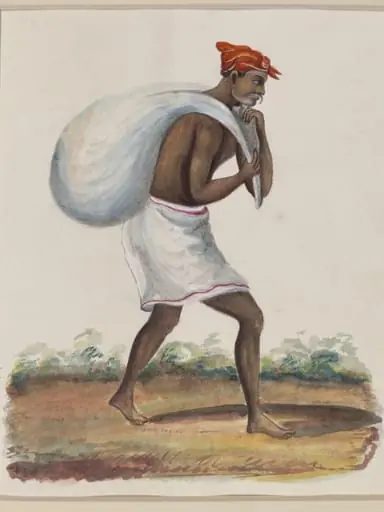
This painting is one of fifteen in a series depicting occupational roles in South India, created in Trichinopoly during the early 19th century.
This painting is one of fifteen in a series depicting occupational roles in South India, created in Trichinopoly during the early 19th century. Executed in watercolor on paper, it belongs to the Company painting tradition, a genre developed under British colonial patronage. The work captures a local figure in a straightforward, observational manner, reflecting the East India Company’s interest in documenting everyday life in India through a visually precise lens.
Subject & Meaning
The figure is a man identified as a Sais, a servant or attendant, holding a fly-whisk used for swatting insects and signaling deference. His bare feet and simple attire suggest manual labor, yet the vivid stripes on his hat and patterned clothing indicate a degree of personal style or social distinction. The scene avoids idealization, presenting him in a quiet, unadorned moment, reinforcing the genre’s documentary intent rather than narrative drama.
Technique & Style
The artist employs fine brushwork and muted watercolor washes to render texture and form with clarity. Details like the weave of fabric, the individual feathers of the whisk, and the subtle gradations of the landscape reflect European-influenced naturalism. The composition is balanced and shallow, with minimal depth, focusing attention on the figure. Color is used deliberately—not for symbolism, but to distinguish elements and convey material reality.
History & Provenance
Created in the early 1800s in Trichinopoly, the painting was likely commissioned by a British official or employee of the East India Company. Such series were often compiled into albums as souvenirs or ethnographic records. The work’s survival suggests it was carefully preserved, possibly entering institutional collections in the 19th or early 20th century, though its exact provenance before modern museum acquisition remains undocumented.
Context
Company paintings emerged as Indian artists adapted traditional techniques to meet European tastes for realism and detail. This series, like others from the region, served both as cultural documentation and as a commercial product for colonial patrons. The depiction of laborers in their roles reflects a broader colonial project of categorizing Indian society, even as the artists infused their work with local sensibilities in dress and gesture.
Legacy
These works remain valuable as historical records of Indian daily life during colonial rule, offering insight into social hierarchies, material culture, and cross-cultural artistic exchange. While once viewed as minor curiosities, they are now studied for their hybrid aesthetics and the agency of Indian artists who navigated colonial demands while preserving elements of their own visual language.
Artist & collection

 Domestic Scene
 Giacomo and Cardinal Marco, investing Andrea, Abbot of San Zeno, with his Benefice
 The Nymph of Fontainebleau
 Portrait of a Woman
 Madonna and Child with Saints in the Enclosed Garden
 Venus and Minerva
 Family Group of Four on Sofa
 Wall painting from Room H of the Villa of P. Fannius Synistor at Boscoreale