Artwork
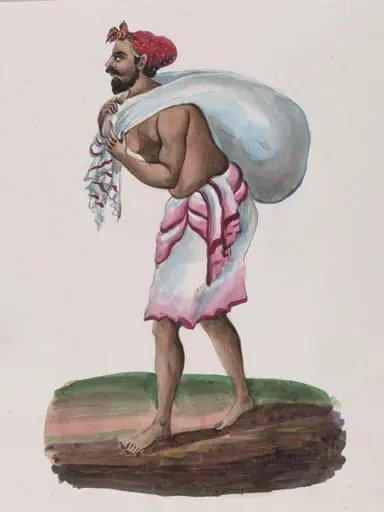
A Bearer
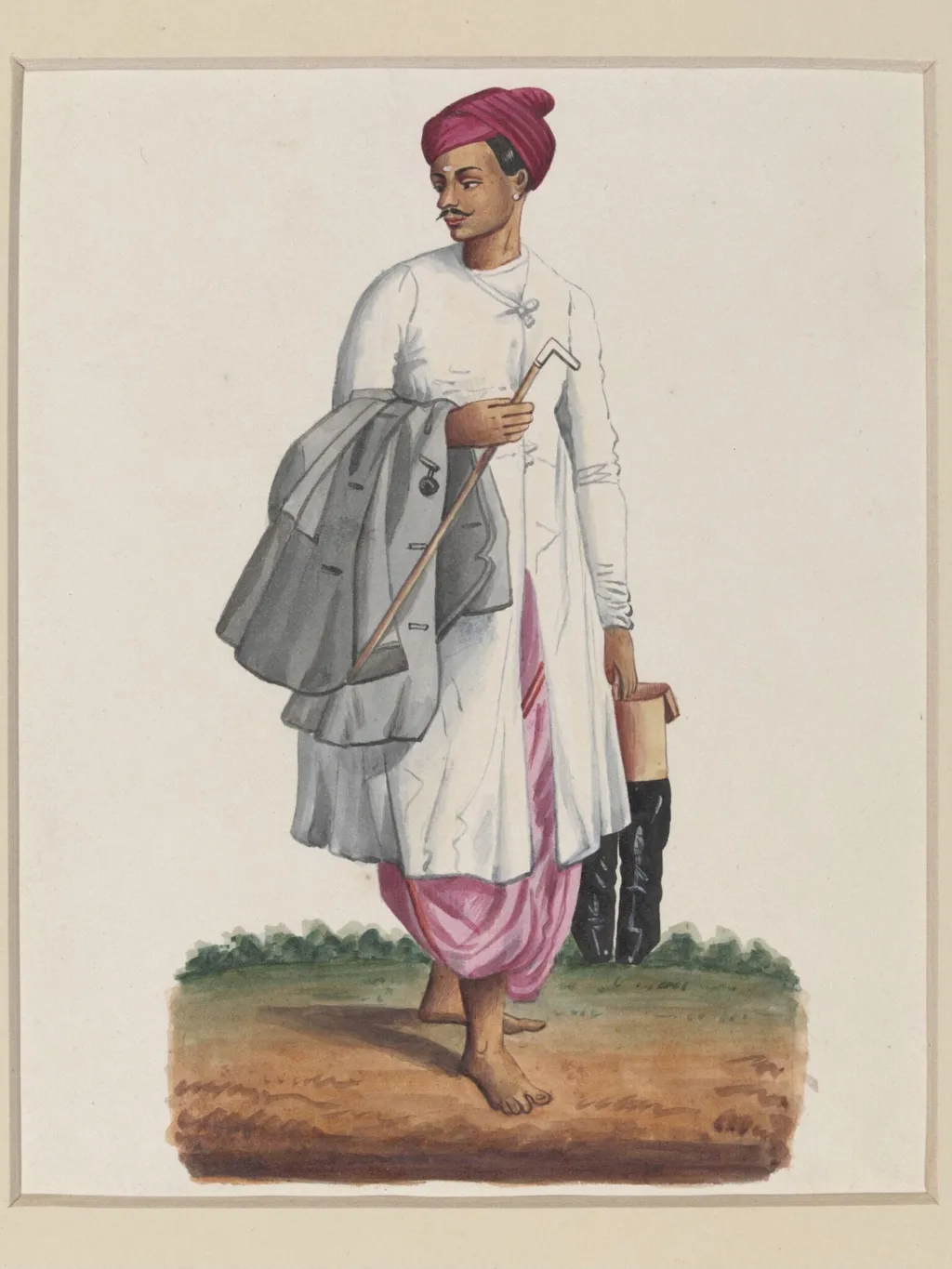
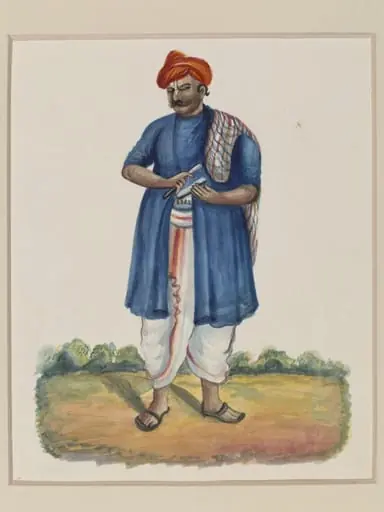
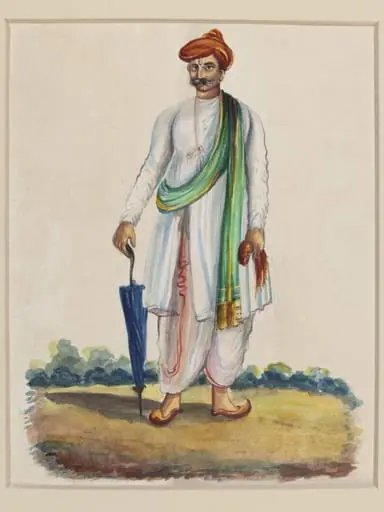
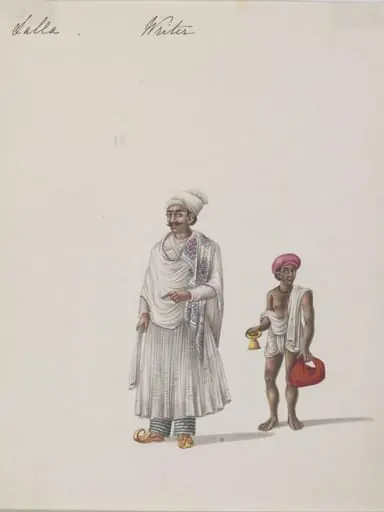
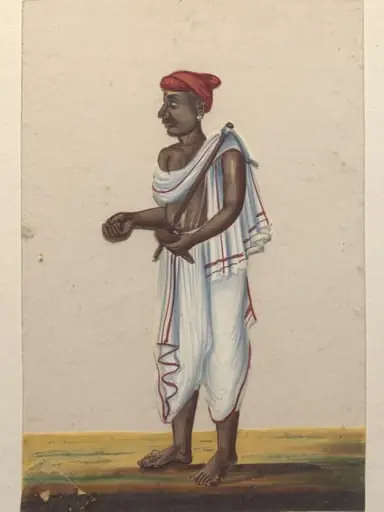
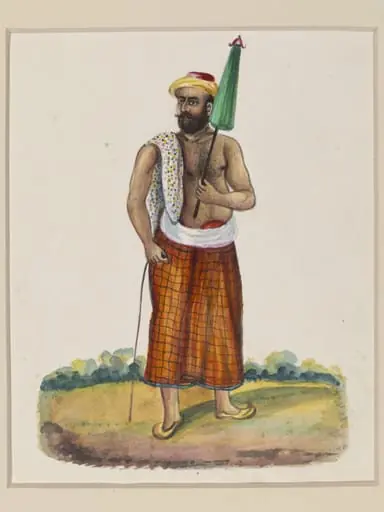
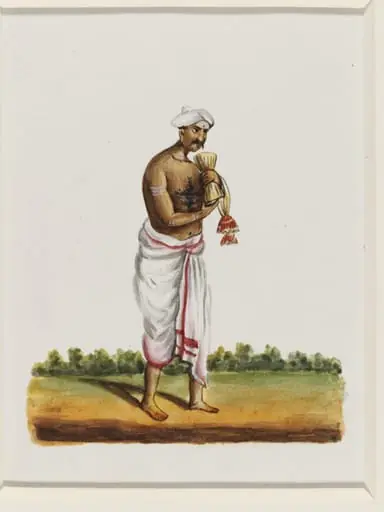
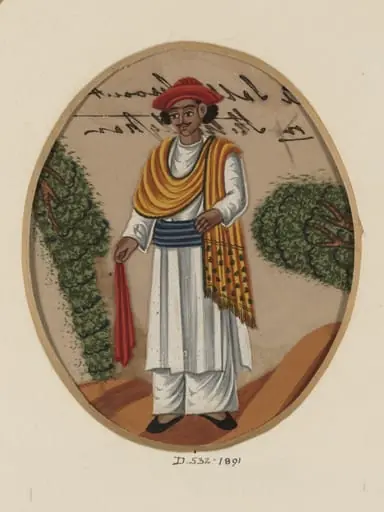
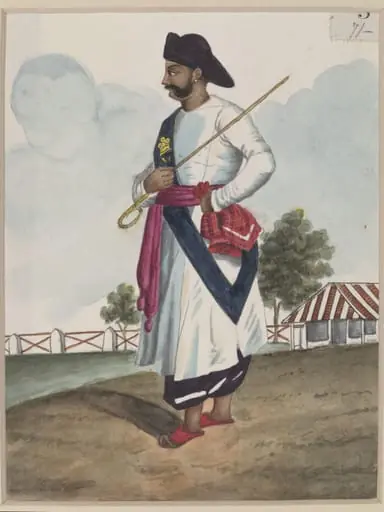
A Bearer is a paint painting by the Patna School of Painting artist Unknown. It dates from 1860 and is held in the collection of the Victoria and Albert Museum. This painting belongs to a series of fifteen works created by Indian artists for British patrons during the colonial period.
About this work
Overview
This painting belongs to a series of fifteen works created by Indian artists for British patrons during the colonial period.
This painting belongs to a series of fifteen works created by Indian artists for British patrons during the colonial period. Known as Company paintings, these pieces documented everyday life in India, particularly labor and trade. The subject here is a laborer transporting a heavy burden, rendered with quiet realism. The set as a whole served as a visual catalog of occupations, appealing to European interest in Indian society.
Subject & Meaning
The figure depicted is a working-class individual, dressed plainly and bearing a substantial load, likely for transport or trade. The solemn expression and physical posture convey endurance rather than drama. As part of a broader series on professions, the image functions as an observational record, reflecting the British colonial appetite for ethnographic detail rather than symbolic or spiritual narrative.
Technique & Style
Executed in watercolor on paper, the painting employs fine brushwork and muted tones to capture texture and form. While influenced by European naturalism, it retains distinct Indian compositional sensibilities. Light is used subtly to define volume, but not through dramatic chiaroscuro; instead, clarity and precision dominate, aligning with the documentary intent of Company painting traditions.
History & Provenance
Created in the early 19th century, likely in a regional atelier such as those in Calcutta or Delhi, this work was commissioned by British officials or East India Company employees. Such sets were often compiled into albums as souvenirs or ethnographic references. The painting’s survival in institutional collections suggests it was preserved early, possibly through direct acquisition by a colonial administrator.
Context
Company paintings emerged as a hybrid genre where Indian artists adapted indigenous techniques to satisfy European tastes for realism and classification. This series on labor reflects broader colonial efforts to categorize and understand Indian society. Unlike traditional Indian miniatures, these works prioritized observable detail over idealization, aligning with Enlightenment-era impulses toward documentation.
Legacy
These paintings now serve as historical records of labor, dress, and social structure in colonial India. While once viewed as decorative curiosities, they are increasingly studied for their cultural negotiation—blending Indian artistic practice with colonial demand. Their preservation in museums underscores their value as artifacts of cross-cultural exchange rather than mere colonial artifacts.
Artist & collection

 Domestic Scene
 Giacomo and Cardinal Marco, investing Andrea, Abbot of San Zeno, with his Benefice
 The Nymph of Fontainebleau
 Portrait of a Woman
 Madonna and Child with Saints in the Enclosed Garden
 Venus and Minerva
 Family Group of Four on Sofa
 Wall painting from Room H of the Villa of P. Fannius Synistor at Boscoreale