Artwork
Welcoming Descent of Amida with Twenty-Five Bodhisattvas
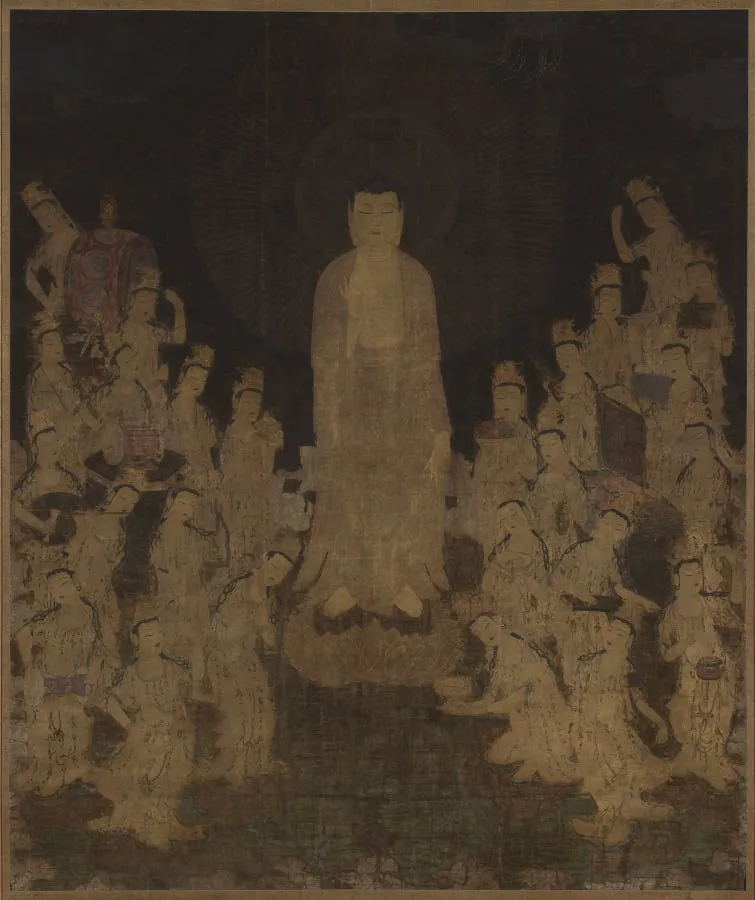
Welcoming Descent of Amida with Twenty-Five Bodhisattvas is an unspecified painting by the Ming dynasty painting artist Unknown. It dates from 1304 and is held in the collection of the Cleveland Museum of Art.
About this work
Overview
The work portrays Amida Buddha descending amid a procession of twenty‑five bodhisattvas, each poised to accompany a soul on its passage to the Western Paradise, the Buddhist Pure Land. The composition captures a moment of transition, with the divine entourage gathering around a central figure who is about to receive a dying individual.
Subject & Meaning
Central to the scene is the compassionate act of Amida offering salvation to a mortal on the brink of death. The bodhisattvas, embodiments of selfless service, underscore the collective assistance promised in Pure Land doctrine, while the kneeling Kannon presenting a lotus platform symbolizes a sacred vehicle for the soul’s ascent.
Technique & Style
Rendered in traditional Japanese painting techniques, the piece employs delicate brushwork and a muted palette to convey both the solemnity and the dynamic movement of the celestial procession. Musical instruments are depicted with fine detail, emphasizing the celebratory atmosphere that accompanies the spiritual journey.
History & Provenance
The painting is part of the collection at the Cleveland Museum of Art, where it has been displayed as an example of devotional imagery associated with Pure Land Buddhism. Its acquisition history reflects the museum’s focus on Asian religious art, though specific details of its earlier ownership remain limited.
Context
Within Buddhist visual culture, scenes of Amida’s descent are common in the Jōdo sect, illustrating the promise of rebirth in the Western Paradise for those who invoke the Buddha’s name. The inclusion of twenty‑five bodhisattvas aligns with textual descriptions of a heavenly retinue that greets the departed.
Artist & collection

 Domestic Scene
 Giacomo and Cardinal Marco, investing Andrea, Abbot of San Zeno, with his Benefice
 The Nymph of Fontainebleau
 Portrait of a Woman
 Madonna and Child with Saints in the Enclosed Garden
 Venus and Minerva
 Family Group of Four on Sofa
 Wall painting from Room H of the Villa of P. Fannius Synistor at Boscoreale
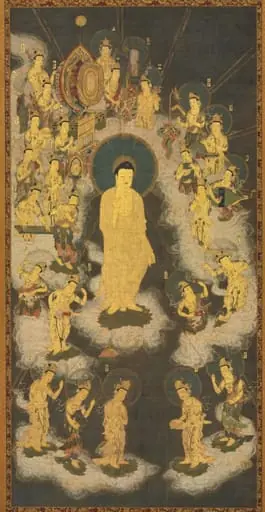 Welcoming Descent of Amida (Amida Raigō)
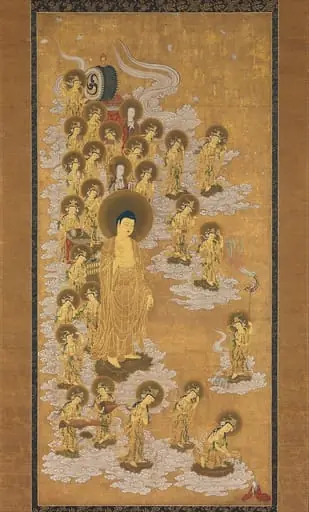 阿弥陀二十五菩薩来迎図|Welcoming Descent of Amida Buddha and Twenty-five Bodhisattvas
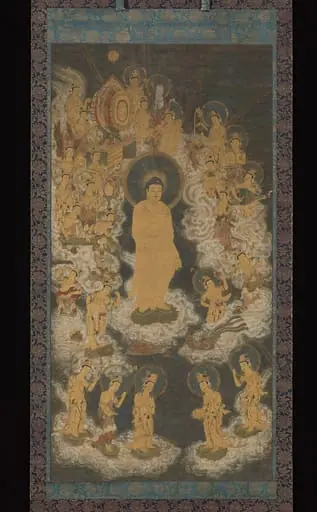 阿弥陀聖衆来迎図 |Welcoming Descent of Amida and Bodhisattvas
 Miroku (Maitreya)
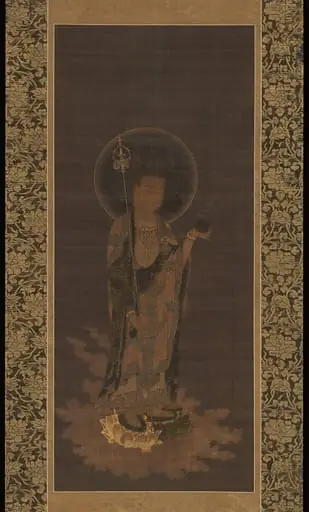 地蔵菩薩来迎図|Welcoming Descent of the Bodhisattva Jizō
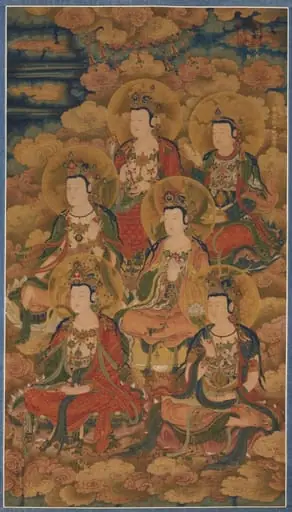 The Bodhisattvas of the Ten Stages in Attaining the Most Perfect Knowledge
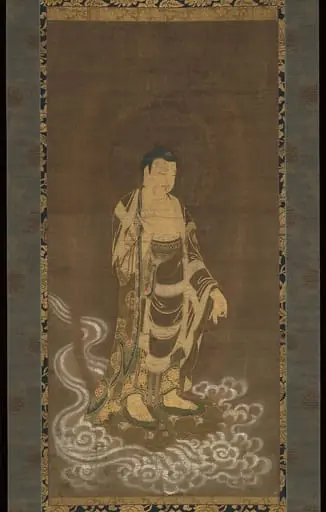 阿弥陀如来像|Welcoming Descent of Amida Buddha
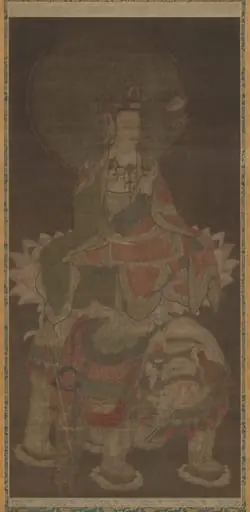 Samantabhadra
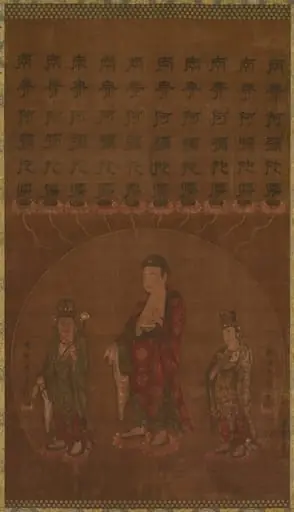 Buddha Amitābha with Two Attending Bodhisattvas
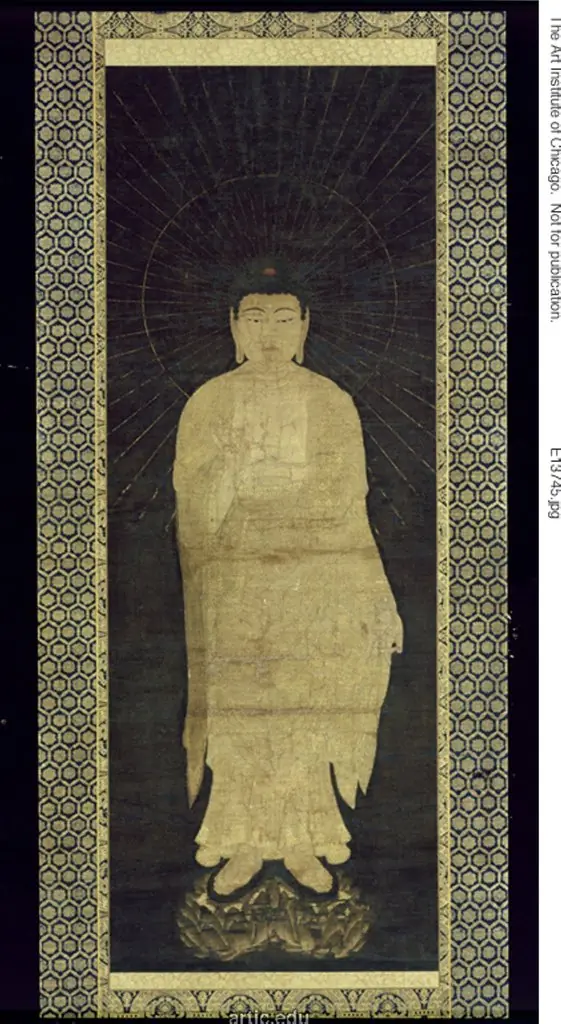 The Buddha Amida, from the triptych Approach of the Amida Trinity