Artwork
Samantabhadra
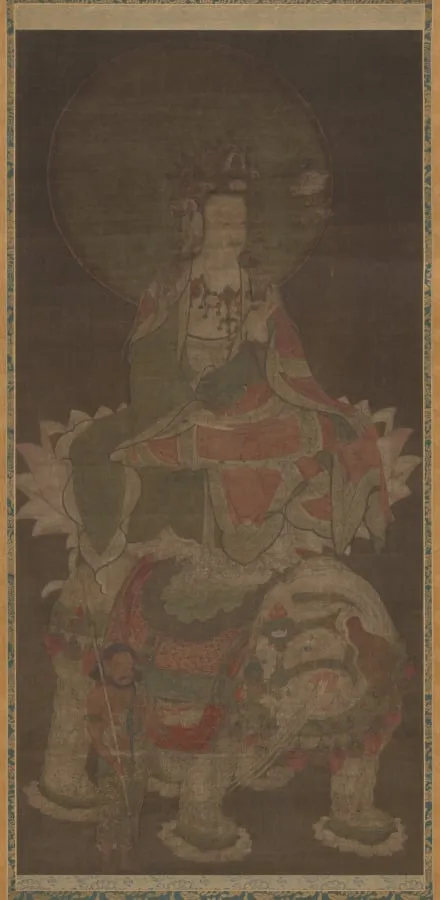
Samantabhadra is an unspecified painting by Unknown. It dates from 1104 and is held in the collection of the Cleveland Museum of Art.
About this work
Look up more works from the subject: china, southern song dynasty (1127-1279) to see how other artists painted these scenes.
You see a blue-skinned figure riding a white elephant with six tusks against a plain gold background. The rider holds a lotus flower and wears flowing robes.
This painting shows Samantabhadra, a Buddhist protector who appears in the Lotus Sutra. Most images pair him with another figure, but here he’s alone—likely part of a three-panel set. The gold leaf makes the figure glow, a common trick in temple art to suggest holiness.
Look up more works from the subject: china, southern song dynasty (1127-1279) to see how other artists painted these scenes.
Overview
The painting depicts the bodhisattva Samantabhadra astride a six‑tusked white elephant, set against a uniform gold background. The figure, rendered with blue skin, holds a lotus and wears draped robes, emphasizing his divine status. The work is likely the left-hand panel of a three‑part composition that originally displayed a group of Buddhist deities.
Subject & Meaning
Samantabhadra is celebrated in the Lotus Sutra as a protector of devotees, proclaiming his vow to support practitioners. While he is often shown alongside Manjusri as attendants of Shakyamuni, this image isolates him, underscoring his individual role as a guardian and emphasizing the symbolism of the lotus and the elephant as vehicles of spiritual perseverance.
Technique & Style
The artist employed gold leaf to create a luminous field, a technique common in temple paintings to evoke sanctity. The figure’s blue pigment and the delicate rendering of the elephant’s six tusks reflect a refined brushwork typical of Chinese Buddhist art, while the flat background focuses attention on the central deity without narrative distraction.
History & Provenance
The work is presumed to be the left panel of a triptych, suggesting it once formed part of a larger altar screen. Although the precise origin is uncertain, its stylistic traits align with Southern Song period conventions (1127‑1279), indicating it may have been produced for a monastic setting during that era.
Artist & collection

 Domestic Scene
 Giacomo and Cardinal Marco, investing Andrea, Abbot of San Zeno, with his Benefice
 The Nymph of Fontainebleau
 Portrait of a Woman
 Madonna and Child with Saints in the Enclosed Garden
 Venus and Minerva
 Family Group of Four on Sofa
 Wall painting from Room H of the Villa of P. Fannius Synistor at Boscoreale
 Samantabhadra
 Shakyamuni with the Sixteen Benevolent Deities
 Shakyamuni Triad: Buddha Attended by Manjushri and Samantabhadra
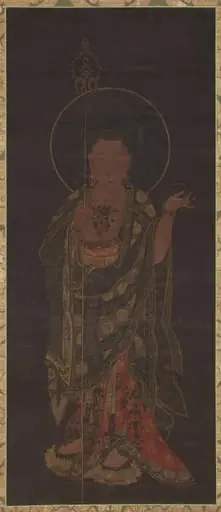 Standing Ksitigarbha
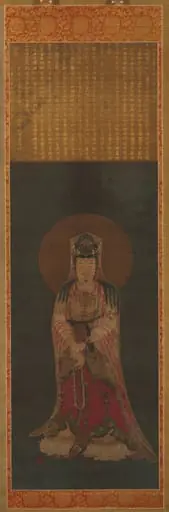 Kannon
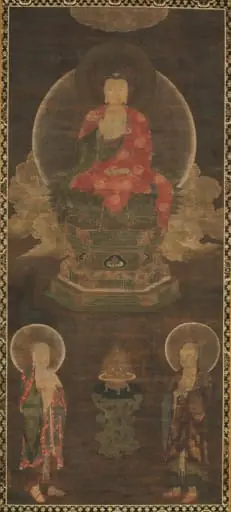 Shakyamuni Triad: Buddha Attended by Manjushri and Samantabhadra (Buddha)
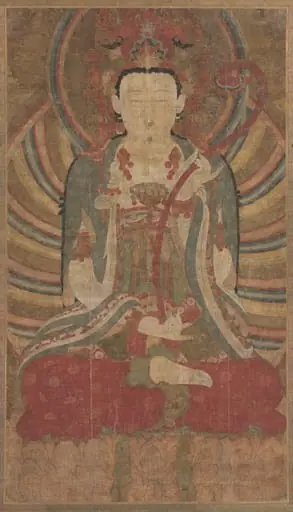 Seated Manjusri
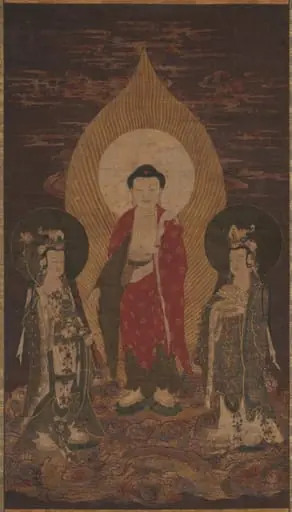 Amitābha Triad
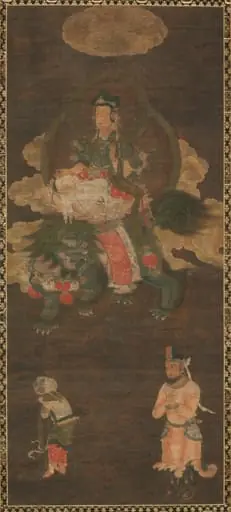 Shakyamuni Triad: Buddha Attended by Manjushri and Samantabhadra (Bodhisattva with Lion)
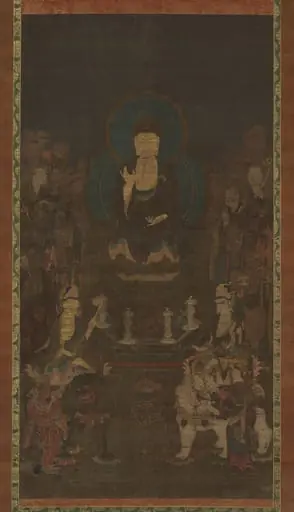 釈迦三尊十大弟子像|Shaka (Shakyamuni), the Historical Buddha, with Two Attendant Bodhisattvas and the Ten Great Disciples
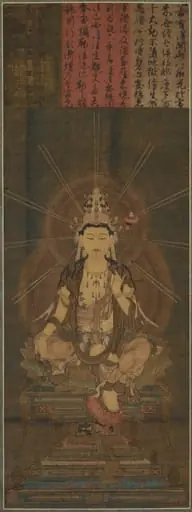 Miroku (Maitreya)