Artwork
柳橋水車図屏風|Willows and Bridge
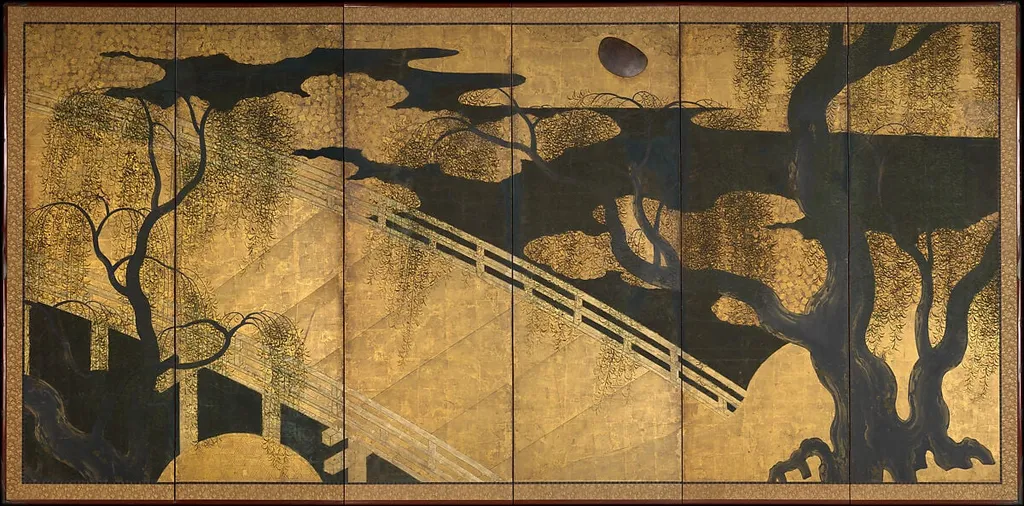
柳橋水車図屏風|Willows and Bridge is an ink painting by the Baroque artist Unknown. It dates from 1608 and is held in the collection of the Metropolitan Museum of Art. This pair of six-panel folding screens depicts a tranquil riverside scene with willow trees, a narrow bridge, and still water.
About this work
Overview
Executed in ink, color, copper, and gold leaf on paper, the work exemplifies the decorative elegance of Edo-period screen painting.
This pair of six-panel folding screens depicts a tranquil riverside scene with willow trees, a narrow bridge, and still water. Executed in ink, color, copper, and gold leaf on paper, the work exemplifies the decorative elegance of Edo-period screen painting. The dark foliage contrasts with luminous gold and pale tones, creating a sense of quiet grandeur. The use of gold leaf suggests its original function in elite interiors, where it enhanced ambient light and conveyed refined taste.
Subject & Meaning
The composition centers on a serene natural setting—twisted willows overhanging a calm river, crossed by a modest bridge. There is no human activity, emphasizing solitude and harmony with nature. The absence of narrative suggests an aesthetic focus on atmosphere rather than story. Such scenes reflected ideals of quiet contemplation valued in Japanese culture, where nature’s subtlety was seen as spiritually resonant.
Technique & Style
Artists applied ink and mineral pigments with precision to render the willows’ gnarled branches and rippling water. Gold leaf was strategically placed on the bridge and water’s surface to catch and reflect light, enhancing the screen’s luminosity. The black background intensifies the glow of gold and the muted greens and browns, creating depth without perspective. This technique, rooted in the Rimpa tradition, prioritizes stylized form over realism.
History & Provenance
Created during the Edo period, likely in the 17th or 18th century, the screens were probably commissioned by a wealthy patron for a private residence or tea room. Their format and materials indicate they were not merely decorative but served as status objects, displayed in spaces designed for refined leisure. Their survival suggests careful preservation within aristocratic or merchant households.
Context
Folding screens like this were central to interior design in Japan, dividing spaces and framing views. The use of gold leaf aligned with trends in luxury arts, where shimmering surfaces symbolized both wealth and spiritual radiance. Similar works by Rimpa-school artists often paired nature motifs with abstracted backgrounds, reflecting a broader cultural preference for suggestive, rather than literal, representation.
Legacy
The screen exemplifies a tradition that influenced later Japanese painting and design, particularly in its emphasis on material richness and atmospheric suggestion. While not widely copied, its aesthetic principles—economy of form, luminous ground, and natural restraint—continued to inform decorative arts into the modern era, preserving its quiet influence within Japan’s visual heritage.
Artist & collection

 Domestic Scene
 Giacomo and Cardinal Marco, investing Andrea, Abbot of San Zeno, with his Benefice
 The Nymph of Fontainebleau
 Portrait of a Woman
 Madonna and Child with Saints in the Enclosed Garden
 Venus and Minerva
 Family Group of Four on Sofa
 Wall painting from Room H of the Villa of P. Fannius Synistor at Boscoreale
 武蔵野図屏風|The Plains of Musashi
 俵屋宗達工房 月に秋草図屏風|Moon and Autumn Grasses
 Untitled
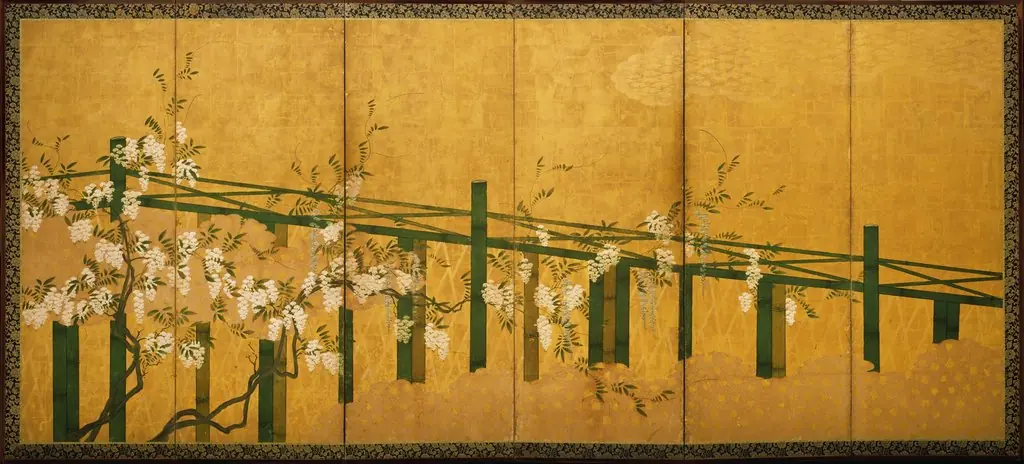 Blue and White Wisteria on a Bamboo Trellis
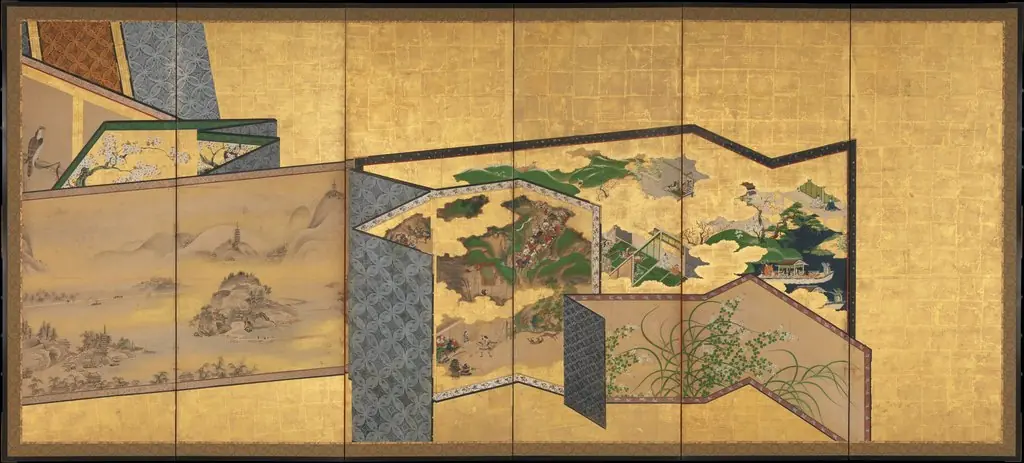 Screens within Screens
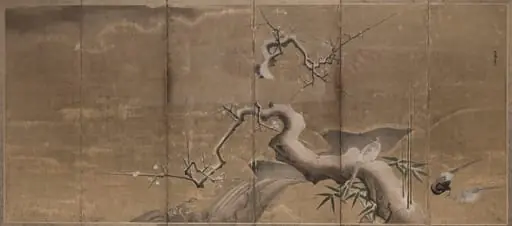 Winter Scene with Plum Trees and Pheasants (Birds Left)
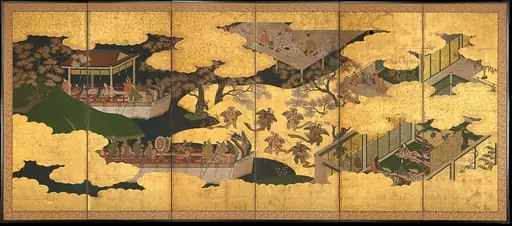 源氏物語図屏風 (胡蝶)|“Butterflies”
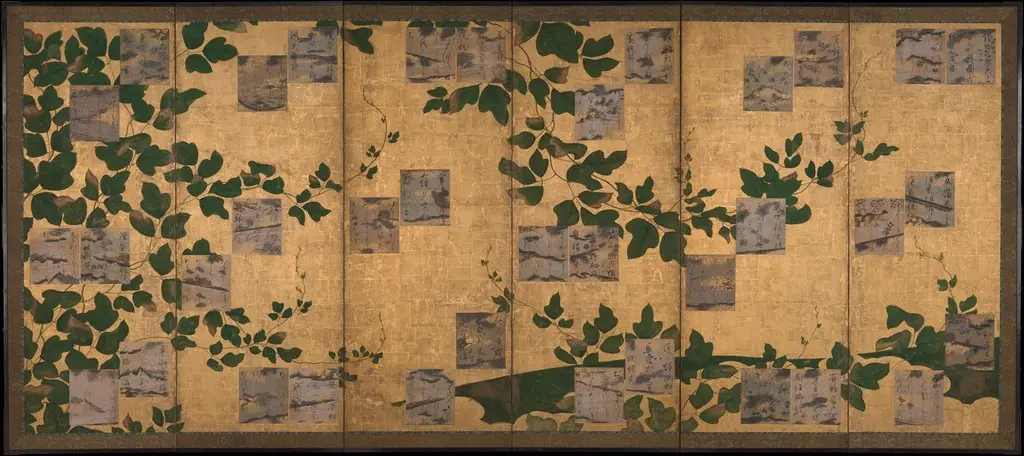 Anthology of Japanese and Chinese Poems (Wakan rōeishū) with Underpainting of Arrowroot Vines
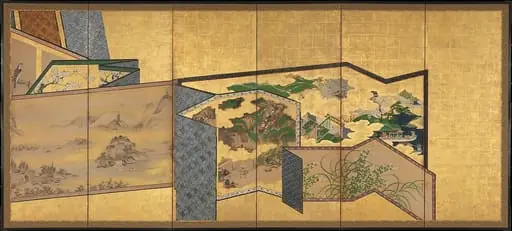 屏風尽図屏風|Screens within Screens
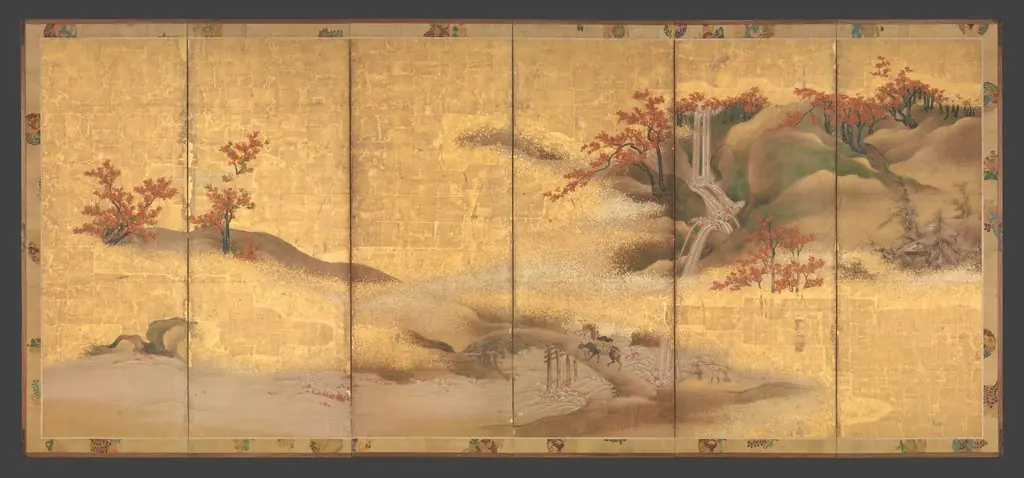 Mountains and Rivers in Autumn