Artwork
Woman with a Tambourine, in Neoclassical Costume
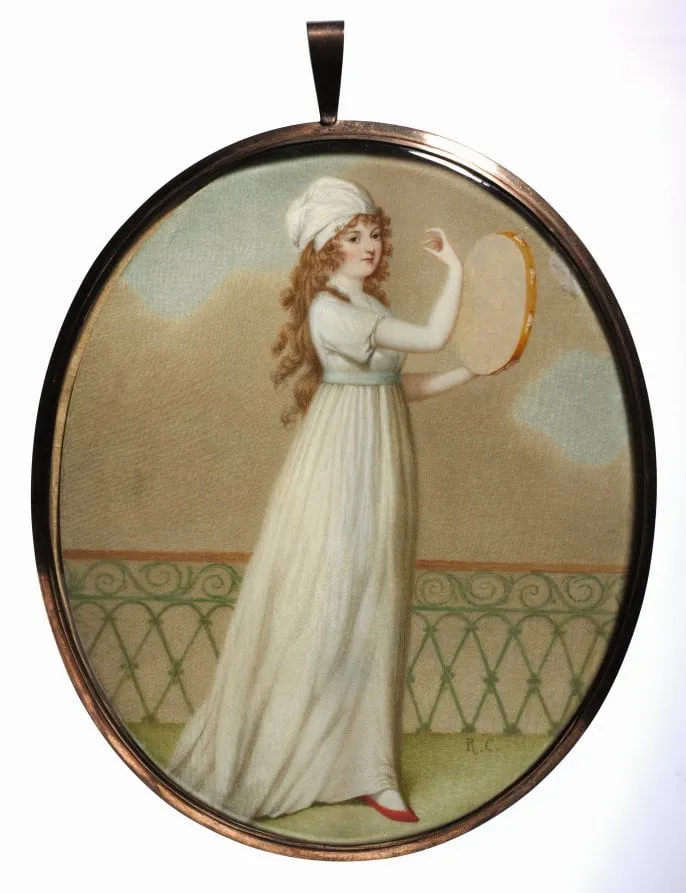
Woman with a Tambourine, in Neoclassical Costume is an unspecified portrait miniature by the Neoclassicist artist Unknown. It dates from 1870 and is held in the collection of the Cleveland Museum of Art.
About this work
Miniatures were usually tiny portraits, but this one is big enough to show her full body.
A woman in a long white dress plays a tambourine. She wears red slippers and a white turban, her brown hair curling past her waist. The dress is simple, with a high waistline—just like the styles around 1800.
This painting is called a "large miniature," which is unusual. Miniatures were usually tiny portraits, but this one is big enough to show her full body. The dress mimics ancient Greek or Roman clothing, a trend in England at the time.
If you like this, look up *England, 19th century, mod euro* for more paintings like it.
Overview
The work is a full‑length portrait miniature, measuring just over 15 cm in height, presented in an oval frame with elaborate glass and braided‑hair mounting. It shows a woman turned to the left, playing a tambourine held in her left hand, and stands on a short expanse of pale‑green lawn before a low wrought‑iron fence topped with a wooden railing.
Subject & Meaning
The sitter is depicted in a white, Empire‑style gown with a high waist and short sleeves, complemented by scarlet slippers and a white turban. Her light‑brown hair falls in curls past her waist. The lack of individualized facial features suggests the image functions more as an idealized representation of feminine beauty and musical leisure than as a specific portrait.
Technique & Style
Executed in fine white cotton or muslin, the dress reflects the neoclassical fashion popular around 1800 that referenced ancient Greek and Roman attire. The miniature’s unusually large scale for a wearable piece allows a full‑body view, contrasting with the typical miniature size of a third to a quarter of its dimensions.
History & Provenance
When acquired by the museum in 1926, the piece was thought to date from the late eighteenth century. However, its dimensions, oval format, and full‑length composition make such an early date improbable. A faint signature “R. C.” appears on the back, possibly indicating the artist Ricci, though the identification remains uncertain.
Context
The Empire silhouette, characterized by a high waist and classical drapery, was fashionable in England at the turn of the nineteenth century. Miniatures of this period were often intimate objects, with initials on the mounting indicating a personal connection between owner and sitter; the presence of such markings here raises questions about the work’s intended function.
Artist & collection

 Domestic Scene
 Giacomo and Cardinal Marco, investing Andrea, Abbot of San Zeno, with his Benefice
 The Nymph of Fontainebleau
 Portrait of a Woman
 Madonna and Child with Saints in the Enclosed Garden
 Venus and Minerva
 Family Group of Four on Sofa
 Wall painting from Room H of the Villa of P. Fannius Synistor at Boscoreale
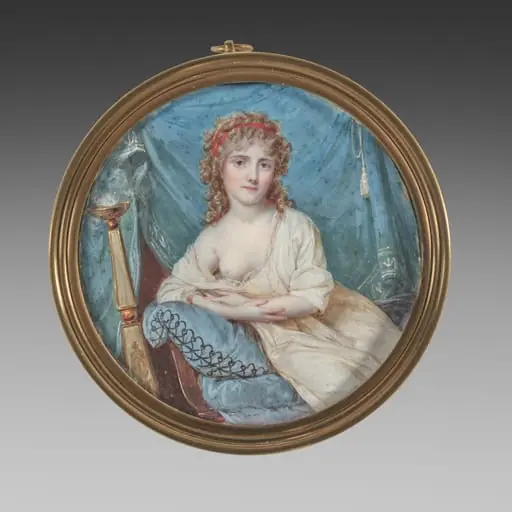 Portrait of a Woman Reclining on a Sofa
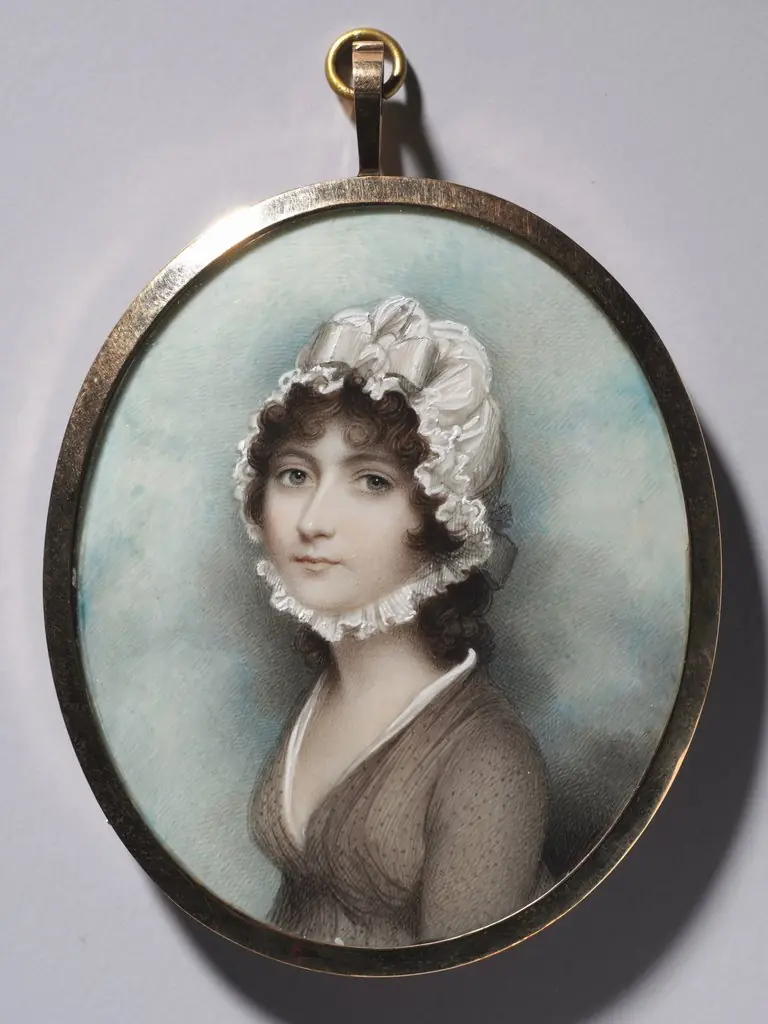 Portrait of a Woman
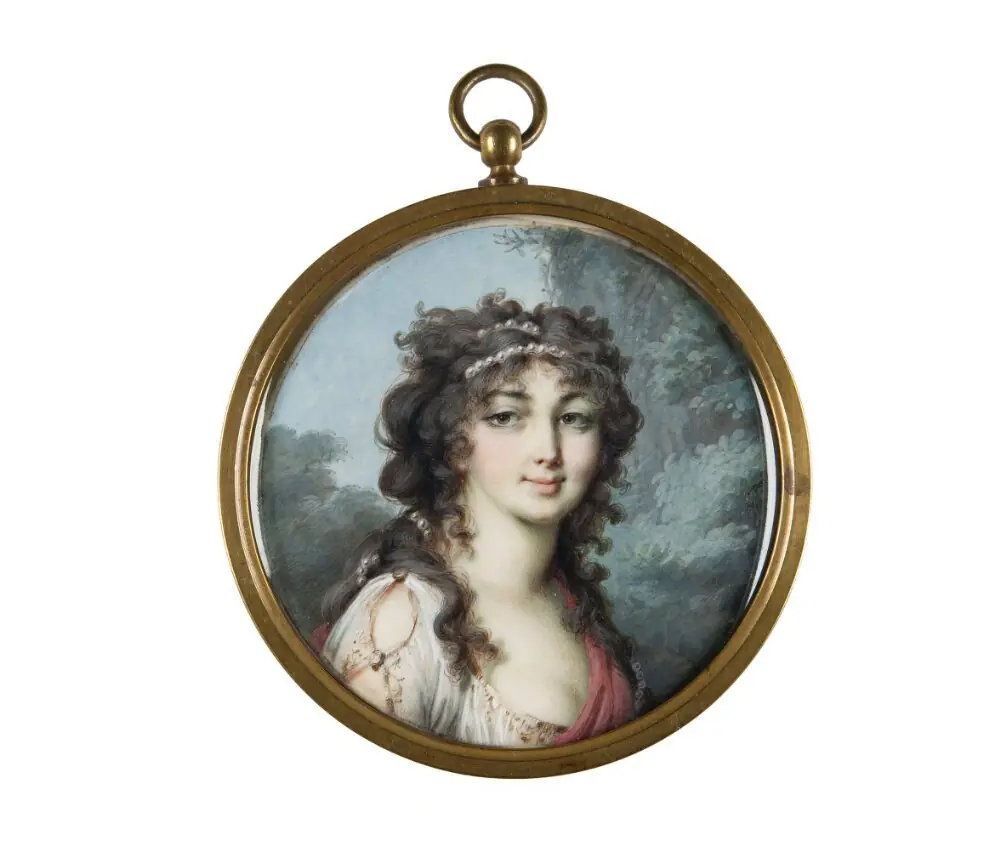 Okänd kvinna som vestal
 Portrait of Anne Vallayer-Coster
 Portrait of Anne Vallayer-Coster
 Marie Antoinette, soția regelui Louis XVI al Franței și Navarrei (în registrul inventar: Portret de femeie)
 Portrait of the Hon. Anne Annesley, later Countess of Mountnorris