Artwork
Earth
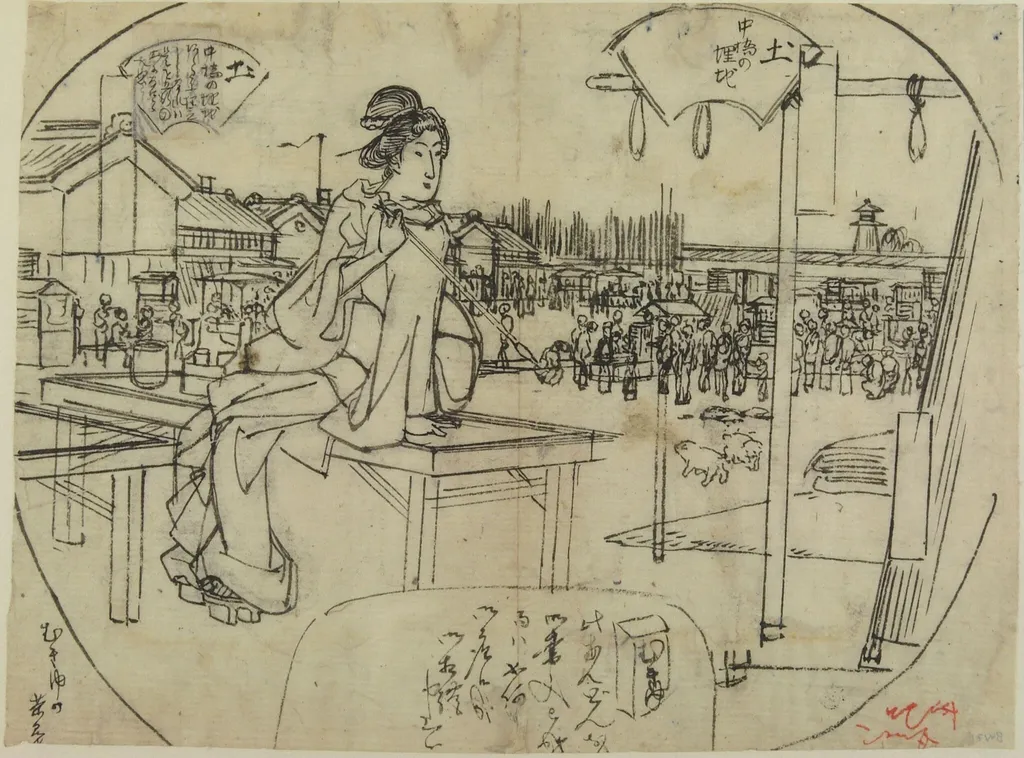
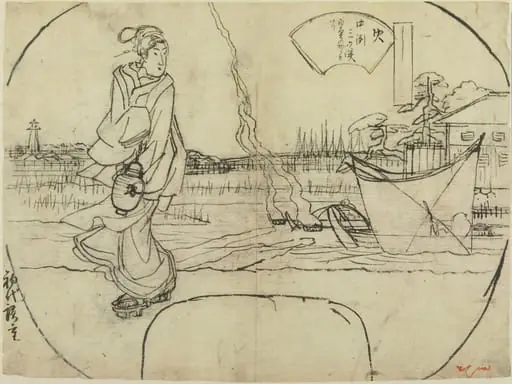
Earth is a drawing by the Romanticist artist Utagawa Hiroshige. It dates from 1845 and is held in the collection of the Victoria and Albert Museum.
About this work
Overview
Executed in sumi on paper, it captures a quiet urban moment with a seated woman in the foreground, pipe in hand.
Created in 1845, this ink drawing by Utagawa Hiroshige served as a preparatory study for a fan print. Executed in sumi on paper, it captures a quiet urban moment with a seated woman in the foreground, pipe in hand. The composition is dense yet uncluttered, suggesting a scene meant for reproduction on a small, curved surface. Its function as a shita-e reveals Hiroshige’s methodical approach to designing commercial prints.
Subject & Meaning
The drawing centers on a woman seated on a raised platform, holding both a pipe and a fan—objects that imply leisure and domestic routine. Behind her, a bustling street unfolds with figures, lanterns, and a distant bridge, evoking the rhythm of Edo life. The inclusion of handwritten text along the margins hints at poetic reflection, grounding the scene in a cultural context where daily moments carried lyrical weight.
Technique & Style
Hiroshige employed loose, economical ink lines to suggest form and movement, avoiding heavy shading. The perspective tilts subtly, creating a sense of intimate, slightly off-center observation. Figures are simplified but distinct, their postures conveying motion and social interaction. The density of detail—lanterns, rooftops, bridge arches—is rendered with precision, yet the overall effect remains airy, as if the scene hovers between reality and memory.
History & Provenance
This drawing was made as a shita-e—a working sketch—for a woodblock fan print, a popular format in mid-19th century Edo. Such studies were typically retained by the artist or publisher and rarely preserved. Its survival suggests it held particular value, perhaps as a reference for multiple prints or as a personal record. No documented ownership before the 20th century is known.
Context
In 1845, Hiroshige was deeply engaged in depicting everyday Edo life through his series on famous places. Fan prints, though small, were widely circulated among urban dwellers. This drawing reflects a broader trend: elevating mundane moments—smoking, strolling, waiting—into subjects worthy of artistic attention, aligning with the ukiyo-e tradition of capturing fleeting, ordinary beauty.
Legacy
Though not a finished print, this sketch reveals Hiroshige’s process and sensitivity to atmosphere. Its survival offers insight into how commercial artists translated observation into mass-produced art. Later collectors valued such studies not for their polish, but for their immediacy—preserving the quiet, unfiltered pulse of Edo’s streets through the artist’s hand.
Artist & collection
Artist
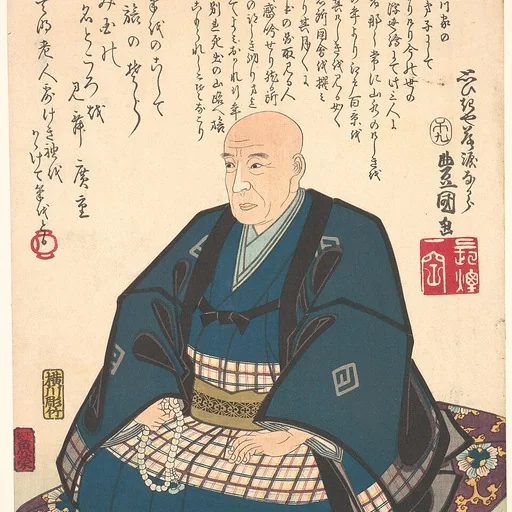
Utagawa Hiroshige (歌川 広重) or Andō Hiroshige (安藤 広重), born Andō Tokutarō (安藤 徳太郎; 1797 – 12 October 1858), was a Japanese ukiyo-e artist, considered the last great master of that tradition.

 Fire
Fire A Summer Evening by the River
 Untitled
 よしわらの躰 揚屋町入り口|The Entrance to Ageya-machi, from the series Scenes in the Yoshiwara (Yoshiwara no tei)
 Untitled
 The Meguro Fudo Temple
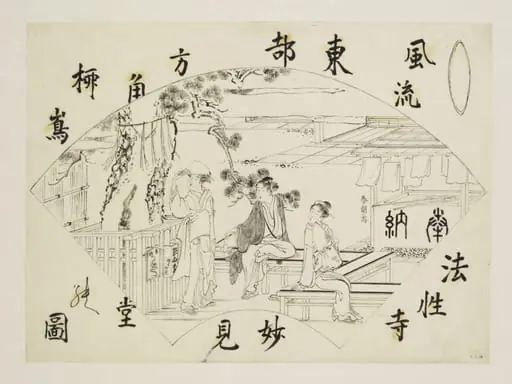 The Myoken Hall of the Hosshoji Temple at Yanagishima
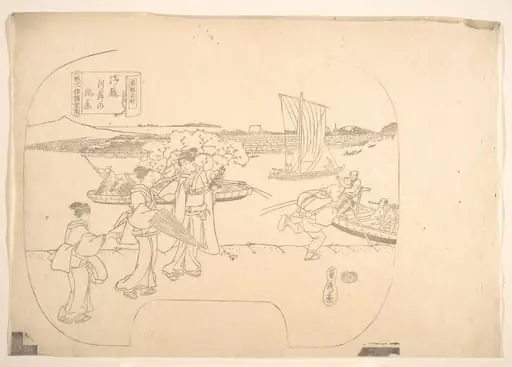 Untitled
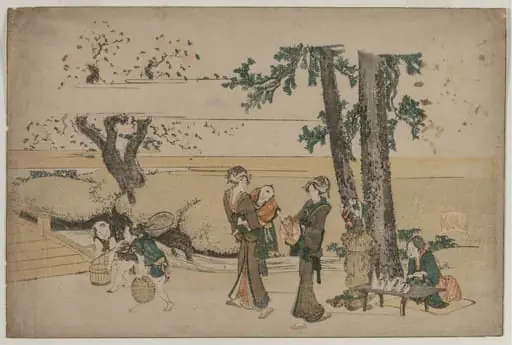 Woman Passing a Roadside Shop Near Oji
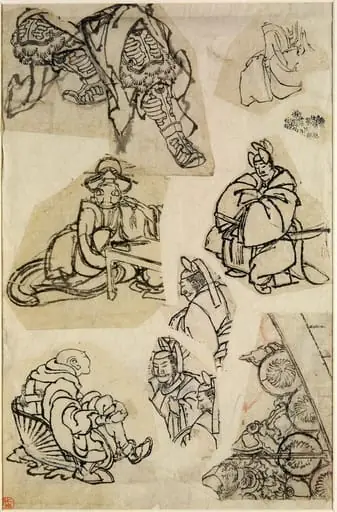 Sketches
 Untitled
 Two pairs of beauties - one at a window, the other taking a walk