Artwork
よしわらの躰 揚屋町入り口|The Entrance to Ageya-machi, from the series Scenes in the Yoshiwara (Yoshiwara no tei)
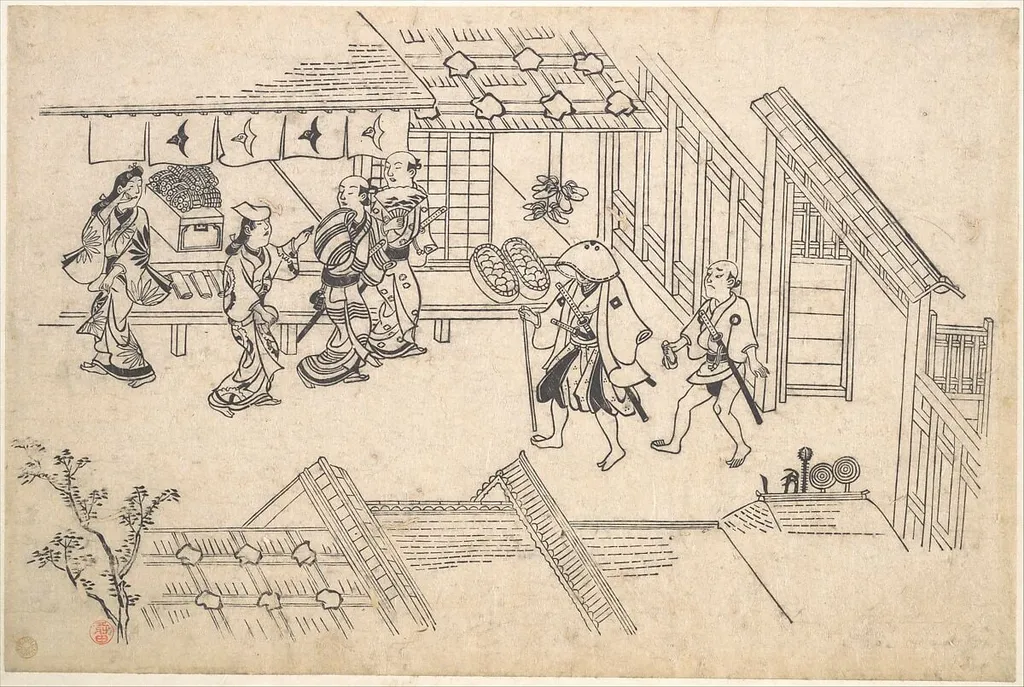
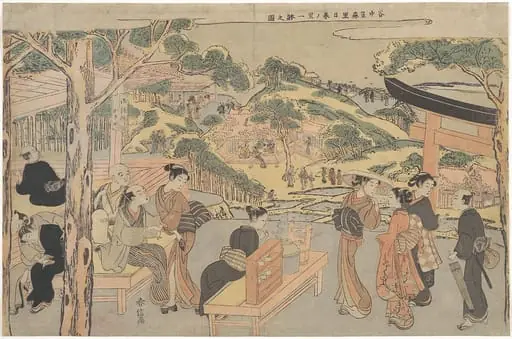
よしわらの躰 揚屋町入り口|The Entrance to Ageya-machi, from the series Scenes in the Yoshiwara (Yoshiwara no tei) is an ink print by the Baroque artist Hishikawa Moronobu 菱川師宣. It dates from 1682 and is held in the collection of the Metropolitan Museum of Art. This woodblock print, dated 1682, is part of a series by Hishikawa Moronobu depicting life in Edo’s Yoshiwara pleasure district.
About this work
The figures are dressed in traditional Japanese clothing, and some are carrying objects such as baskets and swords.
The painting shows a scene of people walking and standing in front of a building. The figures are dressed in traditional Japanese clothing, and some are carrying objects such as baskets and swords. The building in the background has a sloping roof and a large doorway.
In the foreground, there is a group of people gathered near the entrance of the building. One person is holding a basket, while another is carrying a sword. The atmosphere appears to be one of everyday life, with people going about their daily activities.
The painting is a woodblock print, created using ink on paper. It is a good example of the Baroque style, which was popular during the 17th century. The Metropolitan Museum of Art has a large collection of Japanese art, including works by Hishikawa Moronobu.
Overview
This woodblock print, dated 1682, is part of a series by Hishikawa Moronobu depicting life in Edo’s Yoshiwara pleasure district. Executed in sumizuri-e, a monochrome ink technique, it captures a moment at the entrance to Ageya-machi, a street lined with establishments serving entertainers and clients. The composition focuses on pedestrians and architectural details, reflecting early ukiyo-e’s interest in urban scenes without color or elaborate embellishment.
Subject & Meaning
The scene portrays ordinary activity at the threshold of a licensed district: figures in period attire move through the space, some carrying baskets or swords, suggesting a mix of merchants, guards, and visitors. The building’s large doorway and sloping roof mark it as a gateway to Yoshiwara’s private world. Rather than idealizing pleasure, the image presents the district as a functioning urban zone, where daily routines intersect with its regulated social economy.
Technique & Style
Rendered in sumizuri-e, the print uses only black ink on paper, relying on line and tone to define form and movement. Moronobu’s brushwork is fluid yet precise, with figures arranged in loose, naturalistic groupings. The lack of color and minimal shading reflects early ukiyo-e’s simplicity, prioritizing clarity and narrative immediacy over decorative flourish. The composition directs attention to the doorway as a visual and symbolic threshold.
History & Provenance
Created during the Genroku era, this print belongs to one of the earliest known ukiyo-e series focused on urban life. It was produced for a growing literate middle class seeking affordable imagery of Edo’s popular districts. The print entered The Metropolitan Museum of Art’s collection through documented acquisitions in the 20th century, preserving its place as a foundational work in Japanese print history.
Context
In late 17th-century Edo, Yoshiwara was a state-sanctioned entertainment quarter, tightly regulated yet culturally vibrant. Moronobu’s prints helped define ukiyo-e as a genre centered on the 'floating world'—a term capturing transient pleasures and urban rhythms. This work predates later color prints, offering a raw, observational record of the district’s daily pulse before commercialization intensified.
Legacy
Moronobu’s early prints laid groundwork for the ukiyo-e tradition, influencing generations of artists who expanded the genre into color and narrative complexity. This print remains significant as one of the first to treat everyday urban life as worthy artistic subject matter. Its restraint and focus on social space mark a pivotal moment in the evolution of Japanese visual culture.
Artist & collection
Artist
Hishikawa Moronobu made bold black-and-white prints of daily life in late-1600s Japan.

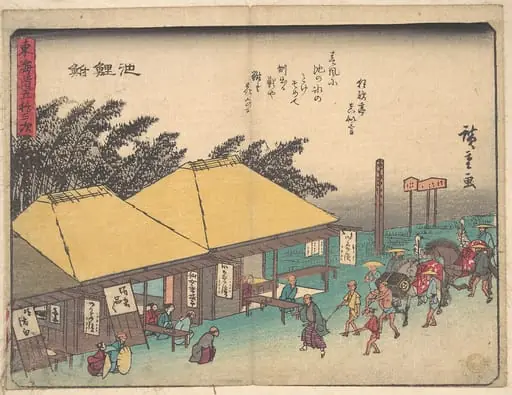 東海道五十三次 池鯉鮒|Chiryu
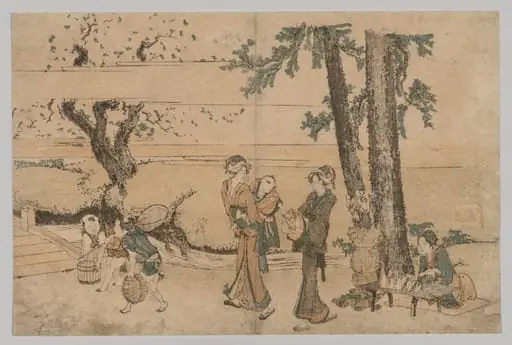 Group of Figures near a Brook
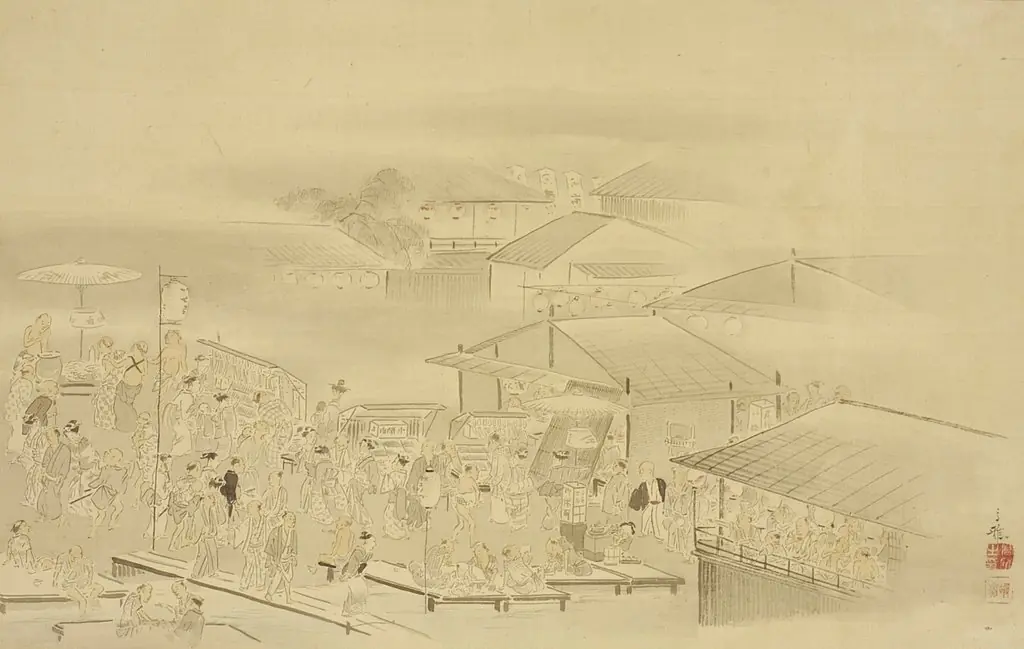 A Summer Evening by the River
 東海道五十三次 水口|Mizukuchi
 Chushingura: Act III (from the series Perspective Pictures for The Treasure House of Loyalty)
 東海道五十三次 鳴海|Narumi
 道中膝栗毛 四日市追分|The Branch Road at Yokkaichi
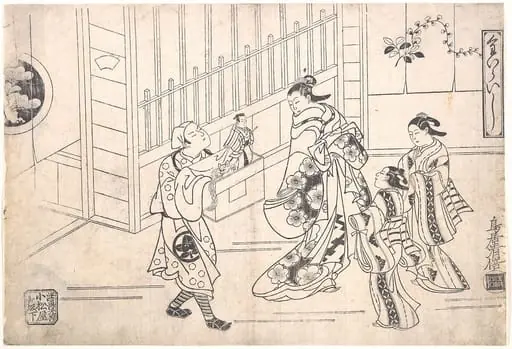 Kairaishi|The Actor Ichimura Takenojo VIII in the Role of a Puppeteer, showing Puppets to a Courtesan
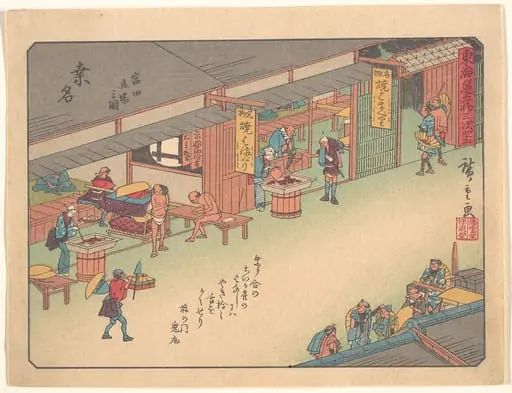 東海道五十三次 桑名|Kuwana, from the series The Fifty-three Stations of the Tōkaidō Road
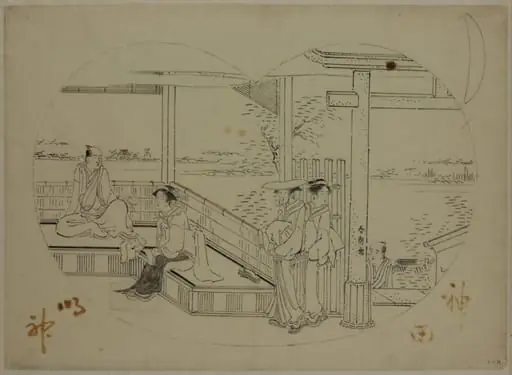 The Kanda Myojin Shrine
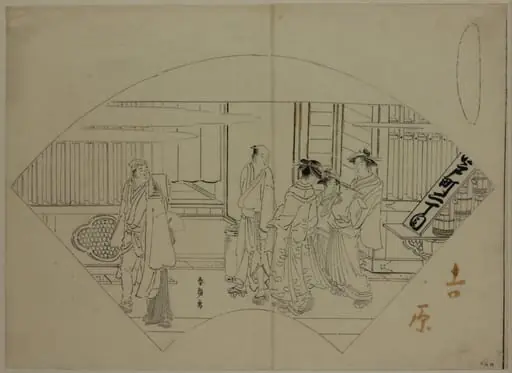 Yoshiwara
 Untitled